
Introduction
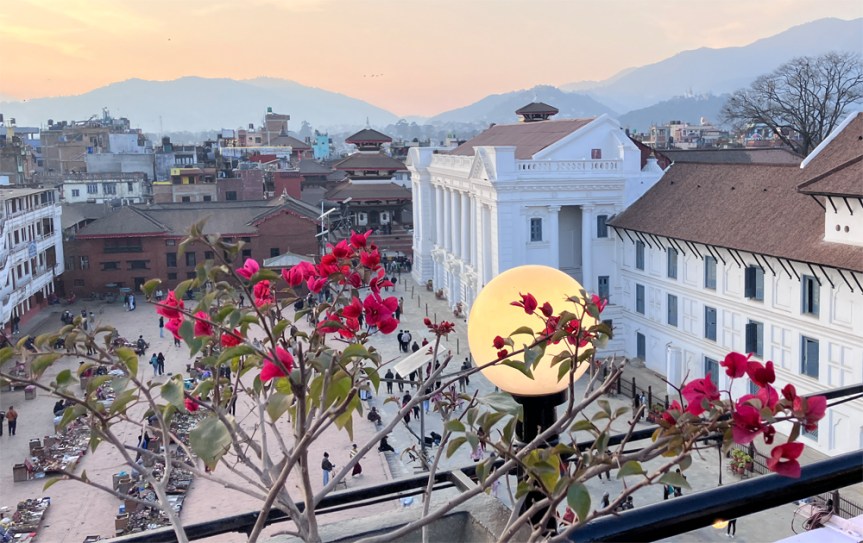
Our research-practice in Nepal began in 2019 as part of the UKRI GCRF funded MIDEQ project, in which our work package focused on the current use of digital tech by migrants, and how they could further benefit from new interventions that combined their knowledge with the expertise of local tech developers. Following the end of this project in 2024, we have continued to work there under the leadership of Prof. G. “Hari” Harindranath, focusing especially on supporting and evaluating the initiatives that we had helped put in place over the previous five years, and exploring new ways through which basic cybersecurity messages can be shared with isolated and marginalised people through community radio, working very closely with our main partner, the Association of Community Radio Broadcasters Nepal (ACORAB) and Community Information Networks (CIN). Our activities, outputs and outcomes are summarisd below beginning with the most recent and finishing with our initial activities.
Quick links to the material available on this page (and elsewhere on our site) are provided below:
- Research-practice in 2026
- Our research-practice with ACORAB/CIN through community radio networks and YouTube in 2025
- Our earlier research practice on dissemination through community radio networks in 2024
- Origins in the MIDEQ project on migration
- Blogs about our research-practice in Nepal
Research-practice in 2026
Prof. G. ‘Hari’ Harindranath’s mission in January 2026
Prof G. ‘Hari’ Harindranath visited Nepal in January 2026 funded by an ODA grant from Royal Holloway, University of London to work with partners there to develop new collaborations and help sustain digital interventions undertaken through the UKRI GCRF MIDEQ (2019-2024) project and over the past two years through other funding streams.
Launch of new collaborative resources
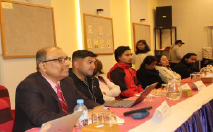
A key highlight was an event to launch our multi-lingual, multimedia resources on the safe, wise, and secure use of digital technology by migrants and other vulnerable groups, developed in partnership with the Association of Community Radio Broadcasters (ACORAB), a network of 300+ community radio stations reaching every corner of Nepal. The event included a multi-stakeholder dialogue on digital safety among vulnerable groups in Nepal which brought together nearly 60 participants representing migrant and civil society organisations (female migrants, undocumented labour migrants, LGBTQ+ communities and migrant families from marginalised backgrounds), media and tech organisations including BBC Nepali and international NGOs as well as other international organisations. This was also an opportunity to launch the Nepali version of our guidance notes for small civil society organisations on the safe, wise and secure use of digital tech.
New partnership opportunities with Pourakhi
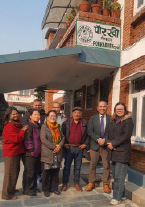
The visit led to new opportunities for partnership with organisations in Nepal that can help further the impact of our ongoing work in support of labour migrants’ use of digital technologies. Pourakhi Nepal, a migrant advocacy group that supports female migrants and returnee migrants, and a key partner for our MIDEQ work, has committed to taking guardianship of the migrant information portal, Pardesi.org.np, which was the result of our collaboration with several migrant organisations and a local tech NGO undertaken during our UKRI GCRF MIDEQ project. The portal will now become part of Pourakhi’s core activity ensuring that it remains updated and relevant to Nepali migrants and their family members.
Meetings with government officials and international organisations
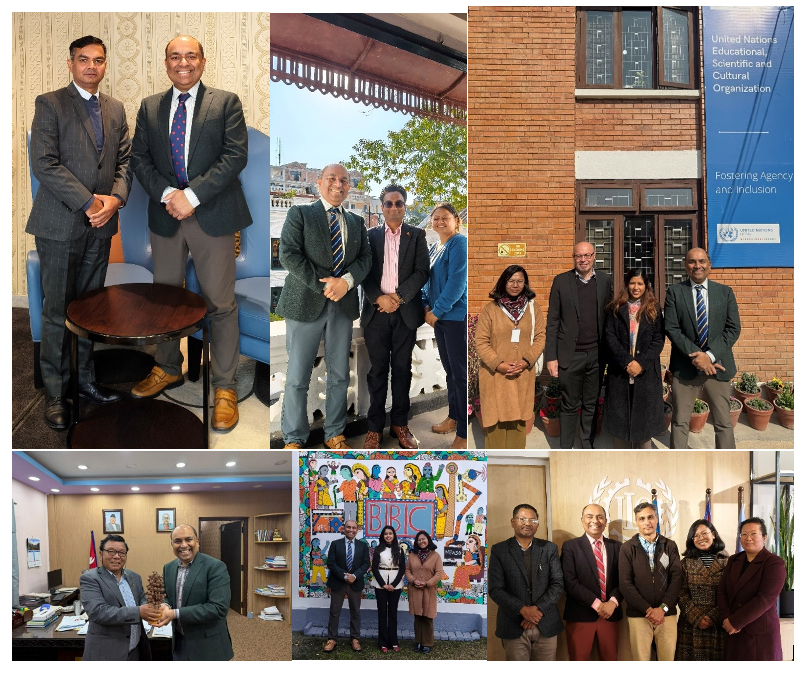
Hari was also able to meet with Nepal’s Minister for Education as well as senior officials at the Ministry of Labour, Employment and Social Security, migrant organisations, local tech and media organisations, and international organisations including UNESCO, IOM, ILO and Helvetas, all with a view to embed our digital interventions within the activities undertaken by our partners, thereby ensuring their sustained impact.
Our research-practice with ACORAB/CIN through community radio networks and YouTube in 2025

We returned to Nepal in January 2025, and under Hari Harindranath’s leadership a clear work plan was developed through which ACORAB and their partners in Nepal would develop a range of resources relating to migrant use of digital tech which would be shared through their radio and web-basd communication media. This provides a good example of the way in which we have been able, through the support of Royal Holloway, University of London’s, Social Purpose grant and their Research England ODA funds, to develop innovative practical interventions building on our original UKRI GCRF funded contribution to MIDEQ.
Watch or listen to the resources ACORAB has developed based on our materials and shared on their dedicated YouTube Channel on Safe, Wise and Secure use of digital tech in multiple languages used in Nepal. Click on the images below to link directly to the relevant media on the channel, under three headings: Videos, Radio Programmes and Public Service Announcements (PSAs) (views and dates on images are as of September 2025 – by that date our resources had been viewed more than 2,700 times).
As of September 2025, CIN has 274K followers on Facebook (@cinkhabar) and 29.3K subscribers to its main YouTube Channel, so it provides a very powerful channel through which our jointly developed resources can be disseminated. Moreover, its radio broadcasts have a reach of some 6 million people across Nepal, and community radio is still one of the main means through which those in isolated communities can gain reliable and useful information.
Videos
Safe, secure and wise use of digital tech | Ratyouli song |

Safe, secure and wise use of digital tech | Deuda song |

Safe, secure and wise use of digital tech | Manju Gurung | Pourakhi Nepal |

Safe, secure and wise use of digital tech | Ram Milan Raya | Sarlahi |

बैदेशिक रोजगारीमा जान नठगिनका लागी विदेश जानै लागेकाहरुको सुझाव | Foreign Employment |

बैदेशिक रोजगारीमा भइरहेका ठगीको प्रवृत्ती र सरकारी निकायबाट भइरहेका पहल |

सुन्नुस हजुर डिजिटल प्रबिधिको कुरा | Digital Tech Song | Sher Bd Acharya

डिजिटल ठगिमा परे के गर्ने ? Digital Scam | Deepak Raj Awasthi |

नेपालमा अनलाईन ठगी कसरी हुन्छ ? Digital fraud in Nepal || CIN ||

बैदेशिक रोजगारीमा हुने डिजिटल ठगीबाट कसरी जोगिने ? Chiranjivi Baral | Digital Scam | NNSM |

भिजिट भिसाका नाममा हुने मानव तस्करीबाट कसरी बच्ने ? Visit Visa | Human Trafficking |

Radio Programmes










Short Public Service Announcements (PSAs) on safe, wise and secure use of digital tech








Our earlier research-practice on dissemination through community radio networks in 2024
Community radio can often play a vital role in providing information to people in isolated regions, and in Nepal it had been an especially important way through which people were supported following the devastating earthquake of 2015 (see also UNESCO and BBC). In December 2023, during his visit to Nepal to continue the work with our existing partners, Tim Unwin met with leading figures in the community radio sector, and especially the team at the Association of Community Radio Broadcasters Nepal (ACORAB) and Community Information Networks (CIN). The meeting was so productive that we subsequently signed a formal partnership agreement with them, and began to develop the exciting initiatives that are summarised below (and see more recent activities in the previous sector).

Public Service Announcements (PSAs) across Nepal
Our initial work with ACORAB focused on developing and broadcasting Public Service Announcements (PSAs) based on the digital preparedness training materials we had previously produced. ACORAB/CIN broadcast these PSAs across more than 300 community radio stations in Nepal reaching 6.7million listeners (based on independent Nepal media survey data supplied by ACORAB/CIN). In total, four PSAs were developed with each being broadcast 15 times during the Sajha Khabar news bulletin during January and February 2024. These have also been live streamed via Facebook and You Tube garnering thousands of views.

The Public Service Announcements are available on CIN’s Facebook page as follows:

1st PSA (broadcast during 12-18th January 2024; PSA airs from 11:00 -11:58-minute mark in the bulletin; 5.7K views by 26/2/24)
2nd PSA (broadcast during 19-26th January 2024; PSA airs from 15:09 -16:35-minute mark in the bulletin; 3.4 K views by 26/2/24)

3rd PSA (broadcast during 28 Jan – 4th Feb 2024; PSA airs from 13:28 to 14:48 mark in the news bulletin; 2.8K views by 26/2/24)
4th PSA (broadcast during 5-12th February 2024; PSA airs from 12:20 to 13:40 minute mark in the news bulletin; 5.7K views by 26/2/24)
In addition, these PSAs were broadcast via CIN’s YouTube channel which as of September 2025 had 29.3K subscribers.
Government of Nepal recognition
ACORAB/CIN have also broadcast two 30-minute programmes discussing the importance of the safe use of digital technologies by migrants and the role of the Pardesi platform in this regard as part of CIN’s regular programme Sajha Nepal. The Sajha Nepal programme is live streamed on Facebook and distributed to over 300 community radio stations throughout Nepal, reaching over 6.7 million people.
Mr Kabiraj Upreti from the Department of Labour and Occupational Safety, Nepal has recognized the importance of these interventions by taking part in the first of these two 30-minute episodes available at https://fb.watch/q45yONWn0F/ and https://ict4d.org.uk/2024/02/14/our-work-on-safe-wise-and-secure-use-of-digital-tech-in-nepal-now-reaching-thousands-of-people/. This initial episode (photo above), which focused on the secure use of digital technologies for safe migration, was aired on February 7, 2024.
Voices from migrant organisations and migrants
The second 30-minute episode centred on the secure use of digital technologies for safe migration, available at https://fb.watch/qlC97bx-gA/ and https://ict4d.org.uk/2024/03/01/further-new-material-for-migrants-shared-in-nepal-through-our-partners-acorab-and-cin/ , featured Mr, Swarna Kumar Jha, the Coordinator of the National Network Nepal, and Ms. Sindhu Aryal, the Secretary General of Pourakhi Nepal. It was broadcast on February 17, 2024. According to Ms Ayeesha Joshi from ACORAB/CIN, “the programme also incorporated vox pops from survivors who have recounted their challenges while employed as migrant workers, and a report presented by Ms. Sushila Shrestha (from the 19:10-minute mark to the 22:20-minute mark), enhancing the programme’s interactivity”.

Origins in the MIDEQ project on migration
Our work in Nepal began as part of the MIDEQ project between 2019 and 2014. Our workstream was led by Prof. “Hari” Harindranath supported by Dr. Maria Rosa Lorini and Tim Unwin. We worked together with our Nepali colleagues to craft training resources for migrants in the safe, wise and secure use of digital tech, as well as developing an integrated portal https://pardesi.org.np to provide links to the many existing sources of information of relevance to migrants.

Our team working together in January 2023
Our work package (WP9) within the MIDEQ Hub was explicitly intended to be an intervention package, using our research and networks to facilitate migrants and tech developers to craft interventions that will reduce inequalities in the lives of migrants. After three years of research (2019-2022 – and interrupted by COVID19), understanding how migrants in the Nepal – Malaysia corridor use digital tech (see working papers on Uses of digital technologies by Nepali migrants in Malaysia, and Uses of digital technologies by Nepali migrants and their families), we began designing interventions with migrants, migrant organisations and tech developers in Nepal, supported by the MIDEQ country lead organisation NISER). The main organisations with which we worked were: AMKAS, AuraEd, Gandaki University Pokhara, GSMA, Helvetas SaMi (and the Migrant Resource Centre in Pokhara), National Innovation Centre (NIC), NNSM, PNCC, Pourakhi, and the UNESCO Office in Kathmandu. Other organisations that have contributed to the development of this intervention include Hamropatro, Ujyaalo Online, and IME.
Outputs and outcomes from our MIDEQ work
Full details of our outputs (in multiple locally-used languages) are summarised below, but are also available through the following links, which provide access to all the videos that have been created through our interventions:

The development of the portal and training resources on the safe, wise and secure use of digital tech
The [workshop] presentation was outstanding. Both the logical presentation and the delivery were done in a way that was extremely easy to understand. The presenters were able to convey their information understandably and used straightforward language. I enjoyed all the sessions, but personal experience sharing of migrant workers from Africa was particularly amazing to me.
Aviman Singh Lama (Pravasi Nepali Coordination Committee), 3 February 2023
During workshops in Kathmandu in 2022, our Nepali colleagues identified two main types of intervention that they thought were necessary for migrants to be able to use digital technologies most effectively for improving their lives: the creation of a clear and simple information platform where migrants and their families can easily find out information and links about all aspects of migration, and training materials on the safe, wise and secure use of digital tech. These interventions are summarisd below.
The Pardesi platform

During our meetings in January 2023 the team agreed on an initial content stucture for the platform (see below – click for larger image), and agreed to create a content team and a tech team to take this work forward, with the aim being to make a beta version of the platform available by May 2023.

These two teams worked together actively during 2023 and the platform was soft-launched during the autumn, with the official launch taking place in Kathmandu on 10th December 2023.
Videos about why migrants and their organisations consider https://pardesi.org.np to be so valuable
Below are short videos in Nepali, Maithili and English by returned migrants and those working for migrant organisations sharing their views on why the platform we developed together (pardesi.org.np) is the go-to place for Nepali migrants and their families. Some of the videos also make reference to a second element of our work in Nepal which has been the development of training resources on the importance of safe, wise and secure/private use of digital tech, which are available in six Nepali languages.
Click on images (or the links below) to watch and listen to the videos:
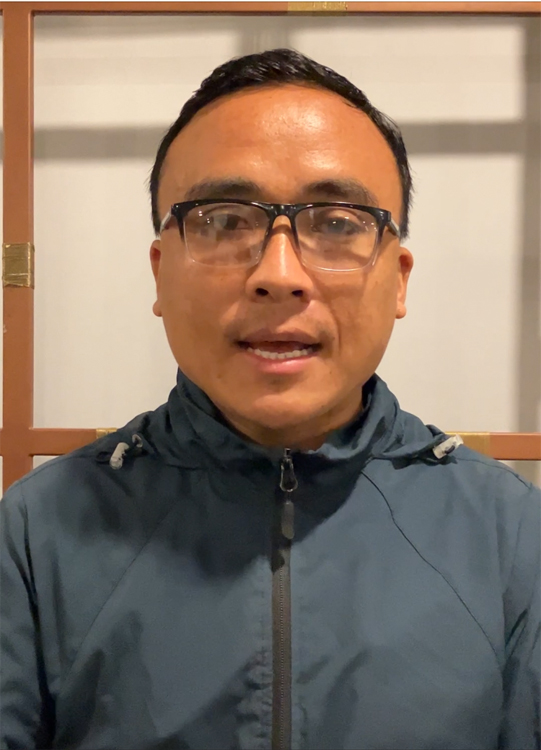
Shyam Lama (a returnee from Saudi Arabia) https://bit.ly/ICT4DCollective-r-np-np1N

Priyasha Shrestha (NISER) https://bit.ly/ICT4DCollective-r-np-np3n

Sharmila Mainali (NISER) https://bit.ly/ICT4DCollective-r-np-np4n

Amira Subba (AMKAS) https://bit.ly/ICT4DCollective-r-np-np5n

Indu Dhungana (NISER) https://bit.ly/ICT4DCollective-r-np-np6n
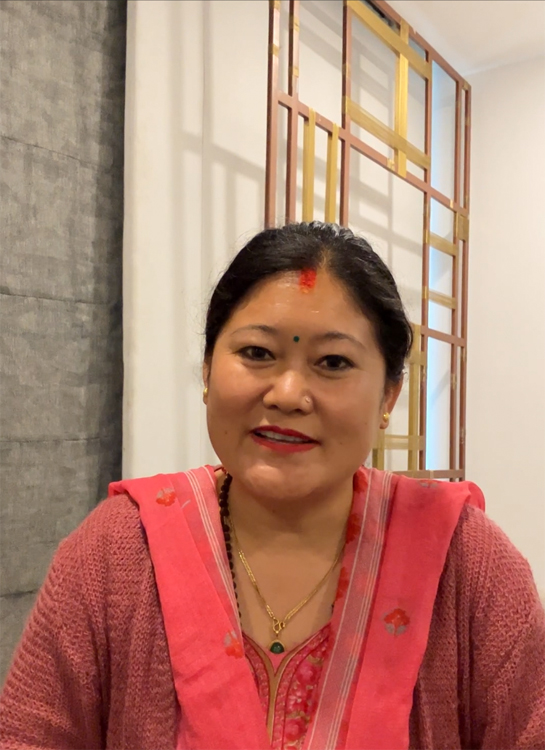
Sapana Shahi (a returnee from Cyprus) https://bit.ly/ICT4DCollective-r-np-np8n
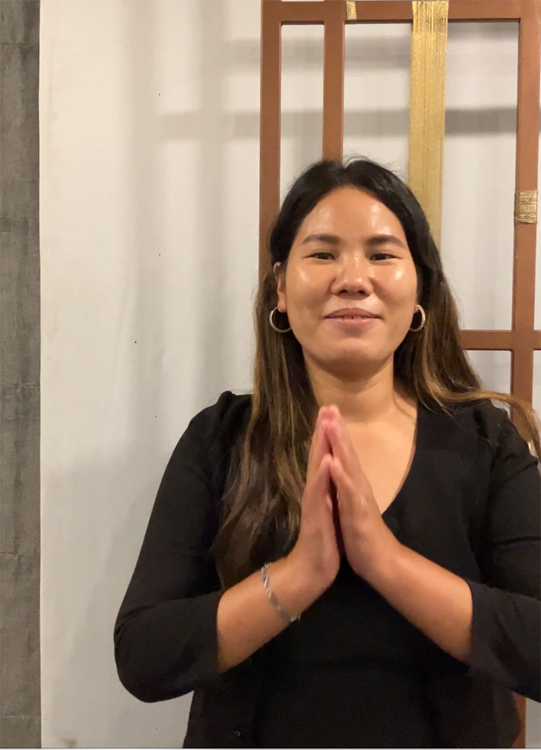
Hem Maya Rana Magar (a returnee from Dubai) https://bit.ly/ICT4DCollective-r-np-np9n

Sindhu Aryal (Pourakhi) https://bit.ly/ICT4DCollective-r-np-np10n

Sindhu Aryal (Pourakhi) and Swarna Kumar Jha (NNSM – National Network for Safe Migration) https://bit.ly/ICT4DCollective-r-np-np12n
Videos in Maithili
Click on images (or the links below) to watch and listen to the videos:

Videos in English
Click on images (or the links below) to watch and listen to the videos:
Priyasha Shrestha (NISER) https://bit.ly/ICT4DCollective-r-np-np3e
Sharmila Mainali (NISER) https://bit.ly/ICT4DCollective-r-np-np4e
Amira Subba (AMKAS) https://bit.ly/ICT4DCollective-r-np-np5e
Indu Dhungana (NISER) https://bit.ly/ICTr4DCollective-r-np-np6e

Anjana Pakhrin (Auraed) https://bit.ly/ICT4DCollective-r-np-np7e
Sindhu Aryal (Pourakhi) https://bit.ly/ICT4DCollective-r-np-np10e

Sindhu Aryal (Pourakhi) and Anjana Pakhrin (Auraed) https://bit.ly/ICT4DCollective-r-np-np11e
Training resources for migrants and migrant organisations
The second main intervention that the migrants recommended we should develop was the creation of basic training resources in Nepali about the safe, wise and secure use of digital tech for migrants and organisations concerned with improving their lives. Many such resources have been created across the world since the early 2000s (see for example the early work by Imfundo in Africa), and so we had not originally expected that there still remained such a need for this material, but our research showed that many migrants and their families remain unaware of key issues that could help them to benefit from the use of digital tech whilst mitigating the potential harms in so doing.
During our work in Nepal in January 2023 we explored with some of the returned migrants who were helping to shape our interventions whether they might like to share some of their experiences on using digital tech that might be of help to other migrants. This idea also drew on our ongoing work in training migrants in South Africa to develop their own videos about using digital tech. The videos below (in Nepali and all around one minute long) exemplify some of their experiences (summary translations into English by Sarmila Mainali) which underlay our subsequent work.
Videos by migrants sharing their experiences of using digital tech
Click on the images or names below to access these videos by returned migrants on their experiences and advice about using digital technologies.

Shyam Lama (A returnee from Saudi Arabia)
Shyam went to Saudi Arabia for foreign employment as a driver. Before leaving, he was told about his salary and a job description but when he reached his destination he found that the situation was quite different. He had to work for more than 8 hours a day at a low salary and had not been told about the type of vehicle he was to drive. Given the situation, he was not satisfied with the salary, working hours, and treatment at the workplace. He felt exploited and wanted some help and advice. He did not even have any idea how to approach the Nepal embassy. He recommends that all prospective migrants should use the Internet to find out all the details of foreign employment before their departure.

Hem Maya Rana Magar (A returnee from Dubai)
She shares her experience abroad when she did not have access to the Internet. She could not communicate with her family back home then using regular phone calls because it would have been too expensive. Likewise, she always wanted to see her family but was also unable to see them on a video call. However, she can now use different apps such as Viber, WhatsApp, and Messenger using the Internet. She wishes she should have learnt about how to do this before leaving Nepal because it would have been very helpful when working abroad. She has realised that digital literacy is very crucial in our lives and she suggests that every aspiring migrant must have this knowledge and skill before leaving their country for foreign employment.
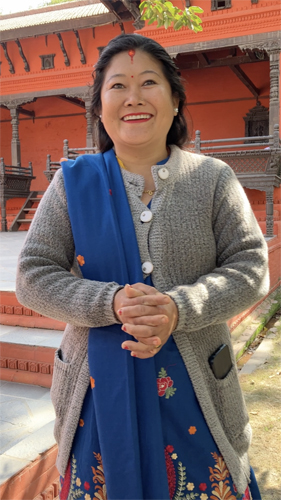
Sapana Shahi (A returnee from Cyprus)
She realises that work-related skills are a vital element that must be learnt by every prospective migrant before their departure. In addition, they must know about the social and cultural aspects of the destination country, and they can do this online while preparing to fly there for a work opportunity. She also emphasises the importance of digital literacy plus the skill to use the Internet. She is now familiar with online payments such as paying the electricity bill plus the children’s education fee and she appreciates the support that she gets from the Internet in her daily life.
Training resources on the safe, wise and secure use of digital tech (freely available)
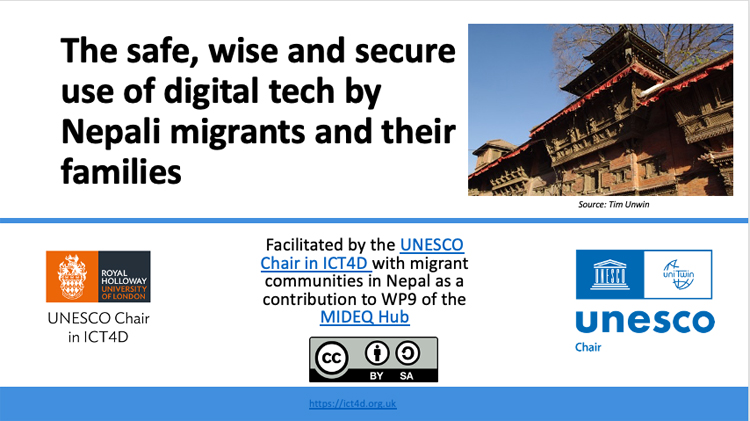
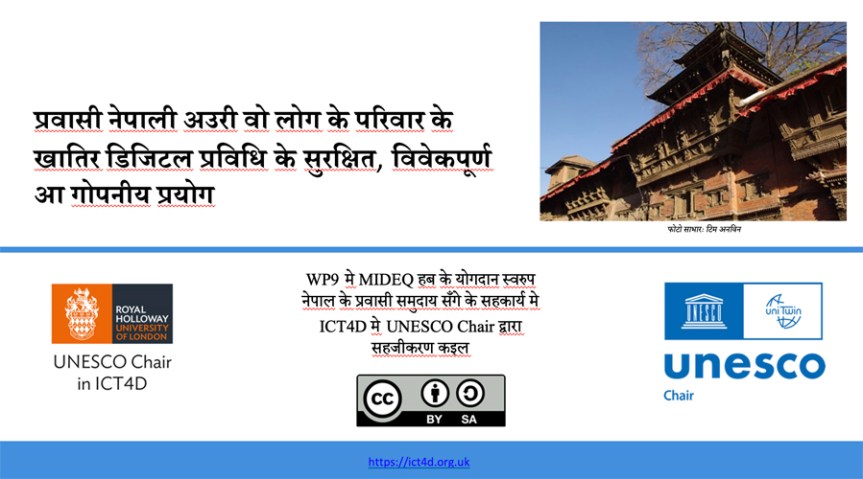
Working together, and drawing on existing good practices globally, we developed a slide-deck in Nepali and English (under CC BY-SA licence) that anyone can use to train migrants in the safe, wise and secure use of digital tech. This was originally designed to be used for training migrants and their families in the centres that they attend prior to departure, but we have also developed a range of other materials (including pamphlets and posters) that draw on these basic principles. Click on the images below to see .pdf versions of the slide decks (or download .pptx files from the links beneath). The deck has now been translated into the six main Nepali languages, Nepali, Maithili, Bhojpuri, Tharu, Tamang and Nepal Bhasa (Newar), alongside English.
The basic training deck

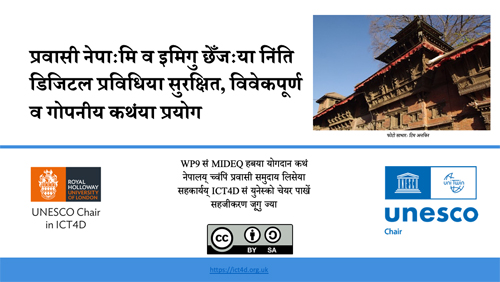


Training deck for those without prior knowledge of digital tech
Following the original development of the training decks, migrants and the migrant organisations with which we were working in Kathmandu and Pokhara suggested that they might be too complicated for migrants without any prior knowledge of digital tech. Working with these migrants, we therefore also developed a more basic version, especially intended for the least tech-savvy migrants and their families. This is now available below in Nepali, Maithili, Bhojpuri, Tharu, Tamang and Nepal Bhasa (Newar), as well as English.

English version (.pptx version)
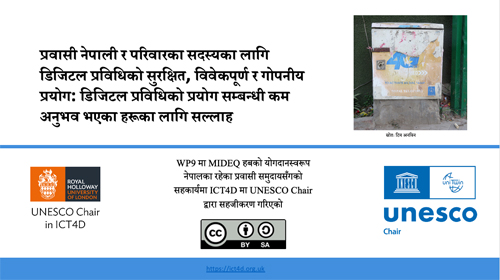
Nepali translation by Nayan Pokhrel (.pptx version)
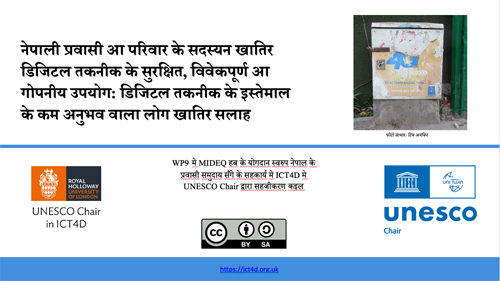


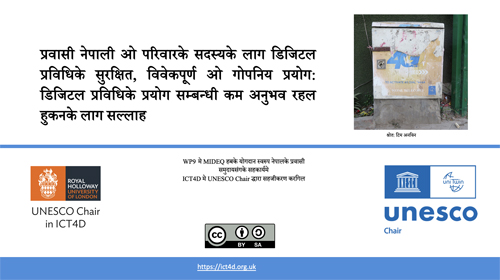
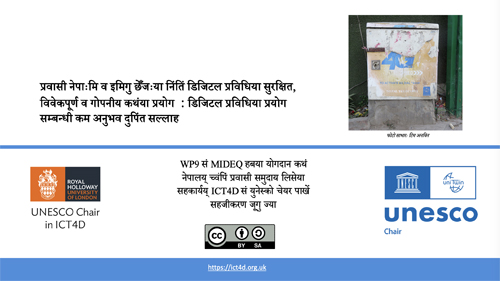
Nepal Bhasa (.pptx)
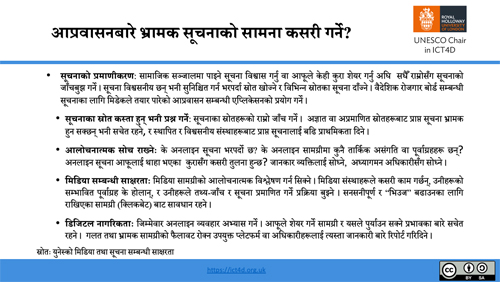
Additional slides that can be added in to the deck
The above slide decks were originally designed as a basic template that could have material added to them, and so that they could be readily reversioned to suit the needs of the groups who wished to use and develop them. We are very grateful to our colleagues in UNESCO Nepal who prepared this slide (in English and Nepali) on combatting misinformation.

Guidance for the use of the training decks
We also developed a 12 page set of guidance notes (in English and in Nepali) on how to use these training decks so that trainers and other users can revise them to suit the needs of different audiences. The guidelines focus on the following main general issues:
- Timing and numbers of participants
- Localising and adapting the slide decks.
- Key messages
- Preparation
- Style of presentation
- Managing discussions and questions
- Using printed versions of the slide decks
- The value of repetition
- Links to the Nepali migrant platform (https://pardesi.org.np)
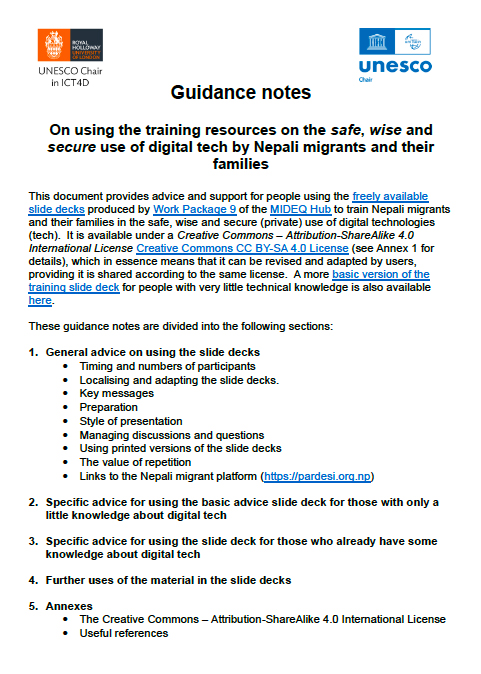
They also provide detailed suggestions for ways to get the best out of both the basic training deck and the more advanced
Tips on the safe, wise and secure use of digital tech
Workshops in Lalitpur in advance of the formal launch of the portal and the training resources on 10th December 2023, provided an opportunity for migrants, representatives of migrant organisations, and young people from the local tech community to share their thoughts on the safe, wise and secure use of digital tech. These tips draw on some of the advice given in our training resources, and are intended to provide short summaries about what they consider to be the most importangt issues that migrants need to remember.








Feedback from the organisations with which we worked during our MIDEQ research-practice in Nepal
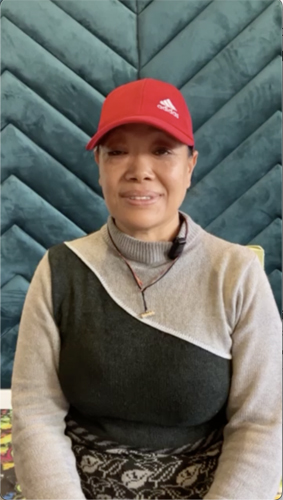
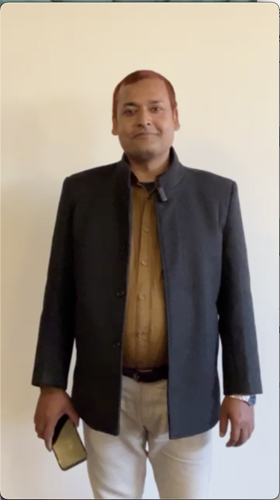
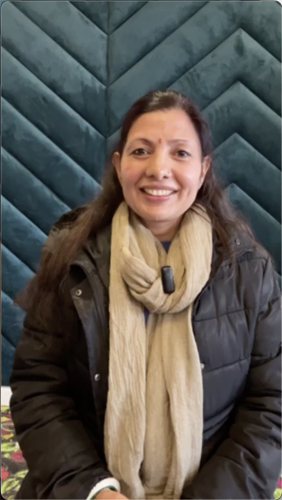
Having in place an effective monitoring and evaluation strategy is an important part of our work, and we consider that qualitative feedback is particularly important. Click on the images or use the links below to hear about our working processes from some of the organisations involved in designing and implementing the interventions.
Videos from participants in our migrant workshops
During our workshops in January and February 2023 we took the opportunity to interview and record videos of some of the comments made by migrants and the representatives of organisations with which we were working.

Ayush Pradhananga (AuraEd) https://bit.ly/UNESCOICT4D-r-N4
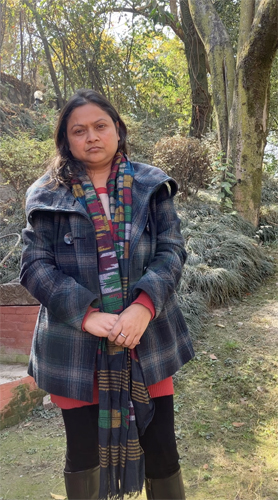
Sindhu Aryal (Pourakhi) https://bit.ly/UNESCOICT4D-r-N5
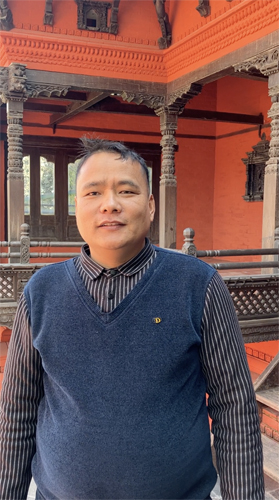
Aviman Singh Lama (Pravasi Nepali Coordination Committee) https://bit.ly/UNESCOICT4D-r-N6
Further feedback from returned migrants who participated in these workshops included:
The discussion was interactive. I really liked that. Everybody present here is working towards the betterment of migrants; they are working towards the safe and secure migrant, which is great
Translated feedback from a returned migrant participating in the workshop on 28-29 January 2023
Overall, I enjoyed the two-day workshop. If I have to select one aspect about it, definitely I learnt more things about safe and wise use of the digital technology. The learning has become very fruitful for me, and I am planning to share it with others as well.
Translated feedback from a returned migrant participating in the workshop on 28-29 January 2023
Feedback on pardesi.org and on working with us
Subsequently, during December 2023 we recorded further feedback videos about the pardesi.org.np portal, and their experiences of working with our team. Click on the images below to link to the videos.
Why https://pardesi.org.np is important

On working with our MIDEQ workpackage



Our MIDEQ work is licensed under a Creative Commons – Attribution-ShareAlike CC BY-SA 4.0 International License https://creativecommons.org/licenses/by-sa/4.0/
It was funded by the UKRI’s GCRF initiative

Blog posts about our research-practice in Nepal
The following blog posts about our research practice in Nepal provide further information on particular activities we have undertaken there since 2019.
- Hari Harindranath and Tim Unwin receive “Best Collaborative and Innovation Research Project” award, 21 June 2025
- Enhancing research-practice impact and outcomes in Nepal, 28 January 2025
- Workshop/seminar on cybersecurity for community radio journalists in Nepal, 25 July 2024
- Further new material for migrants shared in Nepal through our partners ACORAB and CIN, 1 March 2024
- Our work on safe, wise and secure use of digital tech in Nepal now reaching thousands of people, 14 February 2024
- Exciting new partnership with ACORAB and CIN, Nepal, 25 January 2024
- Launch of MIDEQ WP9 interventions in Nepal, 10 December 2024
- Research-practice update: Nepal, July 2023, 1 August 2023
- Helping migrants from Nepal and their families to benefit from safe, wise and secure use of digital tech, 16 February 2023
- New partnership agreement with Gandaki University, Pokhara, Nepal, 7 Februarty 2023
- How and why do migrants use digital tech? Evidence from Malaysia, Nepal and South Africa, 4 February 2022
- Uses of digital technologies by Nepali migrants and their families, 9 August 2021
- Use of digital tech by Nepali migrants in Malaysia, 19 July 2021
Page created 26 September 2025
Latest revision 30 September 2025
 ICT4D Collective