The ICT4D Collective at the WSIS Annual Forum 2026

The ICT4D Collective and its members are taking an active role in this year’s WSIS Forum as we have done ever since the first WSIS summits in Geneva in 2003 and Tunis in 2005. If you are in Geneva then, do please join the sessions in which we will be involved, visit our stand in the Exhibition, or meet us for a drink in one of our favourite hostelries!


WSIS 2026 Exhibition, 8th-9th July

The ICT4D Collective has a stand in the small exhibition area on 8th and 9th July (although sadly our specially prepared banners have been banned!). This is only the second time that we have participated in the exhibition, and Prof G. ‘Hari’ Harindrath and Tim Unwin will be present at the stand for much of the time when they are not involved in sessions. Other members of the Collective will also be there at vsrious times during WSIS. Find out more about our research and practice at the stand, take away some of our resources (especially those prepared on safe wise and secure use of digital tech jointly developed with our colleagues in the LBT community in Rio de Janeiro), read some of our working papers (and take them away on the evening of 9th), buy a copy of Digital Inclusion in an Unequal World: An Emancipatory Manifesto at a 30% discount (first come first served) or get a 20% discount voucher.


Session: Digital Inclusion in an Unequal World, 6th July

Join the ICT4D Collective’s session on Monday 6th July from 16.00-16.45 in Room L1 Montbrillant for a lively discussion about what we all need to do if the poorest and most marginalised are indeed to benefit from, rather than being enslaved through, the use of digital tech. See the great speakers lined up below!
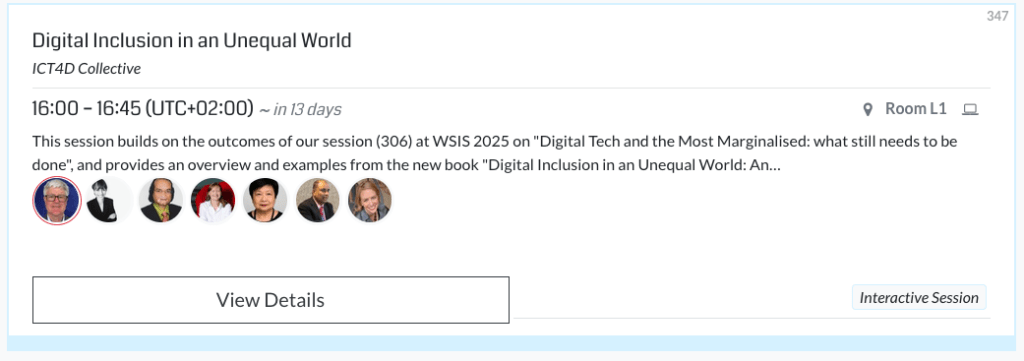

Session: The future of education and research in the AI era: equipping young people for tomorrow

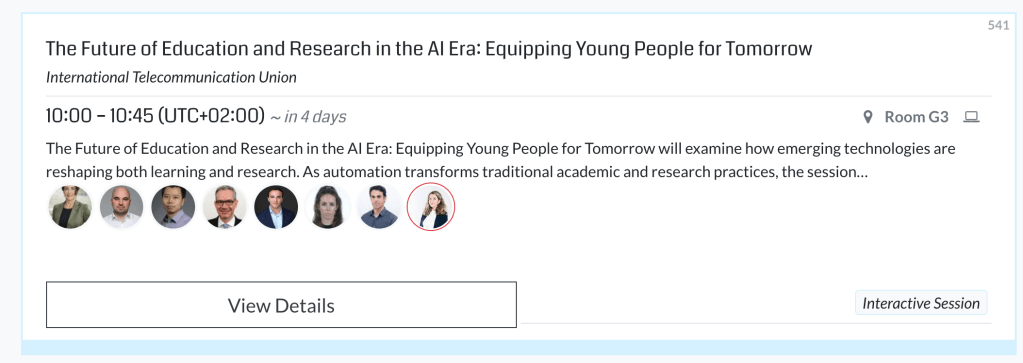
Tim Unwin is a panellist in Session 541 being convened by the ITU from 10.00-10.45 on Tuesday 7th July in Room G3, ITU Varembé.

Session: AI Empowerment for Older People from a Gender Mainstreaming Perspective, 7th July

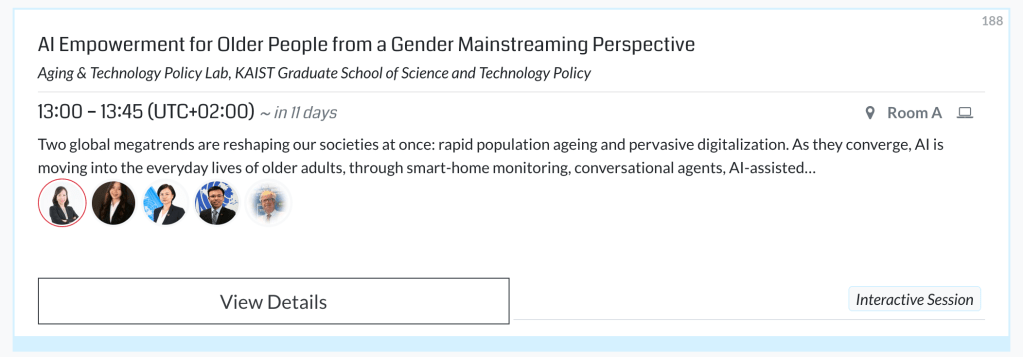
Tim Unwin is a panellist in Session 188 being convened by the Aging & Technology Policy Lab, KAIST Graduate School of Science and Technology Policy (South Korea), from 13.00-13.45 on Tuesday 7th July in Room A, ITU Tower Building.

Session: Connecting the Unconnected in the field of Education Excellence, Cyber Security & Rural Solutions and Women Empowerment in ICT, 7th July

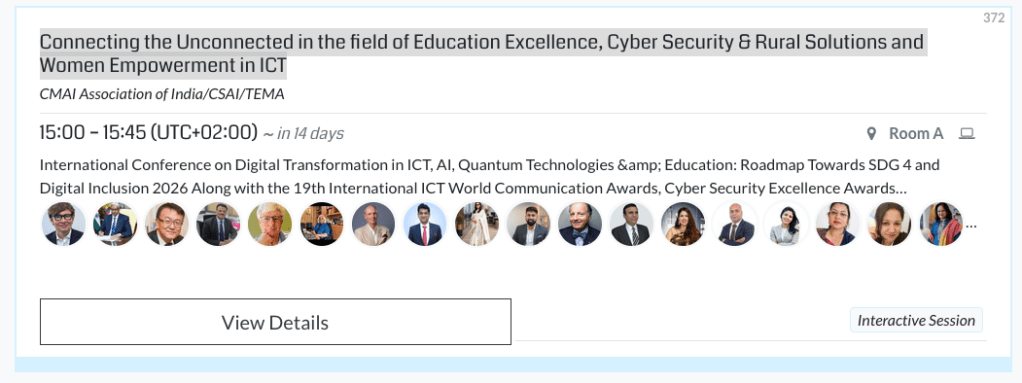
Members of the Collective will be participating in this session being convened by Prof. N.K. Goyal from the CMAI Association of India, along with CSAI and TEMA in Room A on Tuesday 7th Juk from 15.00-15.45. As in previous years, Tim Unwin will have the enjoyable but challenging task of moderating a very full session of Indian speakers.

Session: Foresight for FAIR Cities – Exploring AI Risks and Mitigation Strategies, 9th July

This important session in Room B Palexpo from 16.00-16.45 on Thursday 9th July is being convened by UNU-EGOV to address some of the risks of AI and strategies that can be put in place to mitigate them in the context of their project on “FAIR Cities: Foster AI for Inclusive and Responsible Cities“. Tim Unwin has been invited to be a speaker.

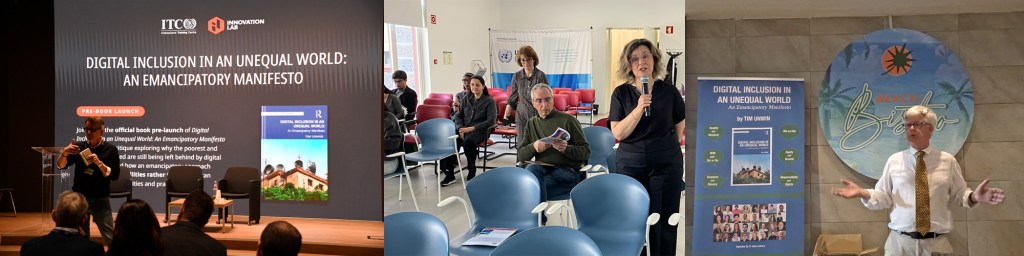
Celebrating the publication of Digital Inclusion in an Unequal World: An Emancipatory Manifesto

Following successful pre-launch and launch events for Tim Unwin’s latest book at the ITCILO in Turin (Italy), at UNU-GOV’s headquarters in Guimarães (Portugal), and during eLearning Africa in Accra (Ghana) several of the authors are going to be present during WSIS including Benita Rowe, G. ‘Hari’ Harindranath, Mei Lin Fung, Revi Sterling, and Yuliya Morenets and will be talking about during and after our session on 6th July. A small number of signed copies of the book will also be available at the >30% discounted price (of £25, CHF 28, €30, US$35) during the session and at our Exhibition stand. We may well also celebrate together at a local hostelry (probably Les Brasseurs) on the evening of 6th July.

Partner2Connect session at AI for Good

The ITU’s Partner2Connect initiative is convening a session on Building the future we want: scaling inclusive AI solutions through collaboration on 9th July from 14.00-15.00 during the AI for Good Summit and Tim Unwin has been asked to moderate the session on “Children, Youth, and Online Protection”. This should be an exciting and highly interactive “engagement”.
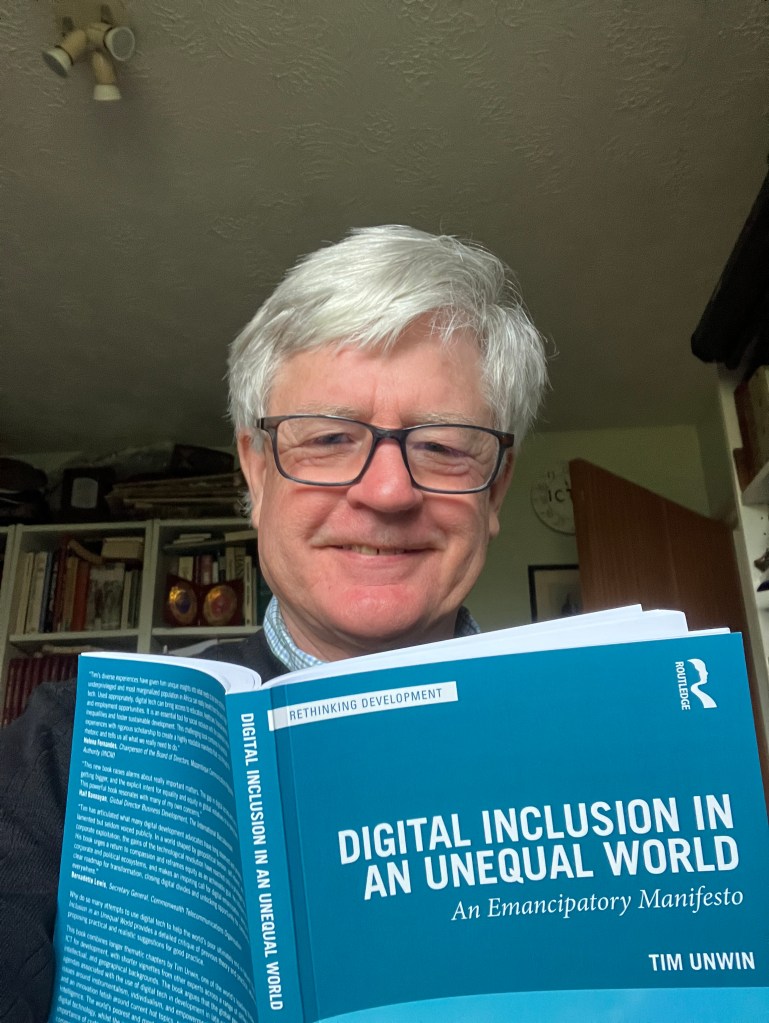
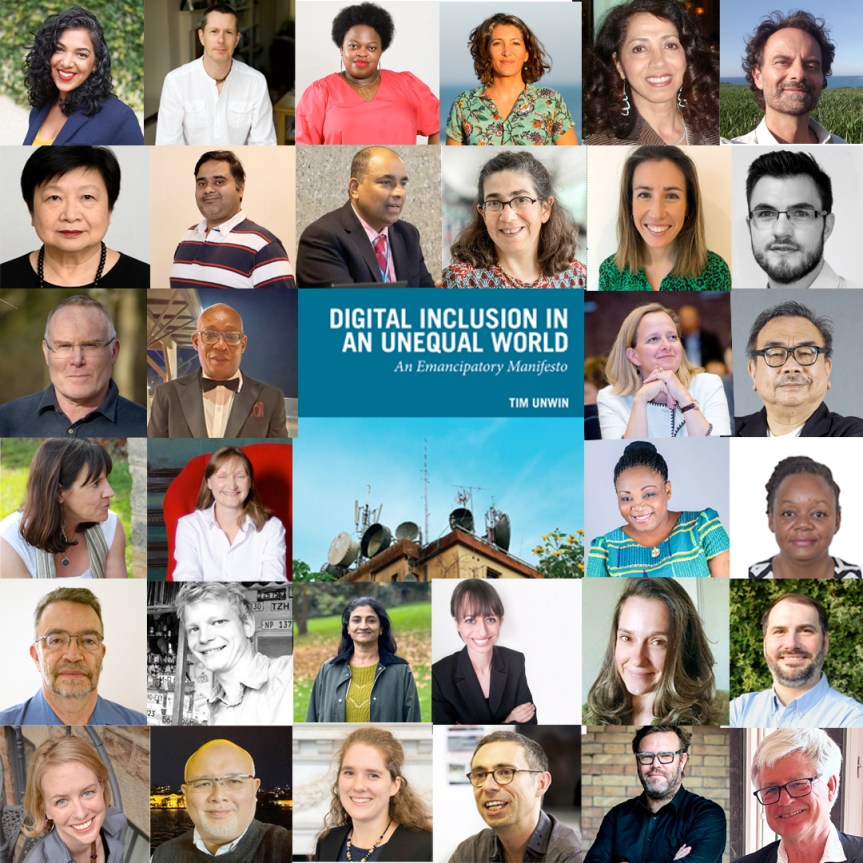
Digital Inclusion in an Unequal World: An Emancipatory Manifesto – officially published today

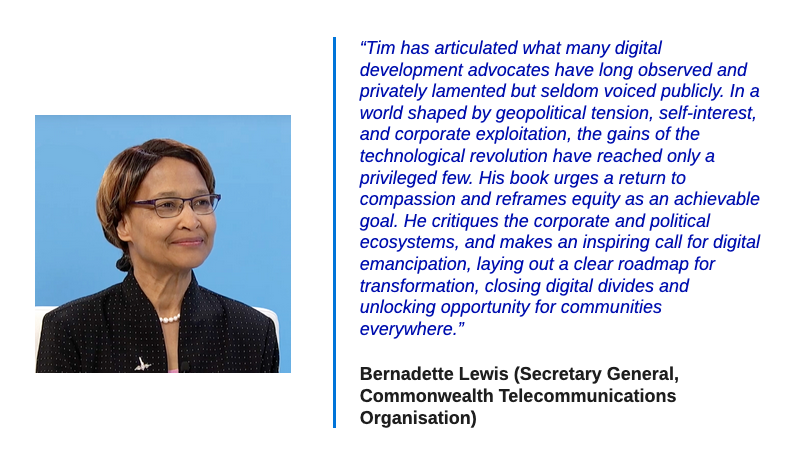
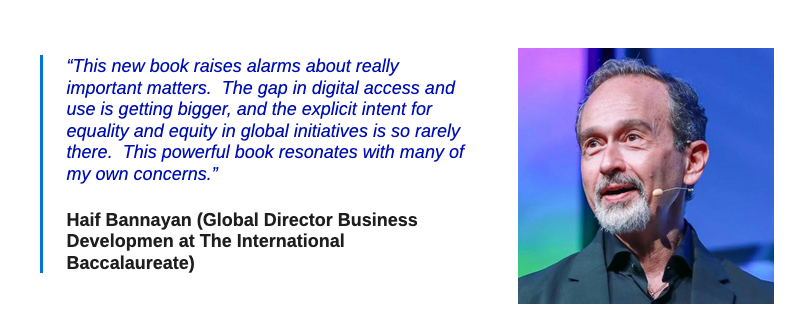
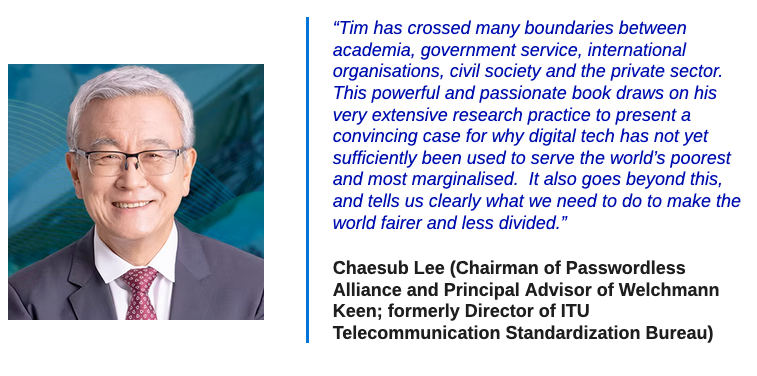
It’s an exciting day: Digital Inclusion in an Unequal World: An Emancipatory Manifesto is officially published today. Find out more at https://ict4d.org.uk/diuw (or http://digital-inclusion.org) – and for a short period get 20% off the recommended price!

Thanks to everyone who made this possible, especially:

  • The 31 authors of the vignettes – listen to them reading their descriptions on our podcast.
  • All those at Routledge who had faith in the book and who helped in its production, especially Helena Hurd, Katerina Lade, Susan Dunsmore (copy-editor), and Jen Hicks (production)
  • Those who read parts of it in draft and provided valuable comments and advice (see the Acknowledgements)
  • And above all those with whom I have worked over the last 50 years and inspired my to write the book!

Upcoming launch events

I’m delighted to share the news that we will be having a series of launch events and discussions around the themes of the book in different locations around the world, including

  • April 20th: at UNU-EGOV in Guimarães, Portugal
  • June (precise date to be confirmed, but between 1st and 6th): Accra, Ghana
  • July (c.6th-8th): coinciding with WSIS Annual Forum and AIforGood (or Bad)
  • December (7th or 8th): Kuala Lumpur
  • London – dates to be confirmed
  • Kathmandu, Nepal – date to be confirmed

At these events copies of the book will be available with a 30% discount.

Links

To find out more about the book, do explore the links below:

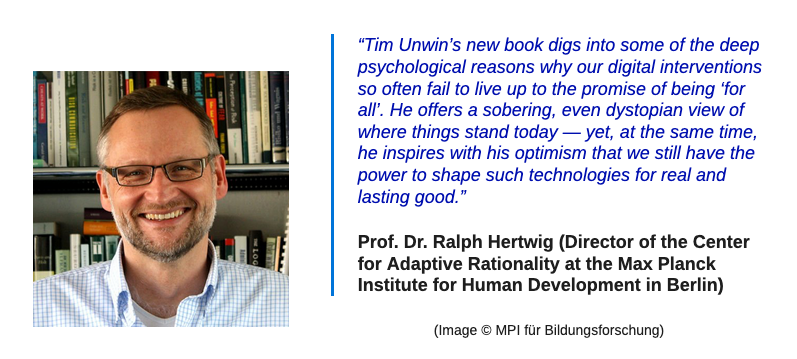
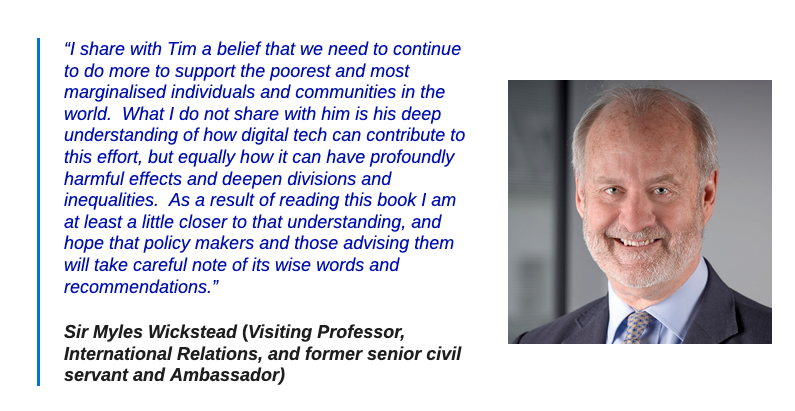
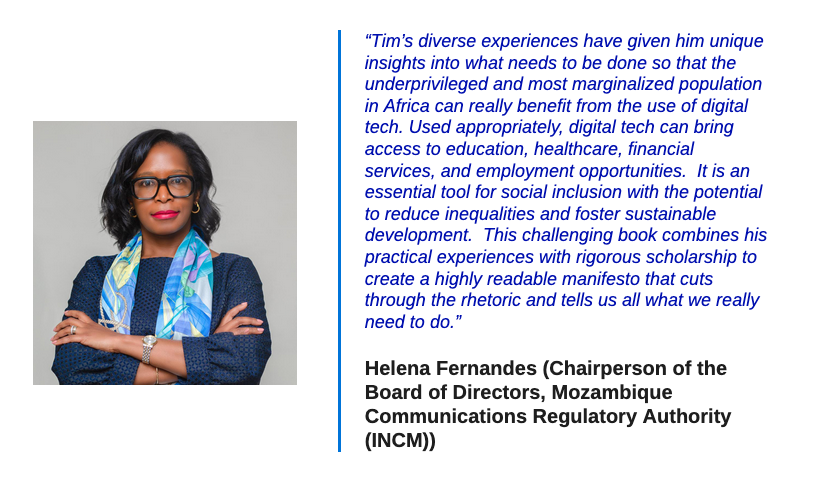
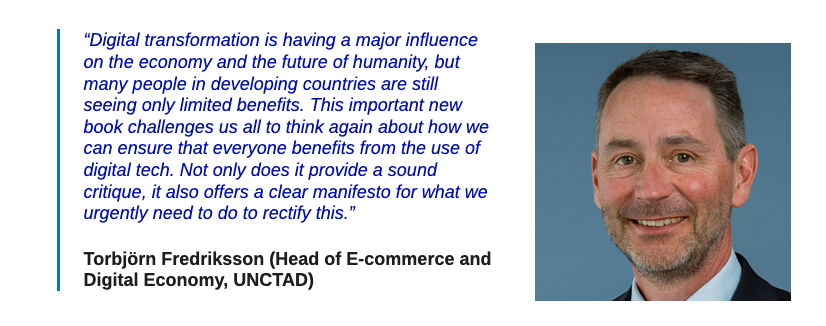
Read what people are saying about the book

FraudBoom: twenty years of lawbreaking, abuses and censorship by the world’s most popular social media

Facebook (FB) was founded in 2004, and more than twenty years later it is time to take stock. More than three billion active users seem to provide evidence of its undisputed global ‘success’. It is a tool that has changed the lives of many people, but is not easy to say whether this has been for better or for worse. In the meanwhile, it seems that we can no longer do without FB or any of Zuckerberg’s other tools, such as Instagram or WhatsApp. Every now and then, the media talks about the psychological and cognitive damage caused by social media, especially among young people. Sometimes they also talk about the misuse of our data, but these are phenomena that are not very visible and difficult to quantify. Despite dozens of books, investigations, academic research, and even films denouncing the abuses of FB (and the whirlwind career of its founder) could fill up entire libraries and websites, most people seem largely uninterested in its harms.

In an attempt to raise users’ awareness, we started to review the political, economic, social, cognitive, ethical, and privacy costs of this addiction. We selected around fifty of the best-known and verifiable categories of event documented in the media between 2007 and 2025, and these are listed here. These range from the illegal use of user data to its deliberate manipulation for commercial and political purposes, from the exploitation of workers in the global south (click farms) to collaboration with authoritarian governments, from million-dollar fines to silencing the voices of Palestinians in Gaza. All events and allegations are known to an audience of experts and insiders but seeing it all together gives us an idea of the temporal dimensions and the extent of those misdeeds. Our work is a preliminary and non-exhaustive “catalogue of horrors” that will form part of a data base project starting in Spring 2026 in the Digital Humanities laboratory at the Department of Humanities of the University of Roma Tre. If you think that we have missed some important Zuckerberg-related abuses or misdeeds, please do contact the authors at domenico.fiormonte@uniroma3.it .

Among the questions I would like to ask in the workshop, there is one that I know will be particularly unpopular with students: isn’t it time to abandon Zuckerberg and the GAFAM empire (which is also an inherent part of the genocide economy)? Abandoning these platforms is part of a necessary and urgent process of epistemic decolonization. The first step in this direction is to counter the narrative that “there are no alternatives”, when in fact there are now more and more, such as those listed by llaborda.org. Software that is free or at least not programmed to extract data and personal lives from individuals has always been available, but its adoption requires, in Gramscian terms, a new consciousness followed by an adequate literacy.

We must develop awareness and mastery of a system of signs in which languages and media, programs and devices, software and hardware constitute the frameworks of thought and knowledge. The second step is to rediscover (and defend) the web as a protocol and open space for cultural diversity, uncensored communication and sharing, in contrast to the cages of commercial platforms and corresponding apps as standardized models of thought and global surveillance. In short, it is up to us to become active and aware digital literates, rejecting a digital world that has been disfigured by Big Tech deception, misrepresentation, and exploitation. The battle for freedom of expression, for the right to the exclusive use of our digital corpus, and for the creative and conscious use of the internet is still ongoing. However, given the increasingly widespread weaponization of digital spaces—as demonstrated by the EU Council substantial approval of Chat Control—we cannot completely rule out the possibility of a gradual DigitalExit. Perhaps, in the not-so-distant future, disconnecting from the internet will be the only way to save it.

Authors: Domenico Fiormonte and Kassandra Wilhelm

4 December 2024