
The ICT4D Collective and its members are taking an active role in this year’s WSIS Forum as we have done ever since the first WSIS summits in Geneva in 2003 and Tunis in 2005. If you are in Geneva then, do please join the sessions in which we will be involved, visit our stand in the Exhibition, or meet us for a drink in one of our favourite hostelries!
WSIS 2026 Exhibition, 8th-9th July
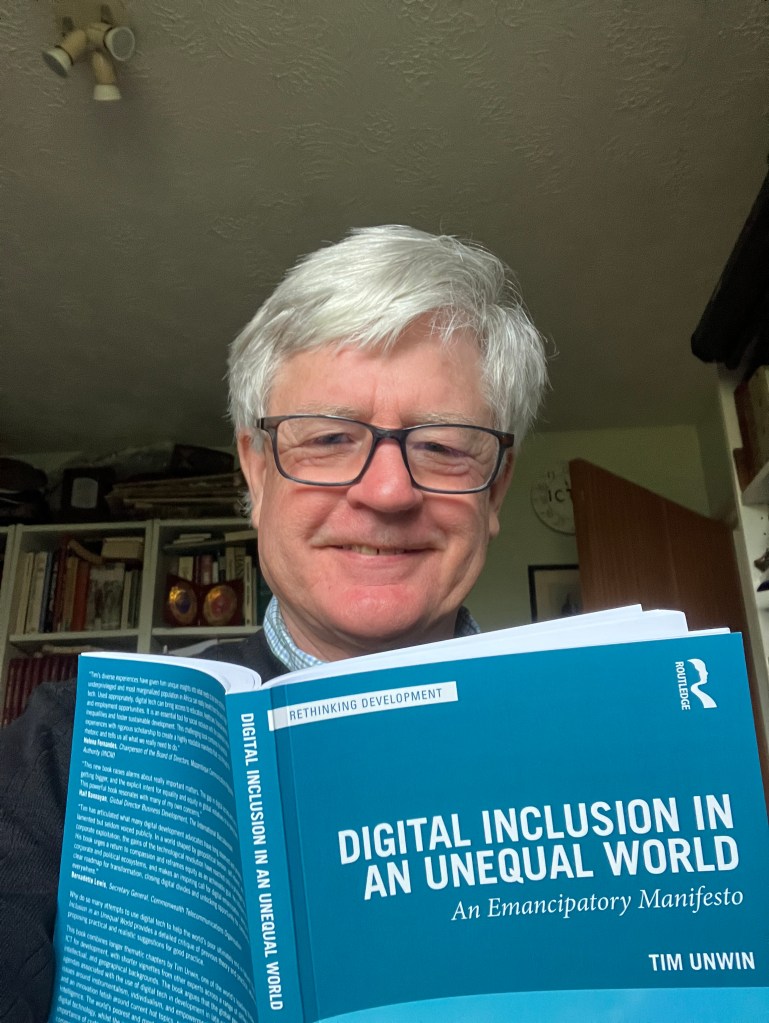
The ICT4D Collective has a stand in the small exhibition area on 8th and 9th July (although sadly our specially prepared banners have been banned!). This is only the second time that we have participated in the exhibition, and Prof G. ‘Hari’ Harindrath and Tim Unwin will be present at the stand for much of the time when they are not involved in sessions. Other members of the Collective will also be there at vsrious times during WSIS. Find out more about our research and practice at the stand, take away some of our resources (especially those prepared on safe wise and secure use of digital tech jointly developed with our colleagues in the LBT community in Rio de Janeiro), read some of our working papers (and take them away on the evening of 9th), buy a copy of Digital Inclusion in an Unequal World: An Emancipatory Manifesto at a 30% discount (first come first served) or get a 20% discount voucher.
Session: Digital Inclusion in an Unequal World, 6th July
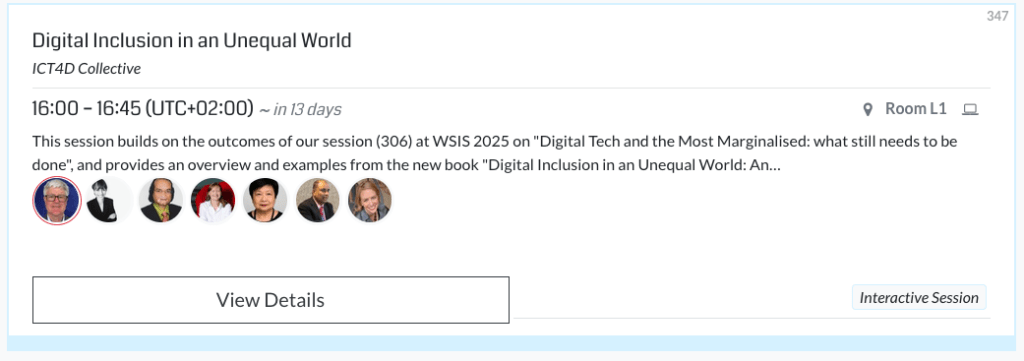
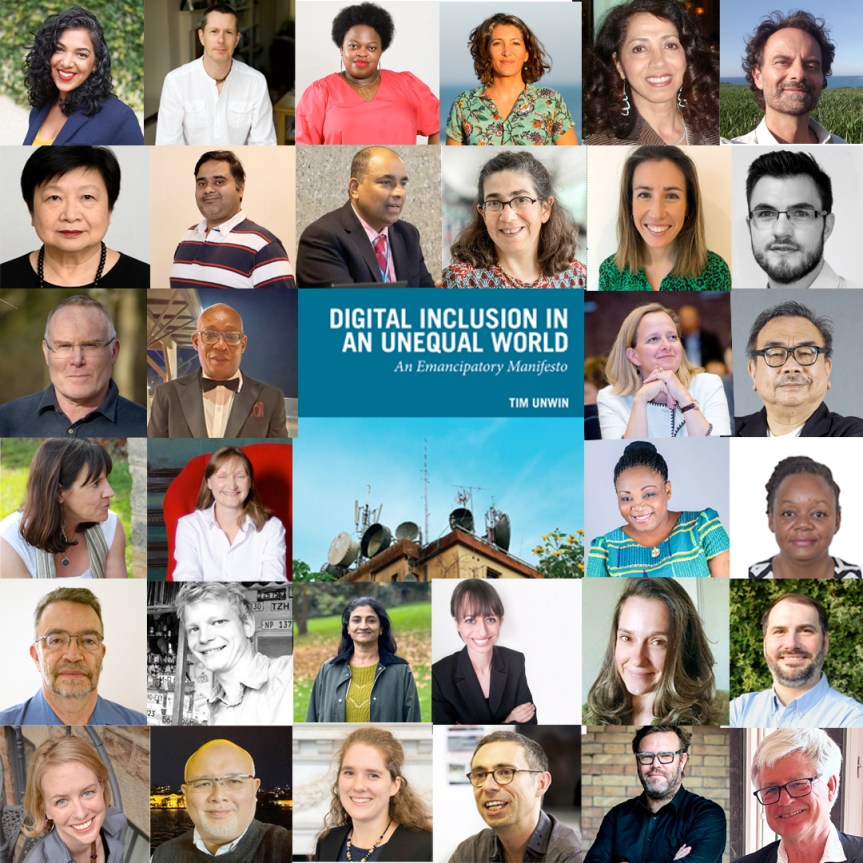
Join the ICT4D Collective’s session on Monday 6th July from 16.00-16.45 in Room L1 Montbrillant for a lively discussion about what we all need to do if the poorest and most marginalised are indeed to benefit from, rather than being enslaved through, the use of digital tech. See the great speakers lined up below!
Session: The future of education and research in the AI era: equipping young people for tomorrow
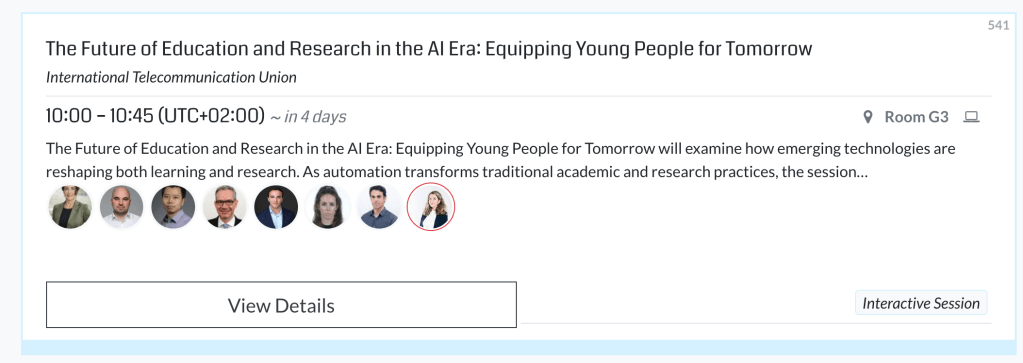
Tim Unwin is a panellist in Session 541 being convened by the ITU from 10.00-10.45 on Tuesday 7th July in Room G3, ITU Varembé.
Session: AI Empowerment for Older People from a Gender Mainstreaming Perspective, 7th July
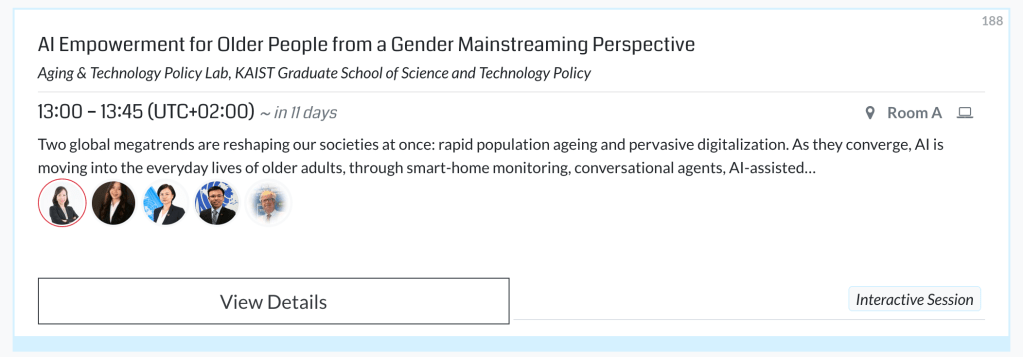
Tim Unwin is a panellist in Session 188 being convened by the Aging & Technology Policy Lab, KAIST Graduate School of Science and Technology Policy (South Korea), from 13.00-13.45 on Tuesday 7th July in Room A, ITU Tower Building.
Session: Connecting the Unconnected in the field of Education Excellence, Cyber Security & Rural Solutions and Women Empowerment in ICT, 7th July
Members of the Collective will be participating in this session being convened by Prof. N.K. Goyal from the CMAI Association of India, along with CSAI and TEMA in Room A on Tuesday 7th Juk from 15.00-15.45. As in previous years, Tim Unwin will have the enjoyable but challenging task of moderating a very full session of Indian speakers.
Session: Foresight for FAIR Cities – Exploring AI Risks and Mitigation Strategies, 9th July
This important session in Room B Palexpo from 16.00-16.45 on Thursday 9th July is being convened by UNU-EGOV to address some of the risks of AI and strategies that can be put in place to mitigate them in the context of their project on “FAIR Cities: Foster AI for Inclusive and Responsible Cities“. Tim Unwin has been invited to be a speaker.
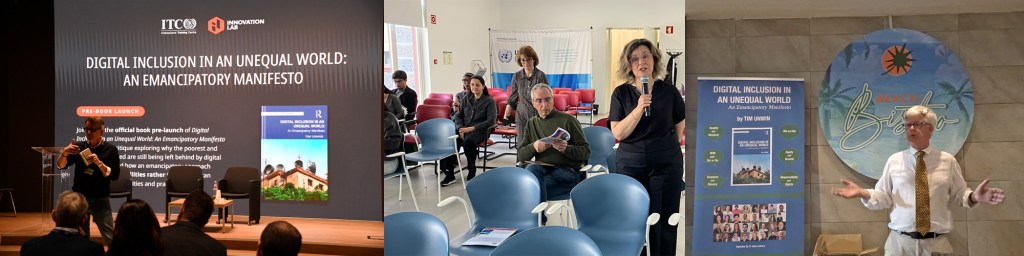
Celebrating the publication of Digital Inclusion in an Unequal World: An Emancipatory Manifesto
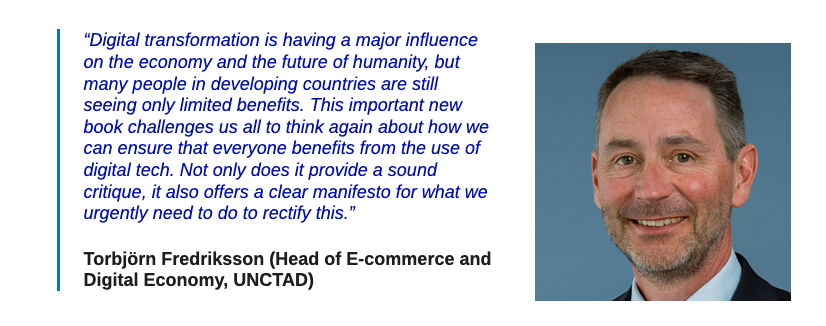
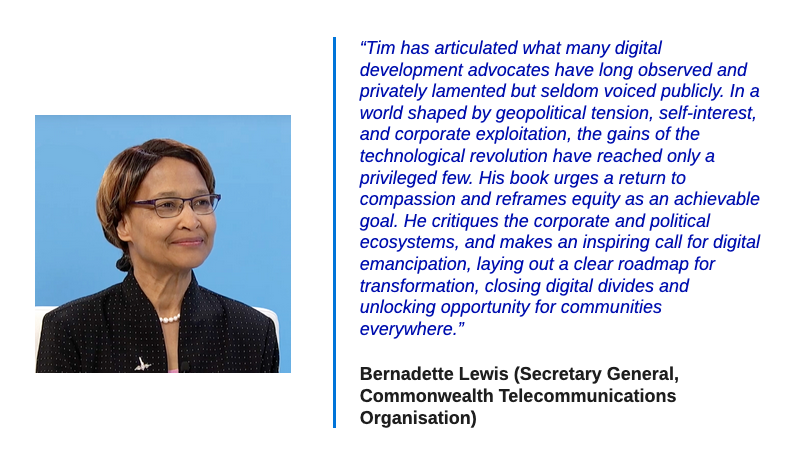
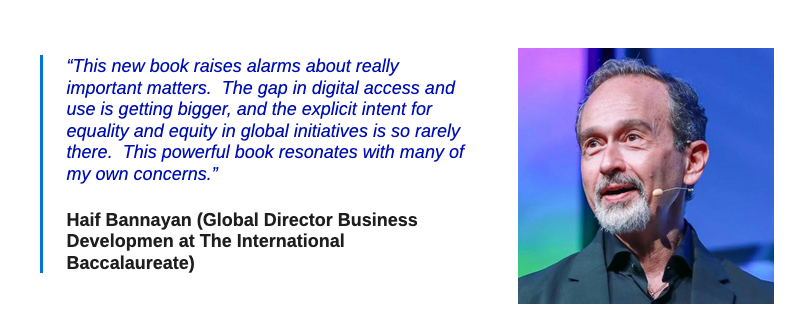
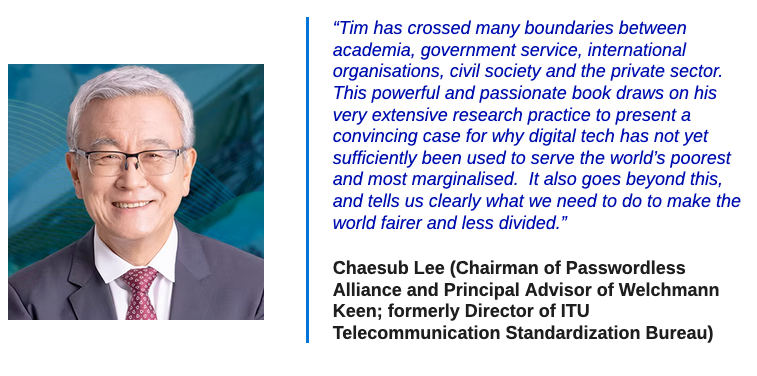
Following successful pre-launch and launch events for Tim Unwin’s latest book at the ITCILO in Turin (Italy), at UNU-GOV’s headquarters in Guimarães (Portugal), and during eLearning Africa in Accra (Ghana) several of the authors are going to be present during WSIS including Benita Rowe, G. ‘Hari’ Harindranath, Mei Lin Fung, Revi Sterling, and Yuliya Morenets and will be talking about during and after our session on 6th July. A small number of signed copies of the book will also be available at the >30% discounted price (of £25, CHF 28, €30, US$35) during the session and at our Exhibition stand. We may well also celebrate together at a local hostelry (probably Les Brasseurs) on the evening of 6th July.
Partner2Connect session at AI for Good
The ITU’s Partner2Connect initiative is convening a session on Building the future we want: scaling inclusive AI solutions through collaboration on 9th July from 14.00-15.00 during the AI for Good Summit and Tim Unwin has been asked to moderate the session on “Children, Youth, and Online Protection”. This should be an exciting and highly interactive “engagement”.

 een a very active member of the Young Women Writers Forum, and had recently passed away battling Multiple Sclerosis. The Forum did not have any funding available and so they contacted Sightsavers with whom they had an existing MoU to help and support Blind Women Writers in Pakistan. The first “award” (but not in a physical sense) was a small gathering of like minded people who supported the cause of empowering women and overall inclusion more generally. As the years passed by this gathering which always took place around the 15th of October began a regular feature to honour visually impaired people who had done substantial work within the community. For the last 3-4 years they have also sought nominations from the wider community to include sighted people working for the service of visually impaired people.
 Akber writes “I am deeply humbled and thankful to my vision impaired friends who recommended my name for this award. This is very special for me as it links me to the memory of the late Saima Ammar. She was a symbol of activism and defiance; she is someone who fought the cause for access to education for people with disabilities in Pakistan. She is someone who did not let blindness be a burden on her life, but rather used it as a motivation. She did not lead a very comfortable and luxurious life herse
 Members of the UNESCO Chair in ICT4D and our colleagues at the Inter-Islamic Network on Information Technology (
 Tim Unwin, our Chairholder of the UNESCO Chair in ICT4D, was recently in Macau and Shenzhen, China, in his role as a member of the Advisory Board of the
  Members of the UNESCO Chair in ICT4D were delighted to work with colleagues from UN ESCAP and INIT (The Inter-Islamic Network on IT) to moderate an expert meeting on inclusion and technology on 30th August 2018 on the margins of the ESCAP
 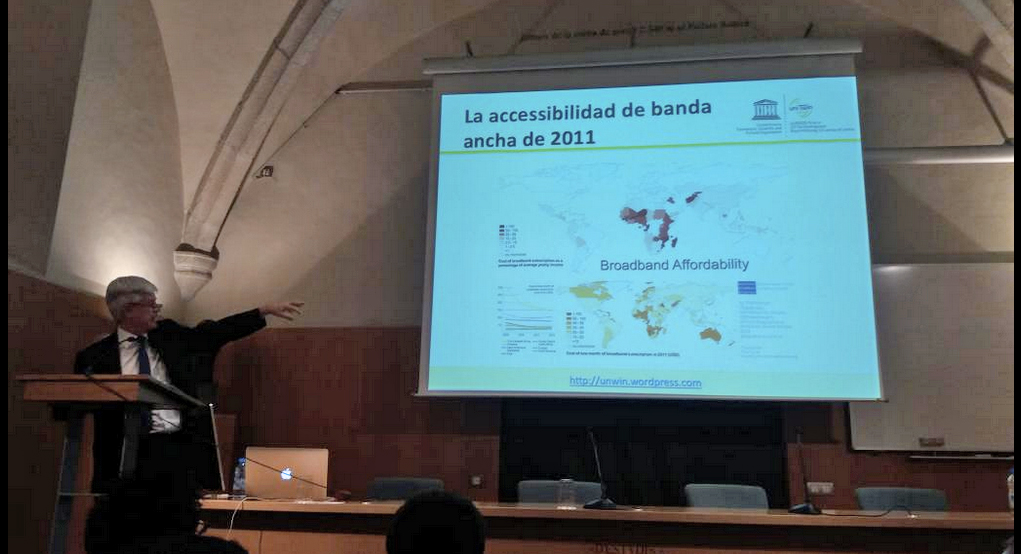 This was an opportunity for me to explore the relevance to the European context of some of my ideas about ICTs and inequality gleaned from research and practice in Africa and Asia. In essence, my argument was that we need to balance the economic growth agenda with much greater focus on using ICTs to reduce inequalities if we are truly to use ICTs to support greater European integration. To do this, I concluded by suggesting that we need to concentrate on seven key actions:
