MoU signed with CIUEM, Mozambique

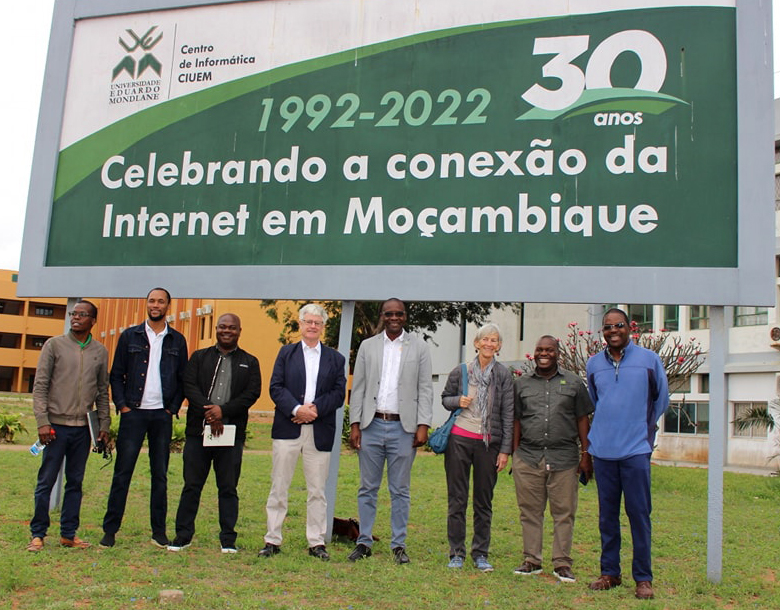
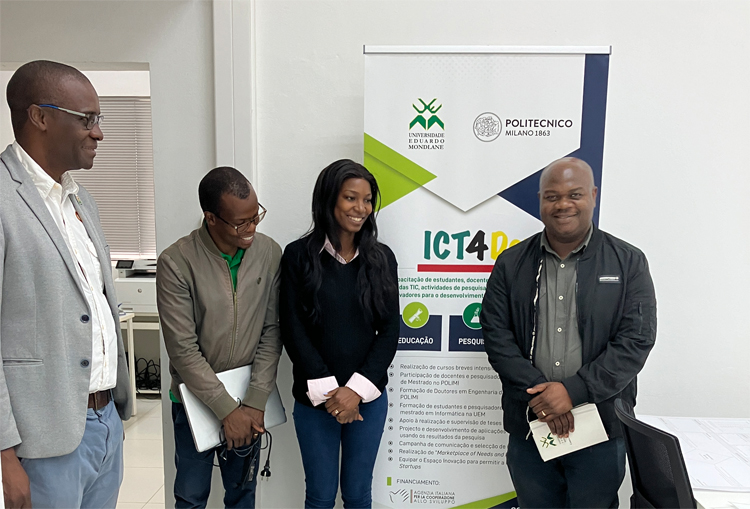
Professor Luis Neves Domingos and Tim Unwin signing a partnership Memorandum of Understanding between the Centro de Informática da Universidade Eduardo Mondlane (CIUEM), Mozambique, and the ICT4D Collective on Monday 30th September 2024 in Maputo.
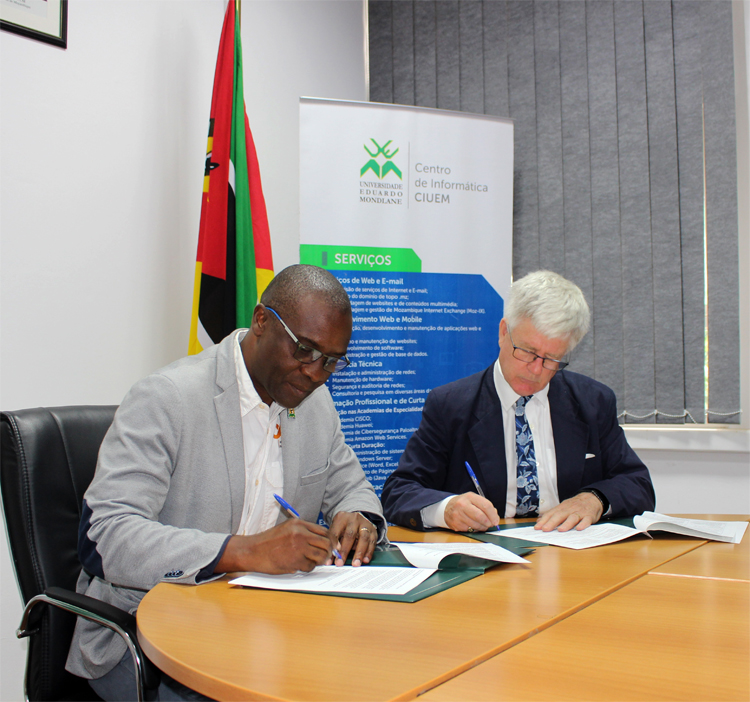
The ICT4D Collective is delighted to have signed its latest partnership agreement with the Centro de Informática da Universidade Eduardo Mondlane (CIUEM) at Eduardo Mondlane University in Maputo. This agreement builds on collaboration between the two organisations over more than 20 years, which began during the UK Government’s Imfundo initiative, and was then taken further through the Africa ICT4D university network that was funded by the UK’s Development Partnerships for Higher Education (DelPHE) scheme supported by DFID and the British Council, and subsequently by European EDULINK funding. This agreement has the following main intended outputs:

  • High quality research and practice on digital technologies, inequalities, social change and international development 
  • Joint workshops and conferences to explore aspects of the inter-relationships between digital technologies, inequalities, social change and international development  
  • Research visits and exchanges between partners, especially to enhance the experiences of early career researchers
  • Joint strategic interventions designed to enhance the wise and appropriate use of digital technologies, especially by marginalised communities and individuals
  • Joint research grant applications to relevant funding agencies and research councils
  • Policy recommendations on areas of mutual interests

More specifically, our work together will focus on developing and sharing local language training resources on the safe, wise and secure use of digital tech, and will initially concentrate on disseminating these resources to Community Radio stations through the agency of the Centro de Apoio à Informação e Comunicação Comunitária.
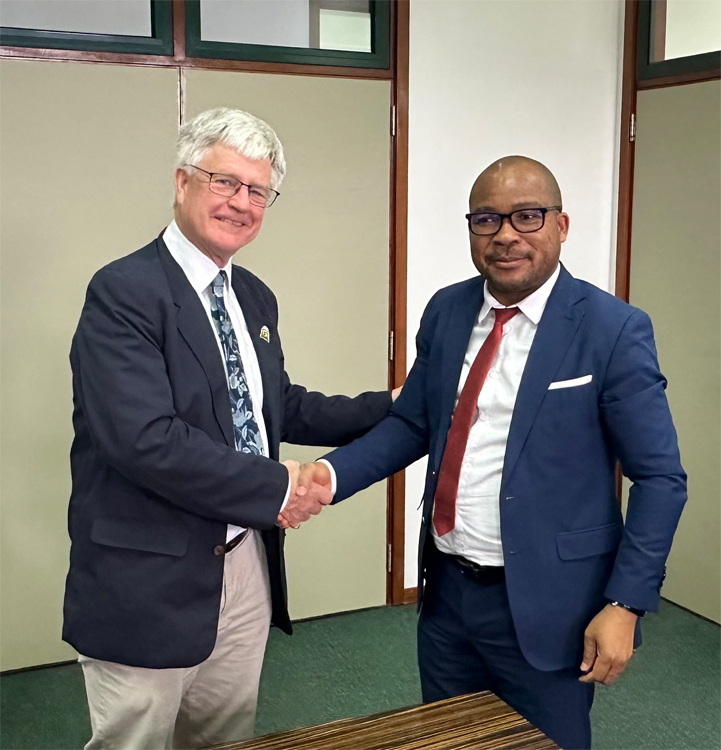
Signing this agreement also provided an opportunity for both Neves and Tim to discuss with the Rector of Eduardo Mondlane University, Prof. Dr. Manuel Guilherme Junior, further ways in which closer collaboration between Mozambican and UK-based researchers and practitioners in the field of digital tech for development can be developed in the interests of some of the poorest and most marginalised people in Mozambique.

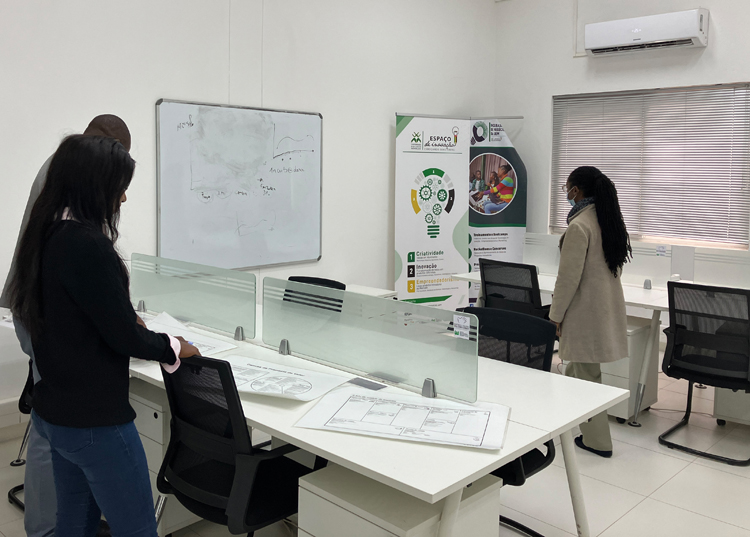
This was also an excellent opportunity to learn more about the CIUEM’s recent achievements, and the exciting new facilities that they are developing, especially in the field of of digital engtrepreneurship and capacity development.

Meeting with colleagues at the UNESCO Office in Kathmandu

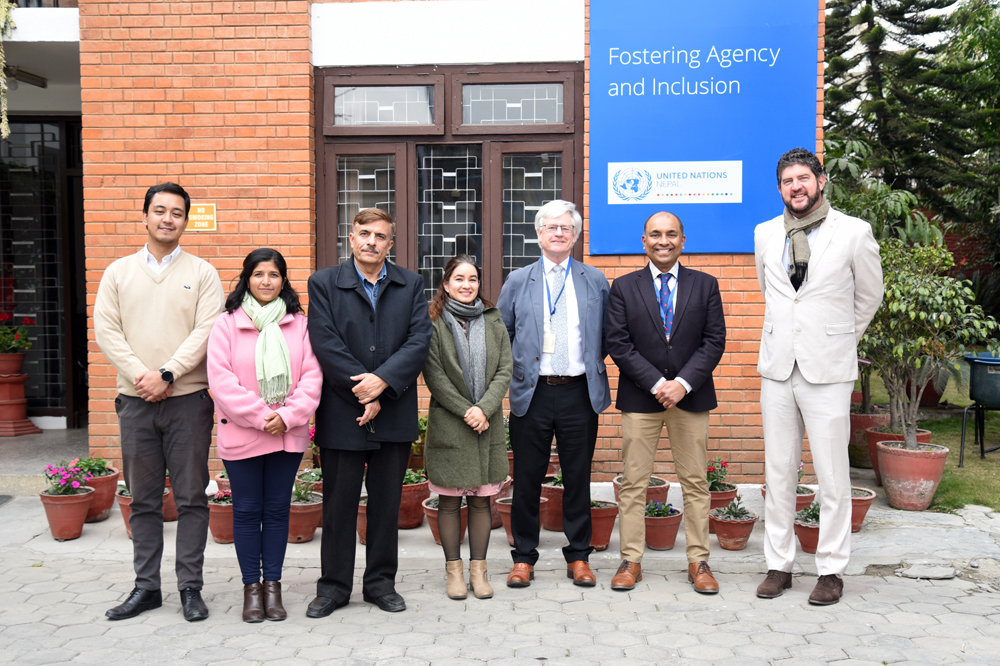
Profs “Hari” Harindranath and Tim Unwin were delighted to visit colleagues at the UNESCO Office in Kathmandu during their recent visit to Nepal (26 January – 5th February) as part of our contribution to the work of the MIDEQ Hub (funded by the UKRI GCRF). This provided an excellent opportunity for them to brief the UNESCO Office team about our MIDEQ-related work in Nepal, and also the wider activities of our UNESCO Chair in ICT4D, including the use of digital tech in education, TEQtogether, and the Digital-Environment System Coalition. It was a real pleasure to learn from Michael Croft (Director) and his team about the various activitites on which the Office focuses, and to discuss ways of collabroating in the future.

We are already building on this visit, and are very grateful to them for their advice on developing training materials and a portal for Nepali migrants and their families to gain information about all aspects of the migration process. This visit was such a good example of how UNESCO Chairs can work closely with UNESCO’s offices around the world to help achieve the organisation’s overall goals. We were made to feel so welcome, and the conversations were full of enthusiasm and passion for how UNESCO and its Chairs can contribute together to support Nepal’s people. We very much hope that other colleagues in our UNESCO Chair as well as our partners will also consider ways through which they too can support the UNESCO Office in Kathmandu.

Launch of the Education for the Most Marginalised Report

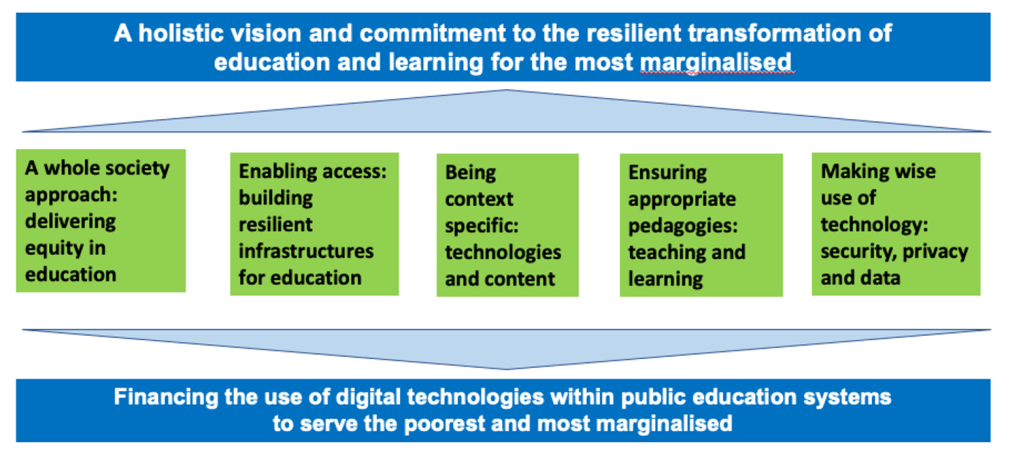
The Report on Education for the Most Marginalised post-COVID-19: Guidance for governments on the use of digital technologies in education, led by the UNESCO Chair in ICT4D and funded by the FCDO and World Bank through the EdTech Hub was officially launched in a 2 hour online gathering on 18th December 2020. More than 350 people had registered for the launch, with some 150 participating at any one time throughout the event.

Speakers included:

  • Michael Trucano (Global Lead for Innovation in Education and Senior Education and Technology Policy Specialist, World Bank)
  • Tim Unwin (Chairholder, UNESCO Chair in ICT4D and Co-Founder of TEQtogether)
  • John Nasasira (Head of Expert National Task Force on Fourth Industrial Revolution, former Government Chief Whip 2011-2013, and Minister of Information and Communication Technology 2013-2016, Uganda)
  • Janet Longmore (Founder and CEO, Digital Opportunity Trust)
  • Caroline Wright (Director General, British Education Suppliers Association): “Technology and Education for the Most Marginalised Post-COVID-19 provides pragmatic, practical and insightful strategies, solutions and supportive practices to help and support Governments and educationalists working to empower learners in the most challenging of circumstances”.
  • Waleed Al Ali (General Co-ordinator Digital School Initiative, Mohammed Bin Rashid Global InitiativesUAE) 

Materials from the launch are available here, including videos of our speakers and more information. Full information about the report is available here.

In translation

We were delighted to announce the following translations of the report’s Executive Summary during the launch:

The full report has also been translated into French as Éduquer les personnes les plus défavorisées après la COVID-19: orientations destinées aux gouvernements sur l’utilisation des technologies numériques by Karen Ferreira-Meyers:

Thanks to all those who participated

Sadly, there were far too many people to capture on a single slide, but we hope this image captures something of the character of the launch:

Draft progamme for the launch of Education for the Most Marginalised

We are excited to release further details of the programme for the launch of the report on Education for the Most Marginalised post-COVID-19: Guidance for governments on the use of digital technologies in education which will be from 2pm-4pm GMT on Friday 18th December. Please register here to receive joining instructions. Further details about the initiative are available here.

  • Opening: Molly Jamieson Eberhardt (Program Director R4D, and Director EdTech Hub)
  • Welcome: Michael Trucano (Global Lead for Innovation in Education and Senior Education and Technology Policy Specialist, World Bank)
  • Introduction to the report: Tim Unwin (Chairholder, UNESCO Chair in ICT4D and Co-Founder of TEQtogether)
  • High-level panel:
  • Video reflections:
    • Amina Umohoza (Digital Opportunity Trust, Youth Leadership Advisory Board, Rwanda; CEO of Saye Company and the Founder of Dukataze)
    • Helen Crompton (Associate Professor Teaching and Learning, Old Dominion University)
  • Insights on the report’s Guidance Notes:
    • Ensuring resilient connectivity: Christopher Yoo (John H. Chestnut Professor of Law, Communication, and Computer and Information Science at the University of Pennsylvania Law School, and the founding director of the Center for Technology, Innovation, and Competition), Leon Gwaka (University of Pennsylvania) and Müge Haseki (University of Pennsylvania)
    • Keeping Safe and Local Context: Azra Naseem (Director, Blended and Digital Learning, Aga Khan University, Pakistan)
    • Small Island States and the importance of sustainable electricity: Javier Rua (former Director of Public Policy for Sunrun; former Chairman, Puerto Rico Telecommunications Regulatory Board)
    • The importance of OER and Creative Commons: Paul West (Senior Education Adviser, West and Associates; and South Africa Chapter Lead, Creative Commons)

The final programme, including any revisions will be available by 16th December.

Speakers will talk for a maximum of 5 minutes each, enabling there to be a lively and forthright discussion afterwards. We welcome all those committed to empowering the poorest and most marginalised through the use of digital technologies in education to join the conversation, and work together to implement the report’s recommendations.

Funded by the FCDO and World Bank through the EdTech Hub.

DFID-funded technology for education Hub Inception Phase consultation retreat hosted at Royal Holloway, University of London

It was great to have hosted the DFID-funded technology for education EdTech Hub three-day Inception Phase consultation retreat from the evening of  29th July through to 1st August at Royal Holloway, University of London.  This brought together some 30 members of the core team, funders and partners from the Overseas Development Institute, the Research for Equitable Access and Learning (REAL) Centre at the University of Cambridge, Brink, Jigsaw Consult, Results for Development, Open Development and Education, AfriLabs, BRAC and eLearning Africa, and the World Bank, as well as members of the Intellectual Leadership Team from across the world, and representation from the Bill and Melinda Gates Foundation.

The meeting was designed to set in motion all of the activities and processes for the Inception Phase of the eight-year Hub, focusing especially on

  • The Hub’s overall vision
  • The work of our three main spheres of activity
    • Research
    • Innovation, and
    • Engagement
  • Our governance structure
  • Our theory of change
  • Our ethical and safeguarding frameworks
  • Our communication strategy, and
  • Our use of Agile and adaptive approaches

The Hub aims to work in partnership to “galvanise a global community in pursuit of catalytic impact, focusing on evidence so we can collectively abandon what does not work and reallocate funding and effort to what does”.  Moreover, it is “committed to using rigorous evidence and innovation to improve the lives of the most marginalised”.

Above all, as the pictures below indicate, this meeting formed an essential part in helping to build the trust and good working relationships that are so essential in ensuring that this initiative, launched in June 2019, will achieve the ambitious goals that it has set.


Members of UNESCO Chair in ICT4D to play leading roles in DFID’s multi-country directorate for research and innovation hub on technology for education

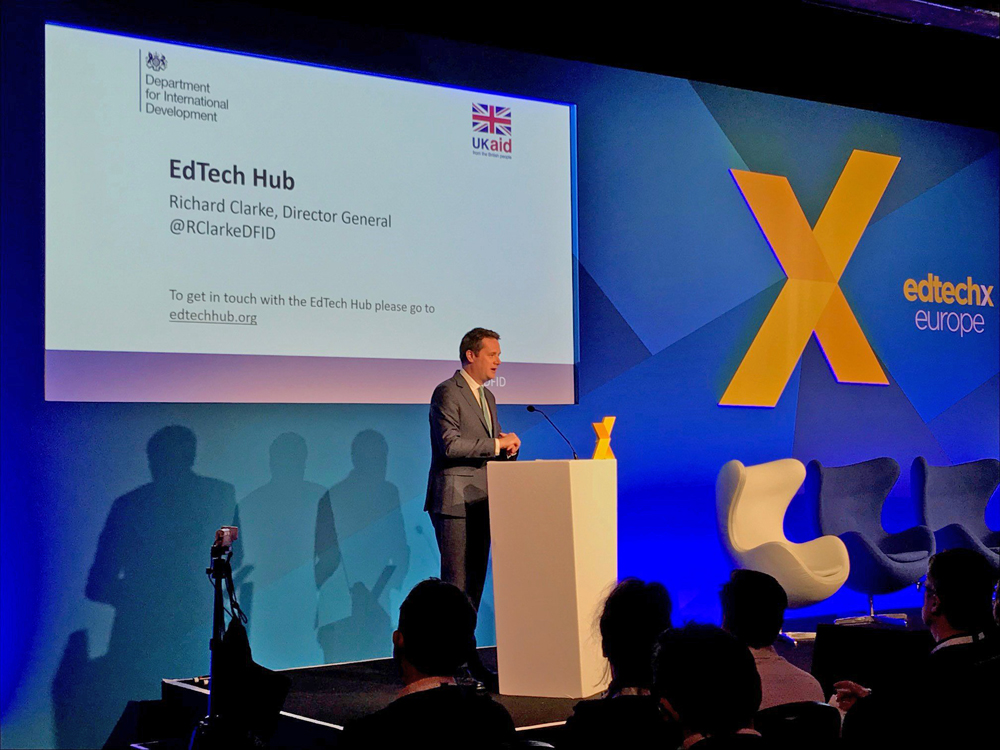
DFID AnnouncementRichard Clarke, Director General for Policy, Research and Humanitarian at the UK’s Department for International Aid (DFID) announced today that a consortium involving Dr. David Hollow and Tim Unwin, both from our UNESCO Chair in ICT4D, has been awarded the contract to lead its new £20 m research and innovation hub on technology for education.  This will explore how the world’s most marginalised children and young people can learn best through the use of new and innovative technologies.  The members of the consortium are the Overseas Development Institute, the Research for Equitable Access and Learning (REAL) Centre at the University of Cambridge, Brink, Jigsaw Consult, Results for Development, Open Development and Education, AfriLabs, BRAC and eLearning Africa.  David will serve as Research Co-Director and Tim as Chair of the Intellectual Leadership Group.

The new Hub aims to undertake and promote the highest quality of comparative and longitudinal research at the interface between technology and education, and then share the findings widely so that everyone is better aware about how technology can best serve the learning interests of the poorest and most marginalised.  This builds in part on the UNESCO Chair in ICT4D’s long established experience on technology and learning, dating back to Tim’s leadership of the UK Prime Minister’s Imfundo initiative (2001-2004) creating partnerships for IT in education in Africa, our DelPHE and EDULINK funded collaboration with African universities, the wider work of the World Economic Forum and UNESCO Partnership for Education initiative between 2007 and 2011, and the cohort of PhD students doing research at the UNESCO Chair in ICT4D on technology and learning in Africa in the latter 2000s , including David Hollow and Marije Geldof.

We are all very excited to be a part of this new initiative, which will be the largest ever education and technology research and innovation programme designed specifically to improve teaching and learning, especially in poorer countries.  It is a clear example of the ways through which research undertaken within the UNESCO Chair in ICT4D is having real global impact, and is the second £20 m grant to have been awarded to consortia that include members of the Chair in the last six months, the other being the UKRI GCRF South-South Migration, Inequality and Development Hub.

Mobile Learning and Education

Volume 3       Issue 1       January 2018

Growth of Mobile Technologies

According to the latest International Telecommunications Union (ITU) data there are still substantial differences in levels of ownership of mobile devices and access to broadband internet between the developing and the developing world. However, it is promising to note that there is a steady growth in the ownership of mobile devices and especially mobile phones across the developing world. This growth in mobile technology adoption has brought much hope for improving the livelihoods of the most disadvantaged. Education is seen as one such domain and mobile learning in particular as an instance of the application of mobile technologies to achieve improved life conditions.

Mobile Technologies in Education

Notwithstanding the rapid growth in ownership of mobile technologies and the promotion of mobile learning as a new model for delivering education, many challenges remain and need to be addressed before we can truly achieve ubiquitous and impactful education via mobile learning. Recent studies suggest that while there is an increase in the adoption of mobile technologies in higher education many problems related to their effectiveness and usage remain [1] such as mobile learning infrastructure, institutional support and design problems related to the pedagogy and content suitable for mobile delivery [2]. These challenges require systematic exploration and this is particularly important in the developing world where the stakes are higher because of resource challenges.

Mobile Learning: Research Agenda for Developing Countries

There is a tendency in the developing world to adopt technologies, practices and models from the developed contexts without due consideration to the local contexts. Our research on mobile learning in Guyana and the Caribbean more widely acknowledged at the outset potential differences and the possible effects these may have on adoption.

Our ongoing research on mobile learning has thus far been two-fold. We are working towards developing a better overview of the level of adoption of mobile technologies in formal learning at the University level in Guyana [2] and across the Caribbean [3]. Our data so far has shown mobile phones technologies are the most widely adopted for learning, that ownership of other types of mobile devices is linked to income; and that students more than lecturers are likely to explore various features on their devices for learning [2]. While we noted an increasing trend in the use of mobile technologies, it is important to understand the factors that might hinder or promote the acceptance and adoption of these technologies in our context. To this end we have assessed a number of technology acceptance models [2] [3] with the aim of determining how well these models work in our context and to help us identify the factors that may or may not be holding up. We found that the attitude towards the use of the mobile technologies for learning is the most important driver of adoption in the Guyanese context. Further, factors may vary across the developing countries context.

Next Steps

We aim to explore two aspects of mobile learning in the near future; one focus will be methodological and the other focuses on mobile computational learning. Our aim is to establish whether these categories can explain the adoption of mobile learning and mobile learning technologies. Second, our work on mobile learning will take a different turn and will explore how mobile technologies can assist the learning of computing. We will undertake a project to bring computing to students at the primary and secondary schools level using the BBC’s Micro:bit technology. This small technology fits the description of the mobile agenda and will allow us to take technology to various schools and groups not constrained by classroom settings. This view of mobile learning will allow us to reach a wider cross section of society using a small resource base.

References

[1] Pimmer, C., Mateescu, M., & Gröhbiel, U. (2016). Mobile and ubiquitous learning in higher education settings. A systematic review of empirical studies. Computers in Human Behavior, 63, 490-501.

[2] Singh, L., Thomas, T.D., Gaffar, K., & Renville, D. (2016). Mobile Learning in the Developing World: Perceptions Using the UTAUT Model. In Handbook of Research on Mobile Devices and Applications in Higher Education Settings. Eds Briz-Ponce, L., Juanes-Mendez, J.A., & Garcia-Penalvo, F.J.

[3] Thomas, T.D., Singh, L., Gaffar, K., Thakur, D., Jackman, G.A., Thomas, M., Gajraj, R., Allen, C., Tooma, K. (2014). Measurement invariance of the UTAUT constructs in the Caribbean. International Journal of Education and Development using Information and Communication Technology (IJEDICT), 10(4), 102-127.


New Internet Society report on Internet Access and Education: Key considerations for policy makers

The Internet Society has just published a new report on Internet Access and Education.  This makes interesting reading.  In summary it argues that “The Internet has immense potential to improve the quality of education, which is one of the pillars of sustainable development. This … briefing outlines ways in which policymakers can unlock that potential through an enabling framework for access to the Internet. It sets out five priorities for policymakers: infrastructure and access, vision and policy, inclusion, capacity, and content and devices. Together these represent key considerations for unlocking access to the Internet in support of education”.

They will be holding an online seminar on 6th December to discuss these issues, which we be moderated by Ben Petrazzini, IDRC, and will include the following speakers:

  • Tomi Dolenc, Academic and Research Network (ARNES), Slovenia
  • Miguel Brechner, Ceibal Plan, Uruguay
  • Dirk Hastedt, IEA, Netherlands & Germany
  • Shireen Yacoub, Edraak.org, Jordan
  • Patrick Muinda, Ministry of Education and Sports, Uganda

This work follows the Internet Society’s report earlier this year entitled Internet for Education in Africa: Helping policy makers to meet the global education agenda Sustainable development Goal 4