Prof G. ‘Hari’ Harindranath visited Nepal in January 2026 funded by an ODA grant from Royal Holloway, University of London to work with partners there to develop new collaborations and help sustain digital interventions undertaken through the UKRI GCRF MIDEQ (2019-2024) project and over the past two years through other funding streams.
Launch of our new collaborative resources
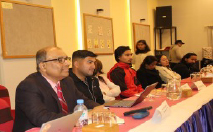
A key highlight was an event to launch our multi-lingual, multimedia resources on the safe, wise, and secure use of digital technology by migrants and other vulnerable groups, developed in partnership with the Association of Community Radio Broadcasters (ACORAB), a network of 300+ community radio stations reaching every corner of Nepal
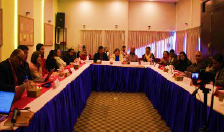
The event included a multi-stakeholder dialogue on digital safety among vulnerable groups in Nepal which brought together nearly 60 participants representing migrant and civil society organisations (female migrants, undocumented labour migrants, LGBTQ+ communities and migrant families from marginalised backgrounds), media and tech organisations including BBC Nepali and international NGOs as well as other international organisations.
New partnership opportunities with Pourakhi
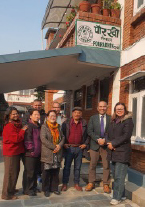
The visit led to new opportunities for partnership with organisations in Nepal that can help further the impact of our ongoing work in support of labour migrants’ use of digital technologies. Pourakhi Nepal, a migrant advocacy group that supports female migrants and returnee migrants, and a key partner for our MIDEQ work, has committed to taking guardianship of the migrant information portal, Pardesi.org.np, which was the result of our collaboration with several migrant organisations and a local tech NGO undertaken during our UKRI GCRF MIDEQ project. The portal will now become part of Pourakhi’s core activity ensuring that it remains updated and relevant to Nepali migrants and their family members.
Meetings with government officials and international organisations
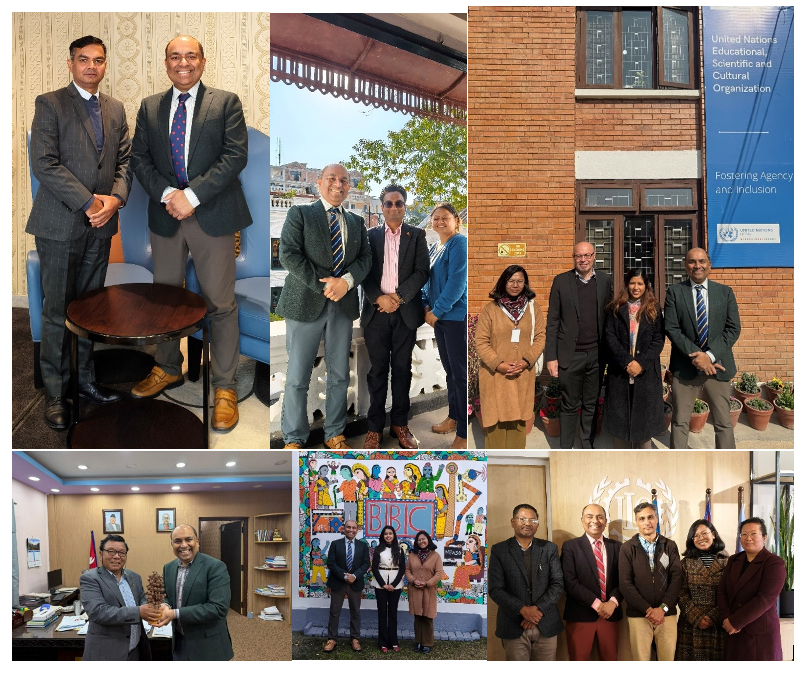
Hari was also able to meet with Nepal’s Minister for Education as well as senior officials at the Ministry of Labour, Employment and Social Security, migrant organisations, local tech and media organisations, and international organisations including UNESCO, IOM, ILO and Helvetas, all with a view to embed our digital interventions within the activities undertaken by our partners, thereby ensuring their sustained impact.
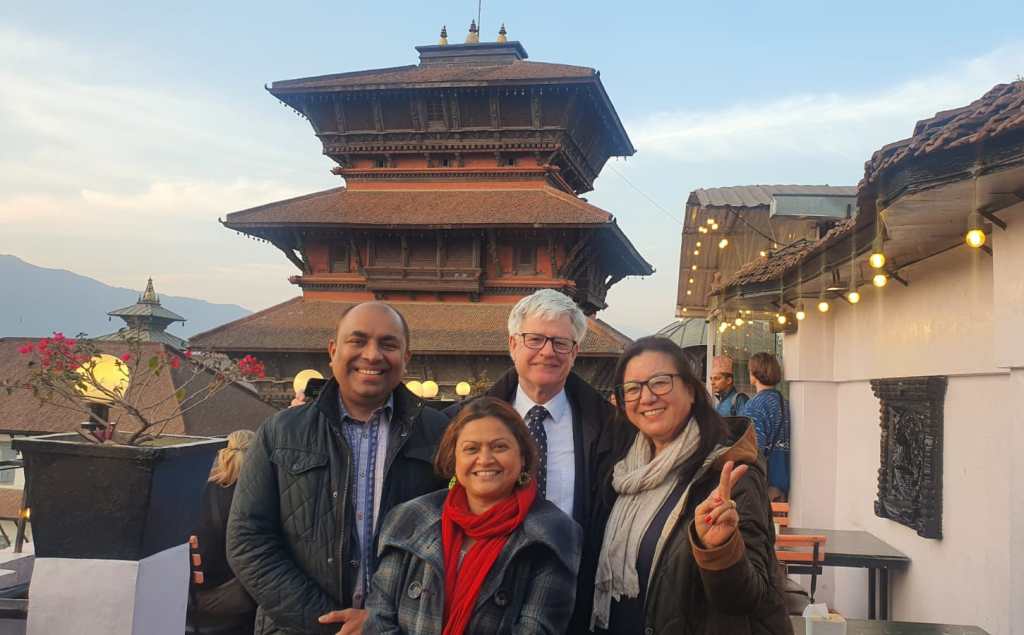
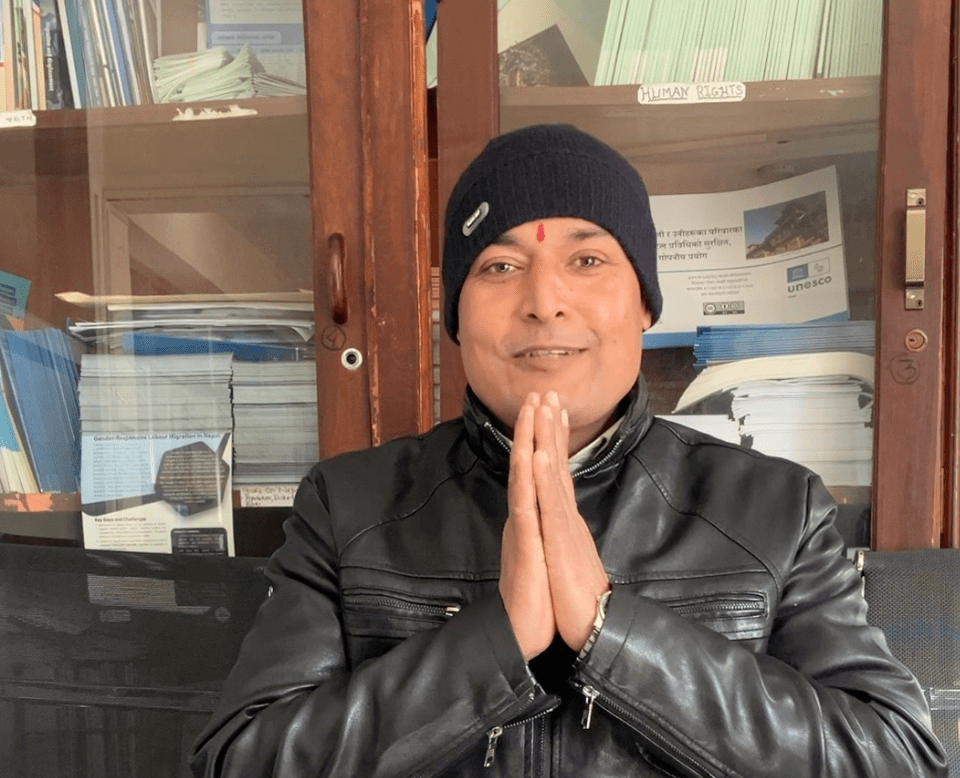
Photos, from the top: two with Gov. of Nepal officials; with UNESCO Nepal; with the Minister for Education; with BBC Nepali Sewa; and with ILO Nepal
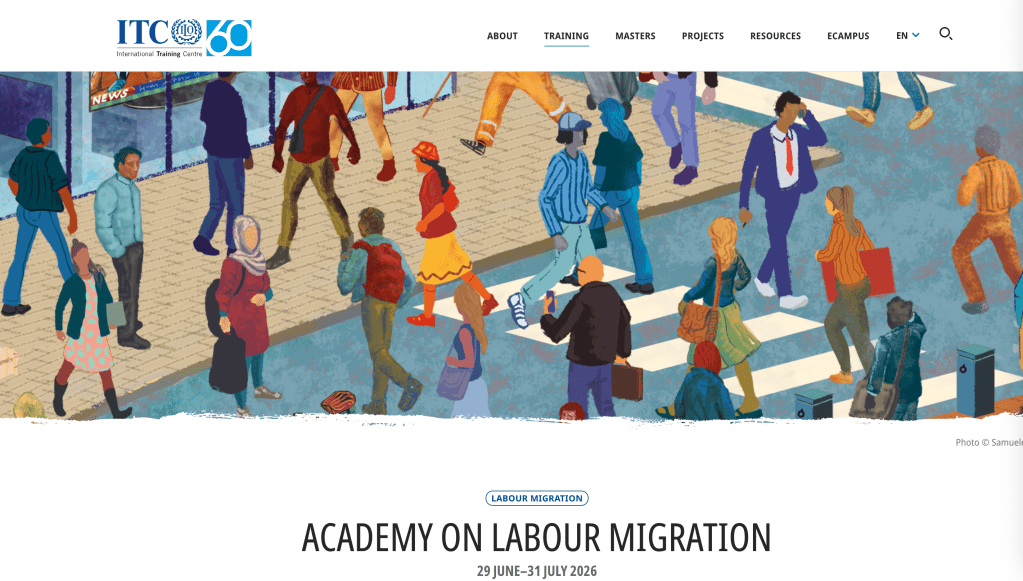
Today, I had the privilege of delivering a session titled “Digitalisation of Labour Migration Governance: Inclusive Solutions or Digital Solutionism?” at the ITCILO Academy on Labour Migration. The session brought together an incredible group of nearly 40 participants from diverse regions – Asia, Africa, the Caribbean, Pacific Islands, and Europe. This global audience included policy planners, government officials, workers’ and employers’ organisations, civil society representatives, activists, researchers, and journalists – all deeply engaged in the critical issues surrounding labour migration.
What stood out for me was the richness of the perspectives shared by participants on the role of digital technologies in this sensitive and complex domain characterised by huge power imbalances and varied digital capacities. Digitalisation of labour migration governance cannot be truly fair if it serves governments, employers and intermediaries and then disempowers vulnerable labour migrants, the very group it is meant to support. We must ensure that migrant voices are at the forefront of these efforts. Their experiences and needs are integral to shaping solutions that are equitable, inclusive, and just.
Let us keep working together to amplify and centre the voices of migrants in this important conversation.
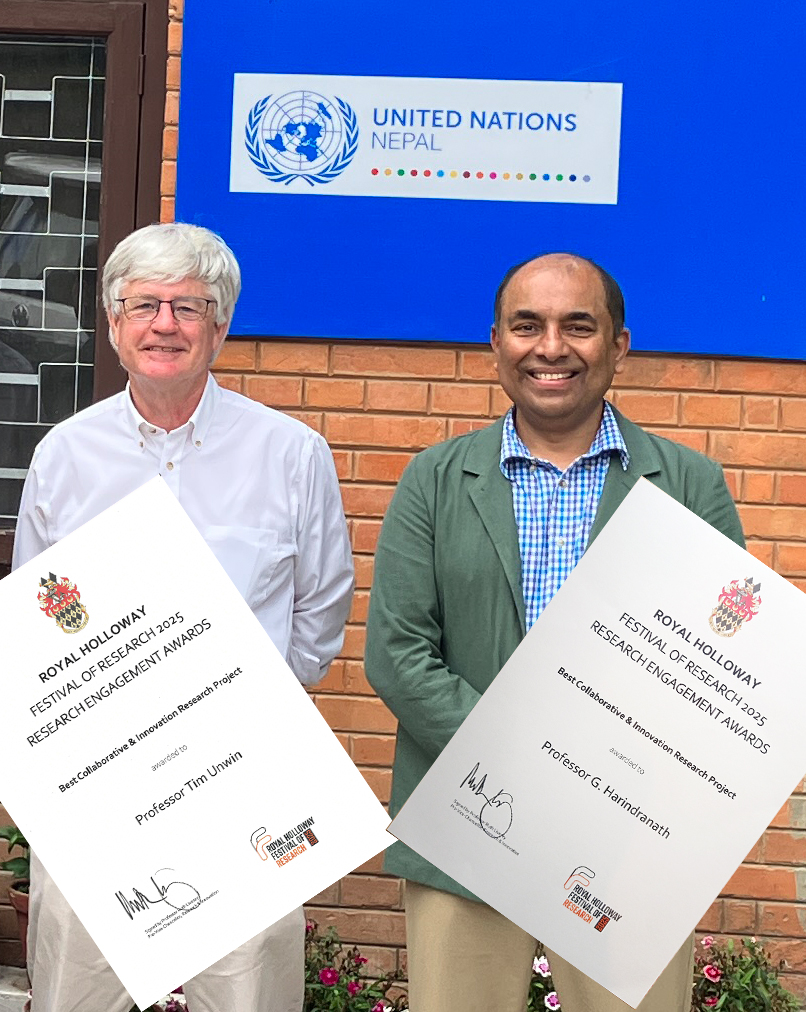
We are delighted to share the news that Profs G. ‘Hari’ Harindranath and Tim Unwin have received the award for “Best Collaborative and Innovation Research Project” from Royal Holloway, University of London for 2025 at their annual Festival of Research on 19th June for their ongoing research-practice with many other organisations across four continents on the safe, wise and secure use of digital tech in marginalised/peripheral communities, working especially with migrants and refugees. [The background to the image on the right is from one of their visits to the UNESCO offices in Nepal in 2023]
Their ‘project project was informed by social science research and resulted in the generation of interventions and training resources that were adopted by community groups and NGOs’ … To deliver outputs at scale, they have ‘engaged innovatively with international stakeholders, including third sector organisations (NGOs), international bodies (UNESCO, IOM, ILO) and key industry partners (community tech organisations). The sheer size, scale and duration of project activities are testament to the hard work’ they have invested. ‘Generating partnerships on such a global scale will not have come without its challenges, so [they] should be incredibly proud of [their] achievements in undertaking such a huge project’
Awards citation for research collaboration and innovation, Royal Holloway, University of London
More details of their work can be seen as follows:
Their main contributions on migrant use of digital tech within the UKRI GCRF funded MIDEQ project (2019-2024) can be fiund through these links:
Links to main work in Nepal (including freely available resources)
Guidance for small civil society organisations in English and Portuguese (for Mozambique)
Many organisations are contributing to this ongoing research, and full acknowledgement to them all is given in the links above.
A list of selected academic publications relating to this research:
Lorini, M.R., Harindranath, G. and Unwin, T. (2025) Responsible Digital: Co-Creating Safe, Wise and Secure Digital Interventions with Vulnerable Groups, Information Systems Frontiers, https://link.springer.com/article/10.1007/s10796-025-10611-4
Harindranath, G., Unwin, T., Lorini, M.R. (2024). The Design and Use of Digital Technologies in the Context of South–South Migration, in: Crawley, H. and Teye, J.K. (eds) The Palgrave Handbook of South–South Migration and Inequality, Cham: Palgrave Macmillan. https://doi.org/10.1007/978-3-031-39814-8_23
Harindranath, G. , Unwin, T. and Lorini, M.R. (2023) Rethinking digital tech policy for (and with) migrants, Chapter 8 in: UNRISD (United Nations Research Institute for Social Development) and MIDEQ (Migration for Development and Equality) Migration and Inequality in the Global South: Evidence from the MIDEQ Hub, Geneva: UNRISD, 36-40.
Harindranath, G. and Unwin, T. (2022) Digital technologies, migration and the SDG agenda, in: Piper, N. and Ditta, K. (eds) Elgar Companion to Migration and the SDGs, Cheltenham: Edward Elgar (in press)
Unwin, T., Marcelin, L.H., de Souza e Silva, J., Otero, G., Lorini, M.R., Anyadi, C., Gonçalves, D.M., Sato, D.P. and Harindranath, G. (2022) Uses of digital technologies by migrants from Haiti and to Brazil, Egham: UNESCO Chair in ICT4D, Royal Holloway, University of London, Working Papers No.4.
Majidi, N., Kasavan, C. & Harindranath, G. (2021) In support of return and reintegration? A roadmap for a responsible use of technology, in: McAuliffe, M. (ed.) Research Handbook on International Migration and Digital Technology, Cheltenham: Edward Elgar, pp. 220-236.
Unwin, T., Ghimire, A., Yeoh, S-G., New, S.S., Kishna, S.S., Gois, W., Lorini, M.R. and Harindranath, G. (2021) Uses of digital technologies by Nepali migrants in Malaysia, Egham: UNESCO Chair in ICT4D, Royal Holloway, University of London, Working Papers No.1.
Harindranath, G. and Unwin, T (2019), Digital technologies and migration: Reducing inequalities or creating new ones?, TREO Talk, International Conference on Information Systems, 15th December, Munich, Germany.
Harindranath, G. (2019) Digital technologies, migration and inequality, Presentation, Copenhagen Business School-Royal Holloway School of Management Joint Workshop, 16th September, Royal Holloway, UK.
To find out more about our work, do get in touch through our Contact Page.
Projectitis is the bane of much good research and practice, whereby often well-intentioned people get caught up in a vicious cycle of bidding for project funding, delivering outputs, producing evidence of success, and then bidding again for new projects. All too frequently, insufficient effort is expended on supporting those involved to continue delivering positive outcomes in the years following the end of a project. In 2019 we were fortunate enough to be part of a successful bid for UKRI GCRF funding for a five year research Hub focusing on migration for development and equality (MIDEQ). By its end in 2024 it was clear that our work package on how migrants might benefit from using digital tech had only really just begun to generate outputs and outcomes to benefit the lives of the migrants and migrant organisations with whom we were working in Nepal and South Africa, and that more work needed to be done to help ensure that these outcomes became a lasting legacy of our work together.
Some of our reflections at the end of 2023 about how migrants might actually benefit from the millions of pounds spent on the academic research undertaken during MIDEQ were published as Unwin, T., Casentini, G., Harindranath, G. and Lorini, M.R. (2023) What works for migrants: reflections on research practice in the interests of migrants (Egham: ICT4D Collective, Working Paper 1). This reinforced our determination to try to find ways through which we could continue to support those with whom we had started working during MIDEQ, and we have been very fortunate to benefit from small amounts of continued funding from Royal Holloway, University of London (ESRC Social Science Impact Accelerator, and a Research England Block Grant) which has enabled us to revisit colleagues in South Africa and Brazil to encourage deeper and wider impact and outcomes. We are very grateful to the Research Impact team (Emily Gow and Rachael Kendrew) for all of their support and flexibility in helping us take this forward.
Most recently, we have also benefitted from a further small grant from Royal Holloway, University of London’s Social Purpose Research and Knowledge Exchange Funds to enable Hari Harindranath and Tim Unwin to return to Nepal for a short visit in January 2024 to help put in place structures that will enable the work we initiated to become further embedded within the activities of our partner organisations, thereby helping to ensure outcome continuity. This work initially focused on three main areas: the Pardesi portal (https://pardesi.org.np), training resources on the safe, wise and secure/private use of digital tech by migrants, and cybersecurity guidance for small civil society organisations. However, the visit also provided an opportunity to explore future collaborative initiatives, especially with our partner organisation ACORAB/CIN, the Association of Community Radio Broadcasters in Nepal.
Our original meetings with migrant organisations in Nepal in September 2022 had emphasised the need that they had identified for an overarching portal for migrants to provide accurate access to relevant and reliable information about all aspects of the migration process. This was not at all intended to duplicate existing information, but instead to provide a simple way for migrants to access the important information that they needed and that is already available on various disparate sites. Originally, we had supported many of the main migrant organisations and people within the local tech community to come together collectively to create this resource, not least so that all of the important entities felt involved in its creation and maintenance. However, it had become evident over the year since the end of MIDEQ that this needed to be complemented by firm direction and leadership to ensure effective updating and development of the portal, and as a result of meetings held during our visit we are delighted that Pourakhi, a human rights defender organization run by and for returnee Nepali women migrants, has agreed to take on this role.
Resources for migrants on the safe, wise and secure use of digital tech
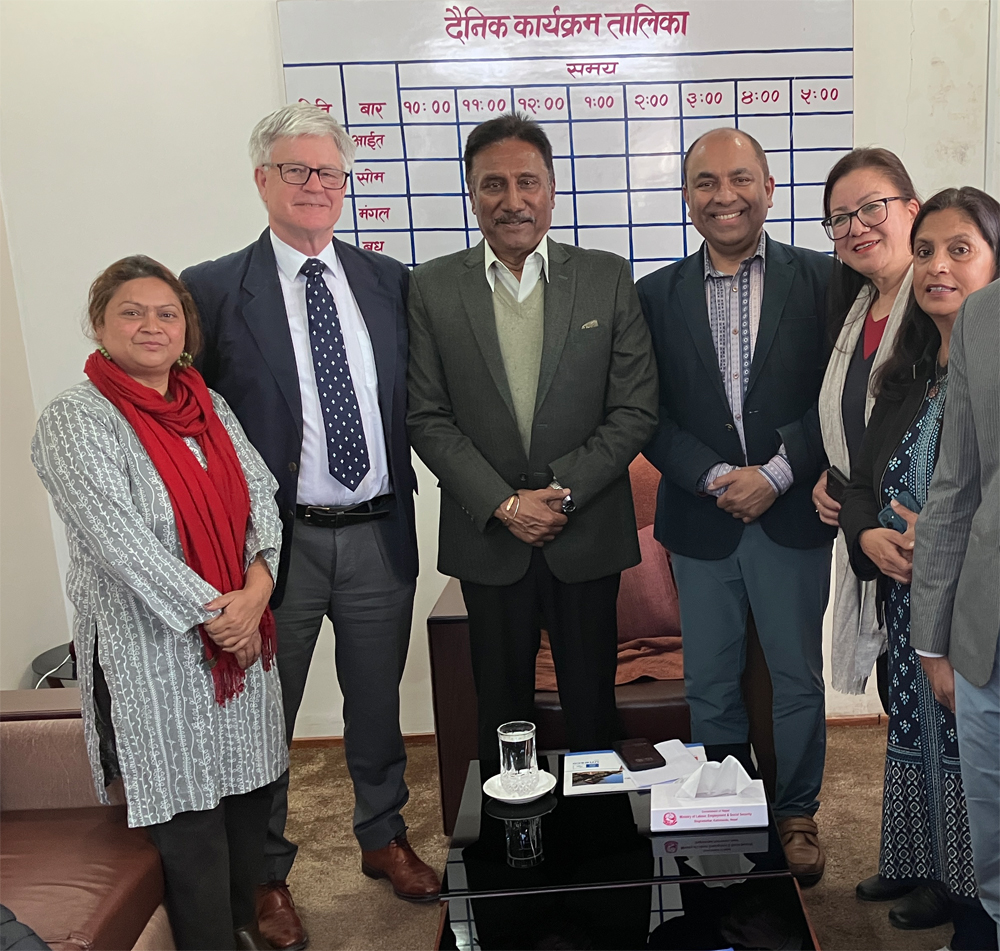
Meeting with Minister Sharat Singh Bhandari, Minister of Labour, Employment and Social Security, and colleagues from Pourakhi
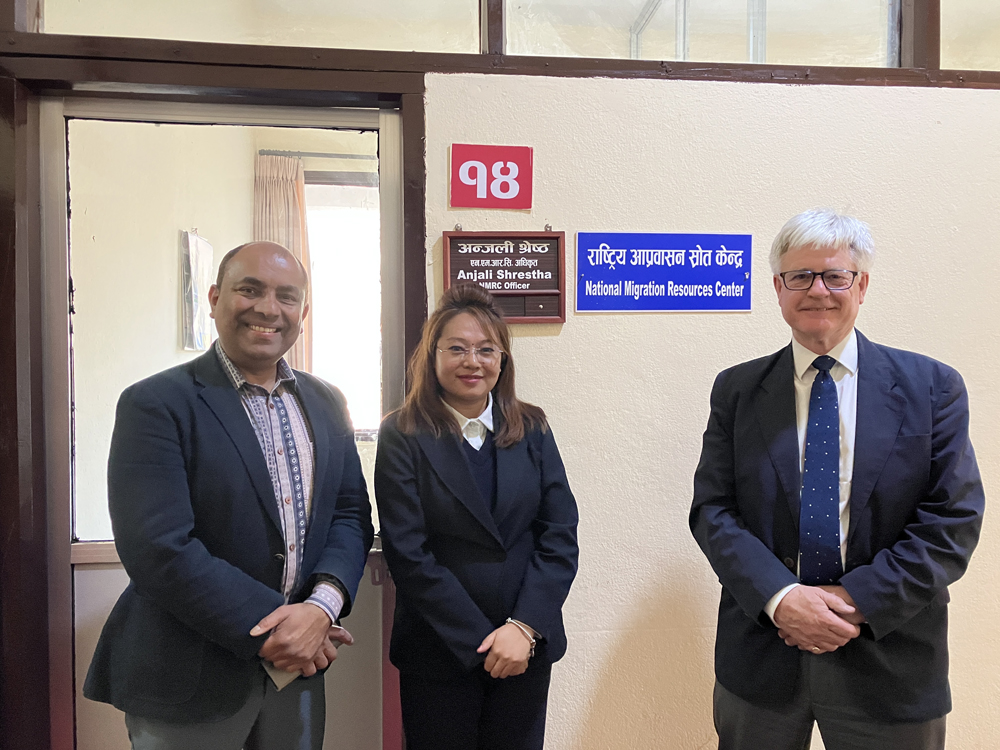
Meeting with Anjali Shrestha, National Migrant Resource Center Officer (NMRC)
During our original MIDEQ project we had developed a set of training resources in the six main languages used in Nepal to empower migrants to use digital tech safely, wisely and securely, with the original intention that these could be rolled out through the training provided by the Migrant Resource Centres (MRCs) in every province of the country. Despite previous meetings with government officials over the previous three years, changes in official roles and the evolution of government policies meant that we had not yet achieved this aim. Persistence and continued commitment nevertheless pays off, and we were delighted that we were able to share information about our work on this visit with the new Minister of Labour, Employment and Social Security, and that our good friend Anjali Shrestha (the National Migrant Resource Center Officer) has committed to finding ways through which counsellors at the MRCs can receive training based on the resources that we have already developed, supplemented by new posters and advice on key messages (see section on new resources being developed with ACORAB below).
Developing our partnership with ACORAB/CIN
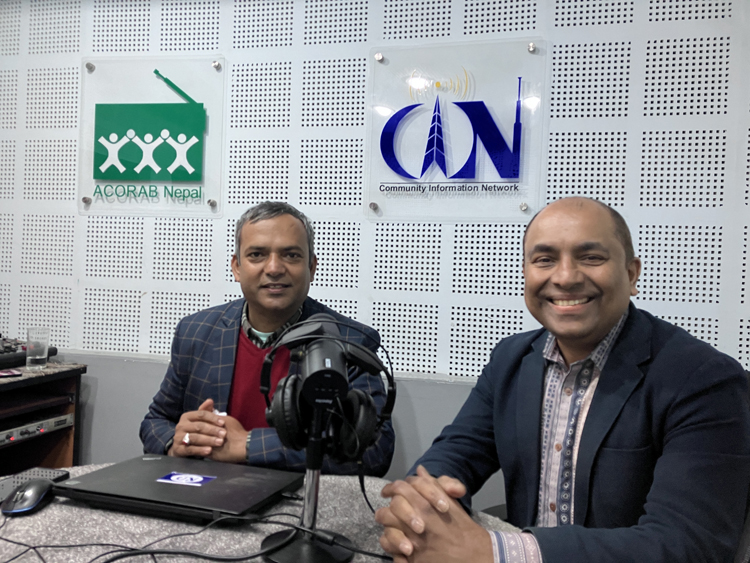
The ACORAB/CIN studio
The ACORAB/CIN studio
During our initial MIDEQ work we signed an official parntership Memorandum of Understanding with ACORAB/CIN, the Association of Community Radio Broadcasters in Nepal, who helped to disseminate our original resources on the safe, wise and secure use of digital tech to their regular audience of 6.7 million people across the country. We have comntinued to work together in training and advocacy, with ACORAB/CIN for example participating actively in the workshop we held at the WSIS+20 session on the future of community media in Geneva in May 2024. Our latest visit to Nepal helped to cement this relationship, with Tim Unwin delivering a seminar on Community Radio in an Increasingly Digital World, and agreements were also reached on the production and dissemination of new resources on the safe, wise and secure use of digital tech. These will include posters and podcasts on key issues of importance to migrant digital safety and privacy.
Sharing information and exploring new ideas with international organisations
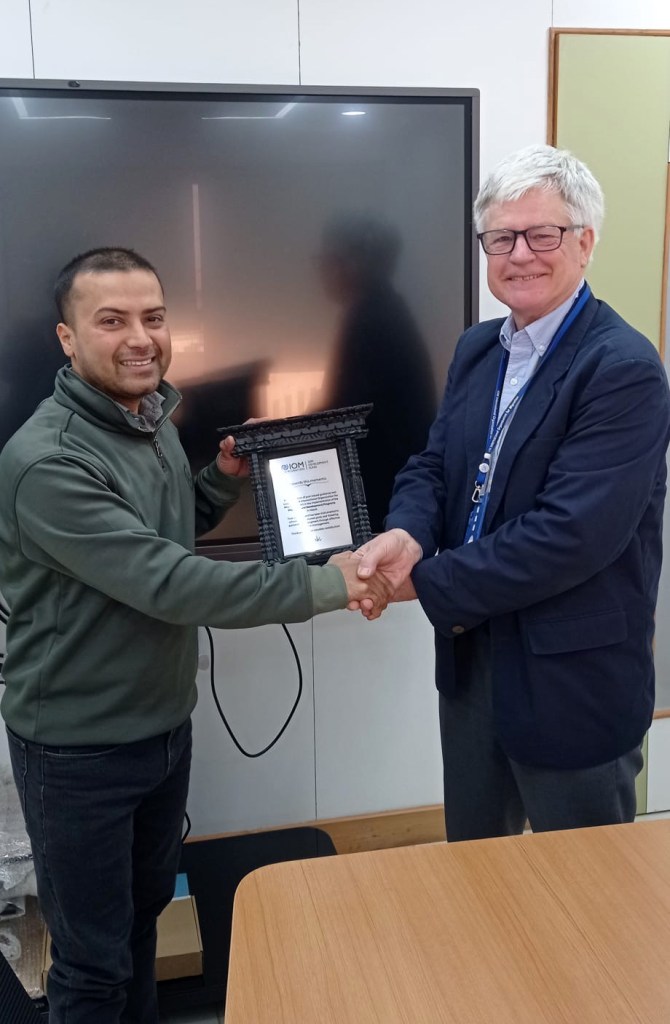
Tim Unwin receiving a certificate of appreciation from Prajwal Sharma at IOM
Meeting with Dollie Shaha at BBC Nepal
We worked closely with colleagues in international and bilateral organisations in Nepal during our original MIDEQ project and this visit provided a valuable opportunity to update colleagues in IOM, UNESCO, and the British Embassy about our work as well as to explore possible future synergies. All too often staff in these organisations move on to new roles and it is therefore very important to develop new personal relationships wtih their successors to ensure that valuable institutional links are maintained. This visit also provided a useful opportunity to meet with staff at BBC Nepal to learn about their work and relationships with ACORAB/CIN.
Meetings with migrant organisations and others involved in our MIDEQ work
One of the main purposes of our visit was to meet with the local migrant organisations wth whom we had worked during MIDEQ to learn more about their current activities and how we might continue to work together both on the pardesi.org.np portal as well as on propagating messages about the safe, and secure use of digital tech. In addition to thos colleagues depicted above and below, we also met with Bijaya Kimari Rai Shrestha from AMKAS and Anita Ghimire from ISER-N.
Measuring the real outcomes of our work for the lives of individual migrants and their organisations remains difficult. We are very hopeful that as a result of our visit many new initiatives will take place that will help us together to achieve lasting outcomes:
Under Pourakhi’s oversight, working with many of our original MIDEQ colleagues, the pardesi.org.np portal will regularlly be updated and enhanced.
Our basic resources on the safe, wise and secure use of digital tech will be rolled out for all the counsellors in the 77 Migrant Resource Centres by the end of the year, and awareness raising posters and leaflets in relevant languages will also be made available for them.
Our cybersecurity resources for civil society organisations will be translated into Nepali and distributed to relevant organisations in Nepal.
ACORAB/CIN will continue to share information about the importance of cybersecurity at individual and organisational level through its support for local community radio stations.
At an organisational level, we will continue to work with ACORAB to help them engage appropriately in relevant digitalisation processes, and with IOM in the delivery of their Migration School.
Across all of these initiatives, we have put in place mechanisms to enable us better to understand the outcomes of our research-practice, not least so that we can share further information about what works and what challenges remain so that others can learn from our experiences. We believe that hearing from migrants themselves is one of the best ways to share such understandings (see videos here), and so this post closes with a short commentary from Swarna Kumar Sha from NNSM, the umbrella organization of civil society organizations in Nepal working in the field of labour migration and development, about his experiences of working with us.
We are delighted to hear that the training resources on safe, wise and secure use of digital tech by migrants, originally developed in Nepal (as part of the MIDEQ Hub, funded by UKRI GCRF) and reversioned specifically for women in Southern Africa have recently been used by our good friends at the Domestic Workers Association Zimbabwe (DWAZ) to deliver training to 1911 of their members in Zimbabwe, South Africa, Botswana and Namibia. DWAZ was set up by Mendy Lusaba in 2021 (see this interview about her in Lionesses of Africa), and it has a centre in Zimbabwe that offers training in housekeeping, cooking and baking, gardening and care work. They also have a domestic worker netball team for the mental health of domestic workers.
In January this year, we met up with Mendy in Johannesburg, where she joined the launch of our work in South Africa that had trained migrants in video making amd the safe use of digital tech, and she made the astute observation that little digital literacy training available in the region includes sessions on the safe, wise and secure use of digital tech (watch this short video where she speaks about this). Working with her and others in South Africa, we therefore reversioned our resources specifically so that they focused on the needs of women and girl migrants there, and it is great to see them being used in this way. The resources include a slide deck and guidance notes on how they can be used and adapted by trainers, and is available freely under a CC BY-SA licence. We are continuing to develop this and we are currently working in Brazil to produce a Portuguese language version that can also be adapted for countries such as Mozambique and Angola.
Everyone is vulnerable to the many harms enabled through the use of digital tech, and it is very important that these are mitigated so that people can indeed benefit from them. Women and girls in Southern Africa are particularly vulnerable to online sexual harassment, scams, bullying, being tracked, exploitation, fake news and identity theft. The training deck is designed for people with little previous knowledge about using digital tech, and includes specific guidance on how to avoid these harms. It was developed together with migrants and migrant oprganisations, and combines this practical approach with existing good practices recommended in the relevant literature. It is divided into four main sections: an introduction covering digital literacy basics, the safe use of digital tech, how to use these technologies wisely, and how to use them privately and securely, and it also includes a short list of recommendations for further reading.
Example of final slide from the training resources
Should you use these resources, please let us know and share suggestions for how they could be improved, and don’t forget to satisfy the requirements of the CC BY-SA licence so that iothers can also benefit from your work.
We are delighted to see our recent partnership agreement with ACORAB and CIN in Nepal already bearing fruit. This was designed in part to share information about the safe, wise and secure use of digital tech, especially in remote areas of the country, as well as providing migrants with information about the new portal https://pardesi.org.np that we helped to craft with a range of migrant organisations and tech developers as part of our contribution to the MDEQ Hub.
Sajha Nepal Episode 1: Featuring Kabiraj Upreti from the Department of Labour and Occupational Safety, Government of Nepal and Aayush Pradhananga from AuraEd.
ACORAB, the Association of Community Radio Broadcasters, Nepal, and CIN, their Community Information Network, have collaboratively developed radio programmes based on some of the resources we have developed with our partners in Nepal. Two recent broadcasts show the considerable importance of community radio as a means for sharing information:
A Public Service Announcement developed earlier in 2024 which included a short section about safe migration had received 4,900 views on Facebook by 6th February, and its final broadcast was on 12th February. By today (14th February) it had received 5,600 views and 452 likes.
ACORAB also extended an invitation to several individuals that we had recommended to participate in a radio programme on secure use of information technology for safe migration, and Kabiraj Upreti from the Department of Labour and Occupational Safety and Aayush Pradhananga from AuraEd were able to participate in a recording session on 5th February. Subsequently this was aired on 7th February immediately following the Sajha Khabar news bulletin at 7 am, as part of their regular program “Sajha Nepal”, and it has also already reached over 1,000 views on Facebook, with 45 likes.
There are more than 300 community radio stations in ACORAB’s network, and these reach over 6.7 million people throughout Nepal, many of whom will have also heard these broadcaste. We are incredibly grateful to everyone at ACORAB and CIN, especially their programme manager Ayeesha Joshi, for helping to make this happen, and look forward to hearing in due course from some of those who have listened to the broadcasts about how they have changed their digital behaviours as a result.
We very much look forward to continuing our work with ACORAB and CIN, and to help them develop their broadcasting capacity, drawing on good practices globally, and optimising the use ot digital technologies.
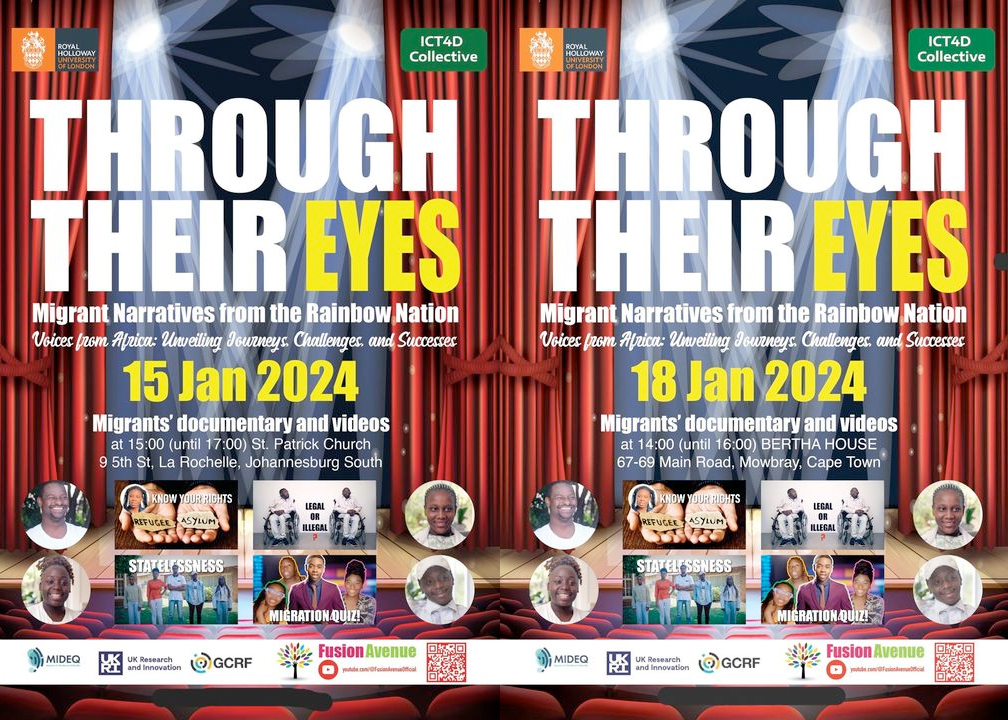
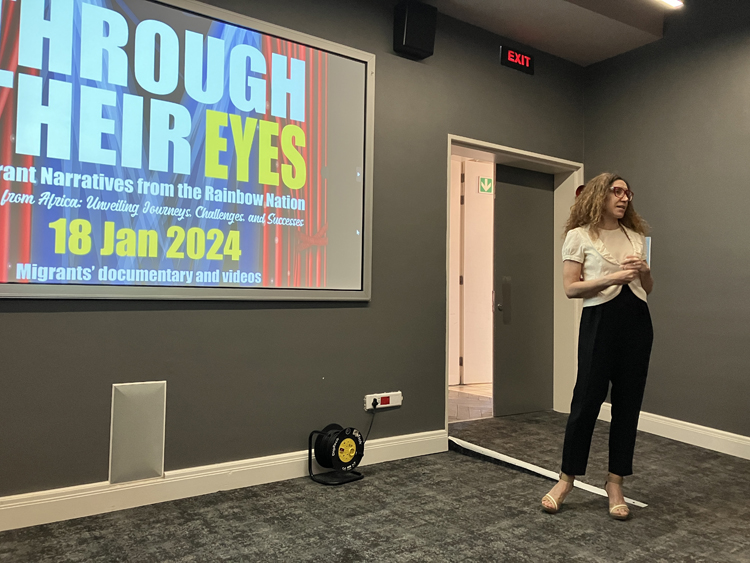
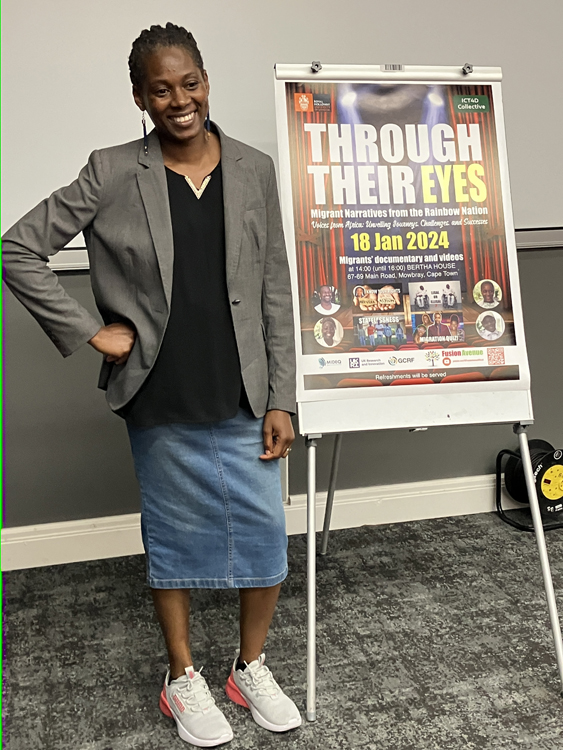
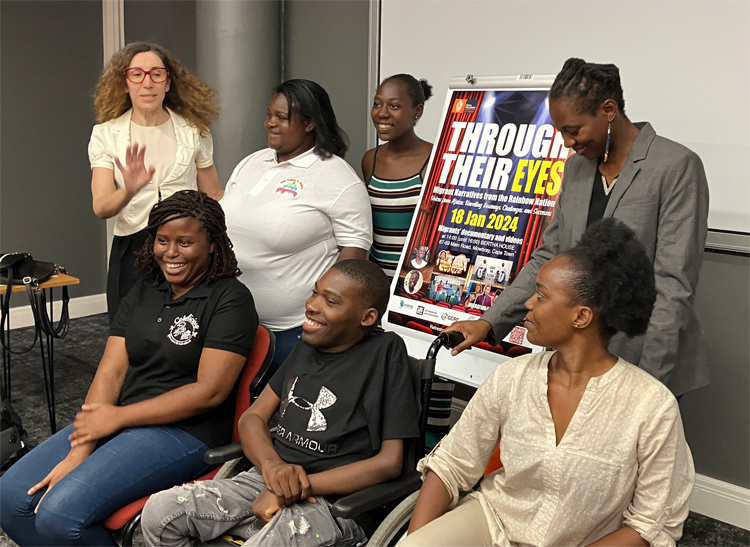
We were delighted to convene public launches on 15th January in Johannesburg and on 18th January in Cape Town for the interventions on which we have worked with migrants and migrant organisations in South Africa. The same format was followed in each location and included four main elements:
Premiere of a documentary film about the lives of the migrants with whom we have been working, entitled Through Their Eyes and produced by Simone Zanetti and Maria Rosa Lorini;
Presentation of videos made by the migrants following training by our work package, and introduction to their YouTube channel Fusion Avenue which features all the videos that they have made;
Information about the training they have been doing for others on the safe, wise and secure use of digital tech, following the training that they have received from our work package; and
Refreshments and networking.
These interventions were conceived and facilitated by the Digital Technologies and Migration work package (WP9) of the MIDEQ Hub funded by the UKRI Global Challenges Research Fund (GCRF). WP9 is led by Professor G. “Hari” Harindranath and Professor Tim Unwin CMG, with the support of Dr. Maria Rosa Lorini (who led the work in South Africa), based at the ICT4D Collective (Royal Holloway, University of London, UK). The resources were created collaboratively with migrants and organisations in both the Johannesburg and Cape Town regions, including the Scalabrini Centres in Cape Town and Johannesburg, the University of Cape Town, UNISA’s Information Systems Department, Stoneintheshoe, Rainbow Media, and SIHMA. Other organisations involved in the initiative have included Adonis Musati, Cape Town TV, Ubunti-Bethu, and JL Zwane
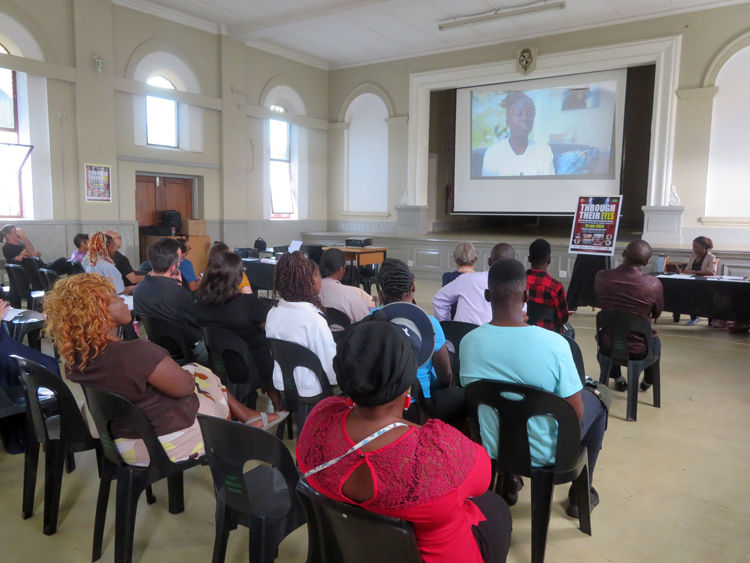
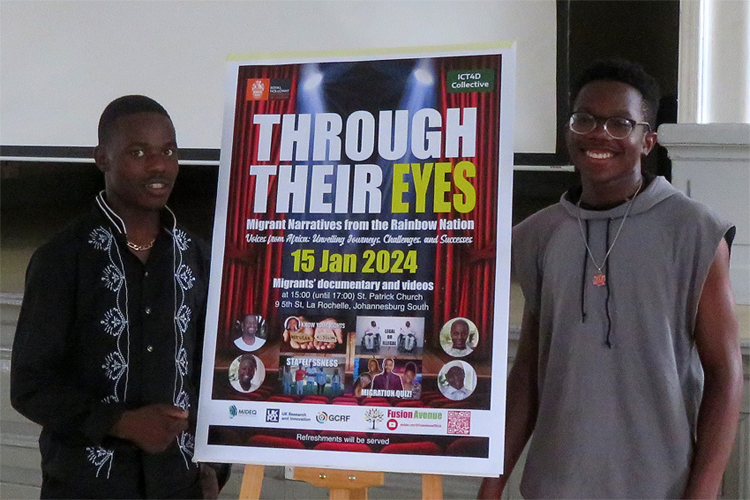
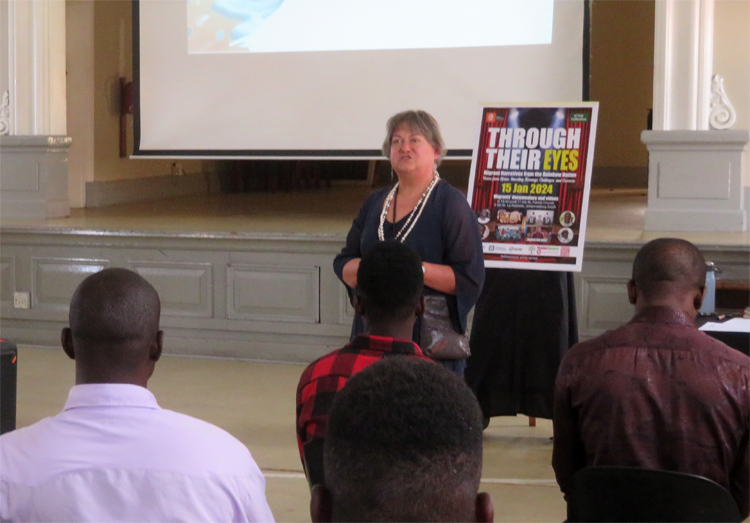
Johannesburg launch, 15th January
The Johannesburg launch was held at St Patrick’s Catholic Curch in La Rochelle (press release), and attracted people from the local community, migrants, universities and international organisations (click on arrows to go through the slide deck).
Cape Town launch, 18th January
The Cape Town launch was held at Bertha House, Mowbray (press release), and likewise attracted people from the local community, migrants, universities and international organisations (click on arrows to go through the slide deck).
Our research-practice in Nepal (led by Hari Harindranath) and in South Africa (led by Maria Rosa Lorini) as part of our contribution to MIDEQ places considerable emphasis on migrants gaining relevant skills so that they can use digital technologies safely, wisely and securely (or privately). Video production forms an important element of this training for three main reasons: so that migrants can share their experiences with each other about why these issues are so vital; so that they can improve their own skills in video production to enhance their visibility on social media; and so that together we can share qualitative evidence about the impact of our work.
A recent conversation between the social influencer Michelle Carlin and Tim Unwin about what advice we might offer to would-be influencers led to her agreeing to make this short video about the five most important pieces of advice she has to offer, especially for those using Instagram. Michelle, a sommelier from Mexico, is one of the top wine-related influencers on Instagram (@mina.wine), with more than 100,000 followers, and she is also an educator and content creator for theeasywine.com, so her advice is well-worth taking (follow her also on X/Twitter at @purpleandwine).
Michelle’s top five tips are:
You must find your own mojo that you feel passionate about and makes you happy;
Follow others to learn from and get inspired by them;
Understand that you are creating a community and interact with them;
It is a full-time job and so you need to be posting all the time; and
Understand that social media algorithms are always changing.
Huge thanks to Michelle for these great tips – muchas gracias!
Members of the UNESCO Chair in ICT4D are leading Work Package 9 of the MIDEQ hub (funded by UKRI GCRF and Royal Holloway, University of London) and are exploring how digital tech can be used to reduce the inequalities associated with migration, especially in four corridors: Nepal-Malaysia, Ethiopia-South Africa, China-Ghana, and Haiti-Brazil. The second of our working papers presenting data on the uses of digital technologies by Nepali migrants and their families has just been published within the UNESCO Chair in ICT4D’s publication series. Key findings and abstract are as follows.
Key findings
1. Nepali migrants and their familes make extensive use of digital technologies – especially smart phones and the Internet for a wide range of purposes, and not just for audio and video calls
2. Very few migrants make any use at all of apps that have been developed specifically for migrants – and even those 8.7% that claim to do so may not have actually used such apps
3. Migrant use of digital technologies increases through the migration journey – only 46.4% had used digital tech daily before migrating, whereas 85.4% used them daily while in the migration destinations.
Abstract
This working paper forms part of the output of Work Package 9 on technology, inequality and migration within the MIDEQ Hub, a multi-disciplinary research project in 12 countries of Latin America, Africa and Asia, including the Nepal-Malaysia migration corridor. It presents the results of an online survey of 266 respondents in and from Nepal, 58.5% of whom identified themselves as migrants, with 28.1% being family members of migrants, and 13.4% being returned migrants. Following a summary of the methodology, which explains why an online survey was used to replace the originally planned interviews and focus groups, the paper provides an overview of the most important results and analysis, focusing on the potential influence of age, gender, countries of origin and destination, migration status, and occupational status on the ways in which respondents use digital technologies and for what purposes. Three important conclusions for Phase Two of our research are: first, the vast majority of Nepali respondents have smart phones and access the internet very frequently for a wide range of purposes; second, simply designing another new app may not be particularly valuable; and third, it might well be wise to work with, or build on, technologies and apps already in existence, so as to improve them in ways that could increasingly empower migrants.
To read this paper in full (v.5 .pdf) please use this link.
Other UNESCO Chair in ICT4D Publications are available here.















 ICT4D Collective