Facebook (FB) was founded in 2004, and more than twenty years later it is time to take stock. More than three billion active users seem to provide evidence of its undisputed global ‘success’. It is a tool that has changed the lives of many people, but is not easy to say whether this has been for better or for worse. In the meanwhile, it seems that we can no longer do without FB or any of Zuckerberg’s other tools, such as Instagram or WhatsApp. Every now and then, the media talks about the psychological and cognitive damage caused by social media, especially among young people. Sometimes they also talk about the misuse of our data, but these are phenomena that are not very visible and difficult to quantify. Despite dozens of books, investigations, academic research, and even films denouncing the abuses of FB (and the whirlwind career of its founder) could fill up entire libraries and websites, most people seem largely uninterested in its harms.
In an attempt to raise users’ awareness, we started to review the political, economic, social, cognitive, ethical, and privacy costs of this addiction. We selected around fifty of the best-known and verifiable categories of event documented in the media between 2007 and 2025, and these are listed here. These range from the illegal use of user data to its deliberate manipulation for commercial and political purposes, from the exploitation of workers in the global south (click farms) to collaboration with authoritarian governments, from million-dollar fines to silencing the voices of Palestinians in Gaza. All events and allegations are known to an audience of experts and insiders but seeing it all together gives us an idea of the temporal dimensions and the extent of those misdeeds. Our work is a preliminary and non-exhaustive “catalogue of horrors” that will form part of a data base project starting in Spring 2026 in the Digital Humanities laboratory at the Department of Humanities of the University of Roma Tre. If you think that we have missed some important Zuckerberg-related abuses or misdeeds, please do contact the authors at domenico.fiormonte@uniroma3.it .
Among the questions I would like to ask in the workshop, there is one that I know will be particularly unpopular with students: isn’t it time to abandon Zuckerberg and the GAFAM empire (which is also an inherent part of the genocide economy)? Abandoning these platforms is part of a necessary and urgent process of epistemic decolonization. The first step in this direction is to counter the narrative that “there are no alternatives”, when in fact there are now more and more, such as those listed by llaborda.org. Software that is free or at least not programmed to extract data and personal lives from individuals has always been available, but its adoption requires, in Gramscian terms, a new consciousness followed by an adequate literacy.
We must develop awareness and mastery of a system of signs in which languages and media, programs and devices, software and hardware constitute the frameworks of thought and knowledge. The second step is to rediscover (and defend) the web as a protocol and open space for cultural diversity, uncensored communication and sharing, in contrast to the cages of commercial platforms and corresponding apps as standardized models of thought and global surveillance. In short, it is up to us to become active and aware digital literates, rejecting a digital world that has been disfigured by Big Tech deception, misrepresentation, and exploitation. The battle for freedom of expression, for the right to the exclusive use of our digital corpus, and for the creative and conscious use of the internet is still ongoing. However, given the increasingly widespread weaponization of digital spaces—as demonstrated by the EU Council substantial approval of Chat Control—we cannot completely rule out the possibility of a gradual DigitalExit. Perhaps, in the not-so-distant future, disconnecting from the internet will be the only way to save it.
As part of our contribution to the UKRI GCRF funded MIDEQ project (2019-24), members of the ICT4D Collective (Dr. Maria Rosa Lorini, Prof. Tim Unwin and Prof. G ‘Hari’ Harindranath) worked with colleagues at the Scalabrini Institute for Human Mobility in Africa (SIHMA) in Cape Town to help train a group of migrants in video production. Our overall research-practice explored how migrants in South Africa (and other countries) wanted to use digital tech to improve their lives, and one of the things that these migrants to South Africa wished to learn was how to make better quality videos about their lives, their work and how to use digital tech safely (see here for more information).
Launch of Through Their Lives, in Cape Town, January 2024.
One output of this work was a powerful 30 minute film about their lives and aspirations entiteld Through Their Lives. Another was their creation of the Fusion Avenue channel on YouTube where they continue to post useful videos on all aspects of migrant life, as well as the safe use of digital tech. We also sought to introduce these migrants to organisations who might be able to use and further develop the skills they had gained, not least so that our work would have more sustainable outcomes lasting beyond the limited period of GCRF funding. A return visit to South Africa in October 2024 provided a valuable opportunity to explore ways further to enhance this process.
We have been delighted recently to receive positive and constructive feedback from SIHMA about how this work has continued, without our direct involvement.
Through your funding, we were able to support a group of migrant amateur media practitioners to co-create a series of short videos reflecting experiences and perspectives of people on the move. The project unfolded with both valuable successes and learning opportunities. (Fr. Filippo Ferraro, SIHMA Executive Director)
Our MIDEQ funding had only provided limited resources for training the migrants on the ground, and ideally we would have liked to have worked with them for longer in a more sustained way to provide greater opportunities for them to practise and develop their video making skills (see their Fusion Avenue channel). It was also not always easy for the migrants to participate in the training and find the time to practise, especially given their needs to balance such training with their other day to day tasks and income generating activities. Our initial training undoutedly enhanced their skills (see their reflections on outomes of our work together eight months after the end of MIDEQ), and has enabled many of them to improve their business profiles on social media. However, it was insufficient for them to acquire the level of skills necessary to produce video work of sufficient quality to earn a living from this alone. We were delighted, though, that SIHMA was able to support them and help to improve their skills. Through a small amount of further funding from us they were also able to provide new equipment for the migrants to improve the quality of their videos on Fusion Avenue. These challenges were again highlighted by SIHMA:
While the initial recordings were promising, a number of videos required reshooting and further editing to meet the desired quality. In response, we engaged an experienced external migrant collaborator to assist with editing and technical guidance. This collaboration greatly enhanced the final production outcomes. We also welcomed new participants, since we were not able to connect with those previously interviewed. They contributed fresh perspectives through interviews, enriching the diversity and authenticity of the narratives. To ensure sustainable impact, we purchased video equipment for Fusion Avenue that enabled them to produce content of a higher standard — an investment that we believe will support future initiatives beyond the scope of this project. (Fr. Filippo Ferraro, SIHMA Executive Director)
This crucially show the importance of continued support to migrants in helping them gain new skills, and we are immensely grateful to SIHMA for this crucial contribution.
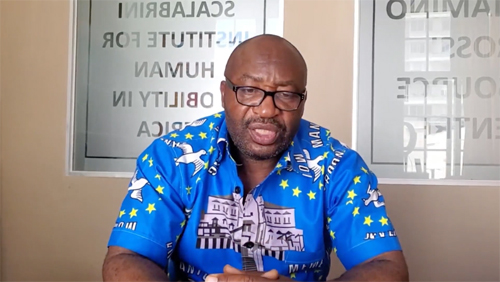
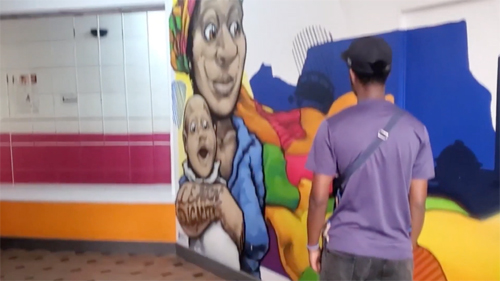
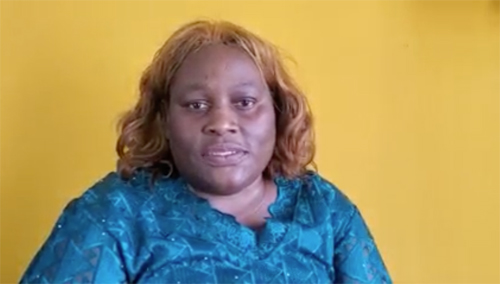
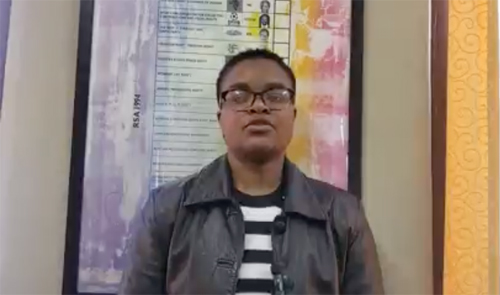
Five videos were produced as a contribution to SIHMA’s “Narratives on human mobility” and “Atlas of African Migration”, and these are also available below (just click on the images below to watch the videos):
We are delighted that after a long process of ensuring that the quality and content were approproate, SIHMA was able to conclude that:
The final deliverables include a set of completed videos that stand as a testament to the creativity, resilience, and talent within migrant communities. These videos will be hosted on our SIHMA website and included in the initiatives “Narratives on human mobility” and “Atlas of African Migration”. This initiative has not only strengthened our training and outreach efforts, but it has also empowered beneficiaries with new technical skills and confidence in self-expression. (Fr. Filippo Ferraro, SIHMA Executive Director)
We look forward to continuing our work with migrants across southern Africa, to explore further how they can use digital tech to contibute positively to their lives. For our wider work on the Safe, Wise and Secure use of digital tech by economically poorer and more marginalised people across the world do access our resources here.
The ICT4D Collective is delighted to be assisting The Global Development Network (GDN) deliver its flagship Global Development Conference (GDC) 2025, taking place October 28-30 in Clermont-Ferrand, France, and virtually. Co-hosted by FERDI and CERDI, this year’s conference focuses on “Inclusive Digital Transformation – Bridging the Gap Between Promise and Reality.”
As ICT4D researchers and practitioners, we know technology holds immense potential for development, but we also see the risks of deepening inequalities and reinforcing existing power structures. GDC 2025 aims to foster a critical, evidence-based dialogue that moves beyond the hype. We’ll explore the complex interplay of social, economic, political, and ethical forces shaping our digital world, with a strong emphasis on learning from diverse global experiences, particularly within low- and middle-income countries (LMICs).
Get Involved Now! Call for Papers: this is the chance for researchers to share original research on digital inclusion, governance, the digital economy’s impact on social development, or technology for climate action. Contribute your evidence to inform policy and practice! Deadline: May 16, 2025.
What to Expect: GDC 2025 will feature inspiring keynotes, thought-provoking plenary discussions, and engaging, practical sessions designed for interaction. It’s a prime opportunity to connect with fellow researchers, policymakers, civil society representatives, and practitioners from across the globe.
Registration Coming Soon: Interested in attending, either in person or online? Participant registration will open shortly!
Stay updated and find all details on the official GDC 2025 website: conf2025.gdn.int
Projectitis is the bane of much good research and practice, whereby often well-intentioned people get caught up in a vicious cycle of bidding for project funding, delivering outputs, producing evidence of success, and then bidding again for new projects. All too frequently, insufficient effort is expended on supporting those involved to continue delivering positive outcomes in the years following the end of a project. In 2019 we were fortunate enough to be part of a successful bid for UKRI GCRF funding for a five year research Hub focusing on migration for development and equality (MIDEQ). By its end in 2024 it was clear that our work package on how migrants might benefit from using digital tech had only really just begun to generate outputs and outcomes to benefit the lives of the migrants and migrant organisations with whom we were working in Nepal and South Africa, and that more work needed to be done to help ensure that these outcomes became a lasting legacy of our work together.
Some of our reflections at the end of 2023 about how migrants might actually benefit from the millions of pounds spent on the academic research undertaken during MIDEQ were published as Unwin, T., Casentini, G., Harindranath, G. and Lorini, M.R. (2023) What works for migrants: reflections on research practice in the interests of migrants (Egham: ICT4D Collective, Working Paper 1). This reinforced our determination to try to find ways through which we could continue to support those with whom we had started working during MIDEQ, and we have been very fortunate to benefit from small amounts of continued funding from Royal Holloway, University of London (ESRC Social Science Impact Accelerator, and a Research England Block Grant) which has enabled us to revisit colleagues in South Africa and Brazil to encourage deeper and wider impact and outcomes. We are very grateful to the Research Impact team (Emily Gow and Rachael Kendrew) for all of their support and flexibility in helping us take this forward.
Most recently, we have also benefitted from a further small grant from Royal Holloway, University of London’s Social Purpose Research and Knowledge Exchange Funds to enable Hari Harindranath and Tim Unwin to return to Nepal for a short visit in January 2024 to help put in place structures that will enable the work we initiated to become further embedded within the activities of our partner organisations, thereby helping to ensure outcome continuity. This work initially focused on three main areas: the Pardesi portal (https://pardesi.org.np), training resources on the safe, wise and secure/private use of digital tech by migrants, and cybersecurity guidance for small civil society organisations. However, the visit also provided an opportunity to explore future collaborative initiatives, especially with our partner organisation ACORAB/CIN, the Association of Community Radio Broadcasters in Nepal.
Our original meetings with migrant organisations in Nepal in September 2022 had emphasised the need that they had identified for an overarching portal for migrants to provide accurate access to relevant and reliable information about all aspects of the migration process. This was not at all intended to duplicate existing information, but instead to provide a simple way for migrants to access the important information that they needed and that is already available on various disparate sites. Originally, we had supported many of the main migrant organisations and people within the local tech community to come together collectively to create this resource, not least so that all of the important entities felt involved in its creation and maintenance. However, it had become evident over the year since the end of MIDEQ that this needed to be complemented by firm direction and leadership to ensure effective updating and development of the portal, and as a result of meetings held during our visit we are delighted that Pourakhi, a human rights defender organization run by and for returnee Nepali women migrants, has agreed to take on this role.
Resources for migrants on the safe, wise and secure use of digital tech
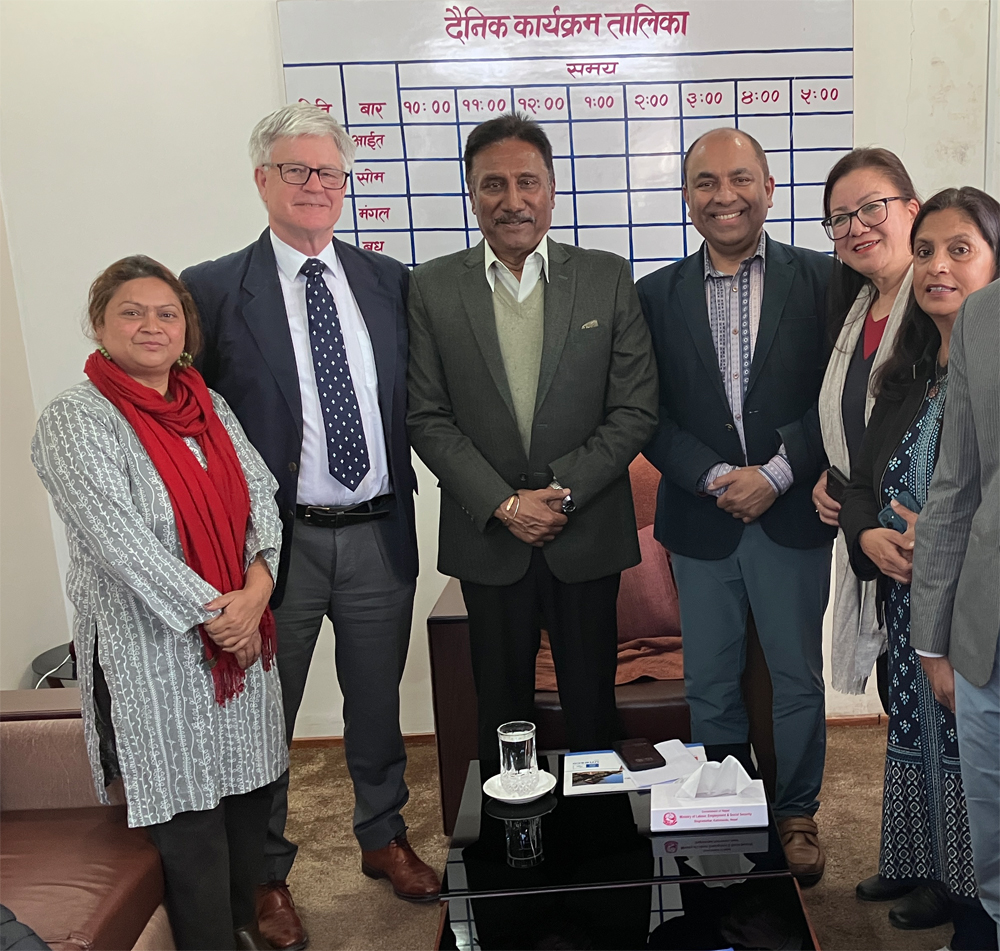
Meeting with Minister Sharat Singh Bhandari, Minister of Labour, Employment and Social Security, and colleagues from Pourakhi
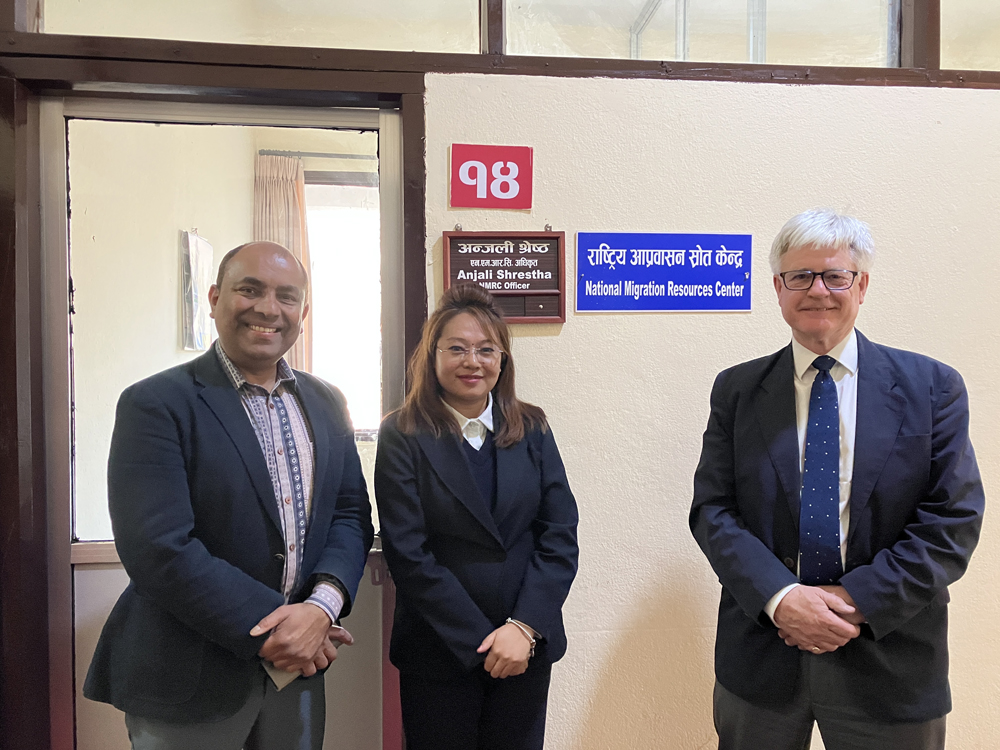
Meeting with Anjali Shrestha, National Migrant Resource Center Officer (NMRC)
During our original MIDEQ project we had developed a set of training resources in the six main languages used in Nepal to empower migrants to use digital tech safely, wisely and securely, with the original intention that these could be rolled out through the training provided by the Migrant Resource Centres (MRCs) in every province of the country. Despite previous meetings with government officials over the previous three years, changes in official roles and the evolution of government policies meant that we had not yet achieved this aim. Persistence and continued commitment nevertheless pays off, and we were delighted that we were able to share information about our work on this visit with the new Minister of Labour, Employment and Social Security, and that our good friend Anjali Shrestha (the National Migrant Resource Center Officer) has committed to finding ways through which counsellors at the MRCs can receive training based on the resources that we have already developed, supplemented by new posters and advice on key messages (see section on new resources being developed with ACORAB below).
Developing our partnership with ACORAB/CIN
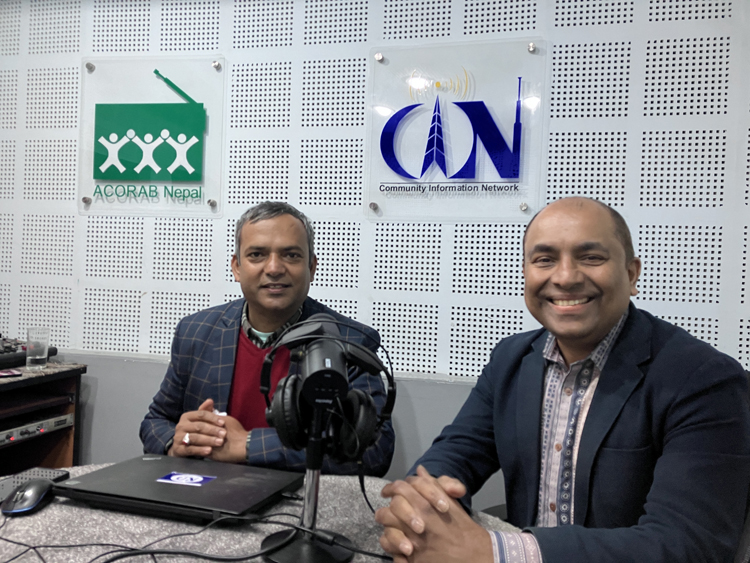
The ACORAB/CIN studio
The ACORAB/CIN studio
During our initial MIDEQ work we signed an official parntership Memorandum of Understanding with ACORAB/CIN, the Association of Community Radio Broadcasters in Nepal, who helped to disseminate our original resources on the safe, wise and secure use of digital tech to their regular audience of 6.7 million people across the country. We have comntinued to work together in training and advocacy, with ACORAB/CIN for example participating actively in the workshop we held at the WSIS+20 session on the future of community media in Geneva in May 2024. Our latest visit to Nepal helped to cement this relationship, with Tim Unwin delivering a seminar on Community Radio in an Increasingly Digital World, and agreements were also reached on the production and dissemination of new resources on the safe, wise and secure use of digital tech. These will include posters and podcasts on key issues of importance to migrant digital safety and privacy.
Sharing information and exploring new ideas with international organisations
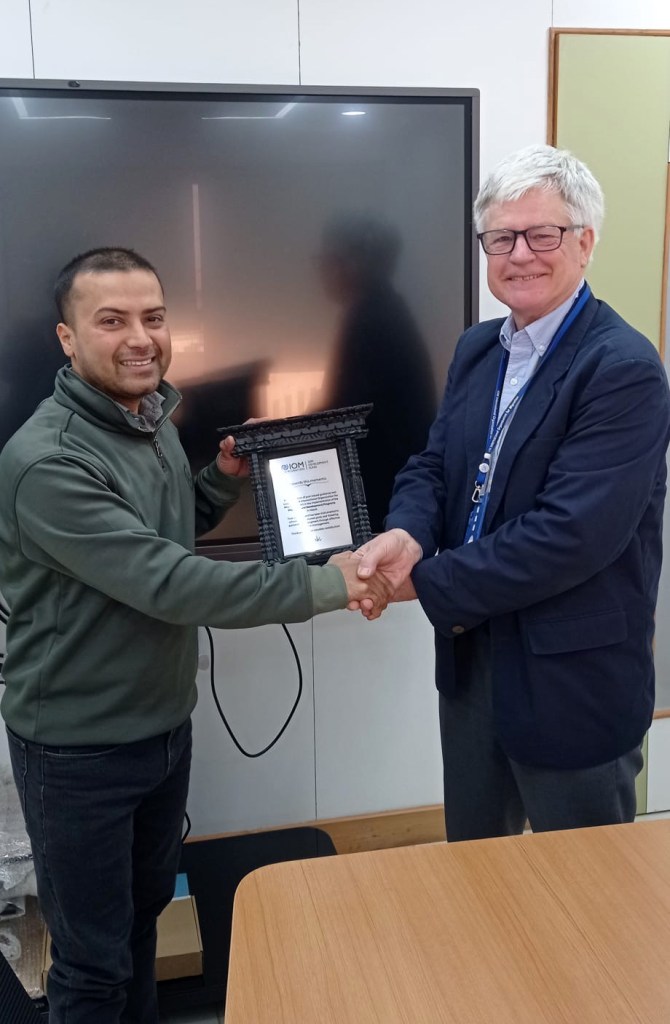
Tim Unwin receiving a certificate of appreciation from Prajwal Sharma at IOM
Meeting with Dollie Shaha at BBC Nepal
We worked closely with colleagues in international and bilateral organisations in Nepal during our original MIDEQ project and this visit provided a valuable opportunity to update colleagues in IOM, UNESCO, and the British Embassy about our work as well as to explore possible future synergies. All too often staff in these organisations move on to new roles and it is therefore very important to develop new personal relationships wtih their successors to ensure that valuable institutional links are maintained. This visit also provided a useful opportunity to meet with staff at BBC Nepal to learn about their work and relationships with ACORAB/CIN.
Meetings with migrant organisations and others involved in our MIDEQ work
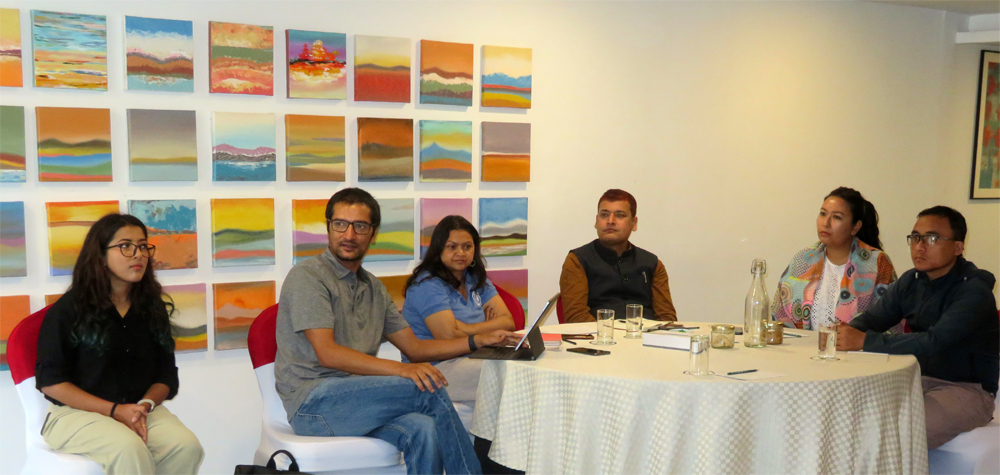
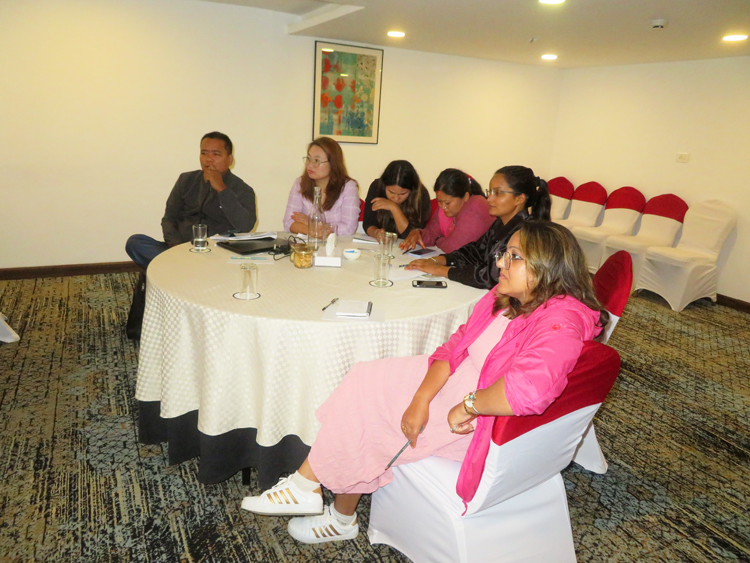
One of the main purposes of our visit was to meet with the local migrant organisations wth whom we had worked during MIDEQ to learn more about their current activities and how we might continue to work together both on the pardesi.org.np portal as well as on propagating messages about the safe, and secure use of digital tech. In addition to thos colleagues depicted above and below, we also met with Bijaya Kimari Rai Shrestha from AMKAS and Anita Ghimire from ISER-N.
Measuring the real outcomes of our work for the lives of individual migrants and their organisations remains difficult. We are very hopeful that as a result of our visit many new initiatives will take place that will help us together to achieve lasting outcomes:
Under Pourakhi’s oversight, working with many of our original MIDEQ colleagues, the pardesi.org.np portal will regularlly be updated and enhanced.
Our basic resources on the safe, wise and secure use of digital tech will be rolled out for all the counsellors in the 77 Migrant Resource Centres by the end of the year, and awareness raising posters and leaflets in relevant languages will also be made available for them.
Our cybersecurity resources for civil society organisations will be translated into Nepali and distributed to relevant organisations in Nepal.
ACORAB/CIN will continue to share information about the importance of cybersecurity at individual and organisational level through its support for local community radio stations.
At an organisational level, we will continue to work with ACORAB to help them engage appropriately in relevant digitalisation processes, and with IOM in the delivery of their Migration School.
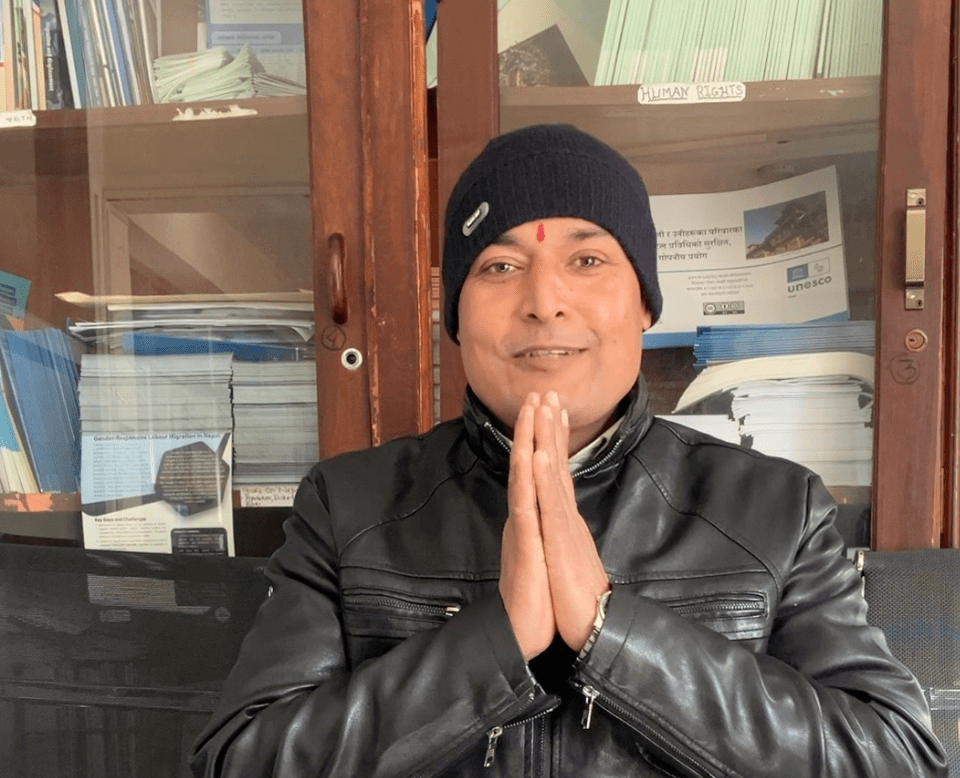
Across all of these initiatives, we have put in place mechanisms to enable us better to understand the outcomes of our research-practice, not least so that we can share further information about what works and what challenges remain so that others can learn from our experiences. We believe that hearing from migrants themselves is one of the best ways to share such understandings (see videos here), and so this post closes with a short commentary from Swarna Kumar Sha from NNSM, the umbrella organization of civil society organizations in Nepal working in the field of labour migration and development, about his experiences of working with us.
During one of our research visits to South Africa in January 2024 it became abundantly clear that many small and poorly resourced civil society organisations have little experience of using digital tech safely, wisely and securely. Drawing on good practices across the world, as well as our subsequent experiences in and with colleagues from Brazil, Nepal and Mozambiaue, we have therefore produced a short (12 page) guide to help such organisations understand the risks they are at from the use of digital tech and how they can be mitigated. This contains useful tips, graphics that can be copied and reversioned into posters, as well as links to more detailed sourcers of information, and it is freely available in English under a Creative Commons CC BY SA license.
Please get in touch using our contact page should you have any comments on how this could be improved or to discuss developing versions in other languages or for other contexts, and do please share information about this resource through your own networks.
Tim Unwin visited Cape Town between 23rd and 30th August to carry forward our work led by Maria Rosa Lorini with migrants in South Africa as part of the MIDEQ Hub. This visit focused especially on dissemination, monitoring and evaluation, and training skills, but it also provided an excellent opportunity to work with other colleagues in MIDEQ from the South African lead team at the University of Cape Town (UCT) and also the work package on creative resistance and well-being from the University of Glasgow
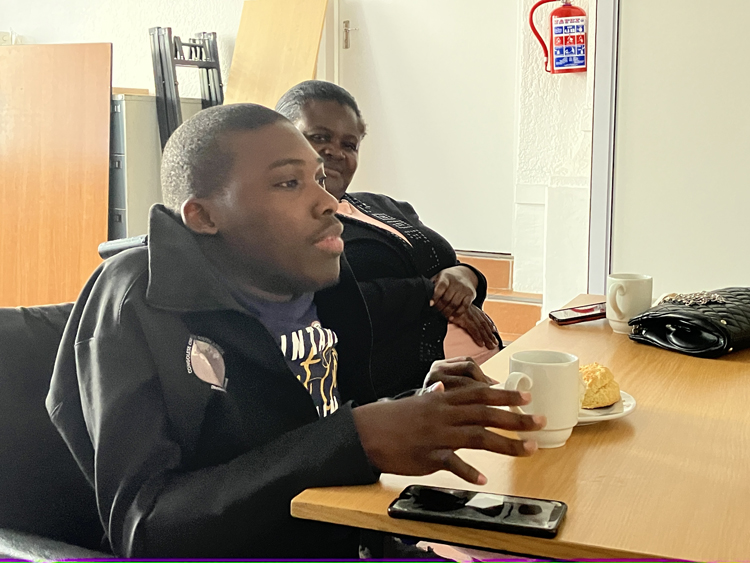
We held two workshops at the Scalabrini Centre of Cape Town with the group of migrants who have been trained in video production and in the safe, wise and secure use of digtital tech through our MIDEQ intervention. The first of these concentrated on ways through which these videos can be disseminated more widely, as well as the importance of rigorous monitoring and evaluation for us to understand the impact of these videos. Key ideas to emerge from the workshop were: that it is better to produce something of, say, 60% quality, rather than aiming to produce something of 95% quality but failing to deliver anything; the ways that short videos on social media platforms such as Instagram and TikTok can be used to direct other migrants to their Fusion Avenue videos on YouTube; and the need for individuals in any loosely knit organisation to take responsibility for some aspect of its work. We also explored the top five tips on Instagram success that Michelle Carlin had suggested.
The migrants had recently held a training workshop on safe, wise and secure use of digital tech for other migrants at Rugby, and so our second workshop was to draw out lessons from this and provide them with additional advice on how to train others. This involved them in delivering short training segments and having feedback from each other on what went well and what aspects they might try to improve.
As part of our dissemination strategy and in order to help make our work sustainable beyond the duration of funding from the UKRI GCRF, we also used the opportunity to have very productive practical discussions with organisations working at the interface between migration and digital tech about ways through which the migrants’ skills in video production could be used to make further videos for these organisations in the future. Among the organisations with whom we explored future collaboration on a range of modalities are the Scalabrini Centre of Cape Town, the Adonis Musati Project, the University of Cape Town’s Refugee Rights Unit, Cape Town TV, Phillipi TV, Africa Unite, Ubunthu-Betu in Samora Machel and JL Zwane in Gugulethu.
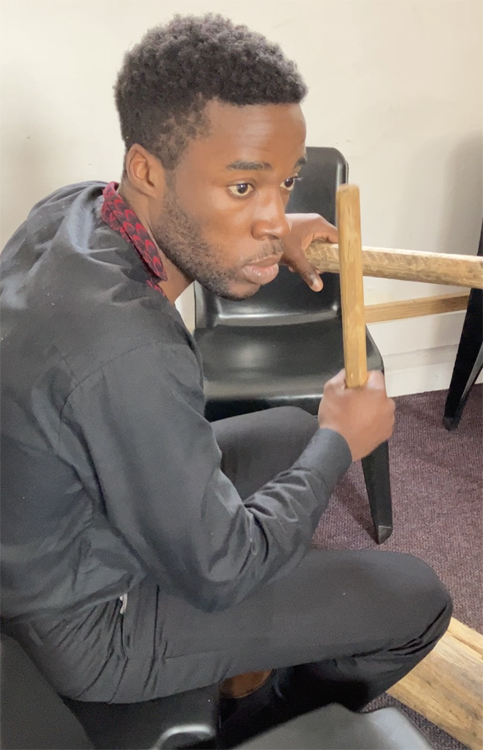
Finally, this visit provided an excellent opportunity to work together with colleagues from other work packages within MIDEQ, namely our South African country lead team ked by Dr. Faisal Garba at UCT, and Dr. Gameli Tordzro from the Univeristy of Glasgow. Gameli is a highly engaging and charismatic artist and musican whose research is in creative arts and translating cultures, language and education with a focus on African diaspora music, video film production, story and storytelling. He was in Cape Town working with about 25 migrants at Africa Unite to weave a story in words, music and culture about the experiences of African migrants, and it was truly humbling to watch them develop their very moving collective story and performance.
Finalising details with them of a portal to bring together existing information of relevance to migrants so that they can readily gain reliable advice on all aspects of migration. There are many existing apps and websites relating to migration for Nepali citizens, not least the advice provided by the government. However, migrant organisations told us early on in our work with them that there was a real need for such a one-stop-shop, and we have been supporting them as they have been creating this portal together with local tech developers. This is due to be launched in December 2023, and the migrants also made some short videos that will be used to promote the portal in advance of the launch.
A second element of work suggested by the organisations was the need for basic training guidance for migrants in multiple languages used in Nepal on the safe, wise and secure/private use of digital tech. Following the development of a training programme earlier in 2023, along with guidance notes on how the slide deck can be used, migrants rquested a more basic set of information. Having produced this before our visit, we tested it out again in Kathmandu, and following some further revisions this is now being translated into relevant languages, and will also be availabe at the launch in December.
The visit also provided an opportunity to meet with colleagues from different organisations based in Kathmandu, primarily to explore ways through which these resources can best be disseminated, notably the Government of Nepal’s Foreign Employment Bureau, the ILO Office in Kathmandu, and the UNESCO office in Kathmandu. We are very grateful for their strong support and the advice that they have given us. It was also good to meet with Nayan Pokhrel who has led on the translation of our work, and has provide much useful information about Nepal for us.
In Pokhara, we followed a similar pattern of work including:
Meetings with our partners at Gandaki University as well as those involved in training young people in digital skills at the National Innovation Centre’s ICT & Electronics Innovation Lab, and staff at Gandaki Medical College and hospital.
A review session on the basic training deck we have been creating together on the safe, wise and secure use of digital tech, with colleagues from Gandaki University, the MRC in Pokhara, and NEST in Pokhara.
We were also grateful to have an opportunity to see some of the wealth of cultural heritage of Nepal, especially around Patan Durbar Square and Kathmandu Durbar Square which have been so lovingly restored after the earthquake of 2015.
As of 1st August 2023, the UNESCO Chair in ICT4D at Royal Holloway, University of London has reverted to its original identity as the ICT4D Collective. We are a group of very diverse researchers and practitioners from across the world, bound together by our commitment to the highest possible quality of research-practice relating to the use of digital technologies in the interests of the world’s poorest and most marginalised people.
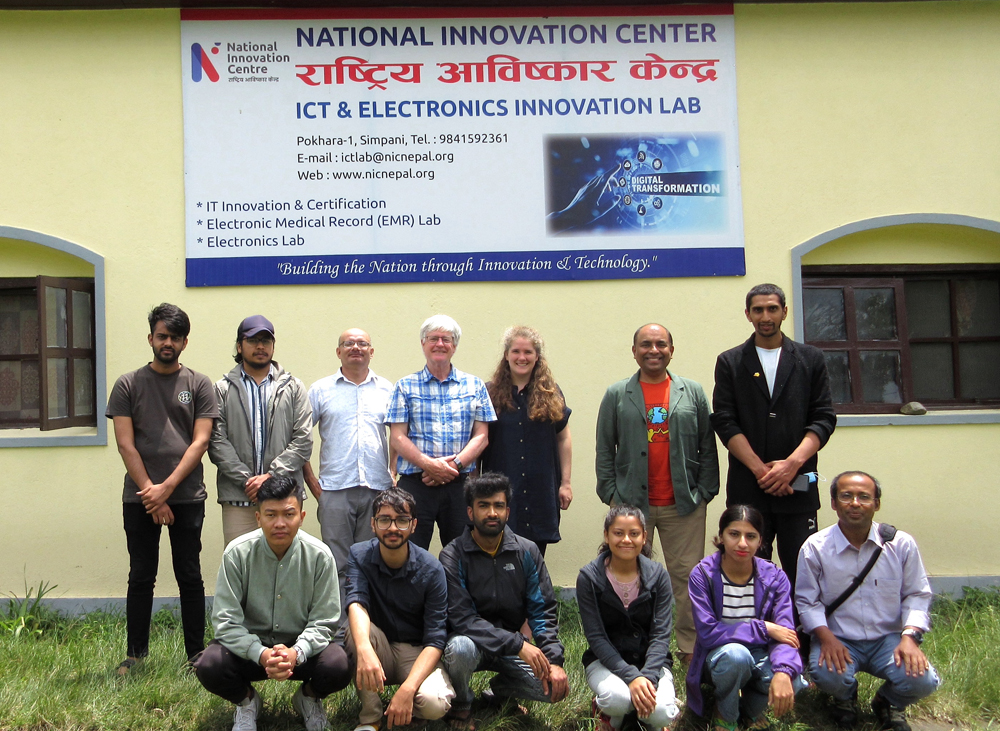
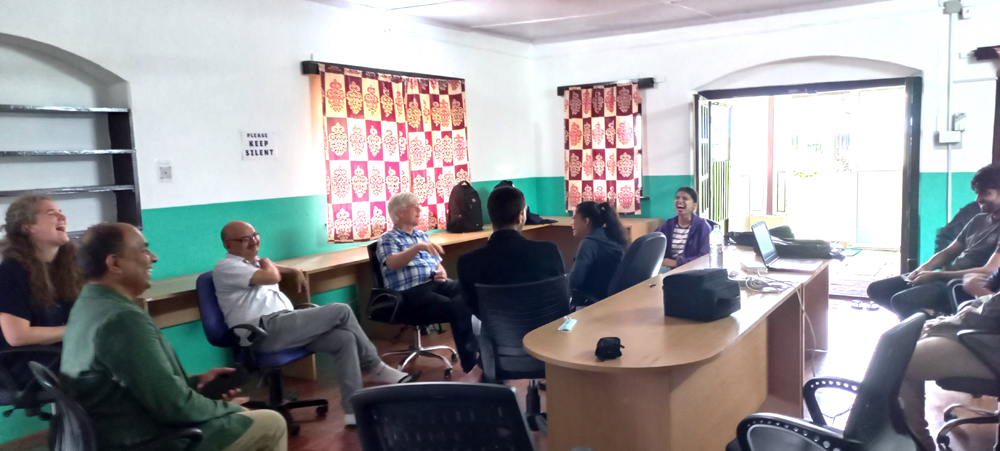
Our last engagement as members of the UNESCO Chair in ICT4D: meeting staff and students at the NIC’s ICT and Electronics Innovation Lab in Pokhara, Nepal, July 2023
The Collective and the UNESCO Chair in ICT4D
The original ICT4D Collective was created in 2004, and evolved through an agreement in 2007 between UNESCO and Royal Holloway, University of London into the UNESCO Chair in ICT4D (Information and Communication Technologies for Development). UNESCO Chairs are groups of researchers in specific institutions undertaking work of direct relevance to UNESCO’s fields of competence, and they promote “international inter-university cooperation and networking to enhance institutional capacities through knowledge sharing and collaborative work”. Members of our UNESCO Chair have been very proud to have been associated with UNESCO for the last 16 years, and to have collaborated closely with many good friends in UNESCO’s Paris headquarters and field offices. We were also honoured that Houlin Zhao, the Secretary General of the International Telecommunications Union (ITU) between January 2015 and January 2023, and Jean Philbert Nsengimana, former Minister of Youth and Information and Communication Technology (MYICT) from Rwanda, were our Honorary Patrons.
The following are some of the things we have particularly enjoyed engaging in over the last 16 years:
Working together collegially in a truly multidisciplinary context, involving colleagues from Computer Science, Geography, Information Security, Law and Managament at Royal Holloway, University of London.
Creating one of the largest groups of postgraduates completing PhDs in the field of ICT4D during the late 2000s and early 2010s.
Crafting an extensive partnership network involving governments, the private sector and civil society, and sharing the lessons we have learnt about making partnerships successful.
Contributing our experiences in global discussions around the role of digital tech in international development, especially in the UN’s WSIS process (since its origins in 2003), and UNESCO’s many gatherings relating to education and technology.
Working on the ground in support of diverse groups of marginalised people, especially those with disabilities, out of school youth, women in patriarchal societies, and migrants and refugees.
We are now re-energised as the ICT4D Collective, with 22 founding members drawn from 13 countries – we welcome new members who share our aims and principles. Quick links to our research and practice are available below:
See also the ICT4D Facebook Group which we established in 2007 and now has >5,500 members
An exciting future…
We all look forward to continuing the work started by the original ICT4D Collective almost 20 years ago, although we remain very sad that the new leadership team at Royal Holloway, University of London did not see value in the institution continuing to have a UNESCO Chair. Perhaps we represented voices from the past; perhaps we have been too critical and anarchic; perhaps we have just been honest and spoken truth to power. Whatever the reason, we will continue to have fun working together, we will continue to challenge the status quo, we will continue to point out the many harms caused by the use of digital tech, and we will continue to work with and support the world’s poorest and most marginalised peoples.
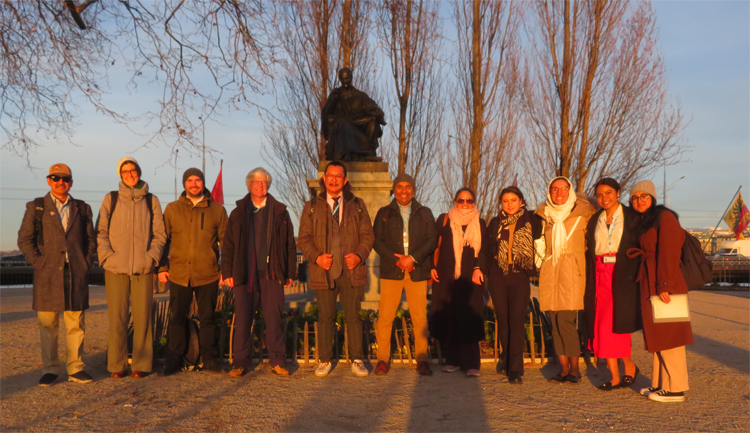
Particiants on the DESC walk photographes beneath the statue of Rousseau as the sun sets
The Digital Environment System Coalition (DESC) convened two sessions (403 and 204) on 16th and 18th March at this year’s WSIS Annual Forum held in Geneva. The first was a walk which we believe to be the first ever such event held during a WSIS annual forum, and the second was a more traditional session within the cavernous CIGG. Both sessions were convened by the UNESCO Chair in ICT4D at Royal Hollloway, University of London which provides the Secretariat to DESC, in association with INIT (the Inter-Islamic Network on IT), the WWRF (Wireless World Research Forum), ICT4D.AT, and RC-DISC (the Research Cluster for Digital Inequality and Social Change at the University of Canberra).
Experiencing digital environment interactions in the “place” of Geneva (Session 403): the DESC Walk
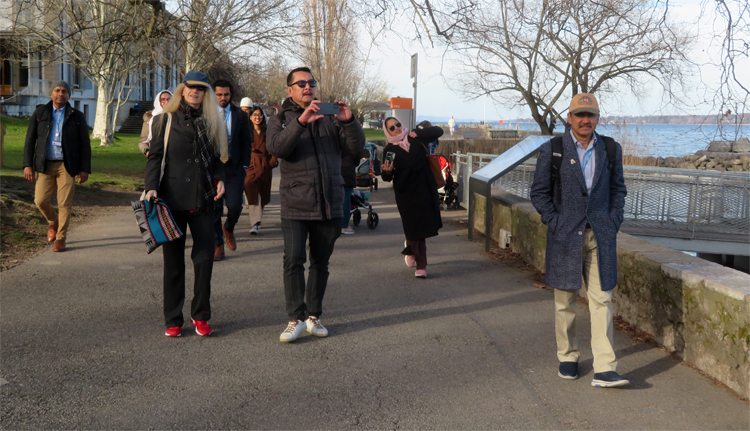
We experience things differently when we walk, when we talk together, and when we interact with the real physical environment. We feel the fresh air on our faces, smell the vegetation, hear the noise of running water, and touch the rough rocks on the slopes. We interact differently with each other. We pause and contemplate where we are. Our minds engage in ways that are so, so different from when we sit in large conference halls.
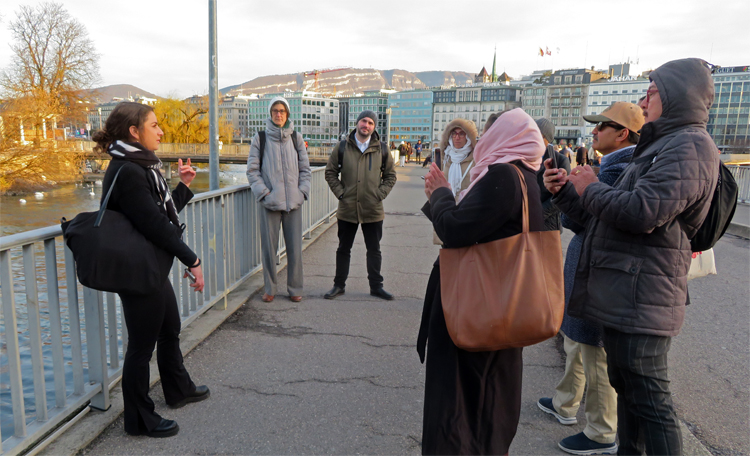
This DESC walk provided an opportunity for participants (i) to share their own research and practice relating to the interactions between digital tech and the environment, (ii) to discuss the positive and negative impacts of digital tech specifically on the biosphere, hydrosphere, atmosphere and lithosphere, and (iii) to make recommendations concerning the further development of YouthDESC. In essence, individual participants brought the group to a halt at locations that they felt were most appropriate for them along the walk and shared information about themselves and their research/practice, and we also stopped at five pre-planned locations to discuss each of the main themes as a group. Moderators of each main stop sought to encourage the participants to highlight three positive and three native interactions between digital tech and the environment.
Parc Mon Repos – the biosphere (led by Paul Spiesberger). Issues discussed included the positives of being able to share nature through digital images, use of remote sensed imagery to monitor the biosphere, and the use of digital tech to enhance agricultural production. Negatives included digital pollution of plants and green spaces, potentially adverse effects on human health (including mental health), and increased urban exploitation of rural environments through digital tech.
Poste Filial – YouthDESC (led by Tasfia Rahman). This began with a visit inside the building to discover the ways through which it is now necessary to use virtual/digital systems to post a physical/real card. We also recognized the important links between postal communication in the past and digital communication at present. The Instagram account of @YouthDESC was discussed, alongside the pros and cons of different social media platforms for engaging youth
Pont des Bergues – the hydrosphere (led by Ahmed Imran). It was recognised that unlike the biosphere and lithosphere, the impact of digital tech on the hydrosphere is less immediately visible. However, negatives include the impact of deep sea mining for rare earth minerals, and the heating of water in cooling systems. The use of water warmed by the heat produced by servers was, though, also seen as a benefit.
Ile Rousseau – the atmosphere (led by Zumana Imran). Beneath the feet of the philosopher Rousseau, our thoughts turned to the atmosphere above us, and focused on the positives of the use of satellites for monitoring environmental change and enabling communication in isolated places, whilst also recognizing the harms of treating outer space as we used to treat the oceans (global commons), the impact on dark space, and space junk. It was also recognised that different cultures have differing views about the environment, and we must engage with indigenous communities.
Auditoire de Calvin – the lithosphere (led by Tim Unwin). As dusk came upon us, few people remained to walk up the steps to the Cathedral and Auditoire de Calvin, but we nevertheless discussed the impact of mining for minerals used in digital tech, the impact of waste especially in landfill, and also the potential benefits in land management.
Scenes from the DESC walk in Geneva, 16 March 2023
Reimagining the Interface between Digital Tech and the Physical Environment (Session 204)
This formal workshop session had three main aims:
to share an updated overview of DESC’s emerging model that challenges much existing work being undertaken on digital tech and climate change;
to provide an update on its ongoing activities since WSIS 2022; and
to do this in a lively and interactive way.
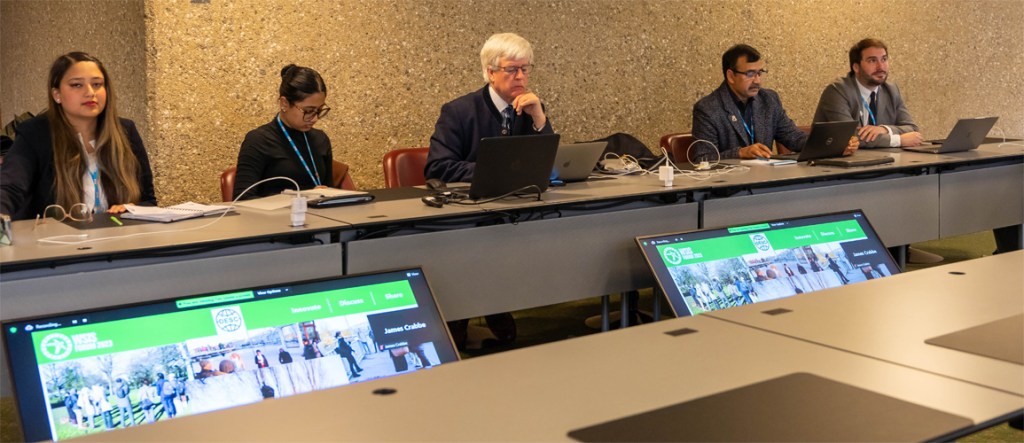
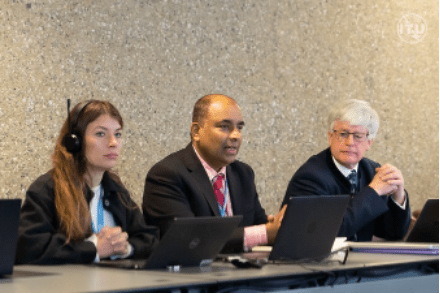
Official ITU photograph from WSIS Session 204
The session was structured as follows:
Introduction to DESC, highlighting the need to adopt a holistic approach focusing on the interaction between digital technologies and the totality of the physical environment (including the lithosphere, hydrosphere, biosphere and atmosphere – see diagram below) rather than just climate change. Indeed, a focus primarily on human-induced climate change is likely to lead to seriously adverse impacts on other dimensions of the physical environment.
Summaries of the key points of discussion explored during the DESC walk (WSIS Session 403) the previous day, presented by the five discussion moderators (including the YouthDESC session).
Highlights of two examples from the activities of DESC’s Working Groups emphasizing why these issues matter:
The indigenous DESC Working Group (Poline Bala’s sliodes were presented by Tim Unwin). This highlighted that indigenous peoples are insufficiently represented at events such as WSIS, and that they can contribute significantly to new ways of addressing the interface between digital tech and the physical environment
A video presentation by James Crabbe on the importance of omics for informing policy on deep sea mining.
This was followed by an introduction to the toolkit being developed by DESC for all those who have pledged to the ITU-led Partner2Connect initiative to enable them to consider and address the environmental impact of their proposed interventions.
The final element was a lively discussion around the issues raised, that included new commitments from participants to explore collaboration on implementing the DESC toolkit
DESC in Geneva
The general consensus from both sessions was that they were enjoyable and informative – and that DESC should offer to convene another walk in 2024 when we can delve once again into both the positive and negative impacts of the design and use of digital tech on the environment.
The session, which aligned especially with SDG10 and WSIS Action Lines C3, C4, C5, C7(iii, iv,v), C8 and C10, was structured around our digital interventions from Nepal and South Africa using a series of short-form videos ‘created by migrants for migrants’ as a framing device for the discussion. The contributions highlighted many inequalities faced by migrants and how digital tech can meaningfully address them as well as how digital tech can support personal life choices, offer networking opportunities, and become a peer-to-peer learning tool. The overarching theme was the need for all actors at the interface of digital tech and migration to be mindful of the need to ensure the safe, secure and wise use of digital tech by migrants.
Despite increasing evidence of the challenges to the beneficial use of digital tech by vulnerable migrants, actors such as tech companies, international and local organisations continue to design technologies aimed at migrants without due regard to their unintended consequences. International organisations and fora such as WSIS that are at the forefront of digital inclusion must recognise not just the opportunities offered by digital tech for migrants but also the risks and harms associated with them. This is especially important given the pervasive structural inequalities and limited digital capabilities that characterise many migrant contexts.
WP9 co-lead Prof G Hari Harindranath led the session with Prof Tim Unwin and Dr Maria Rosa Lorini while Bryce Hartley from GSMA (online) and Julien Varlin from ILO Geneva served as discussants. The highly interactive hybrid session was attended by senior government officials and representatives from international organisations, CSOs and tech companies as well as researchers.
We also used the in-person WSIS Forum in beautiful Geneva as an opportunity to discuss pathways to impact for our work with colleagues at IOM and ILO.
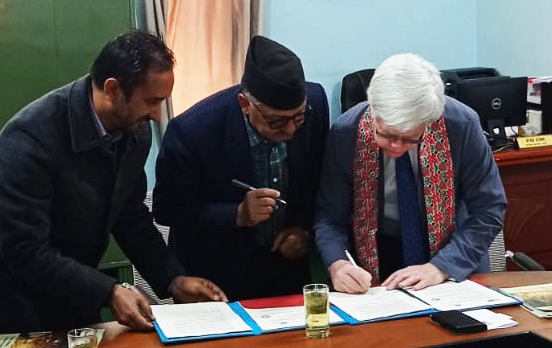
The UNESCO Chair in ICT4D at Royal Holloway, University of London signed a new partnership agreement with Gandaki University, Pokhara during a visit of our Chairholder, Tim Unwin, and Professor Harindranath to the university on 1st February 2023. The University, situated in the valley of the lakes below the Fishtail and Annapurna mountains, was established in 2019 to provide world class education in keeping with recent international trends in university education. It has particular interests in ways through which digital technologies can benefit Nepali society and economic development, and one of its first degree programmes is the Bachelor of Information Technology degree.
Signing the MoU with Gandaki University
Our partnership has five broad outputs:
Joint workshops, events and conferences to explore aspects of the inter-relationships between digital technologies, inequalities, social change and international development in the context of Nepal
High quality research and publications on digital technologies, inequalities, social change and international development in Nepal
Research visits and exchanges between partners, especially to enhance the experiences of early career researchers
Joint funding applications to relevant funding agencies and research councils
Policy recommendations on areas of mutual interests
and is intended that these will in turn lead to the following outcomes:
Nepalese migrants and their families use digital technologies more safely, securely and wisely to improve their lives and livelihoods
Enhanced understanding globally, but especially in the UK and Nepal, about the creation and use of digital technologies, and their influence on social and economic inequalities
Wiser processes and activities implemented by companies in Nepal and the UK to mitigate the negative impacts of the development and use of digital technologies by migrants
Improvement in global policy making relating to the use of digital technologies by and for migrants
Enhanced collaboration between academics, policy makers and practitioners in effecting changes to the ways in which digital technologies are designed and used so that their potential harms are mitigated and their benefits for the poorest and most marginalised are enhanced, especially in the contexts of Nepal and migration
The university is currently building a new campus on the eastern outskirts of Pokhara, and Tim and Hari were invited on 2nd February to see the progress on construction that has already been made, illustrated in the photographs below.
Department of Pharmacy
Valley running past the new campus
Invention and Innovation Centre
The catalyst for this partnership has been the work of the UNESCO Chair in ICT4D on technology, inequality and migration in Nepal as part of the UKRI GCRF funded MIDEQ Hub, but it is hoped that this will provide many further opportunities for future collaboration, and discussions are already underway with some of our Affiliated Members in the region exploring fiurther synergies.
Members of the UNESCO Chair in ICT4D are leading Work Package 9 of the MIDEQ hub (funded by UKRI GCRF and Royal Holloway, University of London) and are exploring how digital tech can be used to reduce the inequalities associated with migration, especially in four corridors: Nepal-Malaysia, Ethiopia-South Africa, China-Ghana, and Haiti-Brazil. The fourth of our working papers presenting data on the Uses of digital technologies by migrants from Haiti and to Brazil has just been published within the UNESCO Chair in ICT4D’s publication series. Key findings and abstract are as follows.
Key findings
1.Context matters: groups of migrants from different countries and backgrounds use digital tech in varying ways and for different purposes. There is no such thing as one size fits all.
2.Many migrants aspire to use digfital tech for educational and employment purpose – yet these are things that digital tech could already be readily used for if they knew how.
3.Most migrants focused on the use of digital tech for increasing economic well-being – none specifically addressed their potential for reducing inequalities.
Abstract
This working paper is the fourth in the series produced as part of the output of Work Package 9 on technology, inequality and migration within the MIDEQ Hub, a multi-disciplinary research project in 12 countries of Latin America, Africa and Asia, including the Haiti-Brazil migration corridor. It presents the results of three iterations of an online survey totalling 372 respondents most currently living in Brazil, and mainly from Haiti; 92.7% of those who reported their status identified themselves as migrants, with the remainder being family members of migrants (5.5%) or returned migrants (1.8%). Following a summary of the methodology, which explains the impact of COVID-19 on our research practice and why an online survey was used to replace our originally planned interviews and focus groups, the paper provides an overview of the most important results and an exploratory data analysis, focusing on the potential influence of age, gender, countries of origin, migration status, and occupational status on the ways in which respondents use digital technologies and for what purposes. Three important conclusions for the subsequent stages of our research on the inequalities associated with migration and how digital tech may be used to reduce these are: first, the migrants responding to this survey are from very different backgrounds, and these differences have a strong influence on their use of digital tech; second, many migrants aspire to use digital tech for purposes that they could readily do if they knew how; and third, none of the migrants specifically identified inequality or equity as issues that they would like to use digital tech to address.
To read this paper in full (v.4 .pdf) please use this link.
Other UNESCO Chair in ICT4D Publications are available here.




























 ICT4D Collective