[Click on images or links to download the relevant press release]
Events
Lalitpur
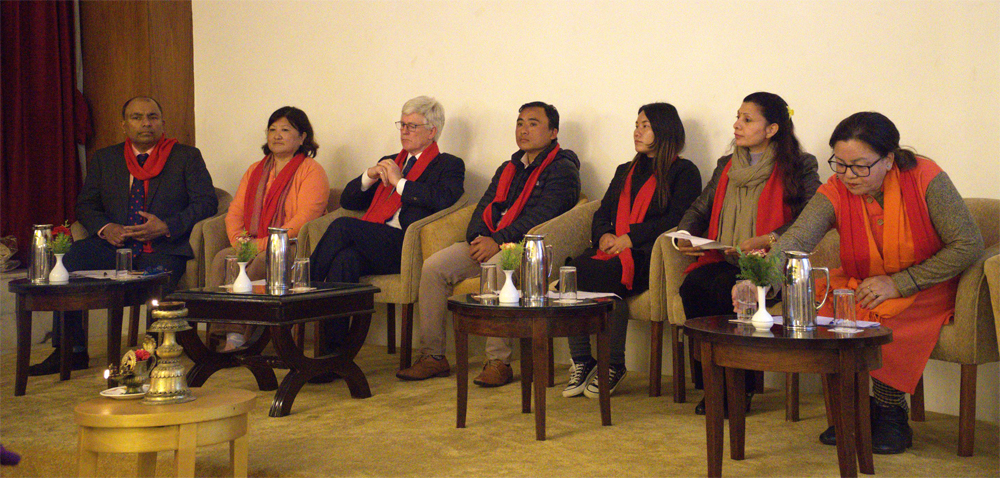
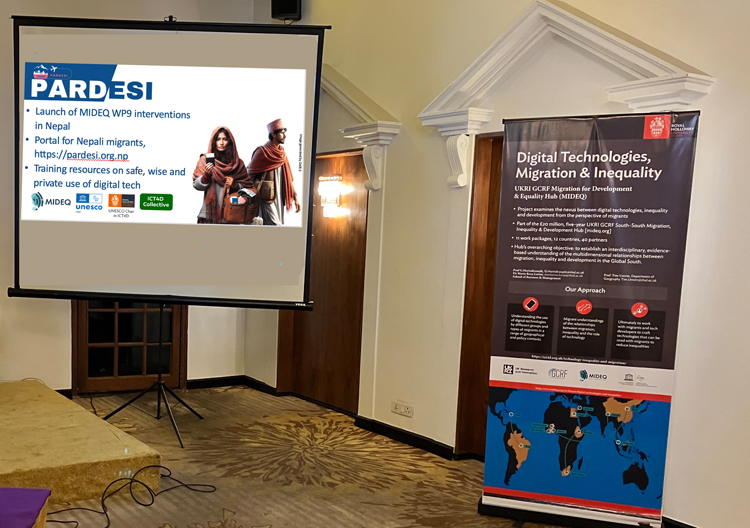
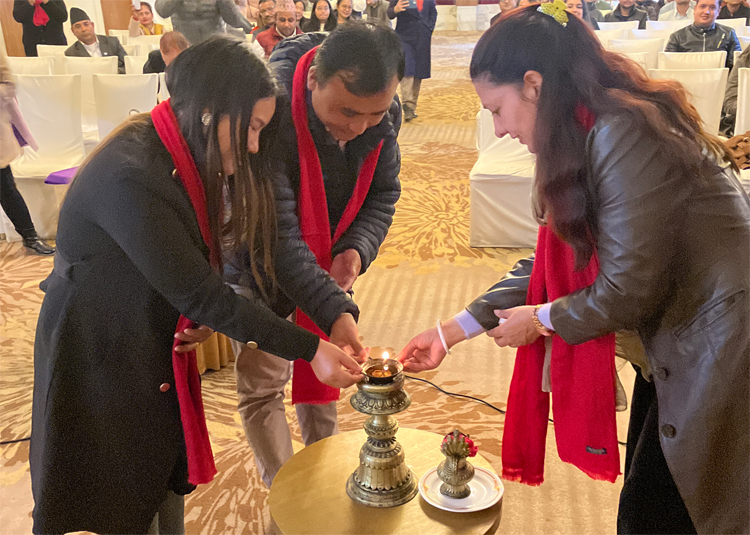
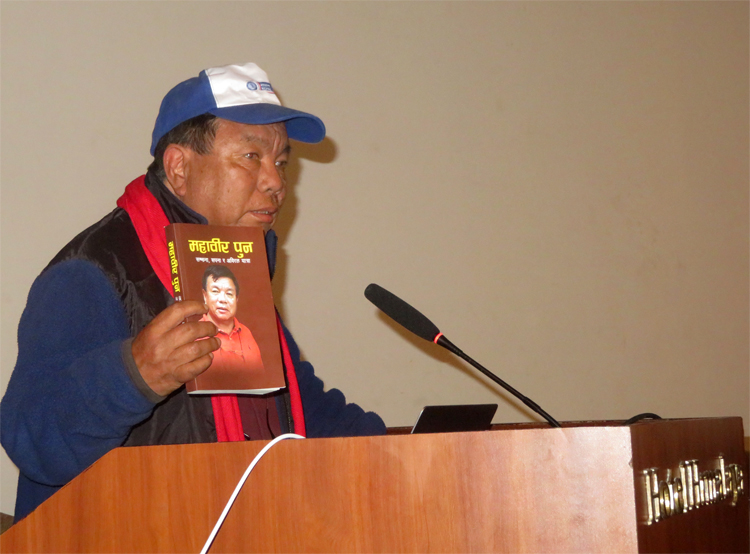
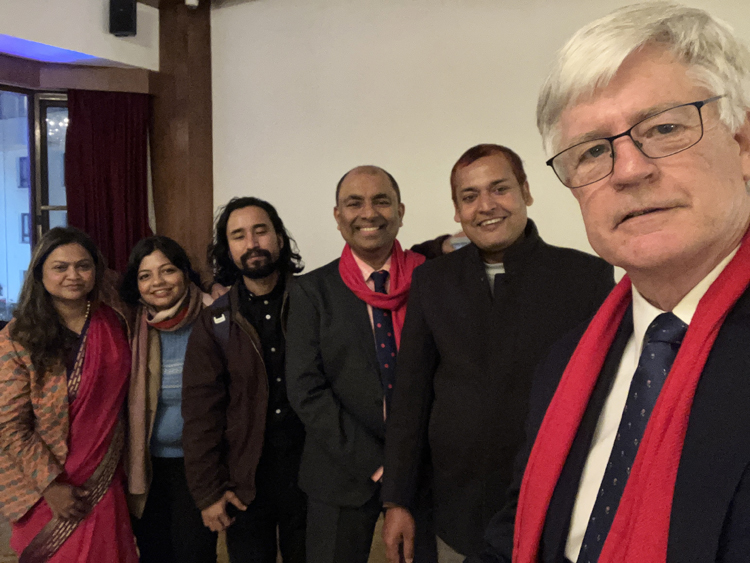
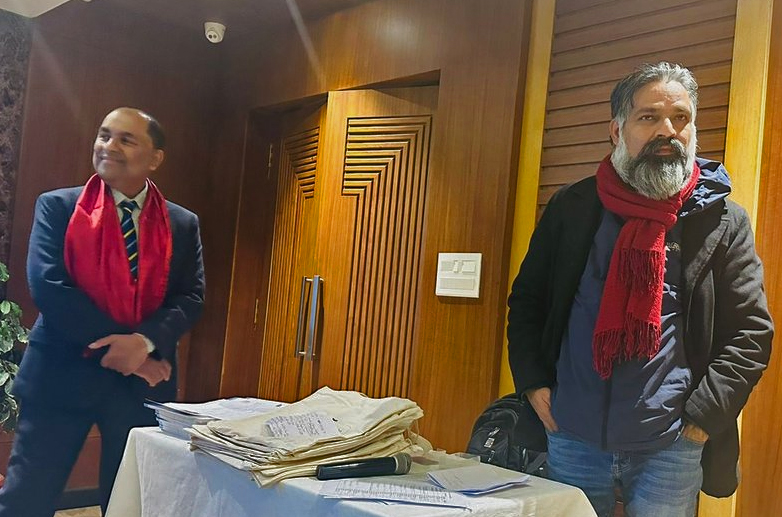
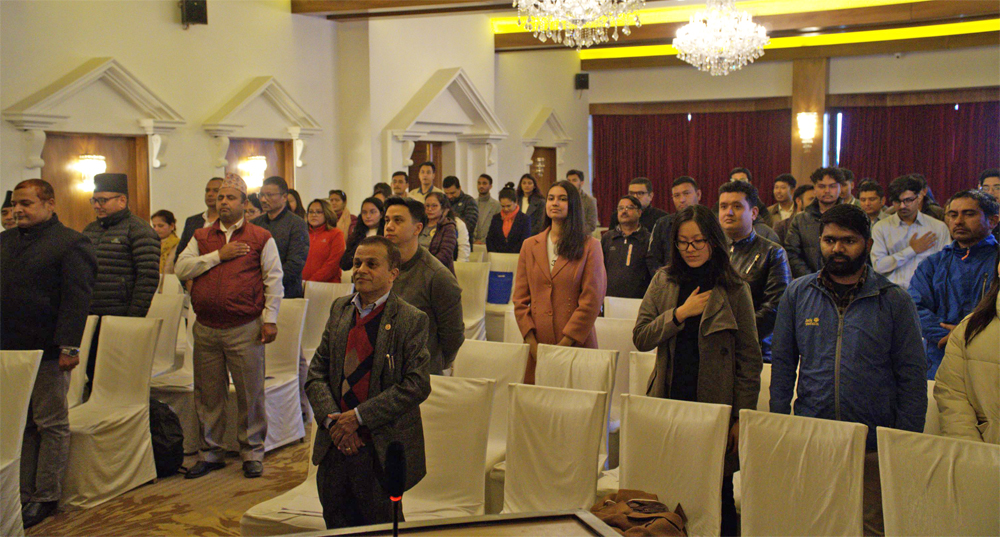
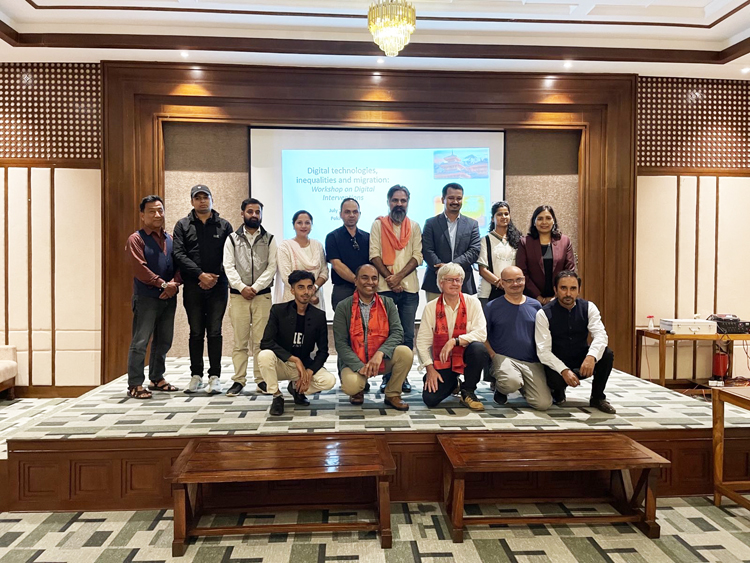
10 December 2023, Lalitpur, Nepal: The launch of the digital tech interventions for Nepali migrants facilitated by Work Package 9 of the MIDEQ Hub took place today in the Hotel Himalaya, Lalitpur. Eighty participants from government, civil society, the private sector, international organisations and digital tech students attended. The two key interventions that Hari Harindranath, Tim Unwin and Maria Rosa Lorini (from the ICT4D Collective and Royal Holloway, University of London) had helped their Nepali colleagues to create were presented: the https://pardesi.org.np portal, which is a one-stop-shop for migrants and their families to find out about all aspects of the migration process; and resources that can be used to train migrants in the safe, wise and secure (or private) uses of digital tech, which have been designed to be especially useful in the Migrant Resource Centres.
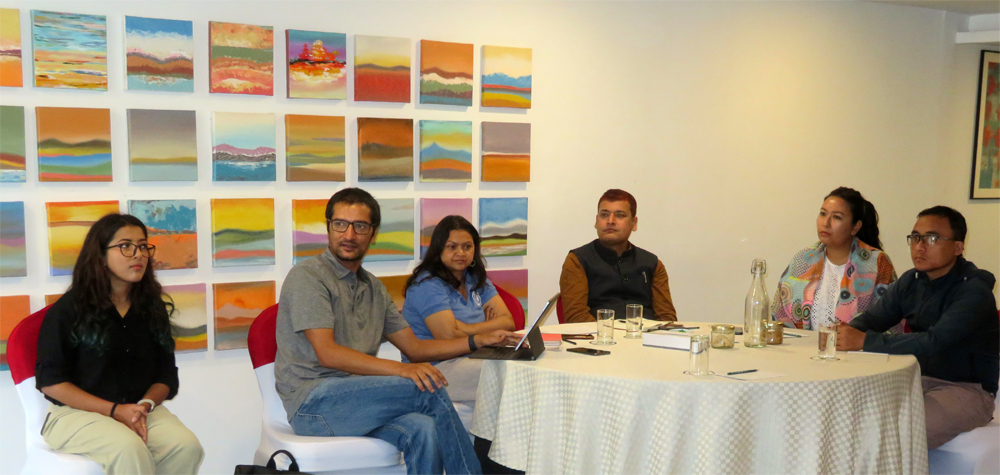
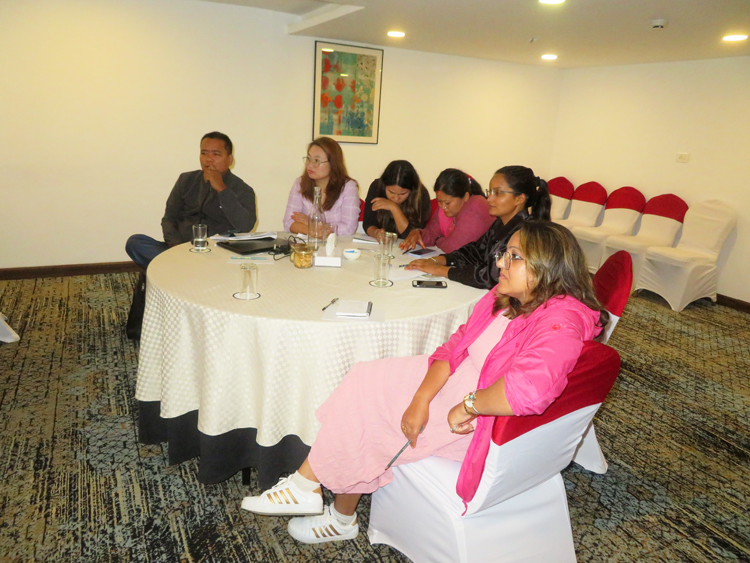
Participants in the workshop (without the convenors!)
Members of the ICT4D Collective have been actively involved as Work Package 9 in the MIDEQ Hub since 2019, focusing especially on ways through which migrants can use digital tech to improve their lives, and thereby reduce the inequalities associated with migration. The Hub held its final major symposium in Rio de Janeiro in September 2023, and Tim Unwin, Hari Harindranath and Maria Rosa Lorini from the Collective, together with Guilia Casentini from SOAS took this opportunity to convene a highly interactive workshop/roundtable for members of MIDEQ on the theme of “What works for migrants: reflections on research practice in the interests of migrants”. The fundamental purpose of this was to explore how migrants may have benefited from our work, and how we might know what impact we may actually have had on them.
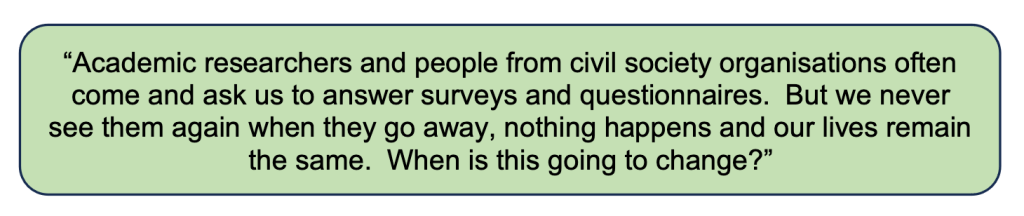
Heard in passing during our research… When will such often heard comments be consigned to the past?
The workshop addressed four main themes:
How do we really know what migrants think about our work?
What have we found to be effective ways of gathering empirical evidence about outcomes experienced by migrants?
What have we found to be effective ways of disseminating our outputs so that migrants benefit from them?
What are good forms of “output”/intervention to improve migrant lives?
We very much hope that this will promote discussion and further interaction on the crucial subject of the extent to which academic research can positively impact the lives of poor and marigalised communites and how we can know what migrants actually think of what we do. Do share your views by adding a comment to this post, or please get in touch with us directly to carry the conversation forward,
A novel initiative to celebrate the International Day of the Girl Child took place in the vibrant city of Cape Town, South Africa, on 11th October. This was driven by a collective commitment to disseminate the importance of safe, wise and secure use of digital technologies, one of the corner stones of Work Package 9 (WP9) within the MIDEQ Hub funded by the UK government’s UKRI GCRF. This team is dedicated to harnessing the potential of digital tech to improve the lives of people and has dedicated much attention and care to discussing the side-effects of the digital world and to find ways to decrease any potential harms, especially when working with vulnerable groups.
Five of the migrants living in South Africa and trained in digital skills through MIDEQ’s WP9, organised and managed an event that stands as a testimony to the importance given by people from many different backgrounds to the safe, wise and secure use of digital tech, and also witnesses the power of autonomous action and community engagement. The ‘Big Five’, as the activists called themselves in a comparison with the charismatic South African megafauna, took it upon themselves to participate in a school event dedicated to girls. This event took on added significance given the unique challenges faced by girls in the digital landscape, including issues of sexual harassment and trafficking, particularly within the migrant community. The school is situated in an area characterized by a significant concentration of migrants, and the teachers there are well-informed about the delicate issues associated with xenophobia and hate speech. Their stydents comprises girls from various nationalities, including Kenya, Zimbabwe, Zambia, Angola, and the Democratic Republic of Congo. Notably, the facilitators, who hail from Zimbabwe and the Democratic Republic of Congo, were themselves also able to glean valuable insights from the small group conversations during the activities.
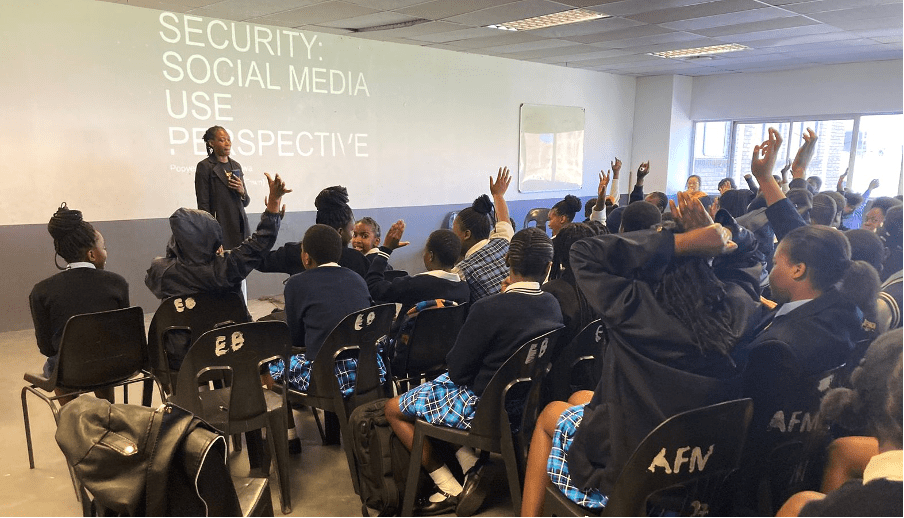
Pascal Avenvuka Mbu-Letang interacting with the young students. Photo Credit: Hentie Wilson
The autonomy and initiative of these migrants trained through WP9 shone through as they seized the opportunity to impart crucial knowledge on online safety and security. As facilitators, they valued the school and specifically the chance to contribute to an event focused on girls’ perspectives. This was just the right arena with a relevant audience to spread messages and initiate a conversation with both students and teachers on risky digital behaviours that are too often underestimated. Above all in marginalised areas affected by limited infrastructures and high inequalities, parents and teachers do not consider digital risks as a priority to worry about. Nevertheless, as the facilitators highlighted during their talks, more and more often technology is the conduit of sexual harassment initially online and soon afterwards in person.
To emphasize the importance of being cautious and discerning while online, the speakers posed a provocative question to the students, asking them who assists them at school. The young audience quickly responded, stating that they have friends. However, when a similar inquiry was made regarding social media, the students became uncertain and struggled to formulate their responses. Throughout the session, the facilitators carefully avoided sounding judgmental about common mistakes or limited knowledge of online risks and solutions. Instead, they tactfully encouraged students to reflect on aspects such as the potential for online tracking when sharing personal pictures of their daily activities.
These migrants are among the founders of the Fusion Avenue YouTube Channel – a collective of migrants living in South Africa dedicated to exploring cultures, ideas, and viewpoints with the goal to bridge gaps, celebrate differences, and find common ground. With the consent of the school, the facilitators created a video reportage of the event, and have posted this on their channel (click also on the image below).
Join us on this journey as we delve into the details of this inspiring initiative, exploring how these dedicated facilitators catalysed the attention of their young audience and left a mark on the students and teachers with whom they engaged. This is a story of empowerment, autonomy, and the boundless potential of collaboratiion that we would like to tell though their own voices.
Memory Mwadziwana, one of the facilitators, captured the essence of the day in this way
“Ladies and gentlemen, welcome to a recap of the extraordinary International Girls Day event! Ladies and gentlemen, this is Memory, reporting on the extraordinary International Girls Day event that took place on October 11th at the Purpose Finders School. It was a day that resonated with empowerment, education, and unity, leaving a profound impact on both the girls and the teachers who took part.
The day kicked off with a briefing by our dedicated organizers, laying the foundation for what would become a transformative experience at Purpose Finders School.
An emotional prayer permeated the air, symbolizing hope and unity and setting the tone for the day’s events. It was followed by a shout-out to the remarkable facilitators and organizers, including Fusion Avenue, Women African Weavers, DMS Ministry, and Purpose Finders School. Their unwavering dedication forged a sense of community, creating a collaborative atmosphere that would define the day.
The girls took centre stage, sharing poignant poems that transcended mere performance; they became acts of self-expression and empowerment. The bond between teachers and students strengthened as educators gained a newfound appreciation for the incredible talents of their charges.
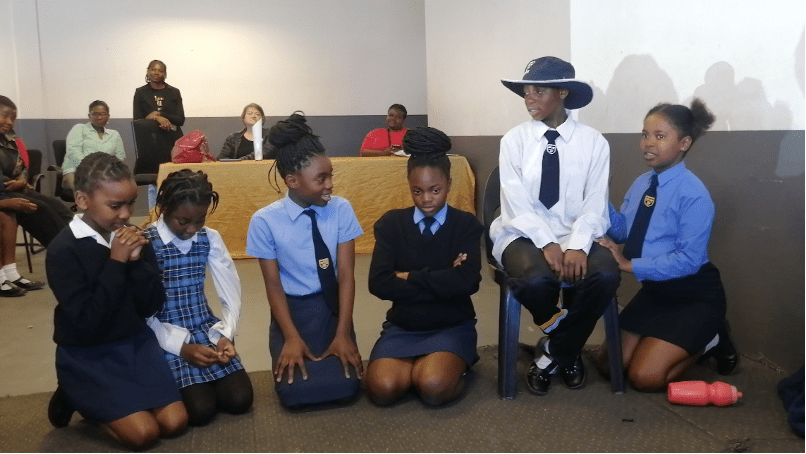
Theatre sketch by the students about early pregnancy (Photo credit: Marlene Sitah)
A highlight of the event was Pascal’s presentation on online safety and security. Trained by the MIDEQ Project, Pascal and her colleagues brought forth critical topics, including personal data exposure, digital harassment, hate speech, and online scams. In an age dominated by digital interactions, this knowledge proved invaluable.
Reiterating the importance of online safety, the event underscored the significance of being vigilant and informed in the digital world. Teachers expressed gratitude for the invaluable knowledge, and the girls left with newfound confidence.
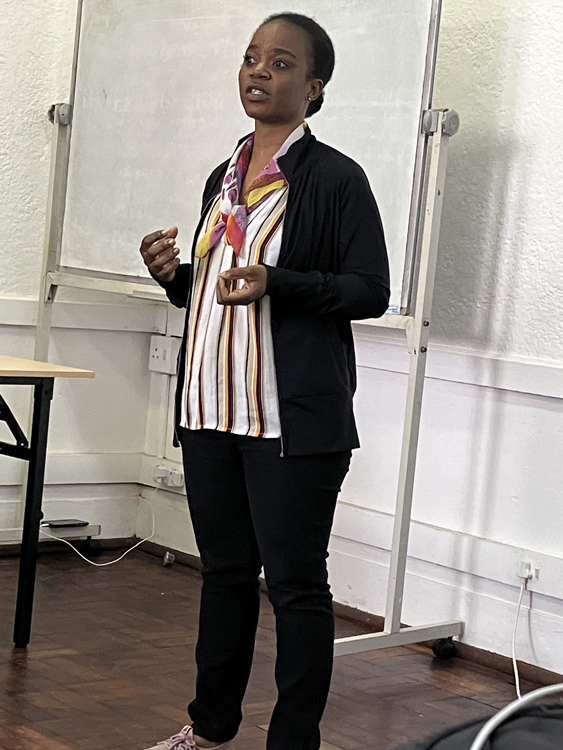
Pascal Avenvuka Mbu-Letang presenting personal data belongingness and life to the young students. Photo Credit: Michael Kanyinda
Reporting from the Purpose Finders School, this is Memory, signing off with a heart full of inspiration and hope for the continued empowerment of young minds.”
At the end of the event, a debriefing session took place among the facilitators and the teachers who were keen to discuss further involvement of the ‘Big Five’ in this learning process, starting from themselves as educators.
From our side in MIDEQ WP9, we can only wish the Fusion Avenue team more successful events such as this!
Video content has become an essential tool for sharing experiences, information, and solutions in the contemporary world. This medium can be an especially powerful means for migrants to connect, inform, and advocate for change. Surveys, interviews and focus groups with migrants in South Africa conducted between 2020 and 2022 as part of our research-practice within the MIDEQ Hub pointed to the potential benefits that training in digital video production could have in empowering migrants, specifically for sharing their life experiences (stories), helping fellow migrants, and shedding light on issues they face. This post describes the creation and implementation of a two-week workshop held at the Scalabrini Centre of Cape Town in November 2022 in collaboration with local tech developers. This subsequently formed a model for further workshops in Johannesburg and set in motion many other activities to improve the skills of migrants (see overview of our interventions with migrants in Nepal and South Africa).
The training workshop
The first week of the workshop was theory-based, and the second focused on practical video creation techniques. Its overall aim was to uplift and empower migrant voices while prioritizing safety and security, above all for the most vulnerable people, and also to leveraged open and free resources and video optimization strategies.
Week One: building a foundation and staying safe
The initial phase of the workshop was dedicated to building a strong foundation for digital storytelling while emphasizing the importance of online safety. Participants, from a dozen Sub-Saharan African countries, gathered to learn about the critical aspects of online safety and security., noting that the nuances of digital safety are paramount, especially when sharing personal experiences or sensitive information (see their video THINK).
Participants were guided by experts who shared valuable insights into protecting their online presence while engaging with social media and digital tools. This included strategies for safeguarding our digital presence, including
adopting strong, unique passwords for each online account,
staying informed about the latest cybersecurity threats and best practices
exercising caution when sharing personal information online, and
being wary of phishing attempts and suspicious links.
Protecting our online identities, financial data, and privacy settings, and minimizing the risk of being targeted by hate speech or discrimination were also essential components of the activities. The participants were encouraged to maintain a balance between sharing their experiences and protecting their well-being.
The workshop also took participants on a journey of discovery, introducing them to the potential of digital technologies for entrepreneurship, social mobilization, and community networking (see their video on e-business). Migrants often face unique challenges in their new homes, and digital tools can provide a platform to address these issues effectively. The theoretical sessions aimed to provide participants with the knowledge and confidence to utilize these tools effectively and safely.
Week Two: turning theory into practice while staying safe and leveraging free and Open resources
The second week enabled participants to learn about some of the technical aspects of video creation. They were introduced to techniques that allowed them to create potentially impactful videos without necessarily showing themselves on camera. This was particularly valuable for those who wanted to share their experiences while minimizing the risk of being identified and targeted.
The workshop emphasized the use of free and open software and content that are readily available on the web. Tools such as CapCut were introduced to allow participants to edit, enhance, and produce their own videos without any financial barriers. This made video creation accessible to all regardless of the devices used, although paying for connectivity often remains a challenge for the migrants. From shooting techniques to sound recording, from video editing to lighting, many details were covered so that they could all create their own videos using their smartphones. Nevertheless, more sophisticated devices such as external microphones for sound quality, stabilizers, and extra lightning were also demonstrated during the training to show the difference they can make and how to replicate the same good-quality results without using any such extra equipment. The initial videos produced as training activities showed how good-quality videos can be produced simply and easily, using accessible and free software. This empowerment through knowledge and frugal technology was a cornerstone of the workshop’s philosophy.
There were three main reasons why we focused on producing good-quality video production in the workshop.
Our commitment to engaging with other organizations: This part of our work aimed to reach out to organizations working with migrants in South Africa, and we hope that the migrants trained through the workshop will go on to make videos for such organizations. High-quality videos are more likely to be shared and promoted by these organizations. A well-produced video captures attention, effectively conveys its message, and aligns with the professionalism expected by these institutions.
Anonymity: Participants learned how to create avatars or use online, free, and readily available materials to anonymize their videos, avoiding the need to show their faces in case of sensitive topics or risk of online harassment.
Cost efficiency: these techniques helped minimize production costs as there was no requirement to constantly shoot new material around the city.
The dual benefit of anonymity and cost efficiency empowered participants to share their stories in high quality video without exposing their identities and without breaking the bank.
The impact and maximizing visibility
The same philosophy applied to the strategies for maximizing the visibility and impact of these videos. Participants were taught how to create captivating thumbnails that would grab viewers’ attention, craft relevant video descriptions to enhance searchability, and use special effects to engage and entice their audiences. Most also implemented a call to action at the end of each video to generate reactions and spark discussions, ensuring their content had a lasting impact.
At the end of the two-week workshop, participants showcased their videos to their peers and mentors. The diversity of topics covered was astounding, ranging from practical advice on navigating South Africa’s bureaucracy to heart-warming personal stories of resilience and triumph. These videos were not just about sharing experiences but also about shedding light on difficult situations and inequalities faced by migrants.
These migrants were able to become advocates for change through their videos. They created videos about organizations that help migrants (such as the Scalabrini Centre), highlighted the challenges faced (see Statelessness), prepared tutorials,and suggested solutions to improve their lives (see Tips for newcomers). They brought attention to the vibrant migrant community in South Africa, fostering greater understanding and empathy among the broader population.
Low-tech production for high and safe impact
This workshop also demonstrated the power of combining digital skills with a desire to share knowledge and experiences safely and effectively. Empowering migrants through video creation enriched their lives and our understanding of the diverse tapestry of human experiences. By leveraging free resources and implementing visibility strategies, this initiative enabled migrants to share their voices and also potentially to reach a wide audience, fostering greater empathy, understanding, and positive change.
This intervention has given voice to a community that often remains unheard. It is a testament to the transformative potential of technology matched with skills development and networking in addressing the challenges faced by migrants and helping them to improve their their lives better.
Tim Unwin visited Cape Town between 23rd and 30th August to carry forward our work led by Maria Rosa Lorini with migrants in South Africa as part of the MIDEQ Hub. This visit focused especially on dissemination, monitoring and evaluation, and training skills, but it also provided an excellent opportunity to work with other colleagues in MIDEQ from the South African lead team at the University of Cape Town (UCT) and also the work package on creative resistance and well-being from the University of Glasgow
We held two workshops at the Scalabrini Centre of Cape Town with the group of migrants who have been trained in video production and in the safe, wise and secure use of digtital tech through our MIDEQ intervention. The first of these concentrated on ways through which these videos can be disseminated more widely, as well as the importance of rigorous monitoring and evaluation for us to understand the impact of these videos. Key ideas to emerge from the workshop were: that it is better to produce something of, say, 60% quality, rather than aiming to produce something of 95% quality but failing to deliver anything; the ways that short videos on social media platforms such as Instagram and TikTok can be used to direct other migrants to their Fusion Avenue videos on YouTube; and the need for individuals in any loosely knit organisation to take responsibility for some aspect of its work. We also explored the top five tips on Instagram success that Michelle Carlin had suggested.
The migrants had recently held a training workshop on safe, wise and secure use of digital tech for other migrants at Rugby, and so our second workshop was to draw out lessons from this and provide them with additional advice on how to train others. This involved them in delivering short training segments and having feedback from each other on what went well and what aspects they might try to improve.
As part of our dissemination strategy and in order to help make our work sustainable beyond the duration of funding from the UKRI GCRF, we also used the opportunity to have very productive practical discussions with organisations working at the interface between migration and digital tech about ways through which the migrants’ skills in video production could be used to make further videos for these organisations in the future. Among the organisations with whom we explored future collaboration on a range of modalities are the Scalabrini Centre of Cape Town, the Adonis Musati Project, the University of Cape Town’s Refugee Rights Unit, Cape Town TV, Phillipi TV, Africa Unite, Ubunthu-Betu in Samora Machel and JL Zwane in Gugulethu.
Finally, this visit provided an excellent opportunity to work together with colleagues from other work packages within MIDEQ, namely our South African country lead team ked by Dr. Faisal Garba at UCT, and Dr. Gameli Tordzro from the Univeristy of Glasgow. Gameli is a highly engaging and charismatic artist and musican whose research is in creative arts and translating cultures, language and education with a focus on African diaspora music, video film production, story and storytelling. He was in Cape Town working with about 25 migrants at Africa Unite to weave a story in words, music and culture about the experiences of African migrants, and it was truly humbling to watch them develop their very moving collective story and performance.
Finalising details with them of a portal to bring together existing information of relevance to migrants so that they can readily gain reliable advice on all aspects of migration. There are many existing apps and websites relating to migration for Nepali citizens, not least the advice provided by the government. However, migrant organisations told us early on in our work with them that there was a real need for such a one-stop-shop, and we have been supporting them as they have been creating this portal together with local tech developers. This is due to be launched in December 2023, and the migrants also made some short videos that will be used to promote the portal in advance of the launch.
A second element of work suggested by the organisations was the need for basic training guidance for migrants in multiple languages used in Nepal on the safe, wise and secure/private use of digital tech. Following the development of a training programme earlier in 2023, along with guidance notes on how the slide deck can be used, migrants rquested a more basic set of information. Having produced this before our visit, we tested it out again in Kathmandu, and following some further revisions this is now being translated into relevant languages, and will also be availabe at the launch in December.
The visit also provided an opportunity to meet with colleagues from different organisations based in Kathmandu, primarily to explore ways through which these resources can best be disseminated, notably the Government of Nepal’s Foreign Employment Bureau, the ILO Office in Kathmandu, and the UNESCO office in Kathmandu. We are very grateful for their strong support and the advice that they have given us. It was also good to meet with Nayan Pokhrel who has led on the translation of our work, and has provide much useful information about Nepal for us.
In Pokhara, we followed a similar pattern of work including:
Meetings with our partners at Gandaki University as well as those involved in training young people in digital skills at the National Innovation Centre’s ICT & Electronics Innovation Lab, and staff at Gandaki Medical College and hospital.
A review session on the basic training deck we have been creating together on the safe, wise and secure use of digital tech, with colleagues from Gandaki University, the MRC in Pokhara, and NEST in Pokhara.
We were also grateful to have an opportunity to see some of the wealth of cultural heritage of Nepal, especially around Patan Durbar Square and Kathmandu Durbar Square which have been so lovingly restored after the earthquake of 2015.
Our research-practice in Nepal (led by Hari Harindranath) and in South Africa (led by Maria Rosa Lorini) as part of our contribution to MIDEQ places considerable emphasis on migrants gaining relevant skills so that they can use digital technologies safely, wisely and securely (or privately). Video production forms an important element of this training for three main reasons: so that migrants can share their experiences with each other about why these issues are so vital; so that they can improve their own skills in video production to enhance their visibility on social media; and so that together we can share qualitative evidence about the impact of our work.
A recent conversation between the social influencer Michelle Carlin and Tim Unwin about what advice we might offer to would-be influencers led to her agreeing to make this short video about the five most important pieces of advice she has to offer, especially for those using Instagram. Michelle, a sommelier from Mexico, is one of the top wine-related influencers on Instagram (@mina.wine), with more than 100,000 followers, and she is also an educator and content creator for theeasywine.com, so her advice is well-worth taking (follow her also on X/Twitter at @purpleandwine).
Michelle’s top five tips are:
You must find your own mojo that you feel passionate about and makes you happy;
Follow others to learn from and get inspired by them;
Understand that you are creating a community and interact with them;
It is a full-time job and so you need to be posting all the time; and
Understand that social media algorithms are always changing.
Huge thanks to Michelle for these great tips – muchas gracias!
As of 1st August 2023, the UNESCO Chair in ICT4D at Royal Holloway, University of London has reverted to its original identity as the ICT4D Collective. We are a group of very diverse researchers and practitioners from across the world, bound together by our commitment to the highest possible quality of research-practice relating to the use of digital technologies in the interests of the world’s poorest and most marginalised people.
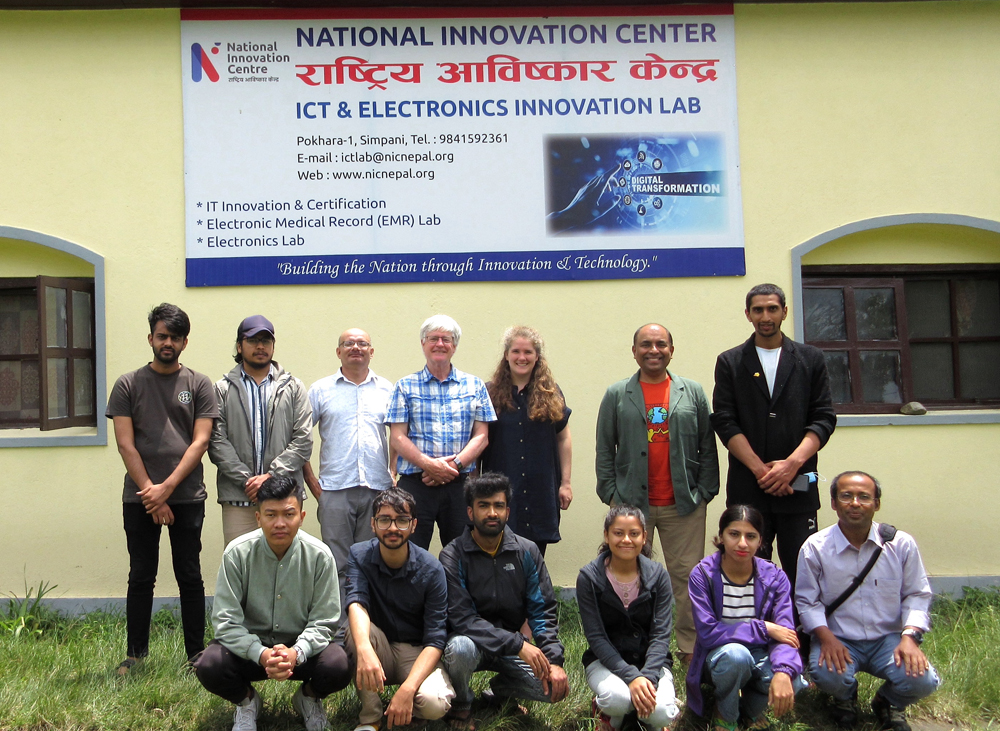
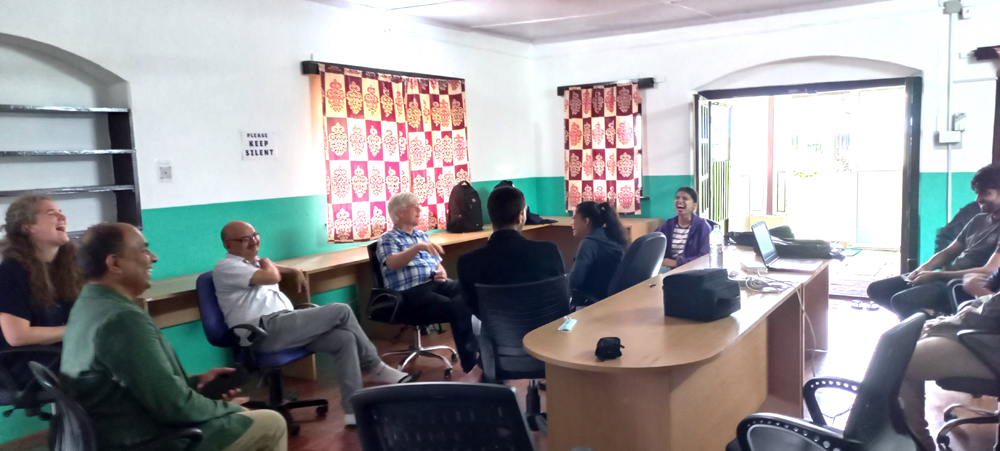
Our last engagement as members of the UNESCO Chair in ICT4D: meeting staff and students at the NIC’s ICT and Electronics Innovation Lab in Pokhara, Nepal, July 2023
The Collective and the UNESCO Chair in ICT4D
The original ICT4D Collective was created in 2004, and evolved through an agreement in 2007 between UNESCO and Royal Holloway, University of London into the UNESCO Chair in ICT4D (Information and Communication Technologies for Development). UNESCO Chairs are groups of researchers in specific institutions undertaking work of direct relevance to UNESCO’s fields of competence, and they promote “international inter-university cooperation and networking to enhance institutional capacities through knowledge sharing and collaborative work”. Members of our UNESCO Chair have been very proud to have been associated with UNESCO for the last 16 years, and to have collaborated closely with many good friends in UNESCO’s Paris headquarters and field offices. We were also honoured that Houlin Zhao, the Secretary General of the International Telecommunications Union (ITU) between January 2015 and January 2023, and Jean Philbert Nsengimana, former Minister of Youth and Information and Communication Technology (MYICT) from Rwanda, were our Honorary Patrons.
The following are some of the things we have particularly enjoyed engaging in over the last 16 years:
Working together collegially in a truly multidisciplinary context, involving colleagues from Computer Science, Geography, Information Security, Law and Managament at Royal Holloway, University of London.
Creating one of the largest groups of postgraduates completing PhDs in the field of ICT4D during the late 2000s and early 2010s.
Crafting an extensive partnership network involving governments, the private sector and civil society, and sharing the lessons we have learnt about making partnerships successful.
Contributing our experiences in global discussions around the role of digital tech in international development, especially in the UN’s WSIS process (since its origins in 2003), and UNESCO’s many gatherings relating to education and technology.
Working on the ground in support of diverse groups of marginalised people, especially those with disabilities, out of school youth, women in patriarchal societies, and migrants and refugees.
We are now re-energised as the ICT4D Collective, with 22 founding members drawn from 13 countries – we welcome new members who share our aims and principles. Quick links to our research and practice are available below:
See also the ICT4D Facebook Group which we established in 2007 and now has >5,500 members
An exciting future…
We all look forward to continuing the work started by the original ICT4D Collective almost 20 years ago, although we remain very sad that the new leadership team at Royal Holloway, University of London did not see value in the institution continuing to have a UNESCO Chair. Perhaps we represented voices from the past; perhaps we have been too critical and anarchic; perhaps we have just been honest and spoken truth to power. Whatever the reason, we will continue to have fun working together, we will continue to challenge the status quo, we will continue to point out the many harms caused by the use of digital tech, and we will continue to work with and support the world’s poorest and most marginalised peoples.
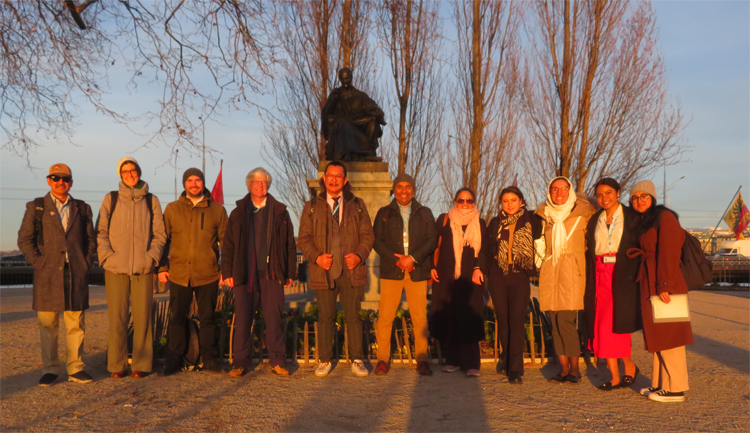
Particiants on the DESC walk photographes beneath the statue of Rousseau as the sun sets
The Digital Environment System Coalition (DESC) convened two sessions (403 and 204) on 16th and 18th March at this year’s WSIS Annual Forum held in Geneva. The first was a walk which we believe to be the first ever such event held during a WSIS annual forum, and the second was a more traditional session within the cavernous CIGG. Both sessions were convened by the UNESCO Chair in ICT4D at Royal Hollloway, University of London which provides the Secretariat to DESC, in association with INIT (the Inter-Islamic Network on IT), the WWRF (Wireless World Research Forum), ICT4D.AT, and RC-DISC (the Research Cluster for Digital Inequality and Social Change at the University of Canberra).
Experiencing digital environment interactions in the “place” of Geneva (Session 403): the DESC Walk
We experience things differently when we walk, when we talk together, and when we interact with the real physical environment. We feel the fresh air on our faces, smell the vegetation, hear the noise of running water, and touch the rough rocks on the slopes. We interact differently with each other. We pause and contemplate where we are. Our minds engage in ways that are so, so different from when we sit in large conference halls.
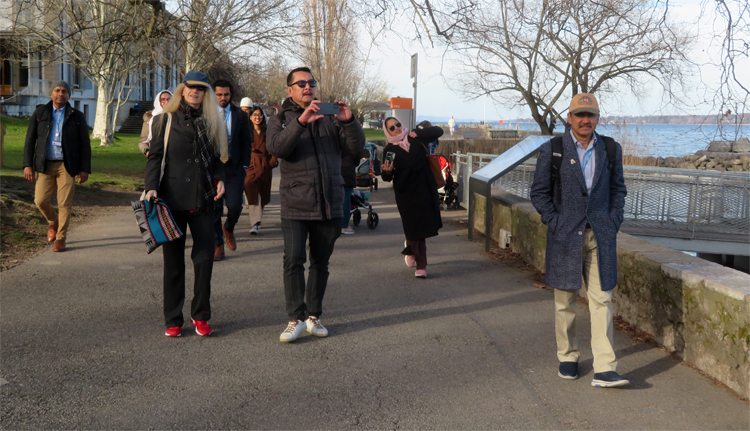
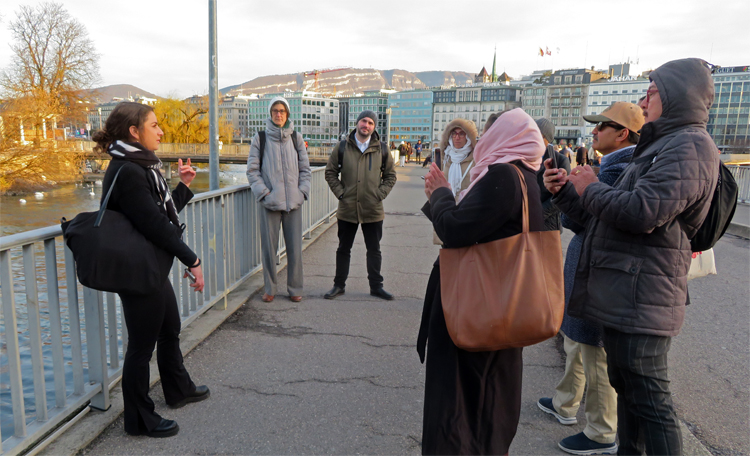
This DESC walk provided an opportunity for participants (i) to share their own research and practice relating to the interactions between digital tech and the environment, (ii) to discuss the positive and negative impacts of digital tech specifically on the biosphere, hydrosphere, atmosphere and lithosphere, and (iii) to make recommendations concerning the further development of YouthDESC. In essence, individual participants brought the group to a halt at locations that they felt were most appropriate for them along the walk and shared information about themselves and their research/practice, and we also stopped at five pre-planned locations to discuss each of the main themes as a group. Moderators of each main stop sought to encourage the participants to highlight three positive and three native interactions between digital tech and the environment.
Parc Mon Repos – the biosphere (led by Paul Spiesberger). Issues discussed included the positives of being able to share nature through digital images, use of remote sensed imagery to monitor the biosphere, and the use of digital tech to enhance agricultural production. Negatives included digital pollution of plants and green spaces, potentially adverse effects on human health (including mental health), and increased urban exploitation of rural environments through digital tech.
Poste Filial – YouthDESC (led by Tasfia Rahman). This began with a visit inside the building to discover the ways through which it is now necessary to use virtual/digital systems to post a physical/real card. We also recognized the important links between postal communication in the past and digital communication at present. The Instagram account of @YouthDESC was discussed, alongside the pros and cons of different social media platforms for engaging youth
Pont des Bergues – the hydrosphere (led by Ahmed Imran). It was recognised that unlike the biosphere and lithosphere, the impact of digital tech on the hydrosphere is less immediately visible. However, negatives include the impact of deep sea mining for rare earth minerals, and the heating of water in cooling systems. The use of water warmed by the heat produced by servers was, though, also seen as a benefit.
Ile Rousseau – the atmosphere (led by Zumana Imran). Beneath the feet of the philosopher Rousseau, our thoughts turned to the atmosphere above us, and focused on the positives of the use of satellites for monitoring environmental change and enabling communication in isolated places, whilst also recognizing the harms of treating outer space as we used to treat the oceans (global commons), the impact on dark space, and space junk. It was also recognised that different cultures have differing views about the environment, and we must engage with indigenous communities.
Auditoire de Calvin – the lithosphere (led by Tim Unwin). As dusk came upon us, few people remained to walk up the steps to the Cathedral and Auditoire de Calvin, but we nevertheless discussed the impact of mining for minerals used in digital tech, the impact of waste especially in landfill, and also the potential benefits in land management.
Scenes from the DESC walk in Geneva, 16 March 2023
Reimagining the Interface between Digital Tech and the Physical Environment (Session 204)
This formal workshop session had three main aims:
to share an updated overview of DESC’s emerging model that challenges much existing work being undertaken on digital tech and climate change;
to provide an update on its ongoing activities since WSIS 2022; and
to do this in a lively and interactive way.
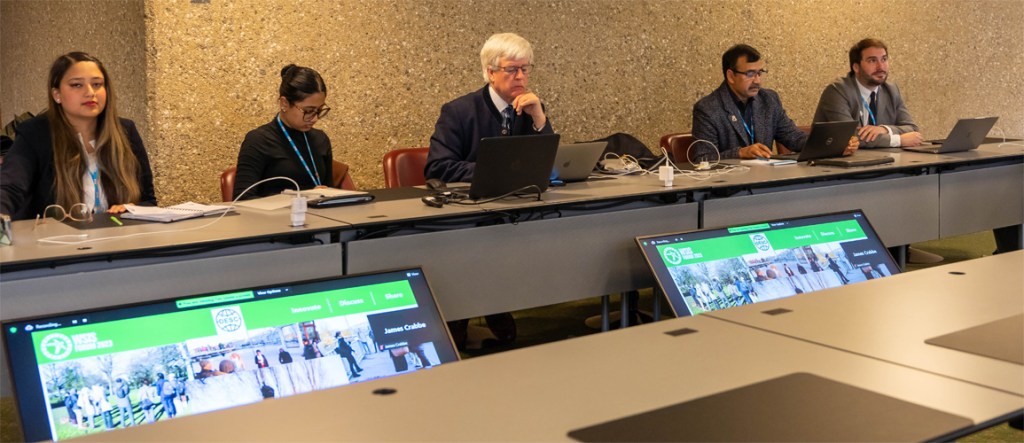
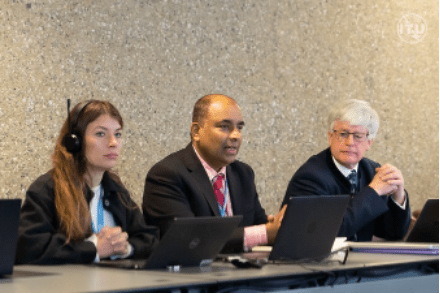
Official ITU photograph from WSIS Session 204
The session was structured as follows:
Introduction to DESC, highlighting the need to adopt a holistic approach focusing on the interaction between digital technologies and the totality of the physical environment (including the lithosphere, hydrosphere, biosphere and atmosphere – see diagram below) rather than just climate change. Indeed, a focus primarily on human-induced climate change is likely to lead to seriously adverse impacts on other dimensions of the physical environment.
Summaries of the key points of discussion explored during the DESC walk (WSIS Session 403) the previous day, presented by the five discussion moderators (including the YouthDESC session).
Highlights of two examples from the activities of DESC’s Working Groups emphasizing why these issues matter:
The indigenous DESC Working Group (Poline Bala’s sliodes were presented by Tim Unwin). This highlighted that indigenous peoples are insufficiently represented at events such as WSIS, and that they can contribute significantly to new ways of addressing the interface between digital tech and the physical environment
A video presentation by James Crabbe on the importance of omics for informing policy on deep sea mining.
This was followed by an introduction to the toolkit being developed by DESC for all those who have pledged to the ITU-led Partner2Connect initiative to enable them to consider and address the environmental impact of their proposed interventions.
The final element was a lively discussion around the issues raised, that included new commitments from participants to explore collaboration on implementing the DESC toolkit
DESC in Geneva
The general consensus from both sessions was that they were enjoyable and informative – and that DESC should offer to convene another walk in 2024 when we can delve once again into both the positive and negative impacts of the design and use of digital tech on the environment.
The session, which aligned especially with SDG10 and WSIS Action Lines C3, C4, C5, C7(iii, iv,v), C8 and C10, was structured around our digital interventions from Nepal and South Africa using a series of short-form videos ‘created by migrants for migrants’ as a framing device for the discussion. The contributions highlighted many inequalities faced by migrants and how digital tech can meaningfully address them as well as how digital tech can support personal life choices, offer networking opportunities, and become a peer-to-peer learning tool. The overarching theme was the need for all actors at the interface of digital tech and migration to be mindful of the need to ensure the safe, secure and wise use of digital tech by migrants.
Despite increasing evidence of the challenges to the beneficial use of digital tech by vulnerable migrants, actors such as tech companies, international and local organisations continue to design technologies aimed at migrants without due regard to their unintended consequences. International organisations and fora such as WSIS that are at the forefront of digital inclusion must recognise not just the opportunities offered by digital tech for migrants but also the risks and harms associated with them. This is especially important given the pervasive structural inequalities and limited digital capabilities that characterise many migrant contexts.
WP9 co-lead Prof G Hari Harindranath led the session with Prof Tim Unwin and Dr Maria Rosa Lorini while Bryce Hartley from GSMA (online) and Julien Varlin from ILO Geneva served as discussants. The highly interactive hybrid session was attended by senior government officials and representatives from international organisations, CSOs and tech companies as well as researchers.
We also used the in-person WSIS Forum in beautiful Geneva as an opportunity to discuss pathways to impact for our work with colleagues at IOM and ILO.
We are delighted that members of the UNESCO Chair in ICT4D at Royal Holloway, University of London, are involved in the following four sessions at this year’s WSIS Annual Forum in Geneva between 13th and 16th March 2023 (listed in chronological order):
Session 184: International Conference on Digital Transformation of Education: Road towards SDG 4 (Guest of Honour and Panellist), Thursday 16 March 09.00-09.45
Session 403: DESC Experiencing digital environment interactions in the “place” of Geneva (convenor) – this is a discussion-walk around Geneva commencing at the main entrance of CICG on Thursday 16 March from 16.00-18.30 (more details)
Session 204: DESC Reimagining the Interface between Digital Tech and the Physical Environment (convenor), Friday 17 March, 10.00-10.45 (more details)
Session 329: MIDEQ WP9 What migrants want: digital tech, inequality and migration (convenor), Friday 17 March, 11.00-11.45
Please do join us at these sessions, the last two of which will also be available for those wishing to join online. More information is available on the DESC sessions here.
Hari Harindranath and Tim Unwin with migrants, migrant organisations and tech organisations in Kathmandu, January 2023
The UNESCO Chair in ICT4D leads Work Package 9 within the MIDEQ Hub (funded by UKRI GCRF) on technology, inequality and migration. This is explicitly an intervention package, designed to draw on research across the Hub to bring migrants, migrant organisations and tech developers together to craft practical interventions that can benefit their lives and reduce inequalities associated with migration. We have been working with NISER, our lead partner in Nepal, since 2019 undertaking research on how migrants already use digital tech (see our working papers), and building on this work Prof “Hari” Harindranath and Dr. Maria Rosa Lorini visited Nepal in September 2020 to initiate our intervention activities. Migrants identified two main areas where they felt that interventions could make a significant difference: appropriate training in the uses of safe, wise and secure digital tech, and creating a platform or portal as a digital one-stop-shop that would bring together the most important sources of information for Nepali migrants and ther families.
Hari returned to Nepal with Tim Unwin in January-February 2023 to convene workshops (on 28 and 29 January, and 3rd February) and meetings to take forward the implementation of these two interventions. Good progress was made in the following areas (further details here):
Designing the content structure for the platform, and setting in motion the work of the content team and the tech team who are going to take forward the digital one-stop-shop with a Beta version planned for May 2023.
Running a pilot workshop in Kathmandu for migrants based on the slide deck developed with migrant organisations over the previous couple of months. This was well received, with helpful comments having been suggested for improvement.
Running another workshop in Pokhara for students and staff from a Migrant Resouce Centre, which recommended that we need to develop a more basic introduction to the wise, safe and secure use of digital tech for those who have negligible prior knowledge of digital tech.
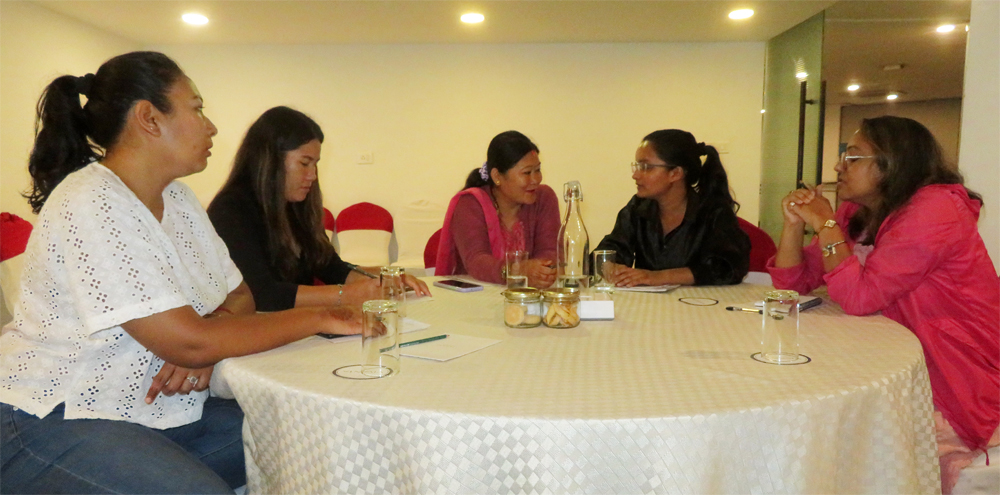
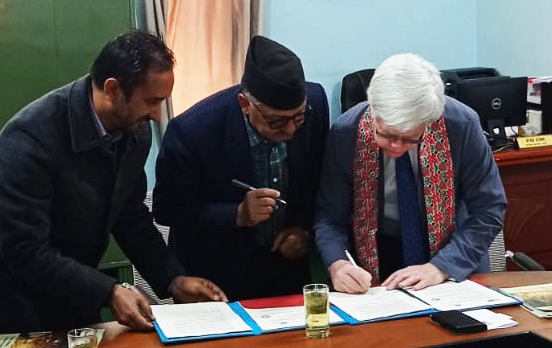
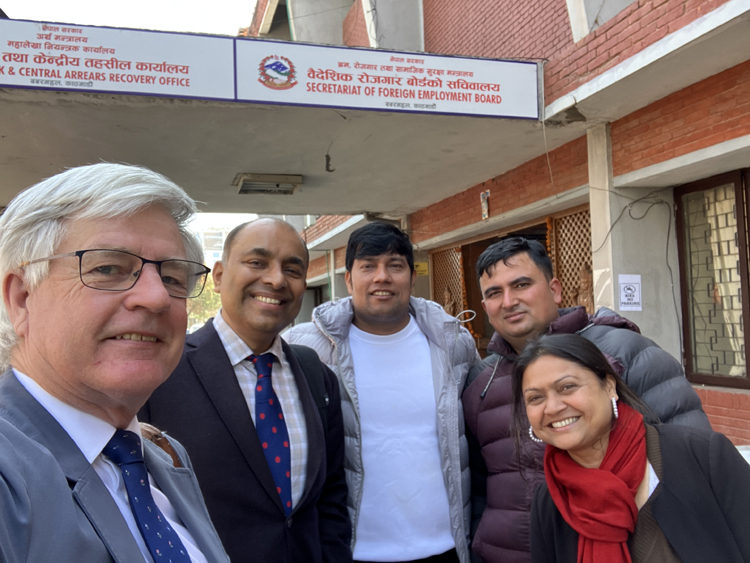
This visit to Nepal also provided the valuable opportunity to have a very productive visit to colleagues in the UNESCO Office in Kathmandu (30 January), to sign a partnership agreement and discuss collaborative research-practice with Gandaki University in Pokhara (1-2 February), to meet with tech companies including Hamro Patro and Ncell (3 February), to explore collaboration with government initiatives through the Foreign Employment Board (31 January), to engage with colleagues at the National Innovation Centre (31 January), and to meet with fellow researchers working in the field of digital tech and migration (see images below).
We would like to take this opportunity to thank all those who attended our workshops, and who contributed to this work. We are also grateful to the staff at the Hotel Himalaya, Lalitpur and the Landmark Hotel in Pokhara for facilitating our stay and meetings – and would recommend both for anyone visiting Kathmandu and Pokhara respectively.

































 ICT4D Collective