
By Prof. G. ‘Hari’ Harindranath
Prof G. ‘Hari’ Harindranath chaired the ILO and ITCILO’s global webinar on ‘Digital Innovation and Fair Recruitment: Harnessing Technology to Protect Migrant Workers’ (22 September 2026) and contributed to the ILO’s Workshop on ‘Responsible Labour Mobility within the ECOWAS Framework: Implications for Employers and Recruiters’ (Lagos and online, 12 November 2026).

The global webinar organised by the International Labour Organisation as part of their ‘FAIR Recruitment Initiative’, in collaboration with the ITCILO (ILO’s training arm based in Turin) and the Fair Recruitment Forward Project examined what it means to place workers at the centre of digital recruitment governance. The webinar, which was attended by an engaged audience of over 120 people from around the world, brought together speakers from the European Commission’s Directorate-General for Migration and Home Affairs, Morocco’s National Agency for the Promotion of Employment and Skills (ANAPEC), Nepal’s Ministry of Youth, Labour and Employment and Indonesia’s Ministry of Migrant Workers Protection, to discuss how public and private actors can collaborate to design accountable and inclusive digital systems, and the conditions essential to ensuring that technology serves justice rather than undermining it. A particular highlight was the inclusion of regional and national perspectives on labour migration digitalisation including the use of technology for job matching, skills development and oversight of recruitment agencies.
Prof Harindranath moderated the webinar, provided the scene setting introduction and summarised the key insights from the webinar at the conclusion. He pointed to persistent challenges in digitalisation efforts in the context of labour migration often resulting from a lack of direct insights from migrant workers and, consequently, poor context awareness by project teams, and weak interoperability between systems across diverse agencies involved in labour migration governance among other issues. The webinar highlighted the role technology can nevertheless play in supporting labour migration governance and the protection of workers. However, technology is an amplifier. It can be used to amplify safety and justice for migrant workers, or it can, inadvertently or otherwise, cause harms and amplify structural inequalities. Given that migrant workers are often highly vulnerable, digital interventions must be embedded within robust human and institutional interventions for them to be effective enablers of protection.
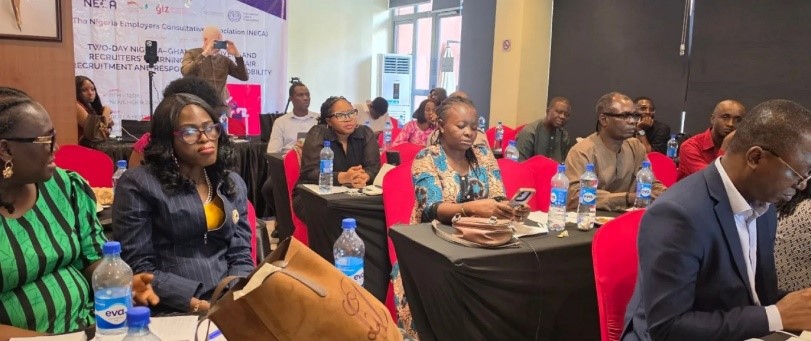
Hari was then invited to join a follow-on hybrid session as part of the ILO’s workshop in Lagos on ‘Responsible Labour Mobility within the ECOWAS Framework: Implications for Employers and Recruiters’ in November 2026 where he presented the AREAS framework, Anticipate, Reflect, Engage, Act and Sustain, to guide responsible digitalisation. Hari raised issues relevant both to employers and recruitment agencies such as data protection, digital accessibility for smaller agencies, safeguards against arbitrary licensing decisions, and the importance of long-term ownership, maintenance and institutional capacity to ensure sustainability of digitalisation efforts in the context of labour migration and fair recruitment.

