Members of the UNESCO Chair in ICT4D are delighted to support this exciting new initiative – #KindnessMatters – by our colleagues at the Mahatma Gandhi Institute of Education for Peace and Sustainable Development (MGIEP). This aims to mobilize the world’s youth to achieve the 17 SDGs through transformative acts of kindness. The campaign attempts to create a positive culture of kindness, in which every young person’s selfless act matters!
As the UNESCO MGIEP says,
“Kindness is not defined by lofty stories, it exists all around us and needs to be celebrated at every moment of life because #KindnessMatters every day. We’re celebrating K3: kindness for self, others and nature, and invite you to share with us a simple act of kindness that you performed today – gave yourself some rest from daily routine, watered the plants, donated some blankets for a cause, or called your family. This exercise will take less than 30 seconds and will make you a part of our global kindness community. So, won’t you help us make the world a kinder place?”
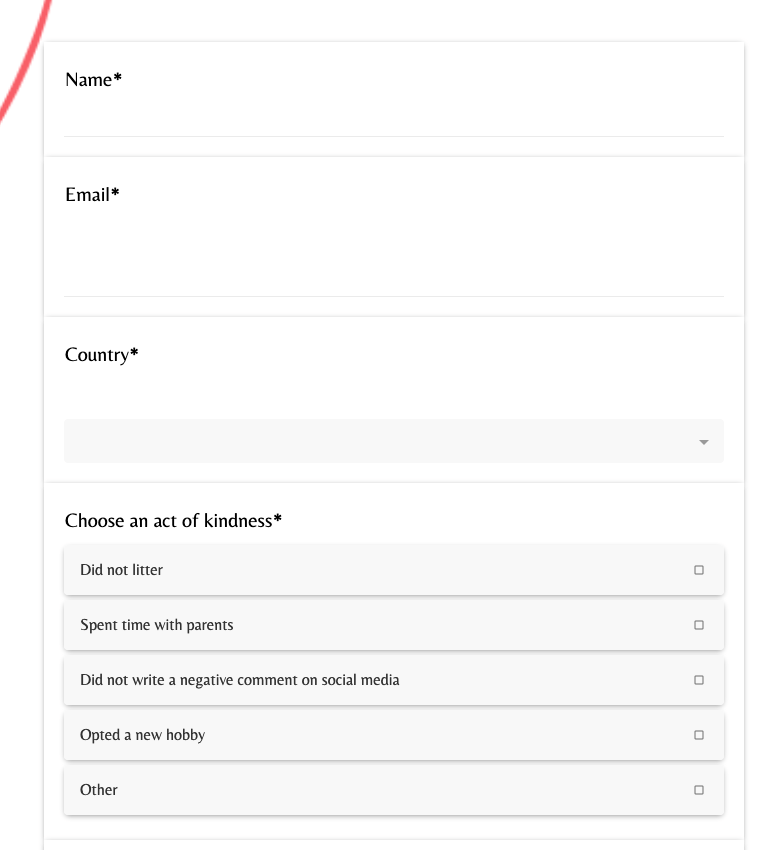
To share an act of kindness, all you have to do is complete a simple form that looks like this:
It won’t take long, and by so doing you can help contribute to their Global Youth Campaign. This is intended to help mobilize United Nations Member States to declare an International Decade on Acts of Kindness.
What is an act of kindness according to the MGIEP?
An Act of Kindness by any person is a generous, intentional gesture or action towards another person, being, or the environment. These acts may range in scale and impact, such as organizing a beach clean-up, working on clean energy projects, campaigning against gender inequality or violent extremism, or mobilizing a community drive to save an endangered species.
Get involved!
If you wish to find out more about how you can get involved, contact youth.mgiep@unesco.org
Do join us in supporting this important initiative, and encourage all the young people you know to share an act of kindness.
This post was first published on the Royal Holloway, University of London Staff Intranet on 2nd March 2021, and is being reposted here since it provides a good overview of the work being done on migration, technology and development as part of the UKRI GCRF funded MIDEQ hub by Hari Harindranath and Tim Unwin from the UNESCO Chair in ICT4D.
Professor G. Hari Harindranath, School of Business and Management, and Professor Tim Unwin, Department of Geography, received GCRF funding for their project ‘South-South Migration, Inequality and Development Hub’. We recently caught up with Hari and Tim to ask more about the project and how they both got involved.
1. Can you tell us a bit about yourselves and your roles at Royal Holloway?
Hari – I am a Professor of Information Systems in the Department of Digital Innovation and Management, School of Business and Management. I also serve as the Director of Internationalisation for the School.
Tim – My role is Emeritus Professor of Geography (since 2011) and Chairholder of the UNESCO Chair in ICT4D (since 2007). I was Head of Geography (1999-2001) and then went on secondment to DFID (2001-2004) where I led the PM’s Imfundo initiative, creating partnerships for the use of technology in education in Africa. Subsequently, I was Chair of the Commonwealth Scholarship Commission and then Secretary General of the Commonwealth Telecommunications Organisation (2011-2015).
2. GCRF funded the ‘GCRF South-South Migration, Inequality and Development Hub’ that you both work on, can you tell us more about the GCRF Hub?
The MIDEQ Hub (Migration for Development and Equality; 2019-2024) funded to the tune of £19,863,201 (FEC) by UKRI-GCRF and led by the PI Heaven Crawley (Coventry University) aims to understand the experiences of migrants in Africa, Asia and Latin America, focusing especially on six contrasting migration corridors (Haiti-Brazil, China-Ghana, Ethiopia-South Africa, Nepal-Malaysia, Burkino Faso-Côte d’Ivoire, and Jordan-Egypt). MIDEQ involves some 40 organisations and includes 128 researchers, with eleven multi-disciplinary work packages cutting across these 12 countries, focusing on issues such as gender and childhood inequalities, migration intermediaries, resource flows and arts, creative resistance and wellbeing.
Hari (in the pink shirt) contributing to the Hub’s research planning discussions in Accra (2019) (Photo by Tim).
3. Can you tell us about the parts you play in the Hub and the work package that you lead/are involved in?
We lead an “intervention” work package, focusing on the interface between digital technologies, inequalities and migration, but participate in all aspects of the Hub’s work and provide advice and support especially on the use of digital tech. Hari is also a member of the Hub’s Management Board and on the Data Management team, and Tim is one of the two safeguarding confidants. Our research is in three phases: understanding how migrants use digital technologies, understanding what inequalities they might like to change, and then working with migrants and tech developers to create some intervention that may help reduce inequalities. We are in the first instance working in the first four of the corridors listed above, but may well only work in two of them for phase three, depending on logistics and the findings we make over the first three years.
4. The Hub award involved a number of universities and stakeholders working together, how did you collaborate and distribute the work?
Working together with so many partners has no doubt had its challenges! Overall, the matrix structure of having six corridors (each with two country leads) intersecting with 11 work packages (each with one or two CoIs) provides the basic framework for our work. The initial group of partners was brought together by the PI and we co-created the proposal to UKRI GCRF, but within the first year two of the country lead organisations had fallen by the wayside and had to be replaced. Two week-long face-to-face meetings of all partners in Ghana and Nairobi in 2019 were crucial to enabling us to get to know each other, and not least create some empathy and understanding of our varying skills and ambitions. This was important in helping us choose the priority corridors in which we would subsequently work. Challenges remain not least in relation to the difficulties of working on the ground with country teams due to the pandemic.
Shaping empathy through storytelling around the fire in Kenya (2019) (Photo by Tim).
5. Can you tell us about some of the difficulties faced by the migrants that you work with?
This is an enormous question, that has many different dimensions. COVID-19 has dominated everything over the last year, and has generally made the lives of migrants very much harder. For example, in Malaysia many migrants were rounded up in the early stages of the pandemic and put into camps so that they would not spread the disease to local citizens. Likewise, the lockdowns in South Africa have made life increasingly difficult, especially for migrants. Across all of the corridors, legal movements of people have been drastically reduced, and this has made life very hard for migrants who were planning to return home. Interestingly, though, there is some evidence from Haiti that migrant remittances although hit significantly in the early days of the pandemic have now returned to levels similar to what they were before.
6. You were both looking at technological ways of improving the lives of migrants, can you give us an example of this?
When we first joined the Hub our partners mostly thought that our role was to develop an app based largely on the research conducted in the early stages of MIDEQ. This is very far from our intention. Indeed, the early evidence of our research has shown that most apps developed “for” migrants are rarely if ever used by them! Instead, a key principle underlying our research and practice is that we should be the servants of the migrants, understanding how they would like to reduce inequalities, and then working with them and local tech developers to craft and implement some digital intervention. If we discover that one of the biggest fears of migrants is that tech will be used to track and control them, we might even suggest that alternative non-digital interventions might be wiser. Although that it is unlikely, we remain very open, and are working with international agencies such as the IOM, ILO and ICRC to explore how the apps that they are already developing might be improved. However, the pandemic has most certainly affected our work. It is not exactly easy to ask migrants about their digital technology use when migration and mobility have been the first to be impacted by COVID-19.
7. What have we learnt most from working within the Hub?
Hari – I have found the experience of working in such a large multidisciplinary Hub both rewarding and challenging; rewarding because of the opportunities to work in such diverse contexts with some great colleagues and challenging because of the different assumptions people have about how that work should be done in the first place! I have learnt that perseverance is key to making any headway.
Tim – I have especially learnt to listen more! All of the partners come from very different backgrounds and have a wide range of experiences. This is an incredible opportunity for us to learn from each other – at least for those of us who realise that we still have much to learn! A project of this size has enormous challenges, and it is easy to criticize, but if we are going to be successful it is very important that we all try to pull together and be supportive of each other. We also come from very different cultures, and it is very easy to cause offence accidentally – so we must be willing to forgive others in the hope that they will also forgive us. However, none of us will ever get on with everyone, and so we need to recognise this and concentrate our efforts on working with those we like and respect.
MIDEQ Hub soft launch (Accra, 2019).
8. Have you found ways to share experiences more widely within College?
We have tried to be as open as possible in sharing our research practices and have also helped some colleagues across the College by providing advice about their own GCRF applications. We have collaborated in College workshops relating to GCRF activities, and Tim has also provided safeguarding training and advice to different groups of colleagues. We have also been able to secure College funds to bring some of our MIDEQ partners for wider networking on campus although this has had to be postponed due to the pandemic.
9. Is there anything you wish you had done differently?
Not really, other than having ensured we had enough funds to be able to do what we really wanted to! The budget for a project this size might seem a lot, but when broken down between the partners it is really insufficient to deliver what we would like. We have, though, been very flexible in our approach, and this has enabled us to act differently in order to ensure that we still deliver. Thus, in 2020 we had planned to spend much time in the field, especially in South Africa, Ghana, Nepal and Malaysia, where we had intended to undertake qualitative and hermeneutic research with migrants. COVID-19 prevented this, and so we had to rethink radically our approach. As a result we developed an online survey for migrants and their families in each of the countries with which we are working, and our partners (and many others) have helped share this widely. This has been more successful in some countries than in others, and the resultant quantitative data are very different from what we had intended, but this has at least enabled us to have evidence from the first phase of the research that we can then hopefully take with us into phase two when we are able to travel overseas again.
10. How do you both like to spend your time outside work?
Hari: The past year has been difficult as I have been shielding quite strictly. This has restricted possibilities but spending more time with the family has been a source of great comfort during the pandemic. Joining the RSPB and discovering the variety of avian life in our garden has been magical.
Tim: I have always been lucky never to have drawn a real distinction between work and other aspects of my life. I love my work-life, and the last year has been a great opportunity to write – including two 275-page reports! However, I also enjoy wine – and have started writing a wine column again for a local magazine – and I am fortunate enough to have a garden where I grow some of the vegetables and fruit that we consume. I also enjoy walking in the mountains, and exploring new places, but that’s not been something I have been able to do over the last year![1]
[1] This last section (10) from our draft response to the questions was not included in the originally published post, but we have added it here to provide a more rounded insight to our work – and play.
To find out more, do look at the MIDEQ site, and also the UNESCO Chair in ICT4D’s material on our work at the interface between digital technologies, migration and inequalities – this includes lots of resources (especially links to relevant materials) that we are making available through our research work. Do get in touch with us through our Contact Page.
Janet Longmore (Founder and CEO, Digital Opportunity Trust)
Caroline Wright (Director General, British Education Suppliers Association): “Technology and Education for the Most Marginalised Post-COVID-19 provides pragmatic, practical and insightful strategies, solutions and supportive practices to help and support Governments and educationalists working to empower learners in the most challenging of circumstances”.
Waleed Al Ali (General Co-ordinator Digital School Initiative, Mohammed Bin Rashid Global Initiatives, UAE)
Materials from the launch are available here, including videos of our speakers and more information. Full information about the report is available here.
In translation
We were delighted to announce the following translations of the report’s Executive Summary during the launch:
بالعربيةا : لملخّص التنفيذيّ (Translation by The Digital School Initiative, Mohammed bin Rashid Al Maktoum Global Initiatives)
En français: Résumé exécutif (Translation by Karen Ferreira-Meyers)
We are excited to release further details of the programme for the launch of the report on Education for the Most Marginalised post-COVID-19: Guidance for governments on the use of digital technologies in education which will be from 2pm-4pm GMT on Friday 18th December. Please register here to receive joining instructions. Further details about the initiative are available here.
Caroline Wright (Director General, British Education Suppliers Association)
Waleed Al Ali (General Co-ordinator Digital School Initiative, Mohammed Bin Rashid Global Initiatives, UAE) (by video)
Video reflections:
Amina Umohoza (Digital Opportunity Trust, Youth Leadership Advisory Board, Rwanda; CEO of Saye Company and the Founder of Dukataze)
Helen Crompton (Associate Professor Teaching and Learning, Old Dominion University)
Insights on the report’s Guidance Notes:
Ensuring resilient connectivity: Christopher Yoo (John H. Chestnut Professor of Law, Communication, and Computer and Information Science at the University of Pennsylvania Law School, and the founding director of the Center for Technology, Innovation, and Competition), Leon Gwaka (University of Pennsylvania) and Müge Haseki (University of Pennsylvania)
Keeping Safe and Local Context: Azra Naseem (Director, Blended and Digital Learning, Aga Khan University, Pakistan)
Small Island States and the importance of sustainable electricity: Javier Rua (former Director of Public Policy for Sunrun; former Chairman, Puerto Rico Telecommunications Regulatory Board)
The importance of OER and Creative Commons: Paul West (Senior Education Adviser, West and Associates; and South Africa Chapter Lead, Creative Commons)
The final programme, including any revisions will be available by 16th December.
Speakers will talk for a maximum of 5 minutes each, enabling there to be a lively and forthright discussion afterwards. We welcome all those committed to empowering the poorest and most marginalised through the use of digital technologies in education to join the conversation, and work together to implement the report’s recommendations.
Funded by the FCDO and World Bank through the EdTech Hub.
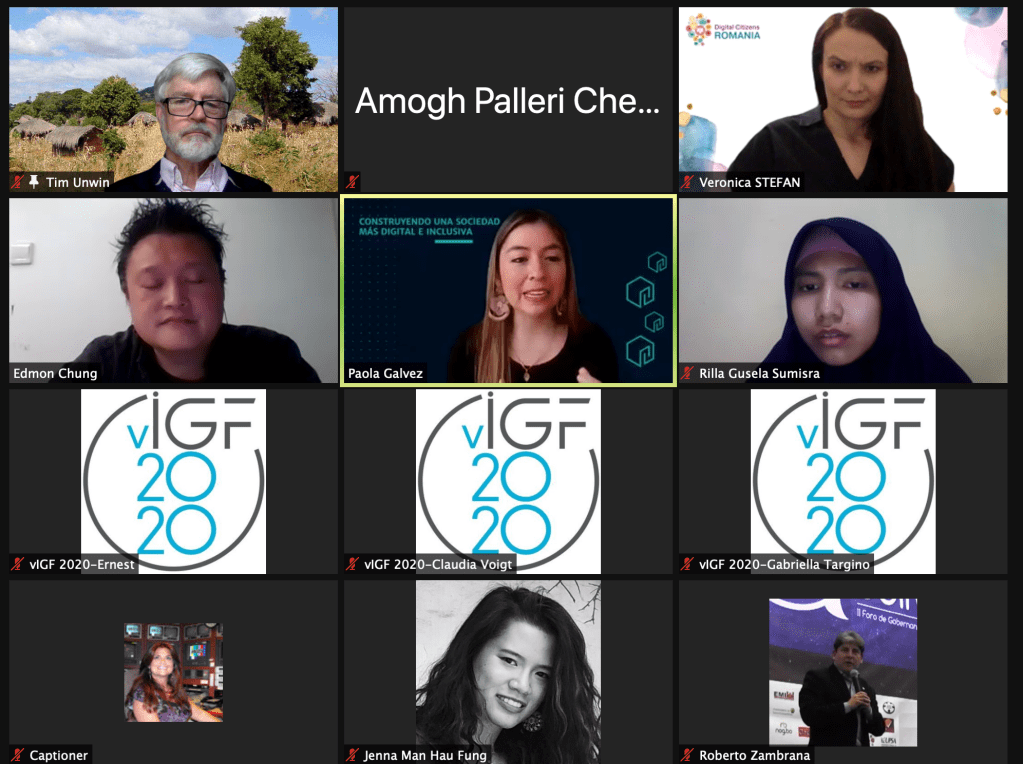
Members of the UNESCO Chair in ICT4D were delighted to participate in the virtual IGF 2020 gathering earlier this month – although most of us would have much preferred actually to have been on the ground in Katowice enjoying Polish hospitality and the opportunity to network and discuss ideas together face-to-face! Thanks to everyone who made this event possible and so successful.
In particular the Chairholder participated in the following three sessions:
Members of the UNESCO Chair in ICT4D have worked hard with colleagues across the world over the last six months to craft an innovative and practical report for the UK’s FCDO and World Bank funded EdTech Hub on ways through which governments can learn from their experiences of COVID-19 to create resilent education systems that use digital technologies wisely, effectively and appropriately. We are all very excited to see this now published.
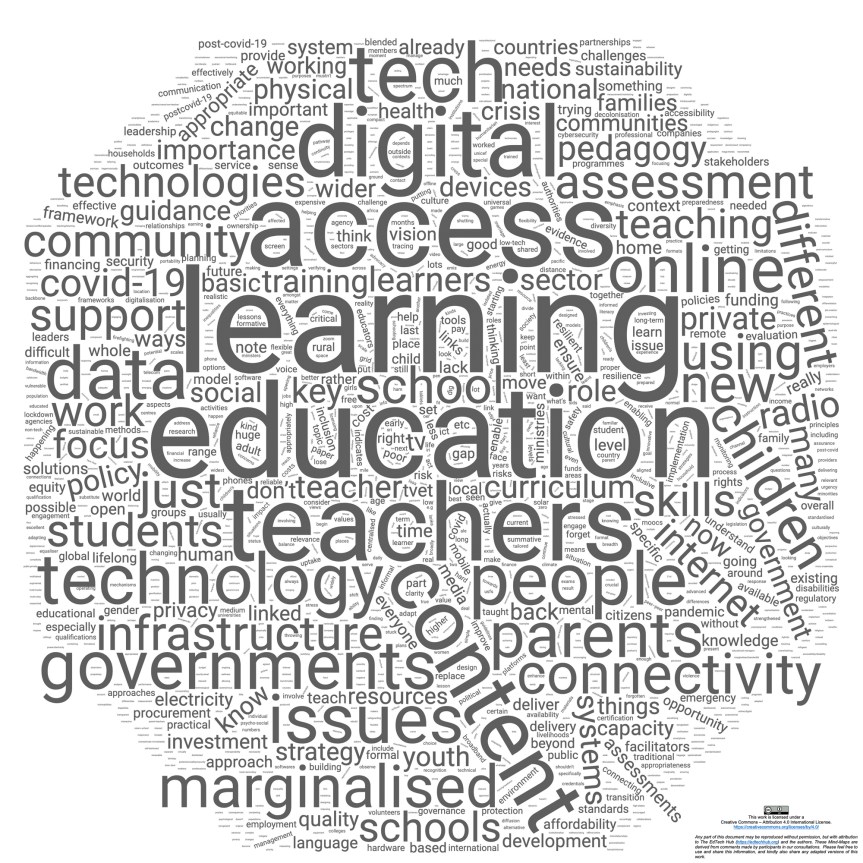
The report was based in part on extensive consultations with a group of 43 women and 44 men from 34 countries who contributed their insights and experiences, captured in this word-map designed by Paul Spiesberger,
Act Three: 14 Guidance Notes on specific themes of relevance, such as Resilient and Sustainable Energy Solutions, and Inclusion and Accessible Learning for People with Disabilities.
Additional details about the Report’s production, and all of the material in different formats is available here.
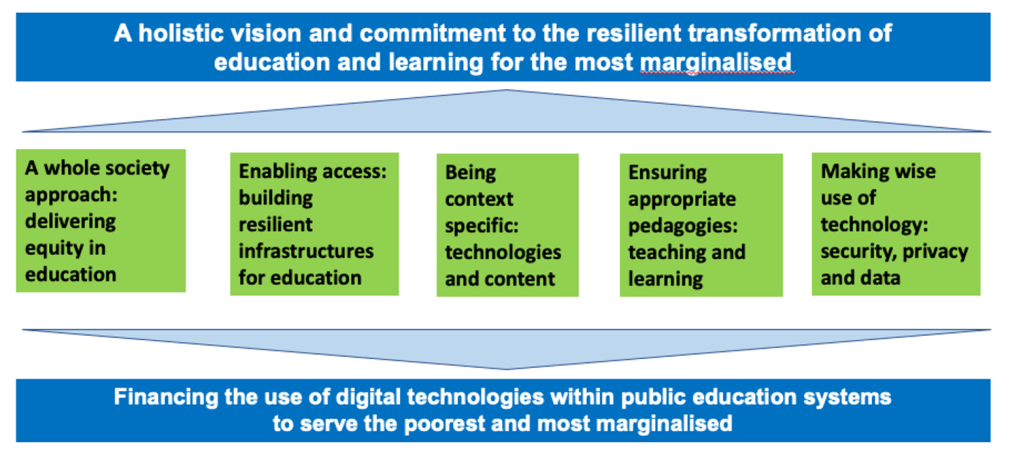
The report’s main recommendations focus on five main areas (shown in green in the diagram with which this post begins):
A whole society approach: delivering equity in education
Enabling access for all: building appropriate resilient infrastructures for education
Being context specific: technologies and content
Ensuring appropriate pedagogies: the practices of teaching and learning
Making wise use of technology: security, privacy and data
Pilot projects using digital technologies for education should not be done where they are easiest to do and are most likely to succeed, but instead with and amongst the poorest and most marginalised, where the circumstances are most challenging, and where most innovation and creativity is required to make them succeed.
The report is published under a Creative Commons – Attribution 4.0 (CC BY) license, and was developed and written by a core team of seven people (Alicja Pawluczuk, Azra Naseem, Christopher Yoo, Mohamed Shareef, Paul Spiesberger, and Paul West – assisted by Juliette Unwin, Leon Gwaka and Müge Haseki) led by our Chairholder Tim Unwin. They were supported by a distinguished advisory board comprising: Alex Wong (ITU, Switzerland), Bitange Ndemo (ICT Champion and University of Nairobi, Kenya), Caroline Wright (DG BESA, UK), John Nasasira (Head of 4thIR Task Force, Uganda), Keith Krueger (CEO Consortium for School Networking, USA), Mike Trucano (World Bank, USA), Vanessa Dreier (GIZ, Germany), and Waleed Al Ali (Mohammed Bin Rashid Global Initiatives, UAE), and also worked closely with David Hollow and Jamie Proctor from the EdTech Hub.
Many other people contributed to the report, and we are particularly grateful to colleagues in the following UN agencies and other organisations, especially for their help in crafting the Guidance Notes.
Further details of the development and contents of the Report are available on our site here. Please use #Emmpostcovid19 (Education for the Most Marginalised post-COVID-19) to refer to and share our work on social media.
Any part of this document may be reproduced without permission, but with attribution to The EdTech Hub and the authors. Our work is based on existing good practices, and more details on these principles can be found at https://www.EdTechHub.org. Please feel free to use and share this information, but kindly respect the copyright of all included works and share any adapted versions of this work
The UNESCO Chair in ICT4D was pleased to participate in celebrations of the 75th anniversary of the United Nations on UN Day on 24th October 2020, by contributing to the IdeaSphere World #Connversations Rountable Relay convened by X360.
This wide-ranging and fascinating series of roundtable discussions involving leading commentators, changemakers and social innovators across the world began in the Asia Pacfic region at 1-3 a.m. UTC and the relay then headed westwards in a series of two-hour sessions that finished in the Americas Pacific at 9-11 p.m.. Congratulations are due to John Wells and Allison Hornery, the concierges of the X360 project, not only for conceptualising this celebration of the UN at 75, but also in convening and moderating this #connversation initiative – and surviving what was a very long day!
The UNESCO Chair in ICT4D’S Chairholder, Tim Unwin, participated in the fascinating Americas East rountable, which brought together a very diverse group of thoughtleaders from the eastern USA (Gadi Ben-Yehuda, Peter Scoblic, Richard Kerby, Tim McDonald), Canada (Ashleigh Weeden, Úna Hassenstein) and Mexico (Carlos Castañeda Girón, José Maria Guajardo) as well as outliers from the UK and the Philippines, and many other participants, to discuss a diversity of issues around the role of the UN, the kind of world in which we wish to live, and the evolving character of public participation in decision making, not least as it is mediated through digital technologies. Key issues that struck a particular chord, included the role of new financial instruments and institutions, new ways of convening public dialogues, how to get the balance right between rural and urban interests, “Open” and proprietary systems and technologies, youth participation, and the UN’s role in contributing to a better (or indeed worse) world.
The roundatables (thanks to X360) also introduced the wealth of emerging way through which digital technologies can be used to encourage such dialogues – not least through the images we may choose to show as backgrounds on Zoom conversations, the rich side conversations in chats, and innovative new platforms such as IdeaSpace.
We are looking for a Post-Doctoral Research Assistant to contribute to the UKRI GCRF South-South Migration, Inequalities and Development (MIDEQ) Hub. Specifically, the PDRA will support Professors G Hari Harindranath (School of Business & Management) and Tim Unwin (Department of Geography) on the development of research within the work package on digital technologies, inequalities and migration across the six migration ‘corridors’ in which the MIDEQ Hub is working but particularly focusing on their work in the following migration ‘corridors’: Nepal-Malaysia, Ghana-China, Ethiopia-South Africa, and Haiti-Brazil. The PDRA will be based in the School of Business and Management at Royal Holloway, University of London but will work across the School and the Department of Geography and within the UNESCO Chair for ICT4D. Occasional overseas travel will be an essential component of this role. The post’s central focus will be on working with migrants and tech developers in partner countries to facilitate the development of digital technologies that will reduce inequalities identified by migrants. The successful candidate will have the ability to develop excellent working relationships with diverse and international team members and have technical expertise relating to the design and implementation of digital technology interventions.
In return we offer a highly competitive rewards and benefits package including:
Generous annual leave entitlement
Training and Development opportunities
Pension Scheme with generous employer contribution
Various schemes including Cycle to Work, Season Ticket Loans and help with the cost of Eyesight testing.
Free parking
The post is based in Egham, Surrey where the College is situated in a beautiful, leafy campus near to Windsor Great Park and within commuting distance from London. However, the post-holder will be required to travel nationally and internationally to fulfil the responsibilities of this role.
To view further details of this post and to apply please visit https://jobs.royalholloway.ac.uk.Please note the Job Description and Person Specification at the at the end of the advertisement. For queries on the application process the Human Resources Department can be contacted by email at: recruitment@rhul.ac.uk
In addition to completion of the online application form applicants are also required to upload two references. Please ensure these documents are uploaded in order for your application to be considered.
Please quote the reference: 1020-215
Closing Date: Midnight, Friday 6 November 2020
Interview Date: Interviews will be held in the week commencing 16 November 2020
The global COVID-19 pandemic has highlighted more than ever the double-edged sword that digital technologies represent for migrants. These technologies offer not only access to information and networking for migrants but also create new vulnerabilities and exacerbate inequalities in the context of increasing securitisation of borders and rising xenophobia online. These inequalities relate not only to digital divides in terms of access and use but also outcomes that all too often mirror existing structural inequalities. Against this backdrop, we convened a special panel session at the Virtual ICT4D Non-Conference on 16th September 2020 that sought to challenge the rhetoric around migration and digital technologies. The panel, which I chaired, was linked to our ongoing research and practice relating to migration and digital technologies, part of the UK Research and Innovation (UKRI) Global Challenges Research Fund (GCRF) funded MIDEQ Hub. MIDEQ, the South-South Migration, Inequality and Development Hub, brings together over 60 researchers and several partner organisations from around the world to examine the complex and multi-dimensional relationships between migration and inequality in the context of the Global South.
Migration has long been ‘appified’, and the recent digital responses to, and indeed the ‘appification’ of, COVID-19 highlights the opportunities as well as the risks associated with digital technologies for marginalised people, in particular migrants around the world. So, what are the key issues affecting digital migrants? What roles are international agencies and regional/local civil society organisations playing in this space? How do we ensure that digital technologies do not harm vulnerable people? These were some of the issues we addressed in the panel which brought together five distinguished speakers from around the world:
Tanja Dedovic – Senior Regional Thematic Specialist on Labour Mobility and Human Development for the Middle East and North Africa, International Organisation for Migration (IOM). Tanja spoke about the how IOM, the UN agency that advocates for migrants, is leveraging digital technologies to promote safe and orderly migration through its MigApp which provides information and humanitarian services to migrants and government agencies. She also highlighted new projects that are using blockchain technologies to prevent contract substitution which sees migrant workers being forced into work that they did not sign up for. Tanja further noted the importance of complementing such efforts with proactive communications strategies and conducting due diligence of employers.
Antonio Diaz-Andrade – Associate Professor, AUT University, Auckland. Antonio shared insights from his recent research into how refugees in New Zealand use digital technologies in their everyday social practices in unfamiliar information environments to exercise their agency. Refugees were seen to be using digital technologies to exercise their agency and to participate in their new host society while at the same time being socially connected to their friends and families in home countries and as well as in other parts of the world. A snapshot of his research is available here.
Evan Easton-Calabria – Senior Research Officer, Refugee Studies Centre, University of Oxford. Evan’s talk centred around her recent study for UNDP, The Migrant Union – Digital Livelihoods for People on the Move, which examined the livelihoods opportunities and challenges from digital technologies, focusing particularly on digitally-mediated and remote work opportunities for refugees. She raised important questions in relation to refugee self-reliance and digital labour: are we truly training some of the most vulnerable people in the world for digital work or are we facilitating low-paid, low-skill work in the global gig economy which is subject to little or no regulation? Can we become more ambitious in the quality of work that is being offered to such workers? How can humanitarian agencies, intermediaries and employers ensure ethical safeguards for migrants in relation to digital work? How can the right to (or not to) work be protected? And how can the gender divide in relation to refugee digital workers and digital entrepreneurs be addressed?
William Gois – Regional Coordinator, Migrant Forum in Asia (MFA). William spoke about the work of MFA, a regional network of NGOs, associations and trade unions of migrant workers, and individual advocates in Asia that seeks to promote migrant rights. William cited several digital interventions that MFA has been part of including the Recruitment Advisor, which helps share recruitment experiences of migrants with a view to promoting fair recruitment practices and Hamsa, an online system for reporting migrant worker abuse. William challenged the rhetoric around the promise of digital technologies and their so-called pervasiveness by highlighting some of the structural and systemic barriers that prevent vulnerable groups such as migrants from accessing and benefitting from these technologies. He concluded that because digital technology is not an equaliser and they often increase inequalities, it is important to use both online and offline methods to connect with what are essentially a very diverse range of migrant groups.
Tim Unwin, Chairholder, UNESCO Chair in ICT4D, Royal Holloway, University of London. Tim spoke about the work he and I are leading on digital technologies, inequalities and migration within the larger MIDEQ project. He highlighted the key stages of our intervention work package which puts migrants at its core: first, seek to understand from migrants the ways in which they use digital technologies; second, explore with them how they understand notions of inequality within the migration process, and how they think technologies might be able to reduce them; and ultimately, work with migrants and digital developers to develop one or more digital technology interventions that can be used to reduce such inequalities. He also introduced two key findings from our early work which shows that while in some countries migrants are afraid of using digital technologies due to the harsh political conditions affecting migrants during the COVID-19 pandemic, they rarely use apps designed specifically designed for them in many others. These findings highlight the need to protect migrant rights while developing digital technologies that addresses their needs and aspirations.
The interactive panel session led to thought-provoking conversations from both panellists and through the forum chat. A key take-away for me was that when it comes to digital technology and migration, we need to begin with the migrants and seek to understand their needs and priorities. Actors in this space need to work ‘with’ migrants and not ‘for’ them! The pandemic has laid bare digital inequalities both in terms of digital exclusion and the potentially disempowering impact of these technologies through securitisation and surveillance. We need a relentless focus on the potential risk to marginalised people from digital technologies both in terms of ethical use and in terms of how they intersect with existing structural inequalities.
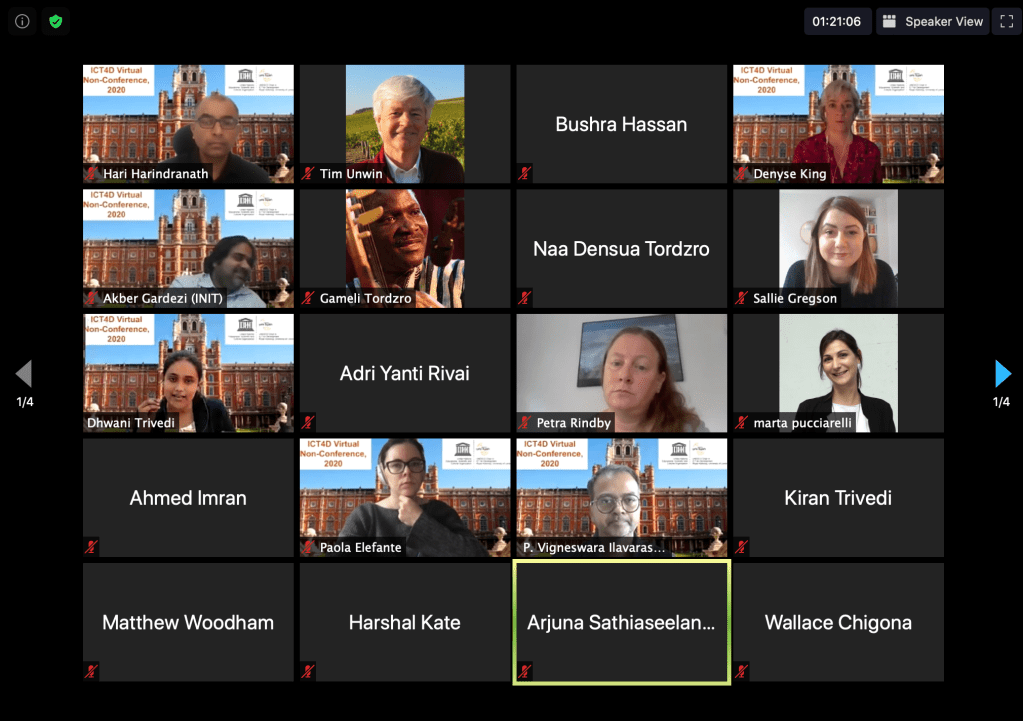
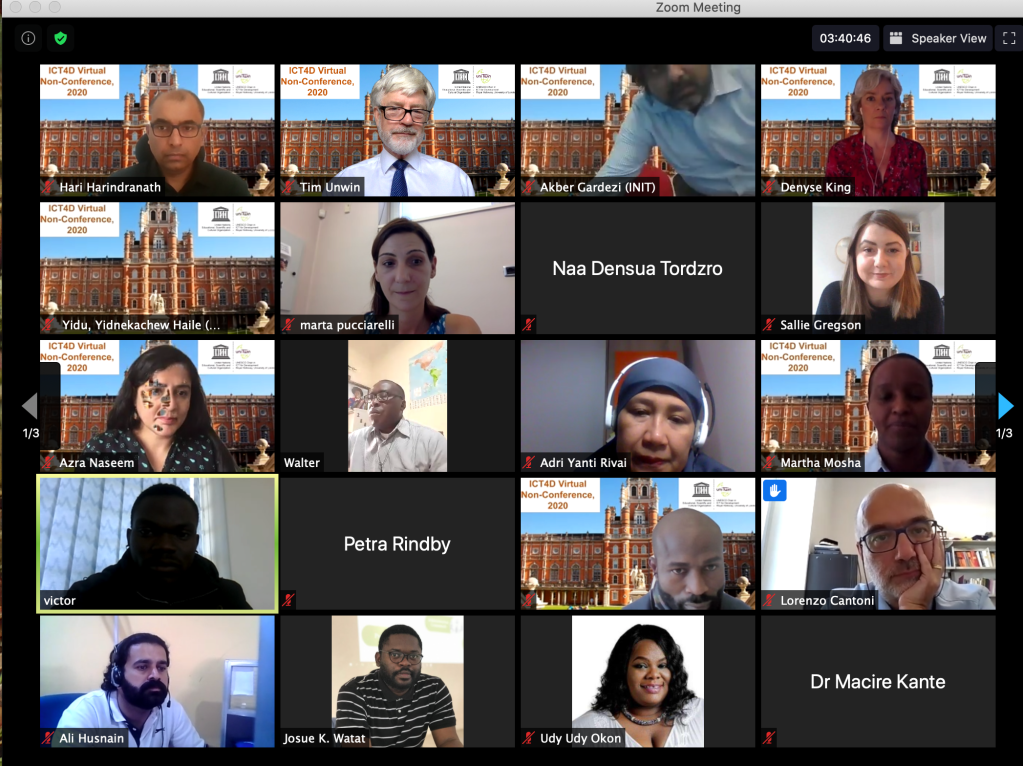
The UNESCO Chair in ICT4D was delighted to convene the first Virtual ICT4D Non-Conference on 16th September 2020 (#virtualict4d2020). COVID-19 had meant that it was impossible to hold the original ICT4D Non-Conference that had been scheduled for 15-17 September, and so we decided instead to bring together all those whose papers and demos had been accepted for a day long conversation – the Virtual ICT4D Non-Conference. All of the posters and demos were made available for participants to read before the event, and to have open on their own devices during the various sessions (these are still available for people to access at the Virtual ICT4D Non-Conference site).
The full programme ran for eight hours live on Zoom from 09.00-17.00 UK time on 16th June. In line with the emphasis of the original non-conference, no presenters were permitted to use slide decks for their presentations. Fifteen posters and four demos were presented during the day, with there being more countries represented amongst the authors than there were presentations (because several papers had multiple authors from different countries). Eight were presented by women, and two of the six moderators were women.
Details and highlights of the day included:
Opening ceremony, with speeches by:
Tahir Naeem (COMSATS University, Islamabad, and Executive Director, Inter-Islamic Network on IT) on behalf of partner organisations, and
Jose Maria Diaz Batanero (Head, Project Support Division, ITU) on behalf of the ITU
And a moving musical interlude by Gameli Kodzo Tordzro while we reflected on all those whose lives had been transformed by COVID-19
Thematic sessions from:
Asia
Business perspectives, employment and health (Moderated by Vigneswara Ilavarasan)
Content, learning and the darker side of technology (Moderated by Akber Gardezi)
Africa and Europe
Government, security and indigenous perspective (Moderated by Azra Naseem)
Health (Moderated by Uduak Okon)
Education (Moderated by John Traxler)
The Americas (Moderated by Jose Maria Diaz Batanero)
Special session on migration and technology, moderated by Hari Harindranath, including five distinguished speakers from across the world.
Closing ceremony, with reflections by Revi Sterling, Hari Harindranath, Sallie Gregson, David Banes, and Lorenzo Cantoni
The awards
Emerald Publishing generously offered a £1000 award to be split between the top three posters presentations. A panel of reviewers read all of the posters in advance, and a subset of these reviewers also attended all of the sessions; 62.5% of the final score was derived from the poster itself, and 37.5% from the actual presentation and wider
The standards were high, and the three prize-winning posters and presentations were (in alphabetical order of first name):
Approximately one hundred and fifty people had registered to participate in the Virtual ICT4D Non-Conference, and between 40 and 80 people participated at any one time during the day. The morning (UK time) sessions were scheduled for Asia, the middle of the day for Africa and Europe, and the afternoon for the Americas. This was so that the time zones were as convenient as possible for people to attend from across the world. We think that the country further east (from the UK) from which participants attended was New Zealand and the furthest west was the USA. Most participants came from South Asia and Africa.
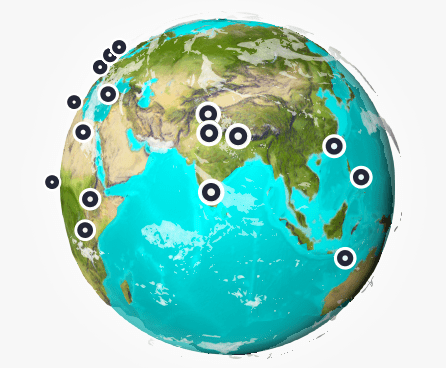
The Virtual Non-Conference programme page received 600 views on the day (and 1331 views since 1st August; see map of September site views up to 19th below) with the posters submitted by Azra Naseem, Marcelo Fornazin, Djenana Jalovcic and Bushra Hassan each being downloaded more than 110 times.
We are delighted that participants also seemed to enjoy the event so much, not least as reflected in comments on Twitter (#virtualict4d2020):
“Thank you! Congratulations for the amazing Virtual ICT4D Non-Conference!
“It was an honor for me to discuss about my poster at #virtualict4d2020 along with all the panelists and being moderated by P. Vigneswara Ilavarasan”
“This was a milestone achievement during this COVID-19 pandemic. There were Great engaging and interesting debates all through. I was proud to have been part and parcel of the presenters and participants”
“Indeed a great success.Brilliant ideas were shared.Thanks so much for organising this wonderful and inspiring conference!!!”
“having a great interactive experience and the audience are so disciplined. #virtualict4d2020“
“Feeling grateful for this #ICT4D community and events like the #virtualICT4D2020 to share, discuss and learn”
“A day full of discussions on what’s to me the most exciting subject in this world”
“This #VirtualICT4D2020 promises virtual walks together during breaks, sharing of music and other virtual treats. AMAZING!”
Looking to the future
Comments such as these inspire us to think about doing another Virtual ICT4D Non-Conference next year! We very much hope that we will indeed be able to meet up face to face before too long, but if not let’s plan to meet again in a year’s time for another virtual event! Thanks to everyone for making it such an enjoyable, interesting and exhausting day!
The UNESCO Chair in ICT4D was delighted to contribute to the 3rd ICT4D workshop convened by the Inter Islamic Network on IT (INIT) and COMSATS University in Islamabad, also supported by the Ministry of IT and Telecom in Pakistan on the theme of Mainstreaming the Marginalised, which was held at the Ramada Hotel in Islamabad on 28th and 29th January 2020. This was a very valuable opportunity for academics, government officials, companies, civil society organisations and donors in Pakistan to come together to discuss practical ways through which digital technologies can be used to support economic, social and political changes that will benefit the poorest and most marginalised. The event was remarkable for its diveristy of participants, not only across sectors but also in terms of the diversity of abilities, age, and gender represented. It was a very real pleasure to participate in and support this workshop, which built on the previous ones that were held in Islamabd in 2016 and 2017.
The inaugural session included addresses by Prof Dr Raheel Qamar (President INIT and Rector COMSATS University, Islamabad), Mr. Shoaib Ahmed Siddiqui (Federal Secretary Ministry of IT & Telecom) and Dr. Tahir Naeem (Executive Director, INIT), as well as a short keynote by our Chairholder Tim Unwin on Digital Technologies, Climate Change and Sustainability. This was followed by six technical sessions spread over two days:
Future of learning and technology
Policy to practice: barriers and challenges
Awareness and inclusion: strategizing through technology
Accessibility and Technology: overcoming barriers
Reskilling the marginalised: understandng role reversals
Technical provisio: indigenisation for local needs.
These sessions included a wide diversity of activities, ranging from panel sessions, practical demonstrations, and mind-mapping exercises, and there were plenty of opportunities for detailed discussions and networking.
Highlights amongst the many excellent presentations included:
Recollections by Prof Abdful Mannan and Prof Ilyas Ahmed of the struggles faced by people with disabilities in getting their issues acknowledged by others in society, and of the work that they and many others have been doing to support those with a wide range of disabilities here in Pakistan
The inspirational presentations by Julius Sweetland of his freely available Open Source Optikey software enabling those with multiple disbilities to use only their eyes to write and control a keyboard
Meeting the young people with Shastia Kazmi (Vision 21 and Founder of Little Hands), who have gained confidence and expertise through her work and are such an inspiration to us all in continuing our work to help some of the pooorest and most marginalised to be empowered through digital technologies.
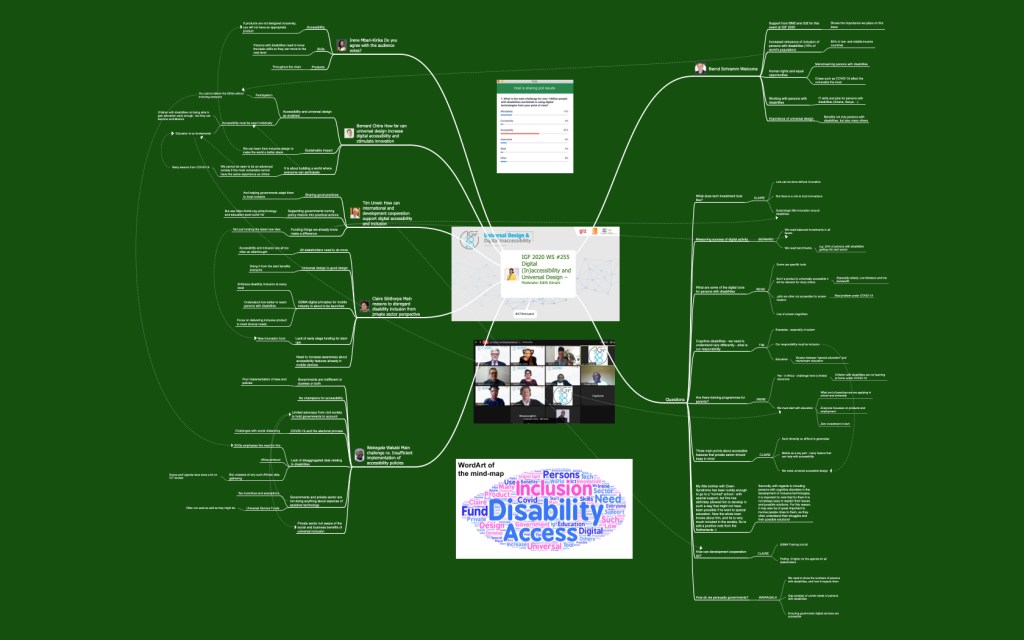
The very dynamic discussions around practical actiona that we can all take to enable more inclusive use of digital technologies (mindmaps of these available below)
Enormous thanks must go to Dr. Tahir Naeem (COMSATS University and Executive Director of INIT) and his team, especially Dr. Akber Gardezi (an Affilated Member of our UNESCO Chair) and Atiq-ur-Rehman, for all that they did to make this event such a success.
A shortened version of this workshop was also subsequently held on Monday 3rd February at the University of Sindh in Jamshoro, thanks to the support and facilitation of Dr. Mukesh Khatwani (Director of the Area Study Centre for Far East and Southeast Asia) and his colleagues. This also focused on the practical ways through which some of the most marginalised can benefit from the appropriate use of digital technologies, and it was once again good to have the strong involvement of persons with disabilities.
As we draw near to Christmas and the end of a politically traumatic few years here in the “United” Kingdom, everyone at the UNESCO Chair in ICT4D would like to take this opportunity to wish you all a relaxed, peaceful and blessed Christmas. We hope that you have had a successful past year, and that the decade ahead brings you great success and fulfilment in all of your endeavours.
We hope too that many of you will join us between 15th and 17th September next year at our exciting – and very different – ICT4D Non-Conference which we intend to make an inspiring opportunity to rethink how we can all do more to help shape safe and inclusive digital technology for all in the years ahead.
Tim Unwin (on behalf of members of the UNESCO Chair in ICT4D)














 The UNESCO Chair in ICT4D was delighted to contribute to the 3rd ICT4D workshop convened by the Inter Islamic Network on IT (INIT) and COMSATS University in Islamabad, also supported by the Ministry of IT and Telecom in Pakistan on the theme of Mainstreaming the Marginalised, which was held at the Ramada Hotel in Islamabad on 28th and 29th January 2020. This was a very valuable opportunity for academics, government officials, companies, civil society organisations and donors in Pakistan to come together to discuss practical ways through which digital technologies can be used to support economic, social and political changes that will benefit the poorest and most marginalised. The event was remarkable for its diveristy of participants, not only across sectors but also in terms of the diversity of abilities, age, and gender represented. It was a very real pleasure to participate in and support this workshop, which built on the previous ones that were held in Islamabd in 2016 and 2017.


 ICT4D Collective