FraudBoom: twenty years of lawbreaking, abuses and censorship by the world’s most popular social media

Facebook (FB) was founded in 2004, and more than twenty years later it is time to take stock. More than three billion active users seem to provide evidence of its undisputed global ‘success’. It is a tool that has changed the lives of many people, but is not easy to say whether this has been for better or for worse. In the meanwhile, it seems that we can no longer do without FB or any of Zuckerberg’s other tools, such as Instagram or WhatsApp. Every now and then, the media talks about the psychological and cognitive damage caused by social media, especially among young people. Sometimes they also talk about the misuse of our data, but these are phenomena that are not very visible and difficult to quantify. Despite dozens of books, investigations, academic research, and even films denouncing the abuses of FB (and the whirlwind career of its founder) could fill up entire libraries and websites, most people seem largely uninterested in its harms.

In an attempt to raise users’ awareness, we started to review the political, economic, social, cognitive, ethical, and privacy costs of this addiction. We selected around fifty of the best-known and verifiable categories of event documented in the media between 2007 and 2025, and these are listed here. These range from the illegal use of user data to its deliberate manipulation for commercial and political purposes, from the exploitation of workers in the global south (click farms) to collaboration with authoritarian governments, from million-dollar fines to silencing the voices of Palestinians in Gaza. All events and allegations are known to an audience of experts and insiders but seeing it all together gives us an idea of the temporal dimensions and the extent of those misdeeds. Our work is a preliminary and non-exhaustive “catalogue of horrors” that will form part of a data base project starting in Spring 2026 in the Digital Humanities laboratory at the Department of Humanities of the University of Roma Tre. If you think that we have missed some important Zuckerberg-related abuses or misdeeds, please do contact the authors at domenico.fiormonte@uniroma3.it .

Among the questions I would like to ask in the workshop, there is one that I know will be particularly unpopular with students: isn’t it time to abandon Zuckerberg and the GAFAM empire (which is also an inherent part of the genocide economy)? Abandoning these platforms is part of a necessary and urgent process of epistemic decolonization. The first step in this direction is to counter the narrative that “there are no alternatives”, when in fact there are now more and more, such as those listed by llaborda.org. Software that is free or at least not programmed to extract data and personal lives from individuals has always been available, but its adoption requires, in Gramscian terms, a new consciousness followed by an adequate literacy.

We must develop awareness and mastery of a system of signs in which languages and media, programs and devices, software and hardware constitute the frameworks of thought and knowledge. The second step is to rediscover (and defend) the web as a protocol and open space for cultural diversity, uncensored communication and sharing, in contrast to the cages of commercial platforms and corresponding apps as standardized models of thought and global surveillance. In short, it is up to us to become active and aware digital literates, rejecting a digital world that has been disfigured by Big Tech deception, misrepresentation, and exploitation. The battle for freedom of expression, for the right to the exclusive use of our digital corpus, and for the creative and conscious use of the internet is still ongoing. However, given the increasingly widespread weaponization of digital spaces—as demonstrated by the EU Council substantial approval of Chat Control—we cannot completely rule out the possibility of a gradual DigitalExit. Perhaps, in the not-so-distant future, disconnecting from the internet will be the only way to save it.

Authors: Domenico Fiormonte and Kassandra Wilhelm

4 December 2024

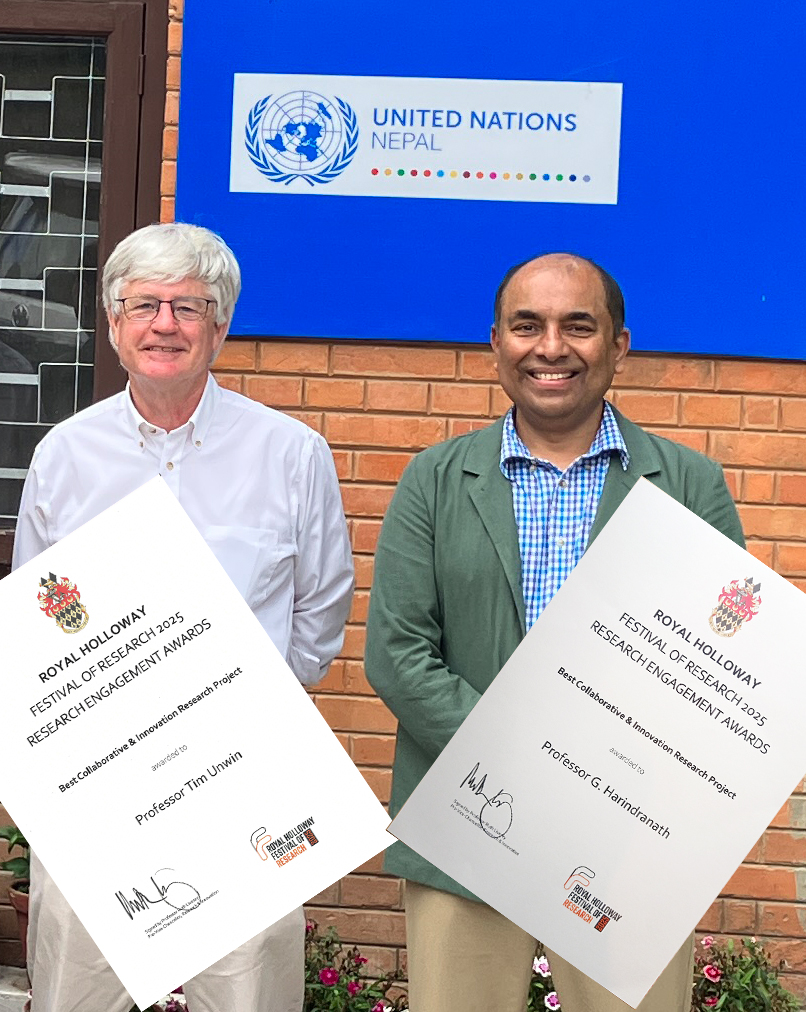
Hari Harindranath and Tim Unwin receive “Best Collaborative and Innovation Research Project” award

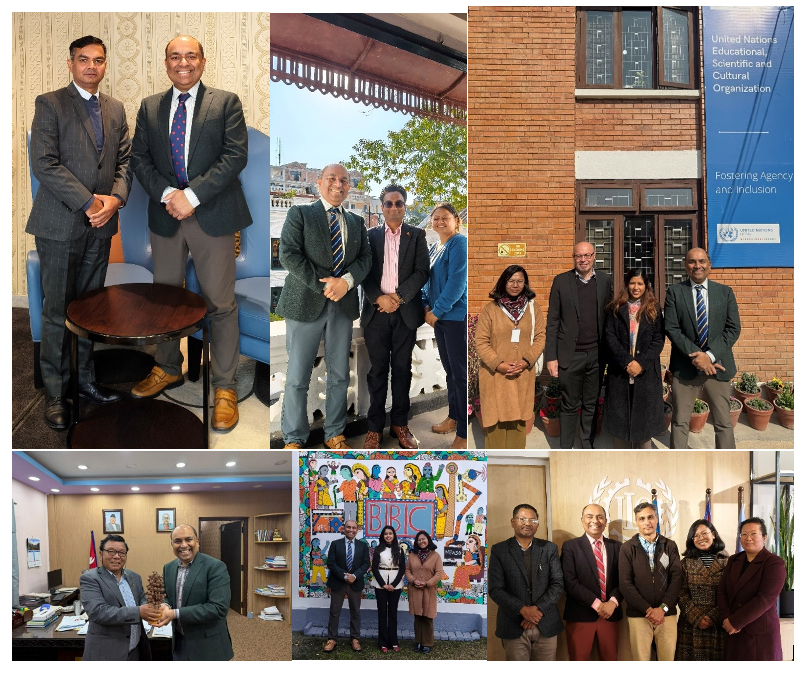
We are delighted to share the news that Profs G. ‘Hari’ Harindranath and Tim Unwin have received the award for “Best Collaborative and Innovation Research Project” from Royal Holloway, University of London for 2025 at their annual Festival of Research on 19th June for their ongoing research-practice with many other organisations across four continents on the safe, wise and secure use of digital tech in marginalised/peripheral communities, working especially with migrants and refugees. [The background to the image on the right is from one of their visits to the UNESCO offices in Nepal in 2023]

Their ‘project project was informed by social science research and resulted in the generation of interventions and training resources that were adopted by community groups and NGOs’ … To deliver outputs at scale, they have ‘engaged innovatively with international stakeholders, including third sector organisations (NGOs), international bodies (UNESCO, IOM, ILO) and key industry partners (community tech organisations). The sheer size, scale and duration of project activities are testament to the hard work’ they have invested. ‘Generating partnerships on such a global scale will not have come without its challenges, so [they] should be incredibly proud of [their] achievements in undertaking such a huge project’

Awards citation for research collaboration and innovation, Royal Holloway, University of London

More details of their work can be seen as follows:

Many organisations are contributing to this ongoing research, and full acknowledgement to them all is given in the links above.

A list of selected academic publications relating to this research:

  • Lorini, M.R., Harindranath, G. and Unwin, T. (2025) Responsible Digital: Co-Creating Safe, Wise and Secure Digital Interventions with Vulnerable Groups, Information Systems Frontiers, https://link.springer.com/article/10.1007/s10796-025-10611-4
  • Harindranath, G., Unwin, T., Lorini, M.R. (2024). The Design and Use of Digital Technologies in the Context of South–South Migration, in: Crawley, H. and Teye, J.K. (eds) The Palgrave Handbook of South–South Migration and Inequality, Cham: Palgrave Macmillan. https://doi.org/10.1007/978-3-031-39814-8_23
  • Unwin, T., Casentini, G., Harindranath, G. and Lorini, M.R. (2023) What works for migrants: reflections on research practice in the interests of migrants, Egham: ICT4D Collective, Working Paper 1
  • Harindranath, G. , Unwin, T. and Lorini, M.R. (2023) Rethinking digital tech policy for (and with) migrants, Chapter 8 in: UNRISD (United Nations Research Institute for Social Development) and MIDEQ (Migration for Development and Equality) Migration and Inequality in the Global South: Evidence from the MIDEQ Hub, Geneva: UNRISD, 36-40.
  • Unwin, T., Harindranath, G.H., Lorini, M.R. (2023) Migrants and digital tech: policy recommendations, Egham: ICT4D Collective, Policy Brief 1.
  • Harindranath, G. and Unwin, T. (2022) Digital technologies, migration and the SDG agenda, in: Piper, N. and Ditta, K. (eds) Elgar Companion to Migration and the SDGs, Cheltenham: Edward Elgar (in press)
  • Unwin, T., Marcelin, L.H., de Souza e Silva, J., Otero, G., Lorini, M.R., Anyadi, C., Gonçalves, D.M., Sato, D.P. and Harindranath, G. (2022) Uses of digital technologies by migrants from Haiti and to Brazil, Egham: UNESCO Chair in ICT4D, Royal Holloway, University of London, Working Papers No.4.
  • Unwin, T., Garba, F.,  Musaba, M.L., Lorini, M.R. and Harindranath, G. (2021) Uses of digital technologies by migrants in South Africa, Egham: UNESCO Chair in ICT4D, Royal Holloway, University of London, Working Papers No.3.
  • Majidi, N., Kasavan, C. & Harindranath, G. (2021) In support of return and reintegration? A roadmap for a responsible use of technology, in: McAuliffe, M. (ed.) Research Handbook on International Migration and Digital Technology, Cheltenham: Edward Elgar, pp. 220-236.
  • Unwin, T., Ghimire, A., Yeoh, S-G., Lorini, M.R. and Harindranath, G. (2021) Uses of digital technologies by Nepali migrants and their families, Egham: UNESCO Chair in ICT4D, Royal Holloway, University of London, Working Papers No.2.
  • Unwin, T., Ghimire, A., Yeoh, S-G., New, S.S., Kishna, S.S., Gois, W., Lorini, M.R. and Harindranath, G. (2021) Uses of digital technologies by Nepali migrants in Malaysia, Egham: UNESCO Chair in ICT4D, Royal Holloway, University of London, Working Papers No.1.
  • Harindranath, G. and Unwin, T (2019),  Digital technologies and migration: Reducing inequalities or creating new ones?, TREO Talk, International Conference on Information Systems, 15th December, Munich, Germany.
  • Harindranath, G. (2019) Digital technologies, migration and inequality, Presentation, Copenhagen Business School-Royal Holloway School of Management Joint Workshop, 16th September, Royal Holloway, UK.

To find out more about our work, do get in touch through our Contact Page.

Outputs of collaboration with the Scalabrini Institute for Human Mobility in Africa

As part of our contribution to the UKRI GCRF funded MIDEQ project (2019-24), members of the ICT4D Collective (Dr. Maria Rosa Lorini, Prof. Tim Unwin and Prof. G ‘Hari’ Harindranath) worked with colleagues at the Scalabrini Institute for Human Mobility in Africa (SIHMA) in Cape Town to help train a group of migrants in video production. Our overall research-practice explored how migrants in South Africa (and other countries) wanted to use digital tech to improve their lives, and one of the things that these migrants to South Africa wished to learn was how to make better quality videos about their lives, their work and how to use digital tech safely (see here for more information).

Launch of Through Their Lives, in Cape Town, January 2024.

One output of this work was a powerful 30 minute film about their lives and aspirations entiteld Through Their Lives. Another was their creation of the Fusion Avenue channel on YouTube where they continue to post useful videos on all aspects of migrant life, as well as the safe use of digital tech. We also sought to introduce these migrants to organisations who might be able to use and further develop the skills they had gained, not least so that our work would have more sustainable outcomes lasting beyond the limited period of GCRF funding. A return visit to South Africa in October 2024 provided a valuable opportunity to explore ways further to enhance this process.

We have been delighted recently to receive positive and constructive feedback from SIHMA about how this work has continued, without our direct involvement.

Through your funding, we were able to support a group of migrant amateur media practitioners to co-create a series of short videos reflecting experiences and perspectives of people on the move. The project unfolded with both valuable successes and learning opportunities. (Fr. Filippo Ferraro, SIHMA Executive Director)

Our MIDEQ funding had only provided limited resources for training the migrants on the ground, and ideally we would have liked to have worked with them for longer in a more sustained way to provide greater opportunities for them to practise and develop their video making skills (see their Fusion Avenue channel). It was also not always easy for the migrants to participate in the training and find the time to practise, especially given their needs to balance such training with their other day to day tasks and income generating activities. Our initial training undoutedly enhanced their skills (see their reflections on outomes of our work together eight months after the end of MIDEQ), and has enabled many of them to improve their business profiles on social media. However, it was insufficient for them to acquire the level of skills necessary to produce video work of sufficient quality to earn a living from this alone. We were delighted, though, that SIHMA was able to support them and help to improve their skills. Through a small amount of further funding from us they were also able to provide new equipment for the migrants to improve the quality of their videos on Fusion Avenue. These challenges were again highlighted by SIHMA:

While the initial recordings were promising, a number of videos required reshooting and further editing to meet the desired quality. In response, we engaged an experienced external migrant collaborator to assist with editing and technical guidance. This collaboration greatly enhanced the final production outcomes. We also welcomed new participants, since we were not able to connect with those previously interviewed. They contributed fresh perspectives through interviews, enriching the diversity and authenticity of the narratives. To ensure sustainable impact, we purchased video equipment for Fusion Avenue that enabled them to produce content of a higher standard — an investment that we believe will support future initiatives beyond the scope of this project. (Fr. Filippo Ferraro, SIHMA Executive Director)

This crucially show the importance of continued support to migrants in helping them gain new skills, and we are immensely grateful to SIHMA for this crucial contribution.

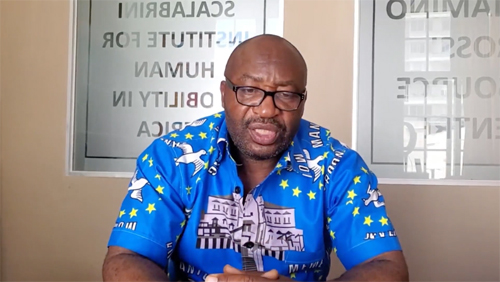
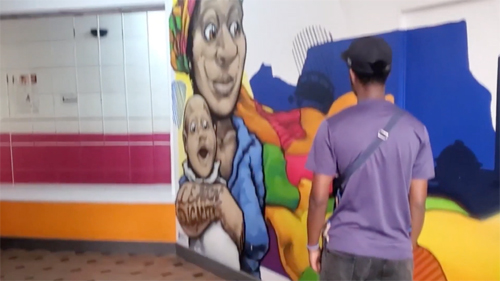
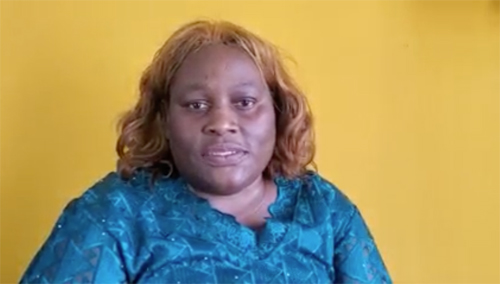
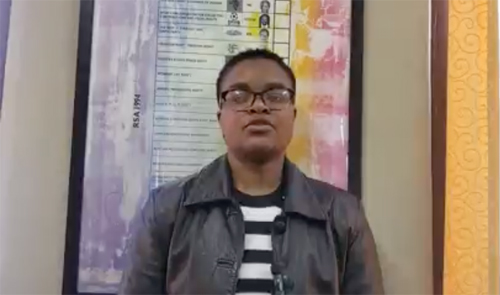
Five videos were produced as a contribution to SIHMA’s “Narratives on human mobility” and “Atlas of African Migration”, and these are also available below (just click on the images below to watch the videos):

From Cameroon

From DRC

From Somalia

From Zambia

From Zimbabwe

For larger versions of these videos see SIHMA’s Atlas of African Migration.

We are delighted that after a long process of ensuring that the quality and content were approproate, SIHMA was able to conclude that:


The final deliverables include a set of completed videos that stand as a testament to the creativity, resilience, and talent within migrant communities. These videos will be hosted on our SIHMA website and included in the initiatives “Narratives on human mobility” and “Atlas of African Migration”. This initiative has not only strengthened our training and outreach efforts, but it has also empowered beneficiaries with new technical skills and confidence in self-expression. (Fr. Filippo Ferraro, SIHMA Executive Director)

We look forward to continuing our work with migrants across southern Africa, to explore further how they can use digital tech to contibute positively to their lives. For our wider work on the Safe, Wise and Secure use of digital tech by economically poorer and more marginalised people across the world do access our resources here.