
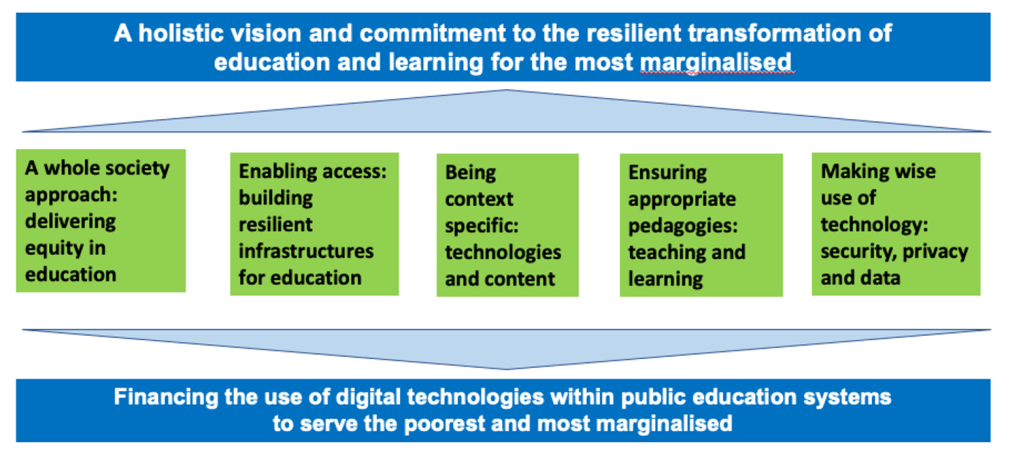
We are excited to release further details of the programme for the launch of the report on Education for the Most Marginalised post-COVID-19: Guidance for governments on the use of digital technologies in education which will be from 2pm-4pm GMT on Friday 18th December. Please register here to receive joining instructions. Further details about the initiative are available here.
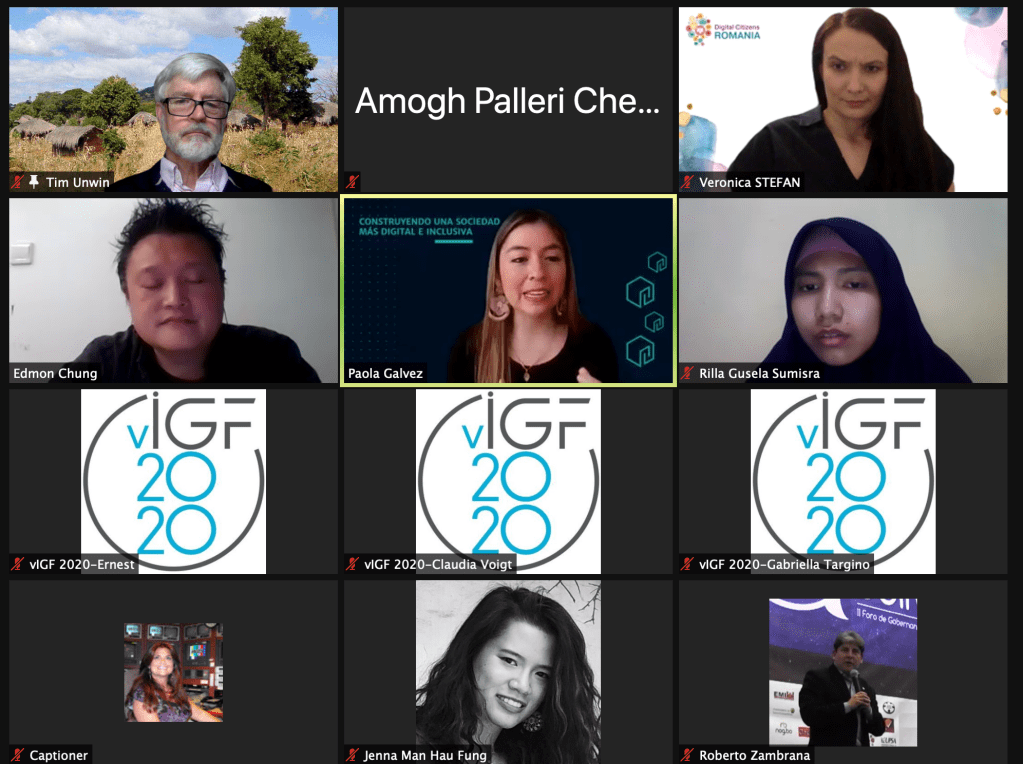
- Opening: Molly Jamieson Eberhardt (Program Director R4D, and Director EdTech Hub)
- Welcome: Michael Trucano (Global Lead for Innovation in Education and Senior Education and Technology Policy Specialist, World Bank)
- Introduction to the report: Tim Unwin (Chairholder, UNESCO Chair in ICT4D and Co-Founder of TEQtogether)
- High-level panel:
- John Nasasira (Head of Expert National Task Force on Fourth Industrial Revolution, former Government Chief Whip 2011-2013, and Minister of Information and Communication Technology 2013-2016, Uganda) (by video)
- Srinivas Reddy (Branch Chief, Skills and Employability, ILO)
- Janet Longmore (Founder and CEO, Digital Opportunity Trust)
- Alex Wong (Senior Strategy Advisor, Telecommunication Development Bureau, ITU)
- Alexandre Barbosa (Gerente do Cetic.br)
- Caroline Wright (Director General, British Education Suppliers Association)
- Waleed Al Ali (General Co-ordinator Digital School Initiative, Mohammed Bin Rashid Global Initiatives, UAE) (by video)
- Video reflections:
- Amina Umohoza (Digital Opportunity Trust, Youth Leadership Advisory Board, Rwanda; CEO of Saye Company and the Founder of Dukataze)
- Helen Crompton (Associate Professor Teaching and Learning, Old Dominion University)
- Insights on the report’s Guidance Notes:
- Ensuring resilient connectivity: Christopher Yoo (John H. Chestnut Professor of Law, Communication, and Computer and Information Science at the University of Pennsylvania Law School, and the founding director of the Center for Technology, Innovation, and Competition), Leon Gwaka (University of Pennsylvania) and Müge Haseki (University of Pennsylvania)
- Keeping Safe and Local Context: Azra Naseem (Director, Blended and Digital Learning, Aga Khan University, Pakistan)
- Small Island States and the importance of sustainable electricity: Javier Rua (former Director of Public Policy for Sunrun; former Chairman, Puerto Rico Telecommunications Regulatory Board)
- The importance of OER and Creative Commons: Paul West (Senior Education Adviser, West and Associates; and South Africa Chapter Lead, Creative Commons)
The final programme, including any revisions will be available by 16th December.
Speakers will talk for a maximum of 5 minutes each, enabling there to be a lively and forthright discussion afterwards. We welcome all those committed to empowering the poorest and most marginalised through the use of digital technologies in education to join the conversation, and work together to implement the report’s recommendations.
Funded by the FCDO and World Bank through the EdTech Hub.






 MIDEQ provides an opportunity to do things differently. It has the potential to change our understandings and influence policy, but only if we truly listen to the voices of migrants in the many different contexts where they live and work.




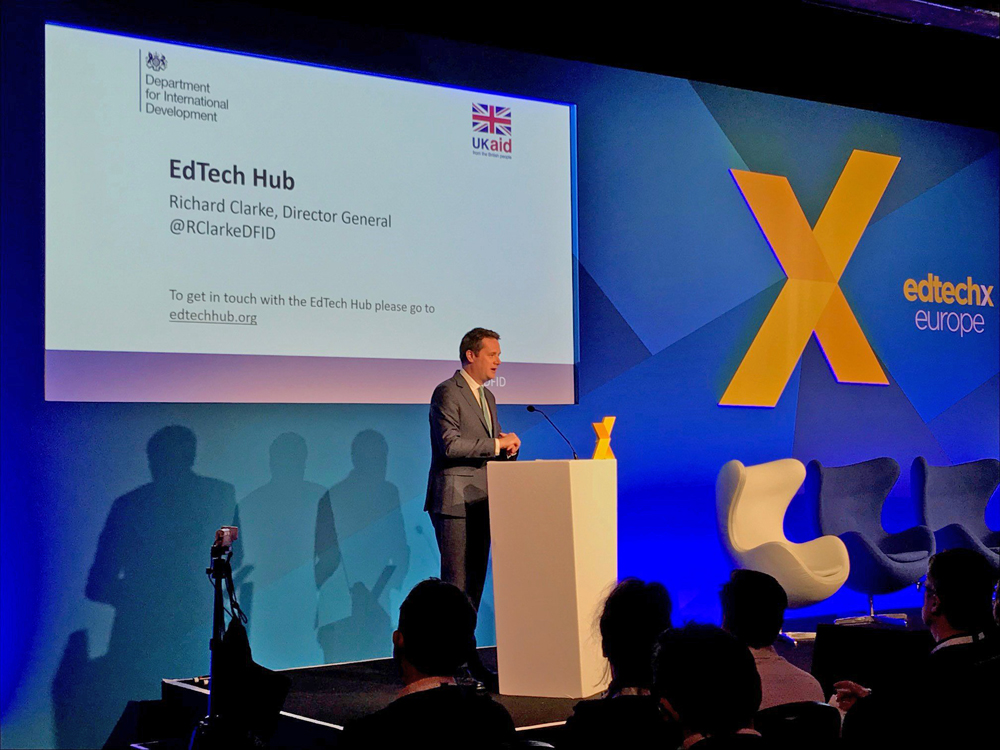 Richard Clarke, Director General
 The Forum of Minister and Secretaries of Culture was held in the very impressive Congress of the Argentine Nation, and provided an excellent opportunity for senior government officials from across the region to share presentations and discuss the theme of Libraries, Access to Information and the Sustainable Development Goals. Welcoming participants, IFLA President Glòria Pérez-Salmerón reminded them of the theme of her presidency – Motors of Change – and underlined the difference that libraries can make, for so many people, in so many ways. IFLA Secretary-General Gerald Leitner stressed to the ministers of the power they had in their hands, and made the case for ensuring that they – and libraries – are included fully in national development plans. A key outcome of the meeting was the signing of the
  A dance performance in two parts by the Arte Ballet Compañía: the Don Quijote suite, and Tiempos de Tango, with ideation, choreography and direction by María Fernanda Blanco.
 Members of
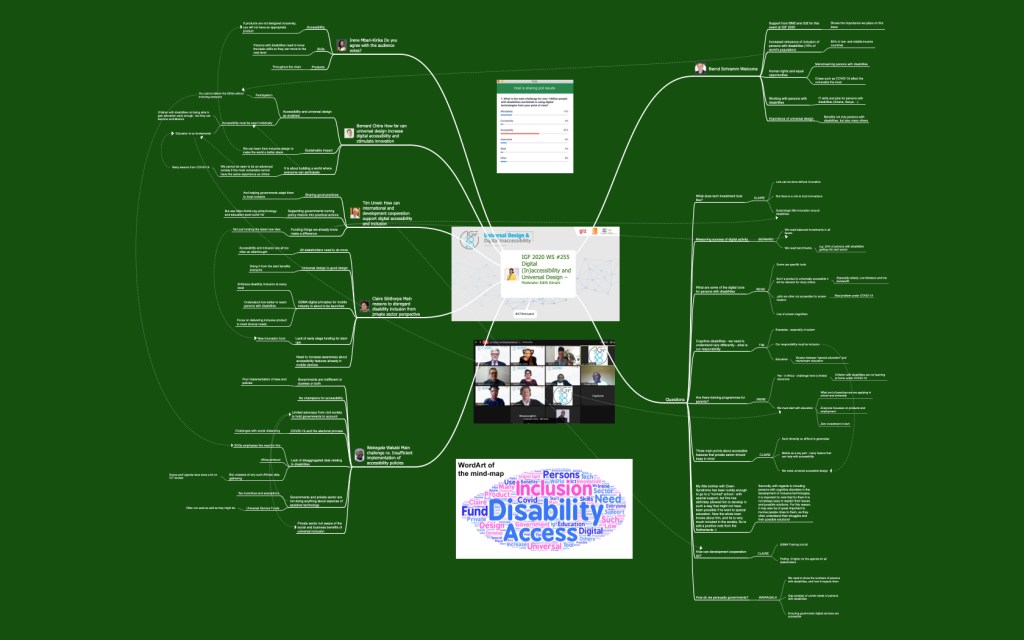
  The main part of the workshop then built on these presentations to discuss what needs to be done to change men’s and boys’ attitudes and behaviours towards women and girls in technology. The co-created mindmap developed during the workshop is illustrated below (
 The four most important issues identified that require attention were:
 Members of the UNESCO Chair in ICT4D and
  ICT4D Collective