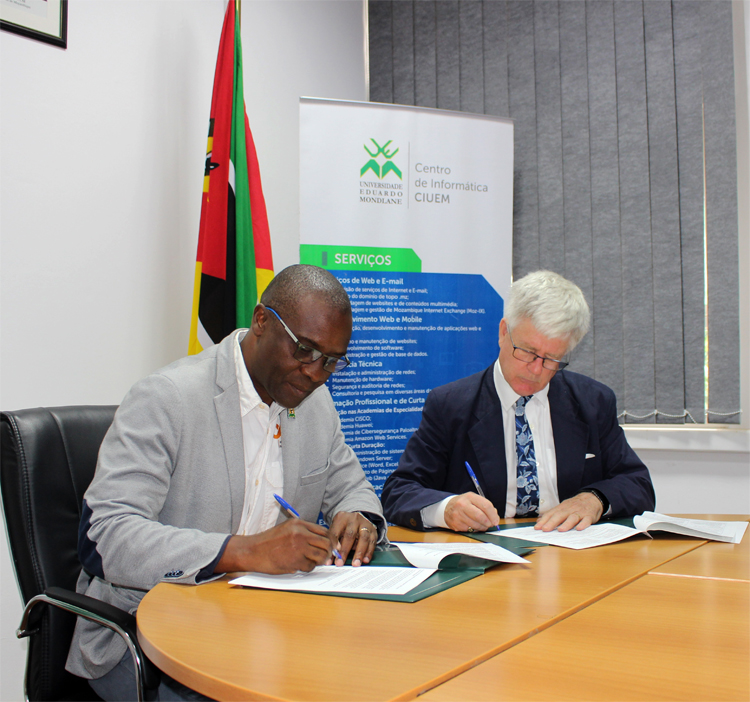
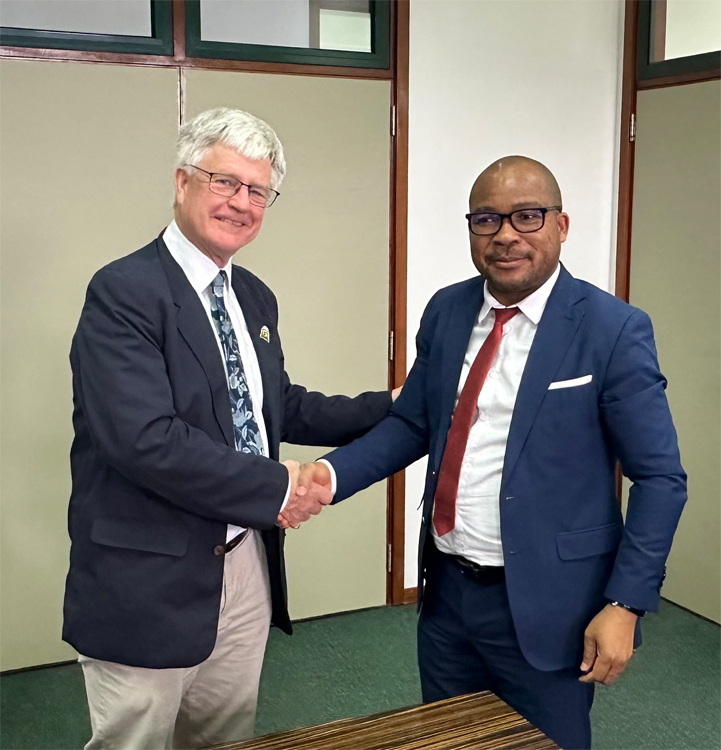
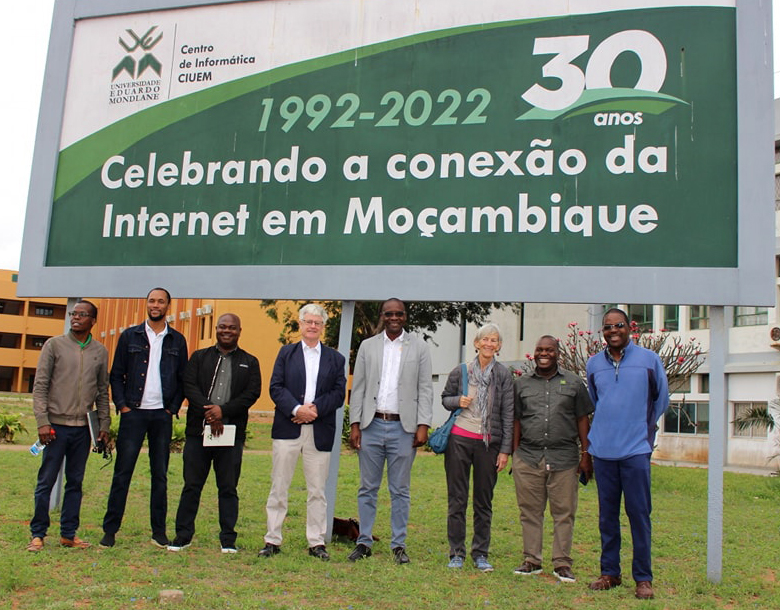
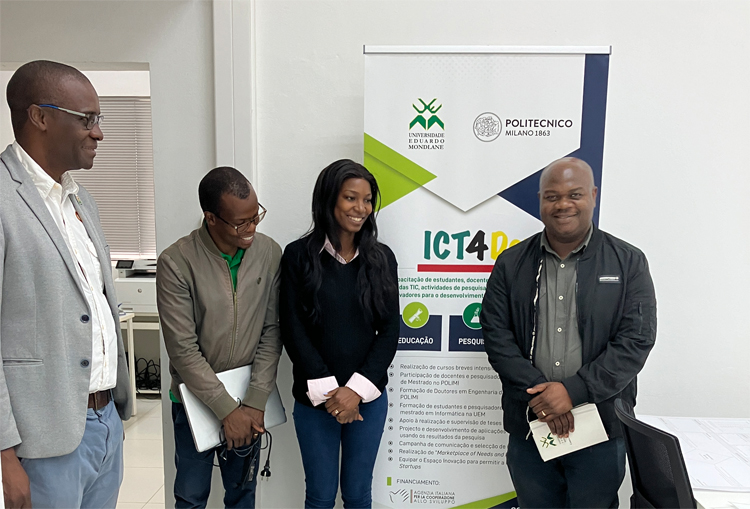
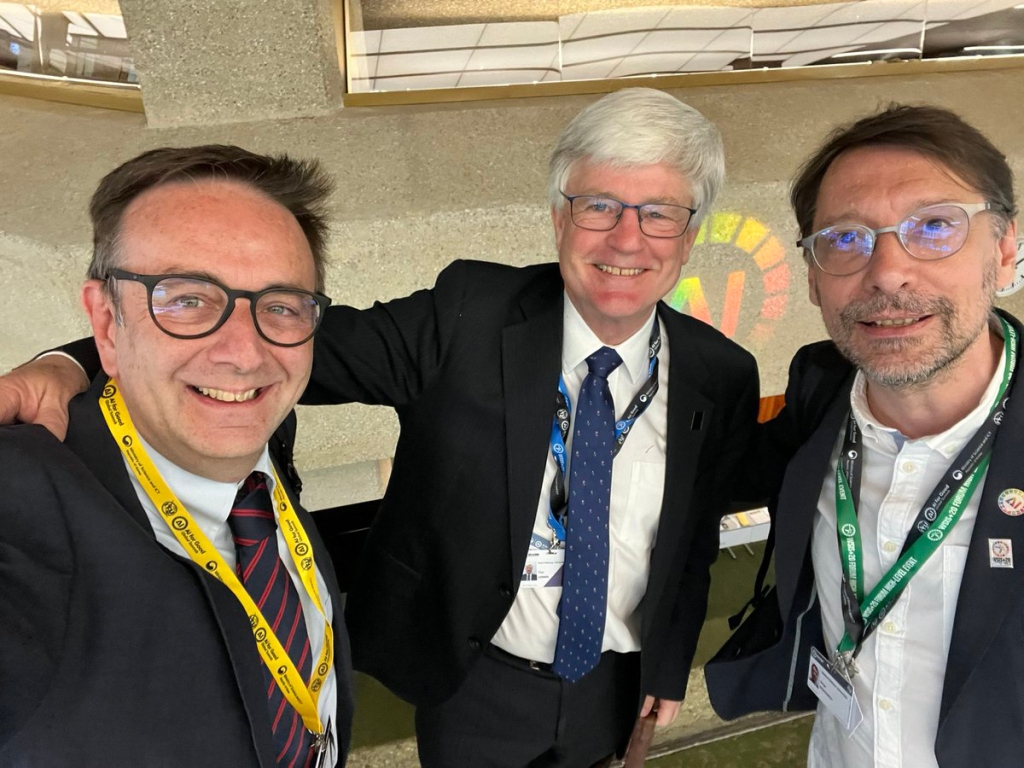
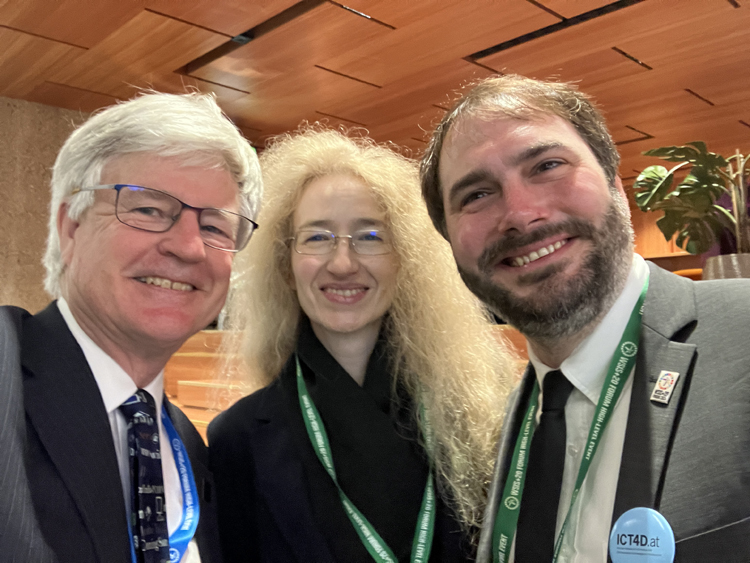
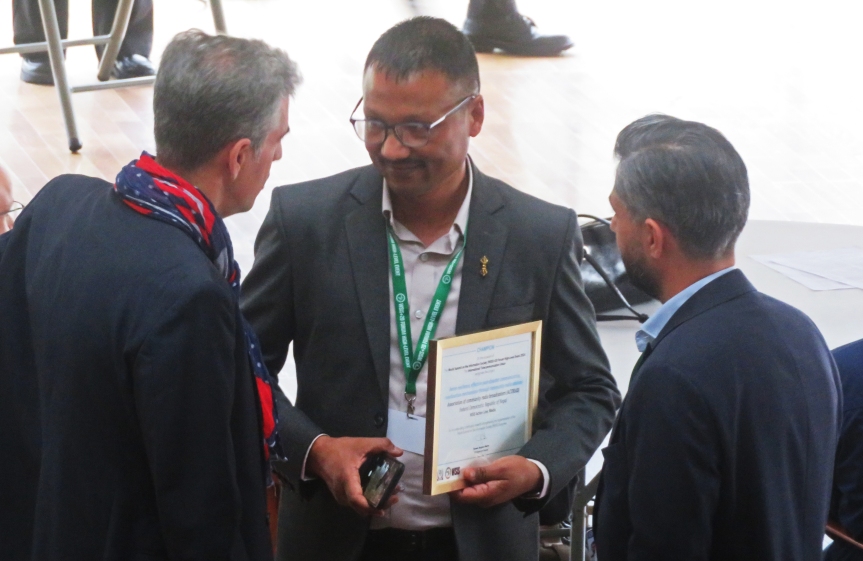
Professor Luis Neves Domingos and Tim Unwin signing a partnership Memorandum of Understanding between the Centro de Informática da Universidade Eduardo Mondlane (CIUEM), Mozambique, and the ICT4D Collective on Monday 30th September 2024 in Maputo.
The ICT4D Collective is delighted to have signed its latest partnership agreement with the Centro de Informática da Universidade Eduardo Mondlane (CIUEM) at Eduardo Mondlane University in Maputo. This agreement builds on collaboration between the two organisations over more than 20 years, which began during the UK Government’s Imfundo initiative, and was then taken further through the Africa ICT4D university network that was funded by the UK’s Development Partnerships for Higher Education (DelPHE) scheme supported by DFID and the British Council, and subsequently by European EDULINK funding. This agreement has the following main intended outputs:
High quality research and practice on digital technologies, inequalities, social change and international development
Joint workshops and conferences to explore aspects of the inter-relationships between digital technologies, inequalities, social change and international development
Research visits and exchanges between partners, especially to enhance the experiences of early career researchers
Joint strategic interventions designed to enhance the wise and appropriate use of digital technologies, especially by marginalised communities and individuals
Joint research grant applications to relevant funding agencies and research councils
Policy recommendations on areas of mutual interests
More specifically, our work together will focus on developing and sharing local language training resources on the safe, wise and secure use of digital tech, and will initially concentrate on disseminating these resources to Community Radio stations through the agency of the Centro de Apoio à Informação e Comunicação Comunitária.
Signing this agreement also provided an opportunity for both Neves and Tim to discuss with the Rector of Eduardo Mondlane University, Prof. Dr. Manuel Guilherme Junior, further ways in which closer collaboration between Mozambican and UK-based researchers and practitioners in the field of digital tech for development can be developed in the interests of some of the poorest and most marginalised people in Mozambique.
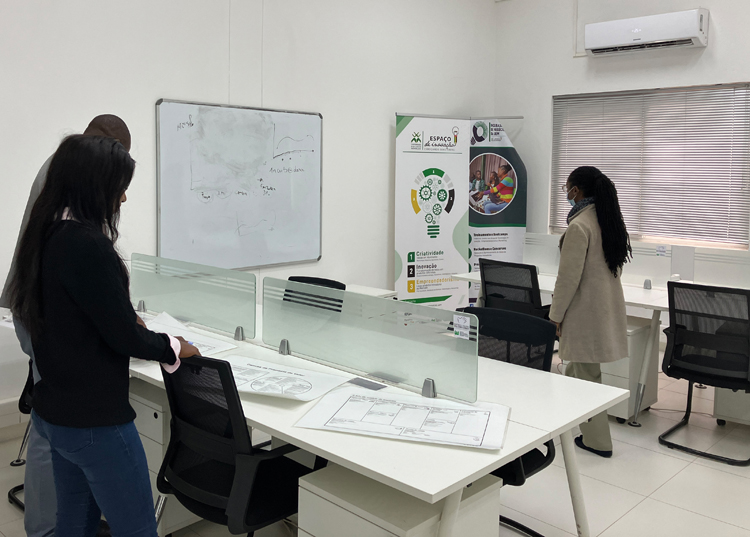
This was also an excellent opportunity to learn more about the CIUEM’s recent achievements, and the exciting new facilities that they are developing, especially in the field of of digital engtrepreneurship and capacity development.
The ICT4D Collective was delighted to be involved in delivering an online workshop/seminar with our partners ACORAB (the Association of Community Radio Broadcasters) and CIN (Community Information Network) in Nepal on 24th July. This drew on our previous work in Nepal, as well as the session on community radio that we ran earlier in the year at WSIS+20 together with other organisations and partners. These form part of our increasing work on cyber-security. Some 70 participants, mostly journalists from community radio stations, participated in the two-and-a-half hour workshop which had four main aims:
To share information and ideas about the work that members of the Collective have been doing, mainly with migrants, on the safe, wise and secure use of digital tech in Nepal, South Africa, Brazil and Mozamibique;
To provide participants with advice that will hopefully be of value to them both personally and in their professional lives;
To share resources on cyber-security that can be used through community radio to advise listeners in Nepal; and
An opportunity for discussion and dialogue between participants
The slide deck used for the workshop is available here, and we would love to hear any feedback or suggestions about the content through our contact page.
During one of our research visits to South Africa in January 2024 it became abundantly clear that many small and poorly resourced civil society organisations have little experience of using digital tech safely, wisely and securely. Drawing on good practices across the world, as well as our subsequent experiences in and with colleagues from Brazil, Nepal and Mozambiaue, we have therefore produced a short (12 page) guide to help such organisations understand the risks they are at from the use of digital tech and how they can be mitigated. This contains useful tips, graphics that can be copied and reversioned into posters, as well as links to more detailed sourcers of information, and it is freely available in English under a Creative Commons CC BY SA license.
Please get in touch using our contact page should you have any comments on how this could be improved or to discuss developing versions in other languages or for other contexts, and do please share information about this resource through your own networks.
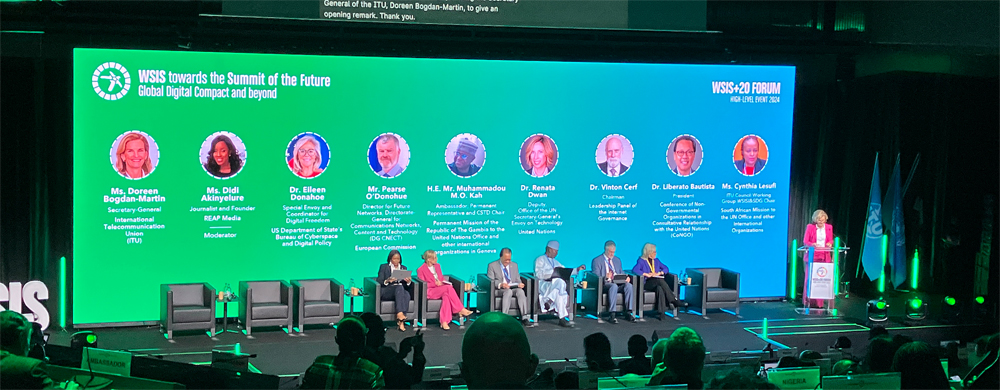
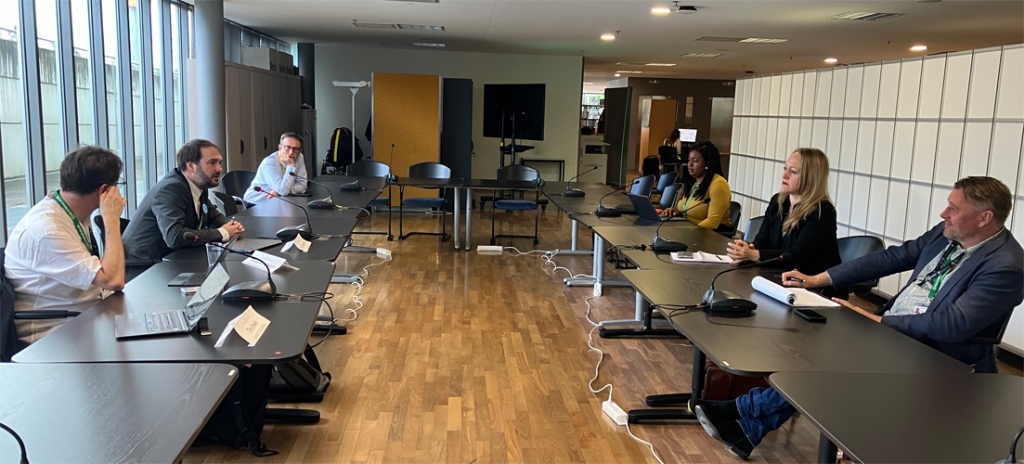
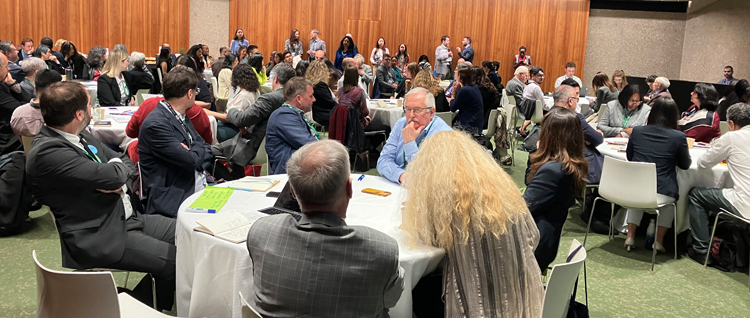
Members of the ICT4D Collective and friends had an exciting and very busy time in Geneva during the 20th anniversary meeting of the World Summit on the Information Society between 26th and 31st May, 2024. Our full agenda is available here, but we summarise below details of the two main sessions that we convened.
Community Media Networks: envisioning the future (Session 331)
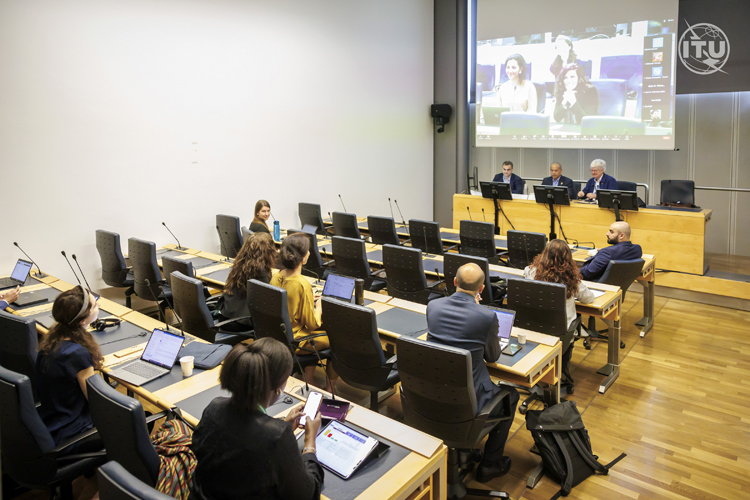
We convened this session on 29th May with ACORAB/CIN , BNNRC, TaC-Together, Youth IGF, Cape Town TV, CEMCA, and ICT4D.at, highlighting the importance of community media in reaching some of the world’s most isolated and marginalised people. Our very distinguished line-up of speakers and moderators included (in order of speaking): Pramod Tandukar (Executive Director, ACORAB, Nepal), AHM Bazlur Rahman (CEO, Bangladesh NGOs Network for Radio and Communication), Dr. R Sreedher (Tele Learning and Community Radio Practitioner), and Philomena Gnanapragasam (CEO Asia-Pacific Institute for Broadcasting Development), with Tim Unwin (ICT4D Collective) and Paul Spiesberger (ICT4D.at) also being moderators.
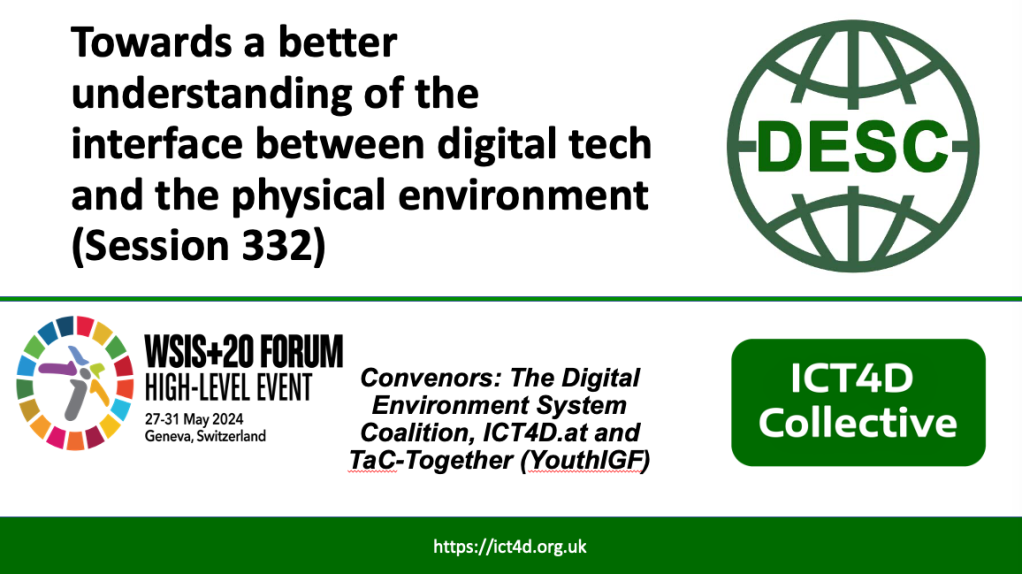
Towards a better understanding of the interface between digital tech and the physical environment (Session 332)
This session (convened by The Digital Environment System Coalition, ICT4D.at and TaC-Together with YouthIGF) provided an overview of the agenda being developed by the Digital-Environment System Coalition (DESC), and an outline of our proposed contribution to the ITU’s Partner2Connect initiative. It emphasised the need for a completely new was of understanding the interactions between digital tech and the environment, that is much more holistic than the existing emphasis of the “global community” mainly on climate change, carbon emissions, and e-waste.
The ICT4D Collective is delighted to be participating actively in the upcoming WSIS+20 week of activities in Geneva, especially since 2024 is also the 20th anniversary of the foundation of the Collective, which was created in 2004 to conduct the highest possible quality of research in the field of ICT4D primarily in the interests of poor people and marginalised communities, and making the results of this available freely to the global community.
Geneva from the ITU
Members of the Collective are actively engaged mainly in the following sessions at WSIS+20:
All of these events have been convened jointly with our partners and friends or we have been invited to participate in their sessions as speakers and moderators, and we are most grateful to them for such collaboration. Please do join us at WSIS+20 – we promise to try to make our involvement exciting, interactive and challenging. Should you wish to contact us and arrange meetings during WSIS, do please use our contacts page.
We are delighted to hear that the training resources on safe, wise and secure use of digital tech by migrants, originally developed in Nepal (as part of the MIDEQ Hub, funded by UKRI GCRF) and reversioned specifically for women in Southern Africa have recently been used by our good friends at the Domestic Workers Association Zimbabwe (DWAZ) to deliver training to 1911 of their members in Zimbabwe, South Africa, Botswana and Namibia. DWAZ was set up by Mendy Lusaba in 2021 (see this interview about her in Lionesses of Africa), and it has a centre in Zimbabwe that offers training in housekeeping, cooking and baking, gardening and care work. They also have a domestic worker netball team for the mental health of domestic workers.
In January this year, we met up with Mendy in Johannesburg, where she joined the launch of our work in South Africa that had trained migrants in video making amd the safe use of digital tech, and she made the astute observation that little digital literacy training available in the region includes sessions on the safe, wise and secure use of digital tech (watch this short video where she speaks about this). Working with her and others in South Africa, we therefore reversioned our resources specifically so that they focused on the needs of women and girl migrants there, and it is great to see them being used in this way. The resources include a slide deck and guidance notes on how they can be used and adapted by trainers, and is available freely under a CC BY-SA licence. We are continuing to develop this and we are currently working in Brazil to produce a Portuguese language version that can also be adapted for countries such as Mozambique and Angola.
Everyone is vulnerable to the many harms enabled through the use of digital tech, and it is very important that these are mitigated so that people can indeed benefit from them. Women and girls in Southern Africa are particularly vulnerable to online sexual harassment, scams, bullying, being tracked, exploitation, fake news and identity theft. The training deck is designed for people with little previous knowledge about using digital tech, and includes specific guidance on how to avoid these harms. It was developed together with migrants and migrant oprganisations, and combines this practical approach with existing good practices recommended in the relevant literature. It is divided into four main sections: an introduction covering digital literacy basics, the safe use of digital tech, how to use these technologies wisely, and how to use them privately and securely, and it also includes a short list of recommendations for further reading.
Example of final slide from the training resources
Should you use these resources, please let us know and share suggestions for how they could be improved, and don’t forget to satisfy the requirements of the CC BY-SA licence so that iothers can also benefit from your work.
We are delighted to see our recent partnership agreement with ACORAB and CIN in Nepal already bearing fruit. This was designed in part to share information about the safe, wise and secure use of digital tech, especially in remote areas of the country, as well as providing migrants with information about the new portal https://pardesi.org.np that we helped to craft with a range of migrant organisations and tech developers as part of our contribution to the MDEQ Hub.
Sajha Nepal Episode 1: Featuring Kabiraj Upreti from the Department of Labour and Occupational Safety, Government of Nepal and Aayush Pradhananga from AuraEd.
ACORAB, the Association of Community Radio Broadcasters, Nepal, and CIN, their Community Information Network, have collaboratively developed radio programmes based on some of the resources we have developed with our partners in Nepal. Two recent broadcasts show the considerable importance of community radio as a means for sharing information:
A Public Service Announcement developed earlier in 2024 which included a short section about safe migration had received 4,900 views on Facebook by 6th February, and its final broadcast was on 12th February. By today (14th February) it had received 5,600 views and 452 likes.
ACORAB also extended an invitation to several individuals that we had recommended to participate in a radio programme on secure use of information technology for safe migration, and Kabiraj Upreti from the Department of Labour and Occupational Safety and Aayush Pradhananga from AuraEd were able to participate in a recording session on 5th February. Subsequently this was aired on 7th February immediately following the Sajha Khabar news bulletin at 7 am, as part of their regular program “Sajha Nepal”, and it has also already reached over 1,000 views on Facebook, with 45 likes.
There are more than 300 community radio stations in ACORAB’s network, and these reach over 6.7 million people throughout Nepal, many of whom will have also heard these broadcaste. We are incredibly grateful to everyone at ACORAB and CIN, especially their programme manager Ayeesha Joshi, for helping to make this happen, and look forward to hearing in due course from some of those who have listened to the broadcasts about how they have changed their digital behaviours as a result.
We very much look forward to continuing our work with ACORAB and CIN, and to help them develop their broadcasting capacity, drawing on good practices globally, and optimising the use ot digital technologies.
Members of the ICT4D Collective are delighted to announce a new partnership with ACORAB, the Association of Community Radio Broadcasters, Nepal, and CIN, their Community Information Network. This follows meetings in Kathmandu in December 2023, mainly concerning the dissemination of resources we have developed collaboratively with migrant organisations in Nepal through our research-practice in the MIDEQ Hub (funded by UKRI GCRF). We are very excited that information about the https://pardesi.org.np portal and our learning resources on the safe, wise and secure use of digital tech in the six main languages used in Nepal have already been shared across their network of 382 community radio stations in the country.
The intended outputs of the partnership include:
Jointly convening awareness raising programmes in Nepal on community radio and digital tech
Jointly convening sessions at relevat international meetings on community radio and development
Joint training programs to enhance the technical skills of community radio broadcasters on utilizing ICT tools
Explorations of innovative ways to merge ICT with community radio for better outreach and impact
Identification of resources for joint projects that aim to enhance the role of ICT in community radio and vice versa
Joint development and broadcasting of advice of safe, wise and secure use of digital tech, especially for migrants.
We anticipate that these will help achieve the following outcomes:
Enhanced capacity of commuity radio broadcasters in Nepal
The work of ACORAB and CIN is better known in the international community
More sustainable development and use of community radio in Nepal, especially by migrants and their families
Enhanced well-being of people in Nepal (especially in marginalised communities)
Increased international suport for the work of ACORAB and CIN in Nepal
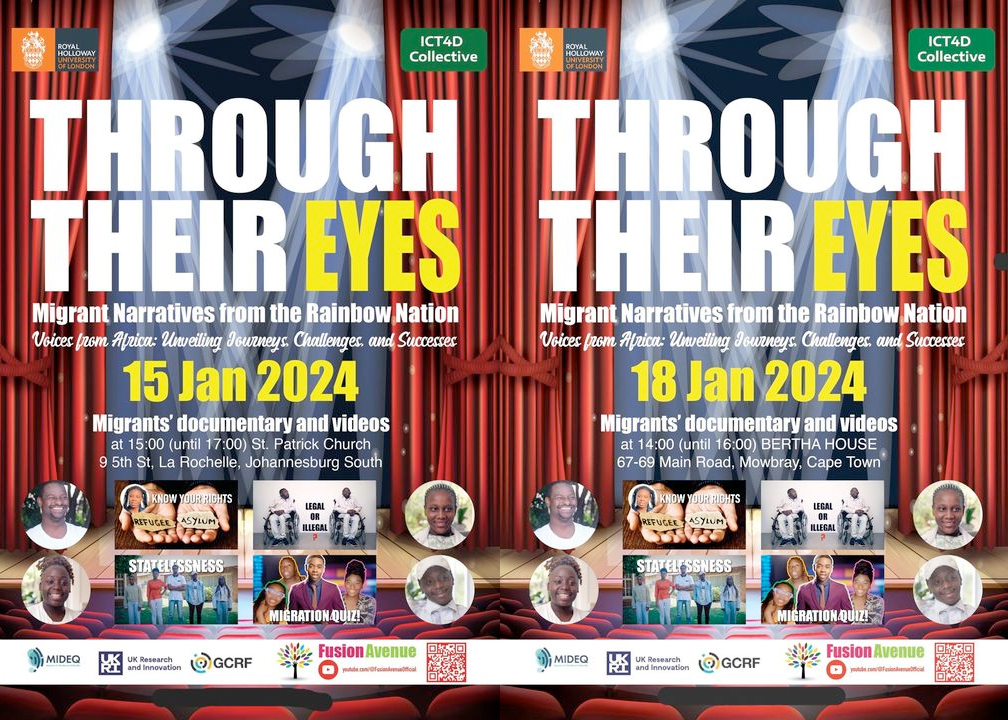
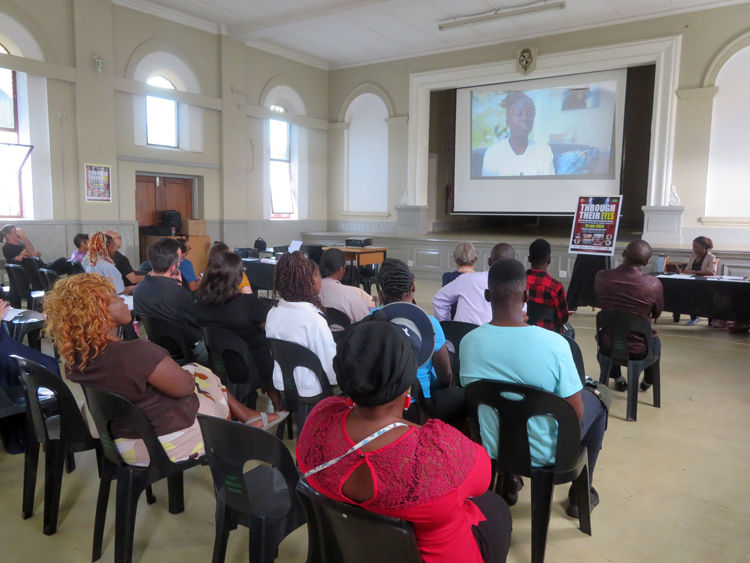
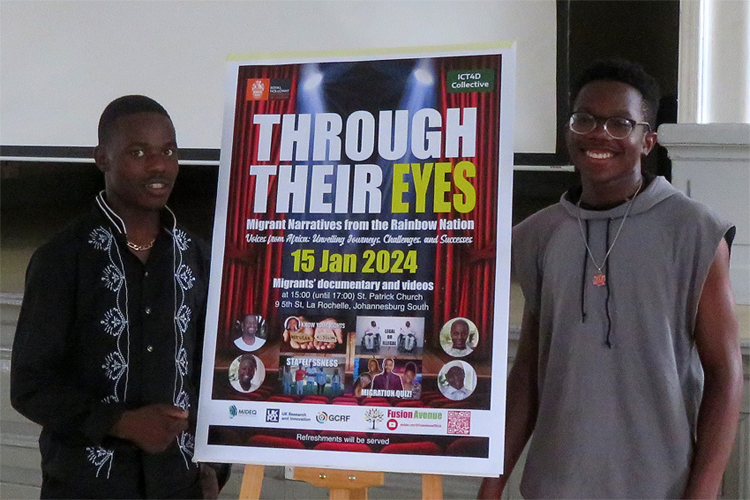
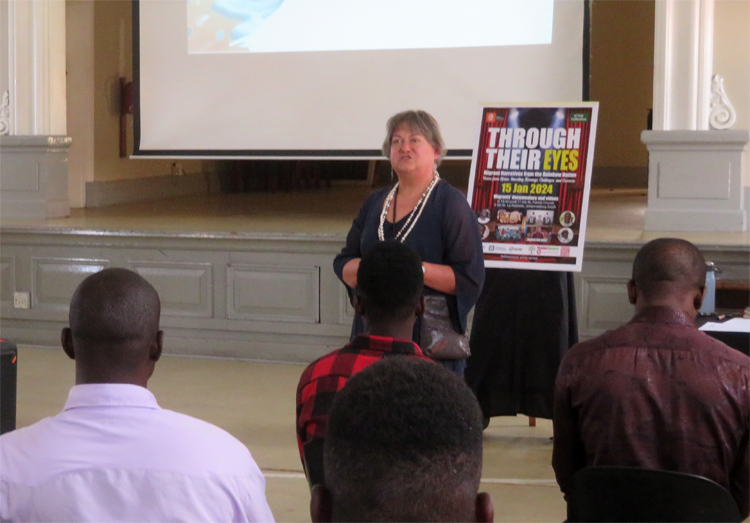
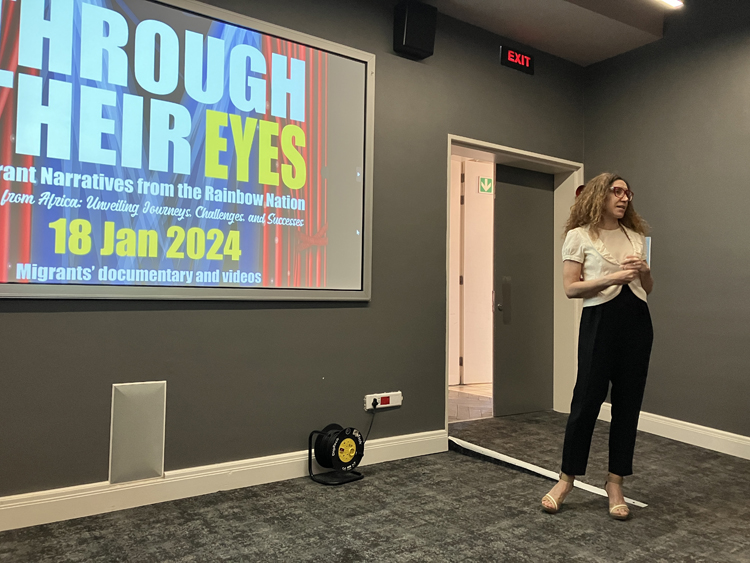
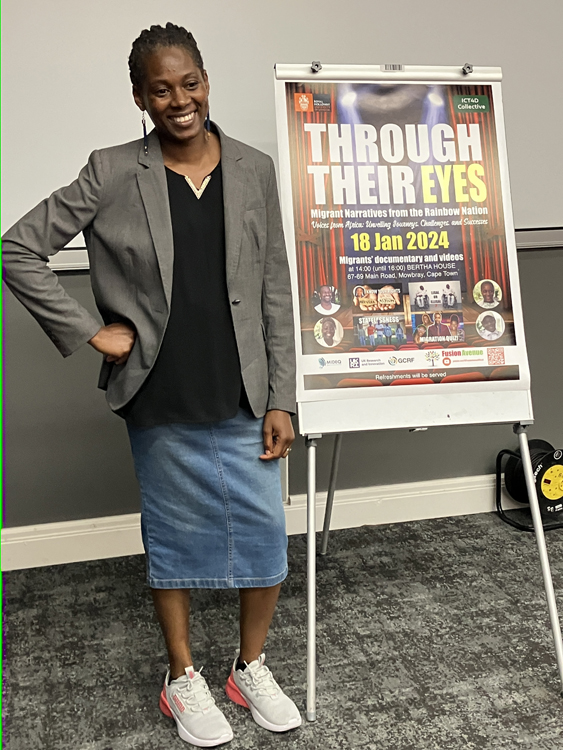
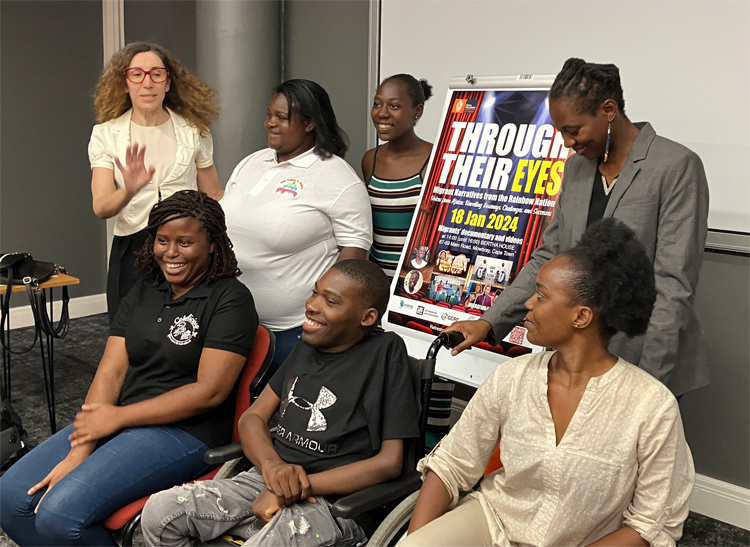
We were delighted to convene public launches on 15th January in Johannesburg and on 18th January in Cape Town for the interventions on which we have worked with migrants and migrant organisations in South Africa. The same format was followed in each location and included four main elements:
Premiere of a documentary film about the lives of the migrants with whom we have been working, entitled Through Their Eyes and produced by Simone Zanetti and Maria Rosa Lorini;
Presentation of videos made by the migrants following training by our work package, and introduction to their YouTube channel Fusion Avenue which features all the videos that they have made;
Information about the training they have been doing for others on the safe, wise and secure use of digital tech, following the training that they have received from our work package; and
Refreshments and networking.
These interventions were conceived and facilitated by the Digital Technologies and Migration work package (WP9) of the MIDEQ Hub funded by the UKRI Global Challenges Research Fund (GCRF). WP9 is led by Professor G. “Hari” Harindranath and Professor Tim Unwin CMG, with the support of Dr. Maria Rosa Lorini (who led the work in South Africa), based at the ICT4D Collective (Royal Holloway, University of London, UK). The resources were created collaboratively with migrants and organisations in both the Johannesburg and Cape Town regions, including the Scalabrini Centres in Cape Town and Johannesburg, the University of Cape Town, UNISA’s Information Systems Department, Stoneintheshoe, Rainbow Media, and SIHMA. Other organisations involved in the initiative have included Adonis Musati, Cape Town TV, Ubunti-Bethu, and JL Zwane
Johannesburg launch, 15th January
The Johannesburg launch was held at St Patrick’s Catholic Curch in La Rochelle (press release), and attracted people from the local community, migrants, universities and international organisations (click on arrows to go through the slide deck).
Cape Town launch, 18th January
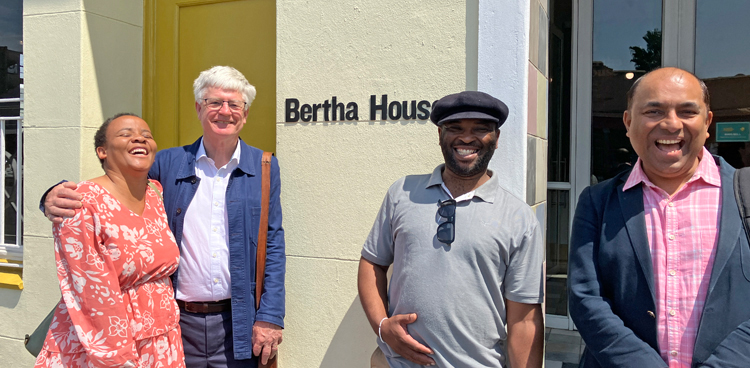
The Cape Town launch was held at Bertha House, Mowbray (press release), and likewise attracted people from the local community, migrants, universities and international organisations (click on arrows to go through the slide deck).
[Click on images or links to download the relevant press release]
Events
Lalitpur
10 December 2023, Lalitpur, Nepal: The launch of the digital tech interventions for Nepali migrants facilitated by Work Package 9 of the MIDEQ Hub took place today in the Hotel Himalaya, Lalitpur. Eighty participants from government, civil society, the private sector, international organisations and digital tech students attended. The two key interventions that Hari Harindranath, Tim Unwin and Maria Rosa Lorini (from the ICT4D Collective and Royal Holloway, University of London) had helped their Nepali colleagues to create were presented: the https://pardesi.org.np portal, which is a one-stop-shop for migrants and their families to find out about all aspects of the migration process; and resources that can be used to train migrants in the safe, wise and secure (or private) uses of digital tech, which have been designed to be especially useful in the Migrant Resource Centres.
Participants in the workshop (without the convenors!)
Members of the ICT4D Collective have been actively involved as Work Package 9 in the MIDEQ Hub since 2019, focusing especially on ways through which migrants can use digital tech to improve their lives, and thereby reduce the inequalities associated with migration. The Hub held its final major symposium in Rio de Janeiro in September 2023, and Tim Unwin, Hari Harindranath and Maria Rosa Lorini from the Collective, together with Guilia Casentini from SOAS took this opportunity to convene a highly interactive workshop/roundtable for members of MIDEQ on the theme of “What works for migrants: reflections on research practice in the interests of migrants”. The fundamental purpose of this was to explore how migrants may have benefited from our work, and how we might know what impact we may actually have had on them.
Heard in passing during our research… When will such often heard comments be consigned to the past?
The workshop addressed four main themes:
How do we really know what migrants think about our work?
What have we found to be effective ways of gathering empirical evidence about outcomes experienced by migrants?
What have we found to be effective ways of disseminating our outputs so that migrants benefit from them?
What are good forms of “output”/intervention to improve migrant lives?
We very much hope that this will promote discussion and further interaction on the crucial subject of the extent to which academic research can positively impact the lives of poor and marigalised communites and how we can know what migrants actually think of what we do. Do share your views by adding a comment to this post, or please get in touch with us directly to carry the conversation forward,
A novel initiative to celebrate the International Day of the Girl Child took place in the vibrant city of Cape Town, South Africa, on 11th October. This was driven by a collective commitment to disseminate the importance of safe, wise and secure use of digital technologies, one of the corner stones of Work Package 9 (WP9) within the MIDEQ Hub funded by the UK government’s UKRI GCRF. This team is dedicated to harnessing the potential of digital tech to improve the lives of people and has dedicated much attention and care to discussing the side-effects of the digital world and to find ways to decrease any potential harms, especially when working with vulnerable groups.
Five of the migrants living in South Africa and trained in digital skills through MIDEQ’s WP9, organised and managed an event that stands as a testimony to the importance given by people from many different backgrounds to the safe, wise and secure use of digital tech, and also witnesses the power of autonomous action and community engagement. The ‘Big Five’, as the activists called themselves in a comparison with the charismatic South African megafauna, took it upon themselves to participate in a school event dedicated to girls. This event took on added significance given the unique challenges faced by girls in the digital landscape, including issues of sexual harassment and trafficking, particularly within the migrant community. The school is situated in an area characterized by a significant concentration of migrants, and the teachers there are well-informed about the delicate issues associated with xenophobia and hate speech. Their stydents comprises girls from various nationalities, including Kenya, Zimbabwe, Zambia, Angola, and the Democratic Republic of Congo. Notably, the facilitators, who hail from Zimbabwe and the Democratic Republic of Congo, were themselves also able to glean valuable insights from the small group conversations during the activities.
Pascal Avenvuka Mbu-Letang interacting with the young students. Photo Credit: Hentie Wilson
The autonomy and initiative of these migrants trained through WP9 shone through as they seized the opportunity to impart crucial knowledge on online safety and security. As facilitators, they valued the school and specifically the chance to contribute to an event focused on girls’ perspectives. This was just the right arena with a relevant audience to spread messages and initiate a conversation with both students and teachers on risky digital behaviours that are too often underestimated. Above all in marginalised areas affected by limited infrastructures and high inequalities, parents and teachers do not consider digital risks as a priority to worry about. Nevertheless, as the facilitators highlighted during their talks, more and more often technology is the conduit of sexual harassment initially online and soon afterwards in person.
To emphasize the importance of being cautious and discerning while online, the speakers posed a provocative question to the students, asking them who assists them at school. The young audience quickly responded, stating that they have friends. However, when a similar inquiry was made regarding social media, the students became uncertain and struggled to formulate their responses. Throughout the session, the facilitators carefully avoided sounding judgmental about common mistakes or limited knowledge of online risks and solutions. Instead, they tactfully encouraged students to reflect on aspects such as the potential for online tracking when sharing personal pictures of their daily activities.
These migrants are among the founders of the Fusion Avenue YouTube Channel – a collective of migrants living in South Africa dedicated to exploring cultures, ideas, and viewpoints with the goal to bridge gaps, celebrate differences, and find common ground. With the consent of the school, the facilitators created a video reportage of the event, and have posted this on their channel (click also on the image below).
Join us on this journey as we delve into the details of this inspiring initiative, exploring how these dedicated facilitators catalysed the attention of their young audience and left a mark on the students and teachers with whom they engaged. This is a story of empowerment, autonomy, and the boundless potential of collaboratiion that we would like to tell though their own voices.
Memory Mwadziwana, one of the facilitators, captured the essence of the day in this way
“Ladies and gentlemen, welcome to a recap of the extraordinary International Girls Day event! Ladies and gentlemen, this is Memory, reporting on the extraordinary International Girls Day event that took place on October 11th at the Purpose Finders School. It was a day that resonated with empowerment, education, and unity, leaving a profound impact on both the girls and the teachers who took part.
The day kicked off with a briefing by our dedicated organizers, laying the foundation for what would become a transformative experience at Purpose Finders School.
An emotional prayer permeated the air, symbolizing hope and unity and setting the tone for the day’s events. It was followed by a shout-out to the remarkable facilitators and organizers, including Fusion Avenue, Women African Weavers, DMS Ministry, and Purpose Finders School. Their unwavering dedication forged a sense of community, creating a collaborative atmosphere that would define the day.
The girls took centre stage, sharing poignant poems that transcended mere performance; they became acts of self-expression and empowerment. The bond between teachers and students strengthened as educators gained a newfound appreciation for the incredible talents of their charges.
Theatre sketch by the students about early pregnancy (Photo credit: Marlene Sitah)
A highlight of the event was Pascal’s presentation on online safety and security. Trained by the MIDEQ Project, Pascal and her colleagues brought forth critical topics, including personal data exposure, digital harassment, hate speech, and online scams. In an age dominated by digital interactions, this knowledge proved invaluable.
Reiterating the importance of online safety, the event underscored the significance of being vigilant and informed in the digital world. Teachers expressed gratitude for the invaluable knowledge, and the girls left with newfound confidence.
Pascal Avenvuka Mbu-Letang presenting personal data belongingness and life to the young students. Photo Credit: Michael Kanyinda
Reporting from the Purpose Finders School, this is Memory, signing off with a heart full of inspiration and hope for the continued empowerment of young minds.”
At the end of the event, a debriefing session took place among the facilitators and the teachers who were keen to discuss further involvement of the ‘Big Five’ in this learning process, starting from themselves as educators.
From our side in MIDEQ WP9, we can only wish the Fusion Avenue team more successful events such as this!