
Digital Inclusion in an Unequal World (Episode 7) – G. ‘Hari’ Harindranath – How May Academics Help to Empower Marginalised Communities Through Digital Tech?

This is the seventh episode of our podcast based on the vignettes contributed by friends and colleagues to Tim Unwin’s new book Digital Technologies in an Unequal World: An Empancipatory Manfesto. In it, Hari argues that “Empowering marginalised groups through our work with digital technologies, and striving to make the world a better place as a result may be lofty aspirations, but they are worth pursuing. That will require us all to get out of our comfort zones and find ways to prioritise outcomes, commit time and resources, and engage with communities on the ground, rather than in the ivory towers, to learn and gather evidence of impact and outcomes of using digital tech in the service of the world’s poorest and most marginalised”

The full vignette can be read in English here and all audio files relating to the book are also available on our podcast.

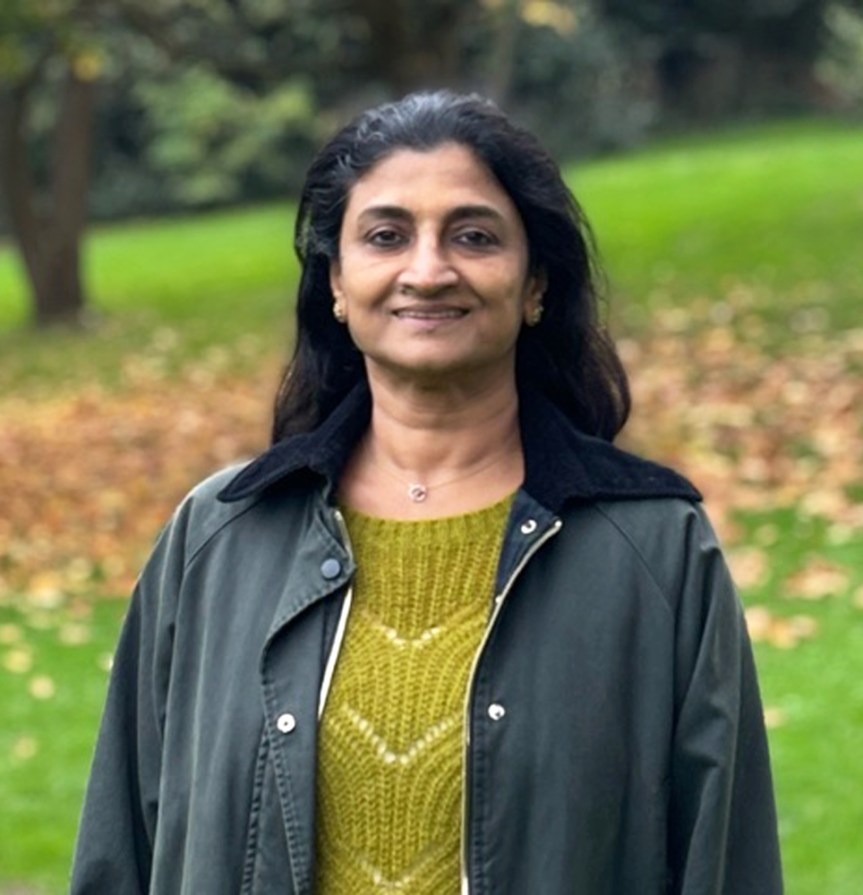
Hari is Professor of Information Systems at Royal Holloway, University of London, UK, exploring how digital tech shapes lives, work, and society. Hari is passionate about impact, collaborates with communities to address digital inequalities, and sometimes even gets policymakers to listen. He thinks research should do good, not just look good (UK).

Full details of the book are available through the following links:


Other recent episodes

Digital Inclusion in an Unequal World (Episode 7) – G. ‘Hari’ Harindranath – How May Academics Help to Empower Marginalised Communities Through Digital Tech? ICT4D Collective » ICT4D

Hari is Professor of Information Systems at Royal Holloway, University of London, UK, exploring how digital tech shapes lives, work, and society. Hari is passionate about impact, collaborates with communities to address digital inequalities, and sometimes even gets policymakers to listen. He thinks research should do good, not just look good (UK). Full details of … Continue reading Digital Inclusion in an Unequal World (Episode 7) – G. ‘Hari’ Harindranath – How May Academics Help to Empower Marginalised Communities Through Digital Tech?
  1. Digital Inclusion in an Unequal World (Episode 7) – G. ‘Hari’ Harindranath – How May Academics Help to Empower Marginalised Communities Through Digital Tech?
  2. Digital Inclusion in an Unequal World (Episode 6) – Mei Lin Fung on “Learning from Land Rights so Data Rights are Right from the Get Go”.
  3. Digital Inclusion in an Unequal World (Episode 5) – Domenico Fiormonte on “The Geopolitics of Digital Knowledge”.

FraudBoom: twenty years of lawbreaking, abuses and censorship by the world’s most popular social media

Facebook (FB) was founded in 2004, and more than twenty years later it is time to take stock. More than three billion active users seem to provide evidence of its undisputed global ‘success’. It is a tool that has changed the lives of many people, but is not easy to say whether this has been for better or for worse. In the meanwhile, it seems that we can no longer do without FB or any of Zuckerberg’s other tools, such as Instagram or WhatsApp. Every now and then, the media talks about the psychological and cognitive damage caused by social media, especially among young people. Sometimes they also talk about the misuse of our data, but these are phenomena that are not very visible and difficult to quantify. Despite dozens of books, investigations, academic research, and even films denouncing the abuses of FB (and the whirlwind career of its founder) could fill up entire libraries and websites, most people seem largely uninterested in its harms.

In an attempt to raise users’ awareness, we started to review the political, economic, social, cognitive, ethical, and privacy costs of this addiction. We selected around fifty of the best-known and verifiable categories of event documented in the media between 2007 and 2025, and these are listed here. These range from the illegal use of user data to its deliberate manipulation for commercial and political purposes, from the exploitation of workers in the global south (click farms) to collaboration with authoritarian governments, from million-dollar fines to silencing the voices of Palestinians in Gaza. All events and allegations are known to an audience of experts and insiders but seeing it all together gives us an idea of the temporal dimensions and the extent of those misdeeds. Our work is a preliminary and non-exhaustive “catalogue of horrors” that will form part of a data base project starting in Spring 2026 in the Digital Humanities laboratory at the Department of Humanities of the University of Roma Tre. If you think that we have missed some important Zuckerberg-related abuses or misdeeds, please do contact the authors at domenico.fiormonte@uniroma3.it .

Among the questions I would like to ask in the workshop, there is one that I know will be particularly unpopular with students: isn’t it time to abandon Zuckerberg and the GAFAM empire (which is also an inherent part of the genocide economy)? Abandoning these platforms is part of a necessary and urgent process of epistemic decolonization. The first step in this direction is to counter the narrative that “there are no alternatives”, when in fact there are now more and more, such as those listed by llaborda.org. Software that is free or at least not programmed to extract data and personal lives from individuals has always been available, but its adoption requires, in Gramscian terms, a new consciousness followed by an adequate literacy.

We must develop awareness and mastery of a system of signs in which languages and media, programs and devices, software and hardware constitute the frameworks of thought and knowledge. The second step is to rediscover (and defend) the web as a protocol and open space for cultural diversity, uncensored communication and sharing, in contrast to the cages of commercial platforms and corresponding apps as standardized models of thought and global surveillance. In short, it is up to us to become active and aware digital literates, rejecting a digital world that has been disfigured by Big Tech deception, misrepresentation, and exploitation. The battle for freedom of expression, for the right to the exclusive use of our digital corpus, and for the creative and conscious use of the internet is still ongoing. However, given the increasingly widespread weaponization of digital spaces—as demonstrated by the EU Council substantial approval of Chat Control—we cannot completely rule out the possibility of a gradual DigitalExit. Perhaps, in the not-so-distant future, disconnecting from the internet will be the only way to save it.

Authors: Domenico Fiormonte and Kassandra Wilhelm

4 December 2024

Digital Inclusion in an Unequal World (Episode 6) – Mei Lin Fung on “Learning from Land Rights so Data Rights are Right from the Get Go”.

This is the sixth episode of our podcast based on the vignettes contributed by friends and colleagues to Tim Unwin’s new book Digital Technologies in an Unequal World: An Empancipatory Manfesto. In it, Mei Lin Fung suggests that “The painful history of poorly defined land rights, which in the past led to displacement through lack of formal documentation, offers a crucial lesson for the digital age”. She concludes optimistically that “We still have time to shape the digital future so that it reflects the dignity of everyone it touches — and ensures meaningful participation for anyone, anywhere”

The full vignette can be read in English here, and it can also be watched on video here.

Mei Lin is co-founder of the People-Centered Internet with Vint Cerf, is a tech pioneer in CRM and the future of health. She leads global efforts in digital public infrastructure, focused on bridging the gap so global finance can reach MSMEs everywhere (Singapore).

Full details of the book are available through the following links:


Other recent episodes

Digital Inclusion in an Unequal World (Episode 7) – G. ‘Hari’ Harindranath – How May Academics Help to Empower Marginalised Communities Through Digital Tech? ICT4D Collective » ICT4D

Hari is Professor of Information Systems at Royal Holloway, University of London, UK, exploring how digital tech shapes lives, work, and society. Hari is passionate about impact, collaborates with communities to address digital inequalities, and sometimes even gets policymakers to listen. He thinks research should do good, not just look good (UK). Full details of … Continue reading Digital Inclusion in an Unequal World (Episode 7) – G. ‘Hari’ Harindranath – How May Academics Help to Empower Marginalised Communities Through Digital Tech?
  1. Digital Inclusion in an Unequal World (Episode 7) – G. ‘Hari’ Harindranath – How May Academics Help to Empower Marginalised Communities Through Digital Tech?
  2. Digital Inclusion in an Unequal World (Episode 6) – Mei Lin Fung on “Learning from Land Rights so Data Rights are Right from the Get Go”.
  3. Digital Inclusion in an Unequal World (Episode 5) – Domenico Fiormonte on “The Geopolitics of Digital Knowledge”.

Digital Inclusion in an Unequal World (Episode 5) – Domenico Fiormonte on “The Geopolitics of Digital Knowledge”.

This is the fifth episode of our podcast based on the vignettes contributed by friends and colleagues to Tim Unwin’s new book Digital Technologies in an Unequal World: An Empancipatory Manfesto. In it, Domenico asks the important question “So who has the power today to ‘represent’ digitally the world’s languages, the core of human cultures?”. He answers: “It is a group of Western, predominantly English-speaking and U.S.-based corporations”. However, he concludes optimistically that “the real Web is becoming multilingual and multicultural, regardless of all its hegemonic and mainstream representations”

Audio in Italian

The full vignette can be read in English here.

Domenico is Associate Professor at the University of Roma Tre and Research Associate at the University of Dar es Salaam, where he teaches courses on Sociology of Communication, Geopolitics of Knowledge, and Digital Humanities. His latest book is Para una crítica del texto digital. Filología, literatura y redes (A Coruña, 2023) (Italy and Tanzania).

Full details of the book are available through the following links:


Other recent episodes

Digital Inclusion in an Unequal World (Episode 7) – G. ‘Hari’ Harindranath – How May Academics Help to Empower Marginalised Communities Through Digital Tech? ICT4D Collective » ICT4D

Hari is Professor of Information Systems at Royal Holloway, University of London, UK, exploring how digital tech shapes lives, work, and society. Hari is passionate about impact, collaborates with communities to address digital inequalities, and sometimes even gets policymakers to listen. He thinks research should do good, not just look good (UK). Full details of … Continue reading Digital Inclusion in an Unequal World (Episode 7) – G. ‘Hari’ Harindranath – How May Academics Help to Empower Marginalised Communities Through Digital Tech?
  1. Digital Inclusion in an Unequal World (Episode 7) – G. ‘Hari’ Harindranath – How May Academics Help to Empower Marginalised Communities Through Digital Tech?
  2. Digital Inclusion in an Unequal World (Episode 6) – Mei Lin Fung on “Learning from Land Rights so Data Rights are Right from the Get Go”.
  3. Digital Inclusion in an Unequal World (Episode 5) – Domenico Fiormonte on “The Geopolitics of Digital Knowledge”.

Digital Inclusion in an Unequal World (Episode 4) – Pari Esfandiari’s contribution to “Nigel Hickson: a digital life well lived for others”

This is the fourth episode of our podcast based on the vignettes contributed by friends and colleagues to Tim Unwin’s new book Digital Technologies in an Unequal World: An Empancipatory Manfesto. Our dear friend and colleague, Nigel Hickson was to have written one of these vignettes based on his wealth of experience working on Internet Governance, especially for the British Government and ICANN, but his untimely death meant that he was unable to complete it. Instead, some of his friends have contributed very short pieces on what it was that made him so special, and a model to follow for anyone wishing to work at the policy level to ensure that the poorest and most marginalised can benefit from the use of digital tech. The full vignette can be read here.

Pari’s work sits at the intersection of technology, geopolitics, and governance. She is President and Co-Founder of the Global TechnoPolitics Forum, advises international bodies, serves on ICANN’s At-Large Advisory Committee, was a Senior Fellow at the Atlantic Council, and helps leaders navigate digital transformation and global systems beyond borders (UK and USA).

Full details of the book are available through the following links:


Other recent episodes

Digital Inclusion in an Unequal World (Episode 7) – G. ‘Hari’ Harindranath – How May Academics Help to Empower Marginalised Communities Through Digital Tech? ICT4D Collective » ICT4D

Hari is Professor of Information Systems at Royal Holloway, University of London, UK, exploring how digital tech shapes lives, work, and society. Hari is passionate about impact, collaborates with communities to address digital inequalities, and sometimes even gets policymakers to listen. He thinks research should do good, not just look good (UK). Full details of … Continue reading Digital Inclusion in an Unequal World (Episode 7) – G. ‘Hari’ Harindranath – How May Academics Help to Empower Marginalised Communities Through Digital Tech?
  1. Digital Inclusion in an Unequal World (Episode 7) – G. ‘Hari’ Harindranath – How May Academics Help to Empower Marginalised Communities Through Digital Tech?
  2. Digital Inclusion in an Unequal World (Episode 6) – Mei Lin Fung on “Learning from Land Rights so Data Rights are Right from the Get Go”.
  3. Digital Inclusion in an Unequal World (Episode 5) – Domenico Fiormonte on “The Geopolitics of Digital Knowledge”.

The global reach of our website

It’s great to see the global reach of our website over the last three years (since January 2023) in the map below. Just a few countries still to crack! We look forward to those living in one of the pale grey states discovering our research and practice – please spread the word. To be sure the dominant countries in terms of visitors remain the UK and USA, but Nepal (3rd), South Africa (6th) and India (7th) are also in the top 10.

In case you are concerned about how we use your data, please see our Privacy Policy. In essence, all we use your data for is to find out the countries from which we receive visitors, and can therefore generate maps such as this.

Digital Inclusion in an Unequal World (Episode 3) – Ken Banks on Memories of Innovation for the Most Marginalised

This is the third episode of our podcast based on the vignettes contributed by friends and colleagues to Tim Unwin’s new book Digital Technologies in an Unequal World: An Empancipatory Manfesto. In it, Ken focuses perceptively on the reasons why so many digital initiative notionally intended to help the poor often fail to do so. As he says “I worked for 15 years trying to give a voice to, and support, the work of grassroots organisations through digital tech, but
my frustration in a wider development system that didn’t seem to want to do what they knew was best for those they were meant to serve eventually forced me to step away”. The full vignette can be read here.

Ken (kiwanja.net) is a social innovator, author and technologist known for developing tools that empower grassroots change. He founded kiwanja.net and created FrontlineSMS, helping communities worldwide. His work bridges technology, development and impact, earning global recognition for supporting social entrepreneurs, local leaders and underrepresented voices through practical, human-centred solutions (UK).

Full details of the book are available through the following links:


Other recent episodes

Digital Inclusion in an Unequal World (Episode 7) – G. ‘Hari’ Harindranath – How May Academics Help to Empower Marginalised Communities Through Digital Tech? ICT4D Collective » ICT4D

Hari is Professor of Information Systems at Royal Holloway, University of London, UK, exploring how digital tech shapes lives, work, and society. Hari is passionate about impact, collaborates with communities to address digital inequalities, and sometimes even gets policymakers to listen. He thinks research should do good, not just look good (UK). Full details of … Continue reading Digital Inclusion in an Unequal World (Episode 7) – G. ‘Hari’ Harindranath – How May Academics Help to Empower Marginalised Communities Through Digital Tech?
  1. Digital Inclusion in an Unequal World (Episode 7) – G. ‘Hari’ Harindranath – How May Academics Help to Empower Marginalised Communities Through Digital Tech?
  2. Digital Inclusion in an Unequal World (Episode 6) – Mei Lin Fung on “Learning from Land Rights so Data Rights are Right from the Get Go”.
  3. Digital Inclusion in an Unequal World (Episode 5) – Domenico Fiormonte on “The Geopolitics of Digital Knowledge”.

ITCILO Labour Migration Academy Webinar: Digitalisation and Fair Recruitment – Sharing Experiences

Prof. G. ‘Hari’ Harindranath was delighted to to moderate the ITCILO Labour Migration Academy webinar on Digitalisation and Fair Recruitment – Sharing Experiences held on 23 October 2025. This was attended by over 50 practitioners from around the world representing governments, employers, trade unions, and civil society groups. They were joined by three experts who shared national experiences of digitalising fair recruitment processes in Bangladesh, India, and Nepal:

  • Neha Choudhary discussed Nepal’s Foreign Employment Information Management System (FEIMS), designed to reduce information asymmetries in the labour migration supply chain by connecting migrant workers, recruiters, employers, and other relevant actors.
  • Rahnuma Salam Khan introduced Bangladesh’s Recruitment Agents’ Information Management System (RAIMS), which enhances oversight of recruitment agencies and intermediaries, promoting transparency and accountability.
  • Dr. K.V. Swamy (former GM, Overseas Manpower Company of Andhra Pradesh, India) shared his experiences with India’s eMigrate system, which connects and monitors all stakeholders involved in labour migration.

Key insights from the discussion

Key insights from the discussions were:

  • Digitalisation can be transformational for fair recruitment. It enables more integrated engagement across stakeholders in the labour migration cycle, improving data collection and analysis, increasing transparency and accountability, reducing migration costs, and offering quicker access to grievance resolution mechanisms.
  • However, these benefits cannot be taken for granted. Labour migration recruitment is complex and risk laden. Digital tools alone cannot eliminate exploitation or structural inequities. Successful digitalisation of fair recruitment requires significant groundwork, including:
    • A migrant-first approach, aligned with the principle of “nothing about us without us”
    • A whole-of-government approach to ensure policy coherence and a data governance approach to match
    • Organisational cultural change across stakeholders to enable new ways of working
    • Commitment to digital skills development and ensuring accessibility for all migrant workers
    • Complementary on-the-ground interventions to ensure inclusion of the most vulnerable, who are often least likely to benefit from digital systems
    • Ethical and privacy safeguards that underpin digital systems, ensuring compliance with data protection regulations and safeguarding migrant workers’ rights.

Hari would like to thank the ITCILO for convening this panel, all the participants and staff for their engagement, and particularly Elton Di Tommazi Maciel and Michela Albertazzi for inviting him to moderate the session.

Digital Inclusion in an Unequal World (Episode 2) – Marine Al Dahdah on The Digital Privatisation of India’s Administration

This is the second episode of our podcast based on the vignettes contributed by friends and colleagues to Tim Unwin’s new book Digital Technologies in an Unequal World: An Empancipatory Manfesto. In it, Marine focuses critically on aspects of the digital privatisation of India’s administrative systems. The vignette can also be read here.

Marine is a sociologist and a CNRS Fellow at the Center for the Study of Social Movements (EHESS-Paris) and French Institute of Pondicherry in India. Her research focuses on digital policies in Asia and Africa and more particularly on digital health in India, Ghana and Kenya (France and India).

Full details of the book are available through the following links:


Other recent episodes

Digital Inclusion in an Unequal World (Episode 7) – G. ‘Hari’ Harindranath – How May Academics Help to Empower Marginalised Communities Through Digital Tech? ICT4D Collective » ICT4D

Hari is Professor of Information Systems at Royal Holloway, University of London, UK, exploring how digital tech shapes lives, work, and society. Hari is passionate about impact, collaborates with communities to address digital inequalities, and sometimes even gets policymakers to listen. He thinks research should do good, not just look good (UK). Full details of … Continue reading Digital Inclusion in an Unequal World (Episode 7) – G. ‘Hari’ Harindranath – How May Academics Help to Empower Marginalised Communities Through Digital Tech?
  1. Digital Inclusion in an Unequal World (Episode 7) – G. ‘Hari’ Harindranath – How May Academics Help to Empower Marginalised Communities Through Digital Tech?
  2. Digital Inclusion in an Unequal World (Episode 6) – Mei Lin Fung on “Learning from Land Rights so Data Rights are Right from the Get Go”.
  3. Digital Inclusion in an Unequal World (Episode 5) – Domenico Fiormonte on “The Geopolitics of Digital Knowledge”.

Digital Inclusion in an Unequal World (Episode 1) – Tendani Mulanga Chimboza on the exploitation of young women: digital tech at the heart of the immoral economy

This is the first episode of our podcast based on the vignettes contributed by friends and colleagues to Tim Unwin’s new book Digital Technologies in an Unequal World: An Empancipatory Manfesto. In it, Tendani highlights how digital tech is being used to exploit young women in southern Africa. The vignette can also be read here.

Tendani is a passionate and driven professional committed to making a difference through inclusive leadership, academic excellence, and impactful research. She advocates for representation and social justice, using technology to empower communities. Her work bridges academia (UCT), corporate insight, and public engagement to drive ethical digital transformation across Africa (South Africa).

Full details of the book are available through the following links:


Other recent episodes

Digital Inclusion in an Unequal World (Episode 7) – G. ‘Hari’ Harindranath – How May Academics Help to Empower Marginalised Communities Through Digital Tech? ICT4D Collective » ICT4D

Hari is Professor of Information Systems at Royal Holloway, University of London, UK, exploring how digital tech shapes lives, work, and society. Hari is passionate about impact, collaborates with communities to address digital inequalities, and sometimes even gets policymakers to listen. He thinks research should do good, not just look good (UK). Full details of … Continue reading Digital Inclusion in an Unequal World (Episode 7) – G. ‘Hari’ Harindranath – How May Academics Help to Empower Marginalised Communities Through Digital Tech?
  1. Digital Inclusion in an Unequal World (Episode 7) – G. ‘Hari’ Harindranath – How May Academics Help to Empower Marginalised Communities Through Digital Tech?
  2. Digital Inclusion in an Unequal World (Episode 6) – Mei Lin Fung on “Learning from Land Rights so Data Rights are Right from the Get Go”.
  3. Digital Inclusion in an Unequal World (Episode 5) – Domenico Fiormonte on “The Geopolitics of Digital Knowledge”.

Digital Inclusion in an Unequal World: An Emancipatory Manifesto

We are delighted to announce the launch of our web-pages for Tim Unwin’s new book, entitled Digital Inclusion in an Unequal World: An Emancipatory Manifesto, being published by Routledge in 2026. These contain:

Podcasts and audio

Many of the authors have contributed audio recordings of their vignettes. These are available here, but are also being shared on a regular basis through our blog and our podcast over the next six months. Do follow us on Apple Podcasts to listen to these inspiring examples of how digital tech can be used constructively by some of the world’s poorest and most marginalised people, but also the reasons why most such initiatives fail sufficiently to serve their interests.

Pre-order

This important book can be pre-ordered from Routledge using the link above, and for those who respond quickly there is a 20% reduction if you order before 23rd October 2025.

Cybersecurity and Cryptography for Toddlers – by Elizabeth Quaglia and illustrated by Alex Thompson

Elizabeth Quaglia, a member of the ICT4D Collective from Royal Holloway, University of London’s Information Security Group, has recently published two exciting and informative short books on cybersecurity and cryptography for young children, appealingly illustrated with dinosaurs by Alex Thompson.

These are excellent learning guides aimed at children and adults who care for them, and introduce fundamental concepts in cyber security and cryptography. Glossaries at the end of each book provide really useful, clear explanations of what key terms in cybersecurity and cryptography mean, and how they have been used in the books – as illustrated below:

These books are available in English, Portuguese (from Portugal and Brazilian: Criptografia para Infantes) and Ukrainian (Кібербезпека для малят).