Prof G. ‘Hari’ Harindranath visited Nepal in January 2026 funded by an ODA grant from Royal Holloway, University of London to work with partners there to develop new collaborations and help sustain digital interventions undertaken through the UKRI GCRF MIDEQ (2019-2024) project and over the past two years through other funding streams.
Launch of our new collaborative resources
A key highlight was an event to launch our multi-lingual, multimedia resources on the safe, wise, and secure use of digital technology by migrants and other vulnerable groups, developed in partnership with the Association of Community Radio Broadcasters (ACORAB), a network of 300+ community radio stations reaching every corner of Nepal
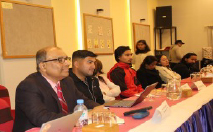
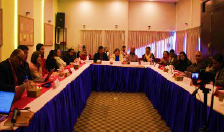
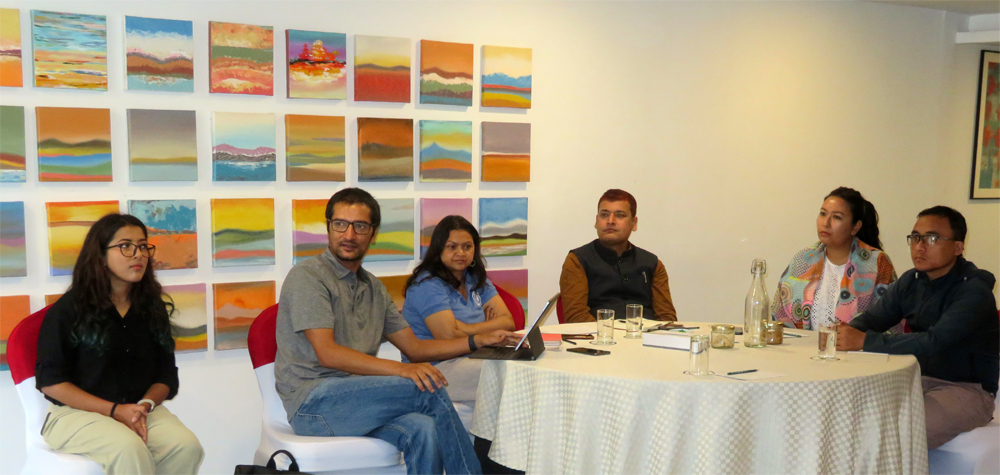
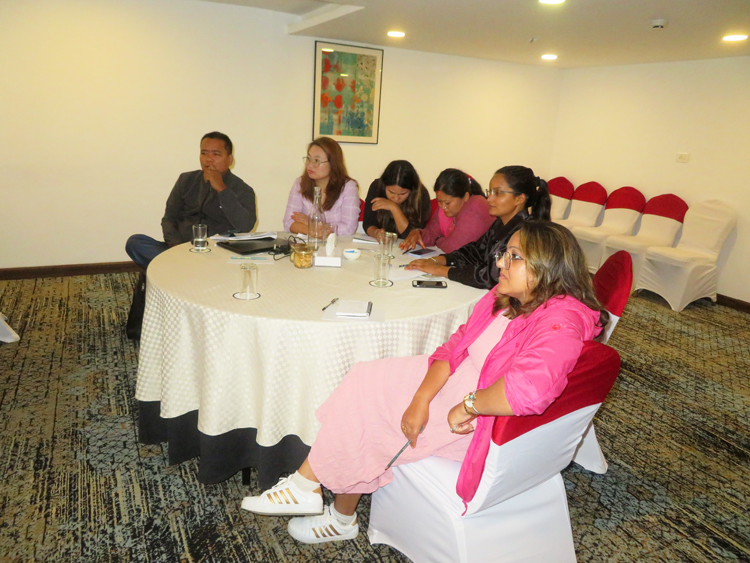
The event included a multi-stakeholder dialogue on digital safety among vulnerable groups in Nepal which brought together nearly 60 participants representing migrant and civil society organisations (female migrants, undocumented labour migrants, LGBTQ+ communities and migrant families from marginalised backgrounds), media and tech organisations including BBC Nepali and international NGOs as well as other international organisations.
New partnership opportunities with Pourakhi
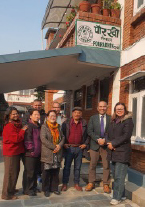
The visit led to new opportunities for partnership with organisations in Nepal that can help further the impact of our ongoing work in support of labour migrants’ use of digital technologies. Pourakhi Nepal, a migrant advocacy group that supports female migrants and returnee migrants, and a key partner for our MIDEQ work, has committed to taking guardianship of the migrant information portal, Pardesi.org.np, which was the result of our collaboration with several migrant organisations and a local tech NGO undertaken during our UKRI GCRF MIDEQ project. The portal will now become part of Pourakhi’s core activity ensuring that it remains updated and relevant to Nepali migrants and their family members.
Meetings with government officials and international organisations
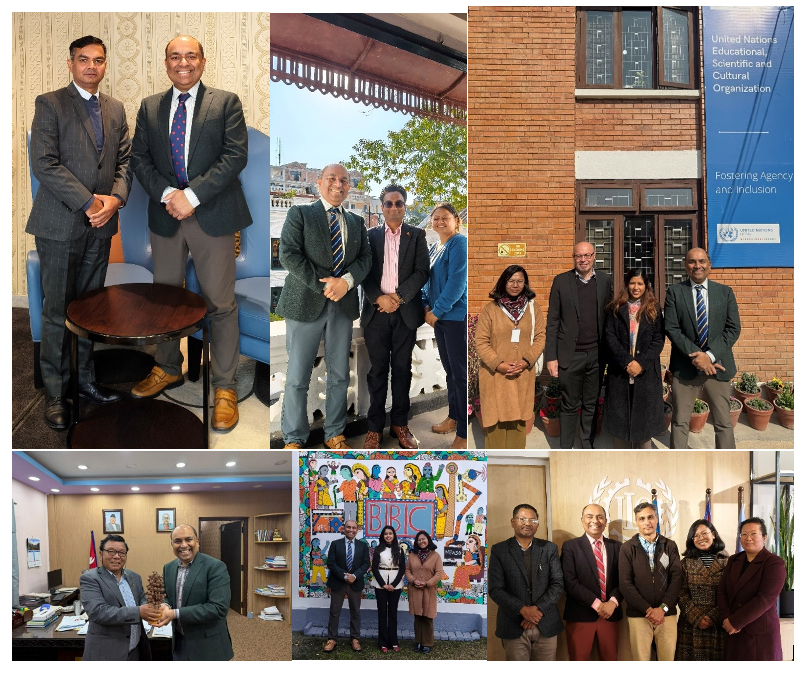
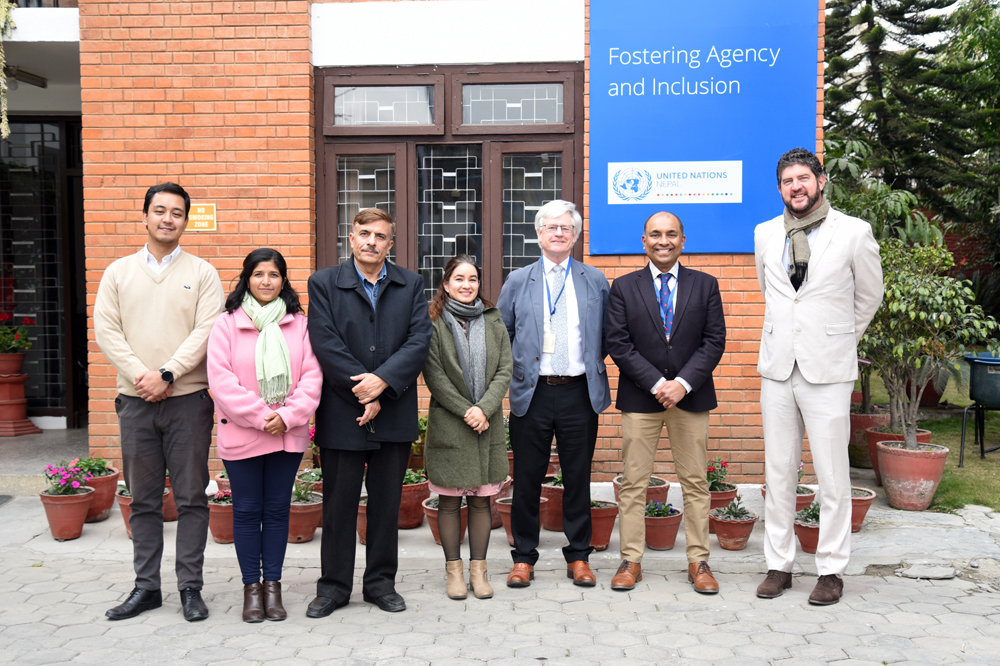
Hari was also able to meet with Nepal’s Minister for Education as well as senior officials at the Ministry of Labour, Employment and Social Security, migrant organisations, local tech and media organisations, and international organisations including UNESCO, IOM, ILO and Helvetas, all with a view to embed our digital interventions within the activities undertaken by our partners, thereby ensuring their sustained impact.
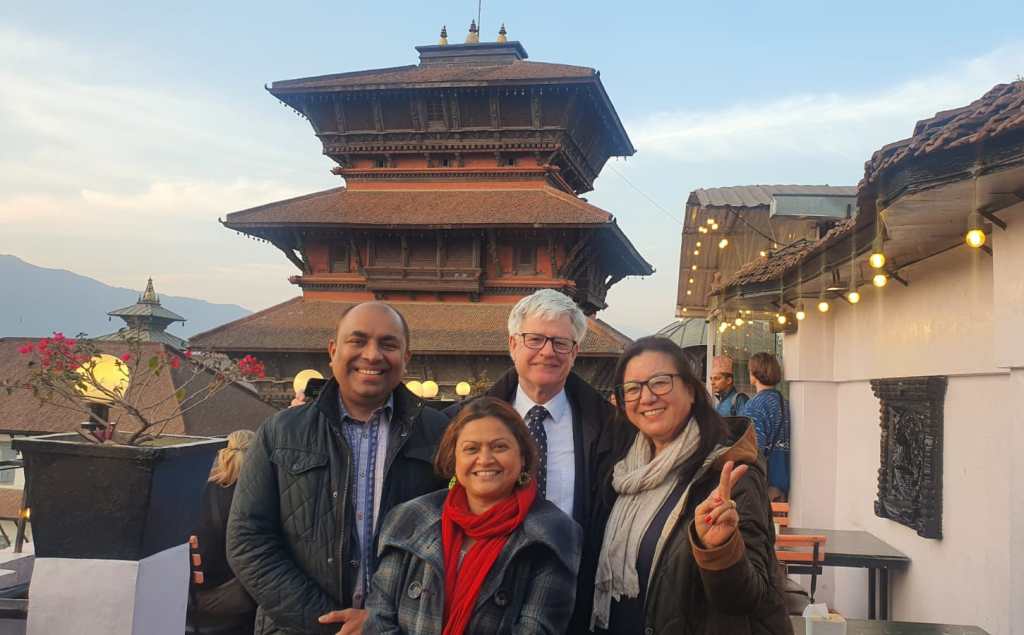
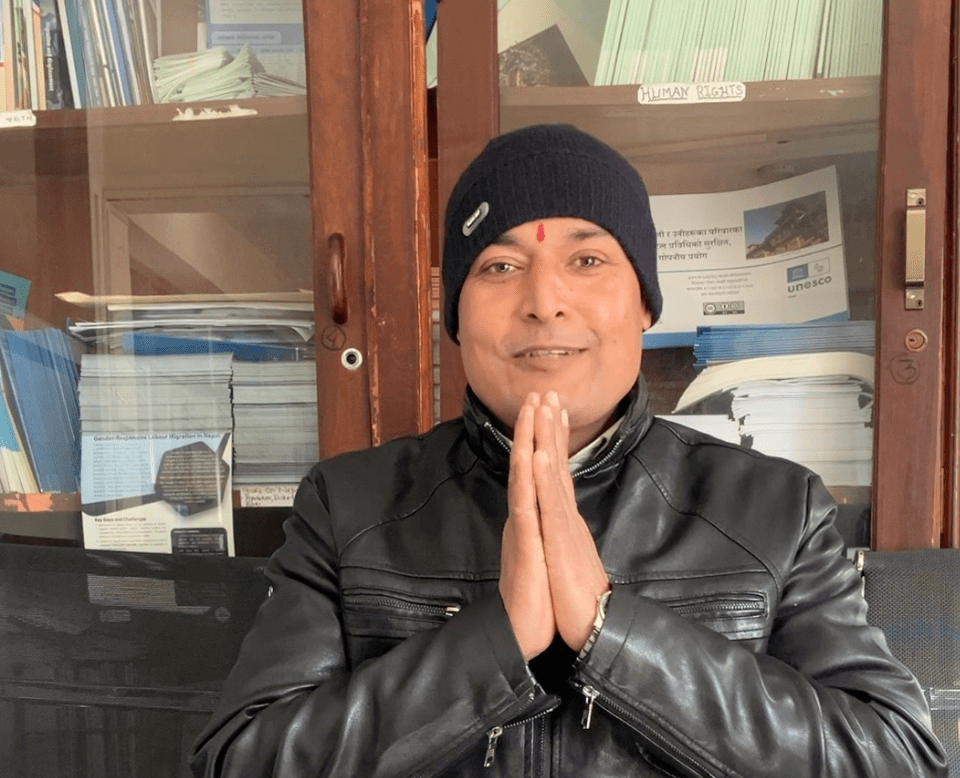
Photos, from the top: two with Gov. of Nepal officials; with UNESCO Nepal; with the Minister for Education; with BBC Nepali Sewa; and with ILO Nepal
The multistakeholder digital tech communities associated with the UN system seem unlikely to deliver on the SDGs by 2030, despite the efforts of those involved in developing and implementing the Global Digital Compact (2024). In particular, SDG10 on reducing inequalities remains insufficiently addressed, with much emphasis instead continuing to be placed on maximising economic growth through innovation. All too often the most marginalised, especially those with disabilities, LGBTIQ communities, women in patriarchal societies, the elderly, ethnic minorities and refugees, are in practice made yet more marginal through the adoption of the latest digital tech by those more powerful and richer than they are.
UNDESA, ECOSOC/CSTD, many other UN agencies, and the IGF process are all conducting widespread consultations about the future of “digital and development” and the WSIS Process, but these have still not sufficiently addressed the tendency for digital tech to be used to increase inequalities, rather than to address issues of inequality and equity. Our interactive session is the culmination of a consultation process during the three months before the annual WSIS Forum through which people across our different networks have contributed their ideas to what the five highest priorities should be for governments, the private sector, civil society and the UN system in creating greater equity in the use of digital tech. The findings of this process will be presented during the session, and participants invited during the session to add to the recommendations through the interactive development of a mind map on marginalization that will provide a very specific output to feed into the wider ongoing debate within the UN system about digital tech and equity.
Please make your voice heard beforehand
Everyone is invited to contribute before the session through a short (max 10 minute) online survey available at: https://app.onlinesurveys.jisc.ac.uk/s/rhul/digital-equity-wsis2025. This will form the basis of our conversations in Geneva, and so even if you cannot attend in person please do copmplete this survey about what needs to be done to ensure that the poorest and most marginalised can indeed benefit from the use of digital tech.
Projectitis is the bane of much good research and practice, whereby often well-intentioned people get caught up in a vicious cycle of bidding for project funding, delivering outputs, producing evidence of success, and then bidding again for new projects. All too frequently, insufficient effort is expended on supporting those involved to continue delivering positive outcomes in the years following the end of a project. In 2019 we were fortunate enough to be part of a successful bid for UKRI GCRF funding for a five year research Hub focusing on migration for development and equality (MIDEQ). By its end in 2024 it was clear that our work package on how migrants might benefit from using digital tech had only really just begun to generate outputs and outcomes to benefit the lives of the migrants and migrant organisations with whom we were working in Nepal and South Africa, and that more work needed to be done to help ensure that these outcomes became a lasting legacy of our work together.
Some of our reflections at the end of 2023 about how migrants might actually benefit from the millions of pounds spent on the academic research undertaken during MIDEQ were published as Unwin, T., Casentini, G., Harindranath, G. and Lorini, M.R. (2023) What works for migrants: reflections on research practice in the interests of migrants (Egham: ICT4D Collective, Working Paper 1). This reinforced our determination to try to find ways through which we could continue to support those with whom we had started working during MIDEQ, and we have been very fortunate to benefit from small amounts of continued funding from Royal Holloway, University of London (ESRC Social Science Impact Accelerator, and a Research England Block Grant) which has enabled us to revisit colleagues in South Africa and Brazil to encourage deeper and wider impact and outcomes. We are very grateful to the Research Impact team (Emily Gow and Rachael Kendrew) for all of their support and flexibility in helping us take this forward.
Most recently, we have also benefitted from a further small grant from Royal Holloway, University of London’s Social Purpose Research and Knowledge Exchange Funds to enable Hari Harindranath and Tim Unwin to return to Nepal for a short visit in January 2024 to help put in place structures that will enable the work we initiated to become further embedded within the activities of our partner organisations, thereby helping to ensure outcome continuity. This work initially focused on three main areas: the Pardesi portal (https://pardesi.org.np), training resources on the safe, wise and secure/private use of digital tech by migrants, and cybersecurity guidance for small civil society organisations. However, the visit also provided an opportunity to explore future collaborative initiatives, especially with our partner organisation ACORAB/CIN, the Association of Community Radio Broadcasters in Nepal.
Our original meetings with migrant organisations in Nepal in September 2022 had emphasised the need that they had identified for an overarching portal for migrants to provide accurate access to relevant and reliable information about all aspects of the migration process. This was not at all intended to duplicate existing information, but instead to provide a simple way for migrants to access the important information that they needed and that is already available on various disparate sites. Originally, we had supported many of the main migrant organisations and people within the local tech community to come together collectively to create this resource, not least so that all of the important entities felt involved in its creation and maintenance. However, it had become evident over the year since the end of MIDEQ that this needed to be complemented by firm direction and leadership to ensure effective updating and development of the portal, and as a result of meetings held during our visit we are delighted that Pourakhi, a human rights defender organization run by and for returnee Nepali women migrants, has agreed to take on this role.
Resources for migrants on the safe, wise and secure use of digital tech
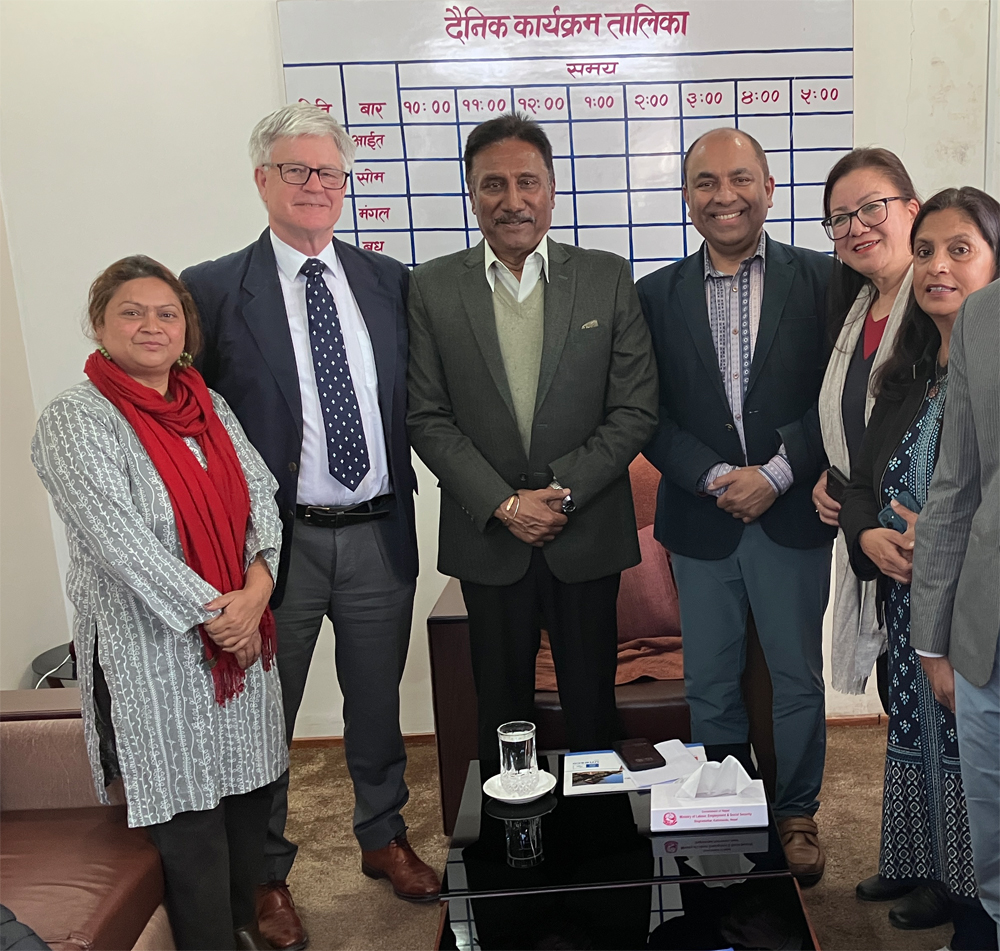
Meeting with Minister Sharat Singh Bhandari, Minister of Labour, Employment and Social Security, and colleagues from Pourakhi
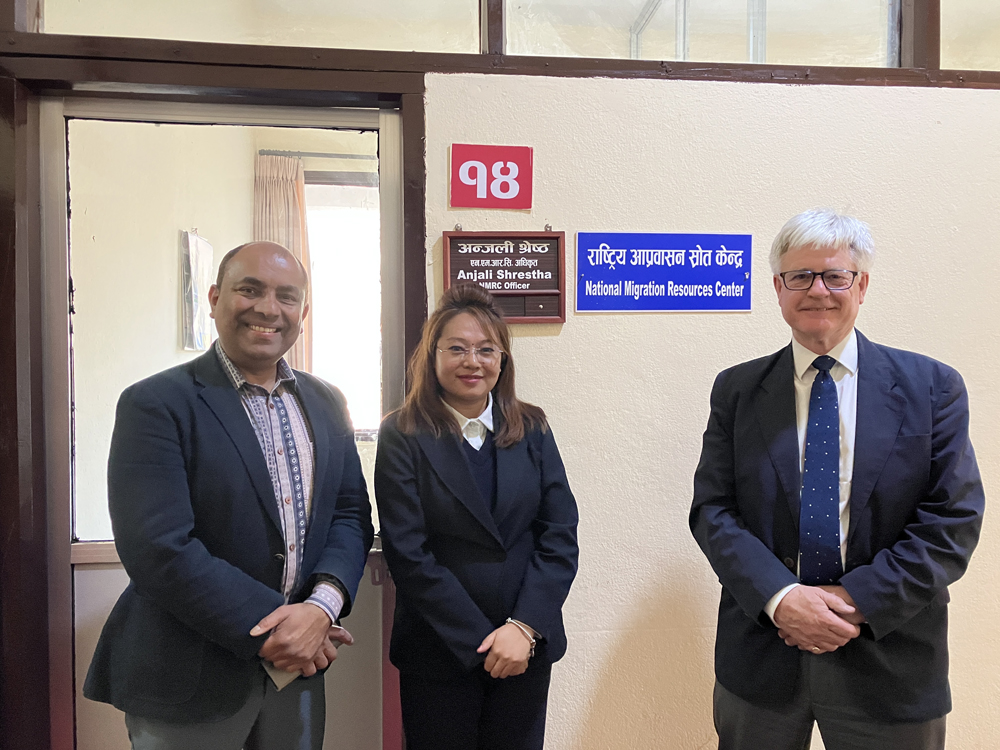
Meeting with Anjali Shrestha, National Migrant Resource Center Officer (NMRC)
During our original MIDEQ project we had developed a set of training resources in the six main languages used in Nepal to empower migrants to use digital tech safely, wisely and securely, with the original intention that these could be rolled out through the training provided by the Migrant Resource Centres (MRCs) in every province of the country. Despite previous meetings with government officials over the previous three years, changes in official roles and the evolution of government policies meant that we had not yet achieved this aim. Persistence and continued commitment nevertheless pays off, and we were delighted that we were able to share information about our work on this visit with the new Minister of Labour, Employment and Social Security, and that our good friend Anjali Shrestha (the National Migrant Resource Center Officer) has committed to finding ways through which counsellors at the MRCs can receive training based on the resources that we have already developed, supplemented by new posters and advice on key messages (see section on new resources being developed with ACORAB below).
Developing our partnership with ACORAB/CIN
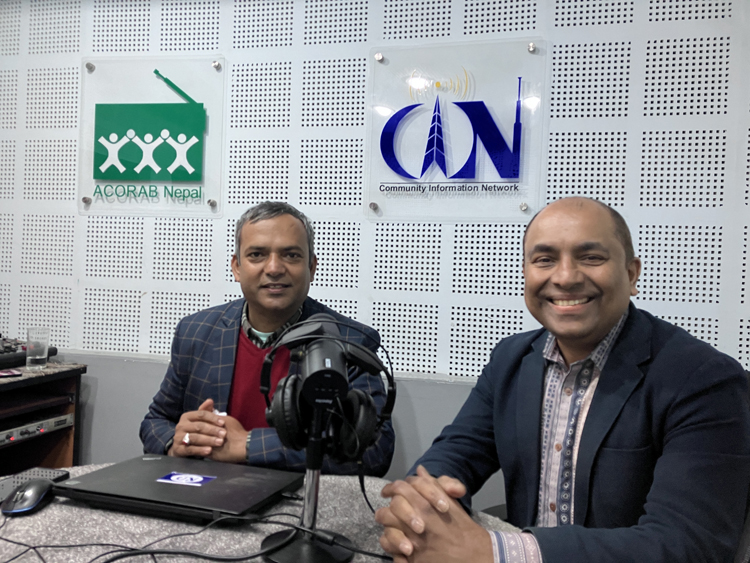
The ACORAB/CIN studio
The ACORAB/CIN studio
During our initial MIDEQ work we signed an official parntership Memorandum of Understanding with ACORAB/CIN, the Association of Community Radio Broadcasters in Nepal, who helped to disseminate our original resources on the safe, wise and secure use of digital tech to their regular audience of 6.7 million people across the country. We have comntinued to work together in training and advocacy, with ACORAB/CIN for example participating actively in the workshop we held at the WSIS+20 session on the future of community media in Geneva in May 2024. Our latest visit to Nepal helped to cement this relationship, with Tim Unwin delivering a seminar on Community Radio in an Increasingly Digital World, and agreements were also reached on the production and dissemination of new resources on the safe, wise and secure use of digital tech. These will include posters and podcasts on key issues of importance to migrant digital safety and privacy.
Sharing information and exploring new ideas with international organisations
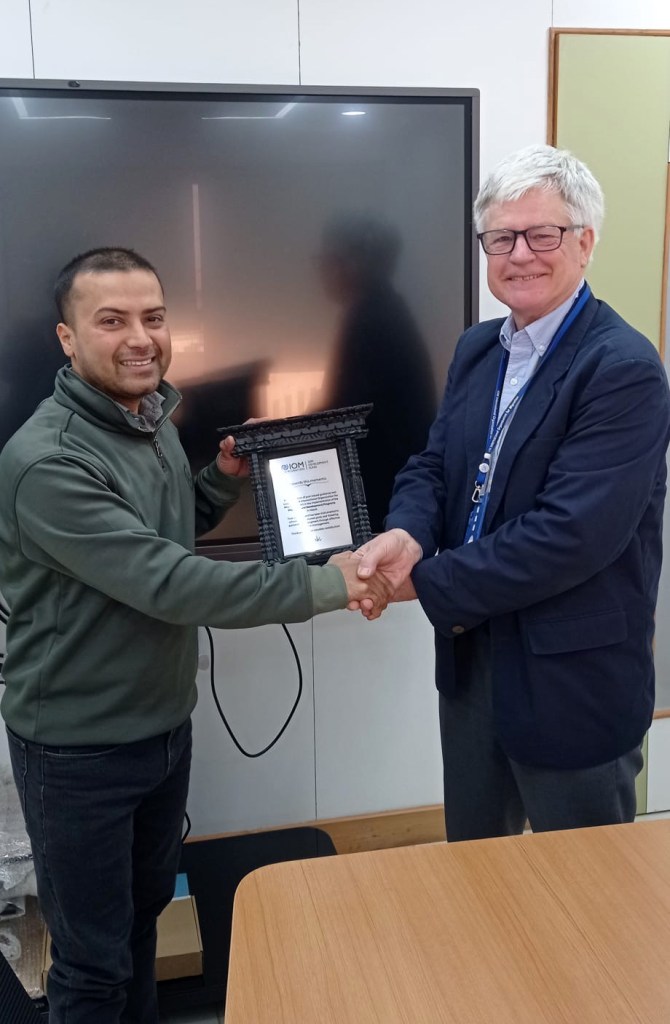
Tim Unwin receiving a certificate of appreciation from Prajwal Sharma at IOM
Meeting with Dollie Shaha at BBC Nepal
We worked closely with colleagues in international and bilateral organisations in Nepal during our original MIDEQ project and this visit provided a valuable opportunity to update colleagues in IOM, UNESCO, and the British Embassy about our work as well as to explore possible future synergies. All too often staff in these organisations move on to new roles and it is therefore very important to develop new personal relationships wtih their successors to ensure that valuable institutional links are maintained. This visit also provided a useful opportunity to meet with staff at BBC Nepal to learn about their work and relationships with ACORAB/CIN.
Meetings with migrant organisations and others involved in our MIDEQ work
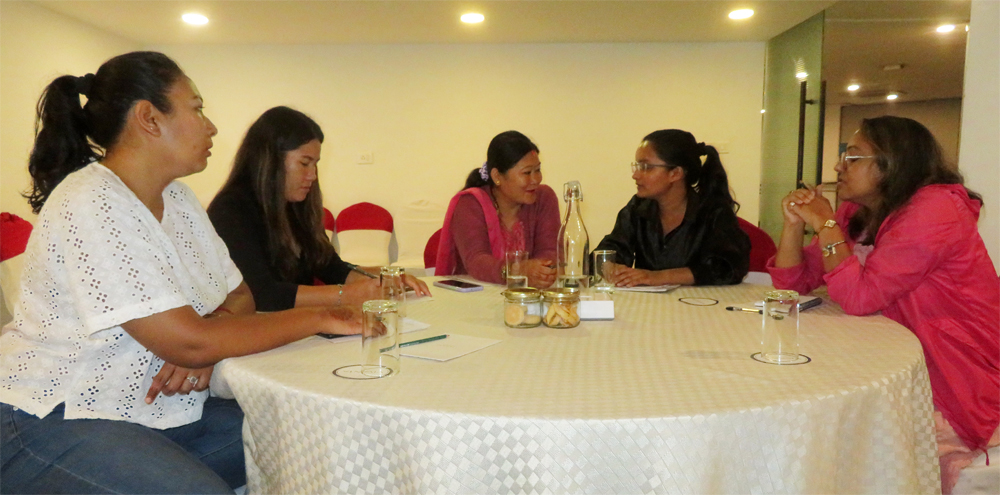
One of the main purposes of our visit was to meet with the local migrant organisations wth whom we had worked during MIDEQ to learn more about their current activities and how we might continue to work together both on the pardesi.org.np portal as well as on propagating messages about the safe, and secure use of digital tech. In addition to thos colleagues depicted above and below, we also met with Bijaya Kimari Rai Shrestha from AMKAS and Anita Ghimire from ISER-N.
Measuring the real outcomes of our work for the lives of individual migrants and their organisations remains difficult. We are very hopeful that as a result of our visit many new initiatives will take place that will help us together to achieve lasting outcomes:
Under Pourakhi’s oversight, working with many of our original MIDEQ colleagues, the pardesi.org.np portal will regularlly be updated and enhanced.
Our basic resources on the safe, wise and secure use of digital tech will be rolled out for all the counsellors in the 77 Migrant Resource Centres by the end of the year, and awareness raising posters and leaflets in relevant languages will also be made available for them.
Our cybersecurity resources for civil society organisations will be translated into Nepali and distributed to relevant organisations in Nepal.
ACORAB/CIN will continue to share information about the importance of cybersecurity at individual and organisational level through its support for local community radio stations.
At an organisational level, we will continue to work with ACORAB to help them engage appropriately in relevant digitalisation processes, and with IOM in the delivery of their Migration School.
Across all of these initiatives, we have put in place mechanisms to enable us better to understand the outcomes of our research-practice, not least so that we can share further information about what works and what challenges remain so that others can learn from our experiences. We believe that hearing from migrants themselves is one of the best ways to share such understandings (see videos here), and so this post closes with a short commentary from Swarna Kumar Sha from NNSM, the umbrella organization of civil society organizations in Nepal working in the field of labour migration and development, about his experiences of working with us.
Finalising details with them of a portal to bring together existing information of relevance to migrants so that they can readily gain reliable advice on all aspects of migration. There are many existing apps and websites relating to migration for Nepali citizens, not least the advice provided by the government. However, migrant organisations told us early on in our work with them that there was a real need for such a one-stop-shop, and we have been supporting them as they have been creating this portal together with local tech developers. This is due to be launched in December 2023, and the migrants also made some short videos that will be used to promote the portal in advance of the launch.
A second element of work suggested by the organisations was the need for basic training guidance for migrants in multiple languages used in Nepal on the safe, wise and secure/private use of digital tech. Following the development of a training programme earlier in 2023, along with guidance notes on how the slide deck can be used, migrants rquested a more basic set of information. Having produced this before our visit, we tested it out again in Kathmandu, and following some further revisions this is now being translated into relevant languages, and will also be availabe at the launch in December.
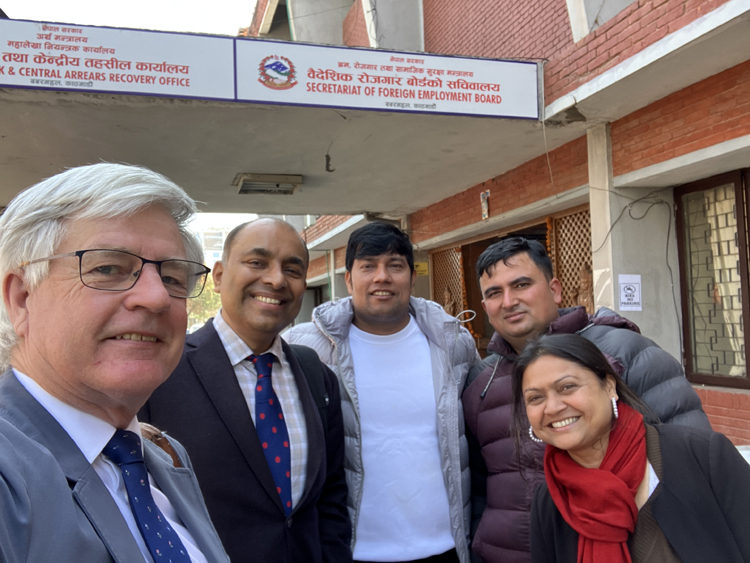
The visit also provided an opportunity to meet with colleagues from different organisations based in Kathmandu, primarily to explore ways through which these resources can best be disseminated, notably the Government of Nepal’s Foreign Employment Bureau, the ILO Office in Kathmandu, and the UNESCO office in Kathmandu. We are very grateful for their strong support and the advice that they have given us. It was also good to meet with Nayan Pokhrel who has led on the translation of our work, and has provide much useful information about Nepal for us.
In Pokhara, we followed a similar pattern of work including:
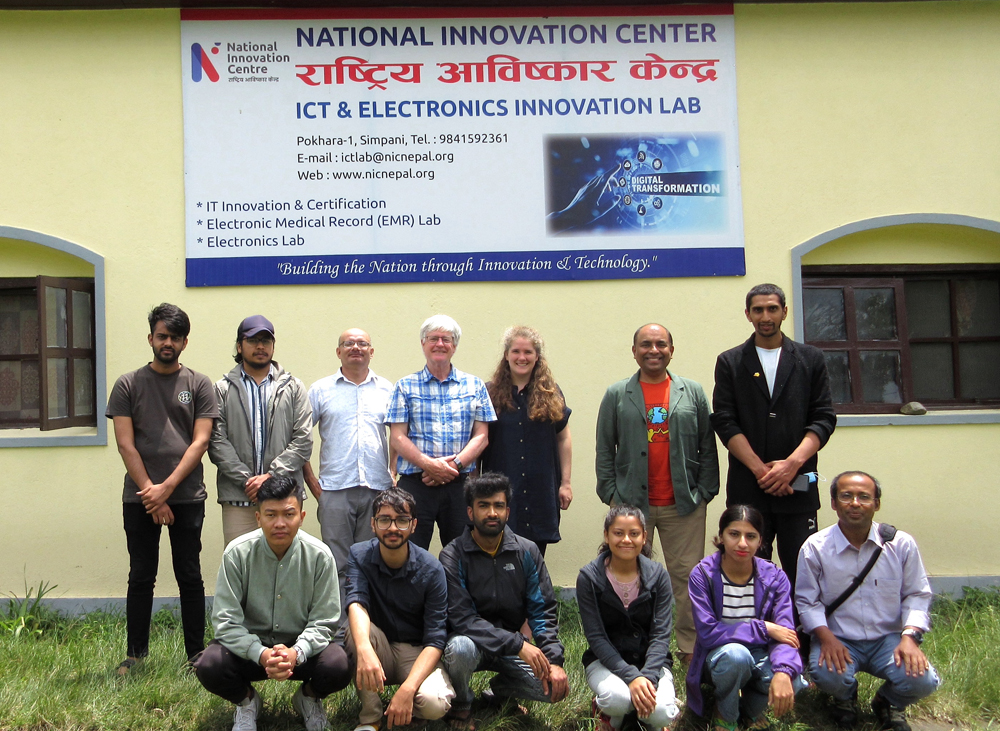
Meetings with our partners at Gandaki University as well as those involved in training young people in digital skills at the National Innovation Centre’s ICT & Electronics Innovation Lab, and staff at Gandaki Medical College and hospital.
A review session on the basic training deck we have been creating together on the safe, wise and secure use of digital tech, with colleagues from Gandaki University, the MRC in Pokhara, and NEST in Pokhara.
We were also grateful to have an opportunity to see some of the wealth of cultural heritage of Nepal, especially around Patan Durbar Square and Kathmandu Durbar Square which have been so lovingly restored after the earthquake of 2015.
As of 1st August 2023, the UNESCO Chair in ICT4D at Royal Holloway, University of London has reverted to its original identity as the ICT4D Collective. We are a group of very diverse researchers and practitioners from across the world, bound together by our commitment to the highest possible quality of research-practice relating to the use of digital technologies in the interests of the world’s poorest and most marginalised people.
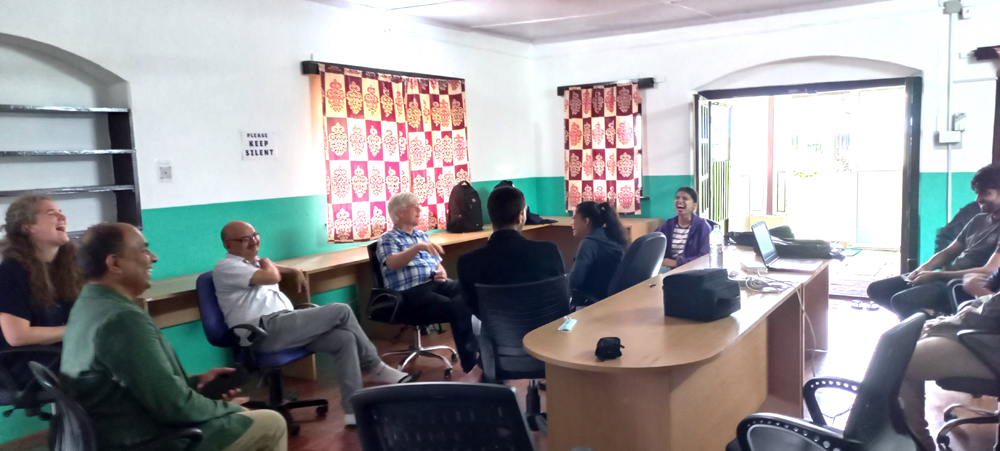
Our last engagement as members of the UNESCO Chair in ICT4D: meeting staff and students at the NIC’s ICT and Electronics Innovation Lab in Pokhara, Nepal, July 2023
The Collective and the UNESCO Chair in ICT4D
The original ICT4D Collective was created in 2004, and evolved through an agreement in 2007 between UNESCO and Royal Holloway, University of London into the UNESCO Chair in ICT4D (Information and Communication Technologies for Development). UNESCO Chairs are groups of researchers in specific institutions undertaking work of direct relevance to UNESCO’s fields of competence, and they promote “international inter-university cooperation and networking to enhance institutional capacities through knowledge sharing and collaborative work”. Members of our UNESCO Chair have been very proud to have been associated with UNESCO for the last 16 years, and to have collaborated closely with many good friends in UNESCO’s Paris headquarters and field offices. We were also honoured that Houlin Zhao, the Secretary General of the International Telecommunications Union (ITU) between January 2015 and January 2023, and Jean Philbert Nsengimana, former Minister of Youth and Information and Communication Technology (MYICT) from Rwanda, were our Honorary Patrons.
The following are some of the things we have particularly enjoyed engaging in over the last 16 years:
Working together collegially in a truly multidisciplinary context, involving colleagues from Computer Science, Geography, Information Security, Law and Managament at Royal Holloway, University of London.
Creating one of the largest groups of postgraduates completing PhDs in the field of ICT4D during the late 2000s and early 2010s.
Crafting an extensive partnership network involving governments, the private sector and civil society, and sharing the lessons we have learnt about making partnerships successful.
Contributing our experiences in global discussions around the role of digital tech in international development, especially in the UN’s WSIS process (since its origins in 2003), and UNESCO’s many gatherings relating to education and technology.
Working on the ground in support of diverse groups of marginalised people, especially those with disabilities, out of school youth, women in patriarchal societies, and migrants and refugees.
We are now re-energised as the ICT4D Collective, with 22 founding members drawn from 13 countries – we welcome new members who share our aims and principles. Quick links to our research and practice are available below:
See also the ICT4D Facebook Group which we established in 2007 and now has >5,500 members
An exciting future…
We all look forward to continuing the work started by the original ICT4D Collective almost 20 years ago, although we remain very sad that the new leadership team at Royal Holloway, University of London did not see value in the institution continuing to have a UNESCO Chair. Perhaps we represented voices from the past; perhaps we have been too critical and anarchic; perhaps we have just been honest and spoken truth to power. Whatever the reason, we will continue to have fun working together, we will continue to challenge the status quo, we will continue to point out the many harms caused by the use of digital tech, and we will continue to work with and support the world’s poorest and most marginalised peoples.
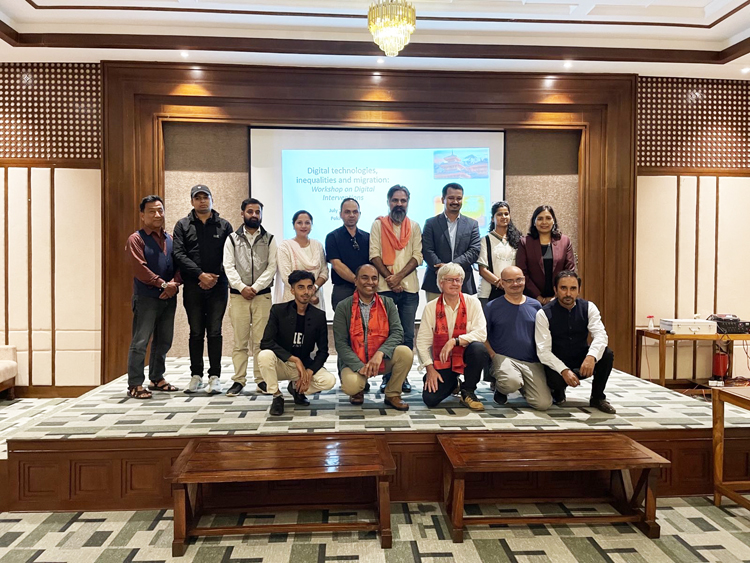
Hari Harindranath and Tim Unwin with migrants, migrant organisations and tech organisations in Kathmandu, January 2023
The UNESCO Chair in ICT4D leads Work Package 9 within the MIDEQ Hub (funded by UKRI GCRF) on technology, inequality and migration. This is explicitly an intervention package, designed to draw on research across the Hub to bring migrants, migrant organisations and tech developers together to craft practical interventions that can benefit their lives and reduce inequalities associated with migration. We have been working with NISER, our lead partner in Nepal, since 2019 undertaking research on how migrants already use digital tech (see our working papers), and building on this work Prof “Hari” Harindranath and Dr. Maria Rosa Lorini visited Nepal in September 2020 to initiate our intervention activities. Migrants identified two main areas where they felt that interventions could make a significant difference: appropriate training in the uses of safe, wise and secure digital tech, and creating a platform or portal as a digital one-stop-shop that would bring together the most important sources of information for Nepali migrants and ther families.
Hari returned to Nepal with Tim Unwin in January-February 2023 to convene workshops (on 28 and 29 January, and 3rd February) and meetings to take forward the implementation of these two interventions. Good progress was made in the following areas (further details here):
Designing the content structure for the platform, and setting in motion the work of the content team and the tech team who are going to take forward the digital one-stop-shop with a Beta version planned for May 2023.
Running a pilot workshop in Kathmandu for migrants based on the slide deck developed with migrant organisations over the previous couple of months. This was well received, with helpful comments having been suggested for improvement.
Running another workshop in Pokhara for students and staff from a Migrant Resouce Centre, which recommended that we need to develop a more basic introduction to the wise, safe and secure use of digital tech for those who have negligible prior knowledge of digital tech.
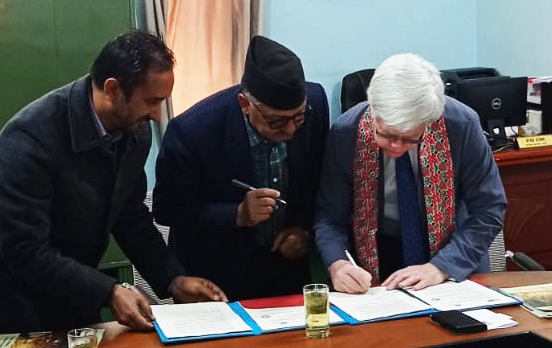
This visit to Nepal also provided the valuable opportunity to have a very productive visit to colleagues in the UNESCO Office in Kathmandu (30 January), to sign a partnership agreement and discuss collaborative research-practice with Gandaki University in Pokhara (1-2 February), to meet with tech companies including Hamro Patro and Ncell (3 February), to explore collaboration with government initiatives through the Foreign Employment Board (31 January), to engage with colleagues at the National Innovation Centre (31 January), and to meet with fellow researchers working in the field of digital tech and migration (see images below).
We would like to take this opportunity to thank all those who attended our workshops, and who contributed to this work. We are also grateful to the staff at the Hotel Himalaya, Lalitpur and the Landmark Hotel in Pokhara for facilitating our stay and meetings – and would recommend both for anyone visiting Kathmandu and Pokhara respectively.
Profs “Hari” Harindranath and Tim Unwin were delighted to visit colleagues at the UNESCO Office in Kathmandu during their recent visit to Nepal (26 January – 5th February) as part of our contribution to the work of the MIDEQ Hub (funded by the UKRI GCRF). This provided an excellent opportunity for them to brief the UNESCO Office team about our MIDEQ-related work in Nepal, and also the wider activities of our UNESCO Chair in ICT4D, including the use of digital tech in education, TEQtogether, and the Digital-Environment System Coalition. It was a real pleasure to learn from Michael Croft (Director) and his team about the various activitites on which the Office focuses, and to discuss ways of collabroating in the future.
We are already building on this visit, and are very grateful to them for their advice on developing training materials and a portal for Nepali migrants and their families to gain information about all aspects of the migration process. This visit was such a good example of how UNESCO Chairs can work closely with UNESCO’s offices around the world to help achieve the organisation’s overall goals. We were made to feel so welcome, and the conversations were full of enthusiasm and passion for how UNESCO and its Chairs can contribute together to support Nepal’s people. We very much hope that other colleagues in our UNESCO Chair as well as our partners will also consider ways through which they too can support the UNESCO Office in Kathmandu.
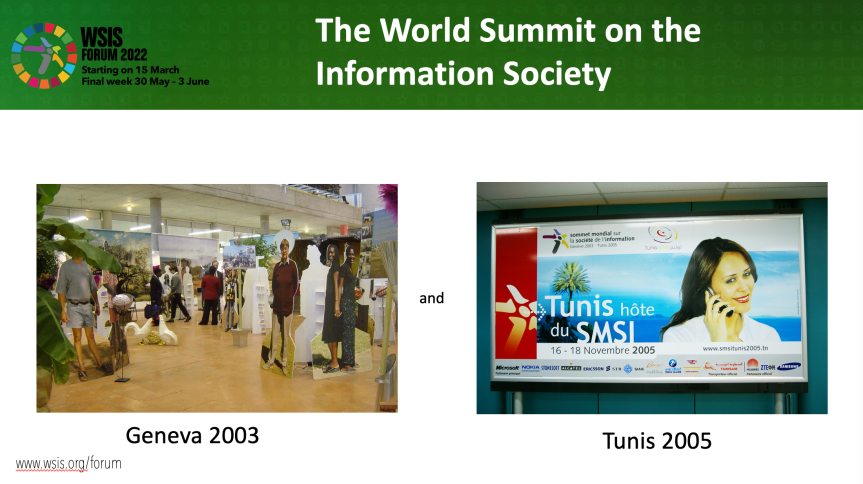
Members of the UNESCO Chair in ICT4D have been involved in the World Summit for the Information Society (WSIS) since its inception in 2003 (Geneva) and 2005 (Tunisia), and have participated in many of the subsequent Annual Forums held in Geneva.
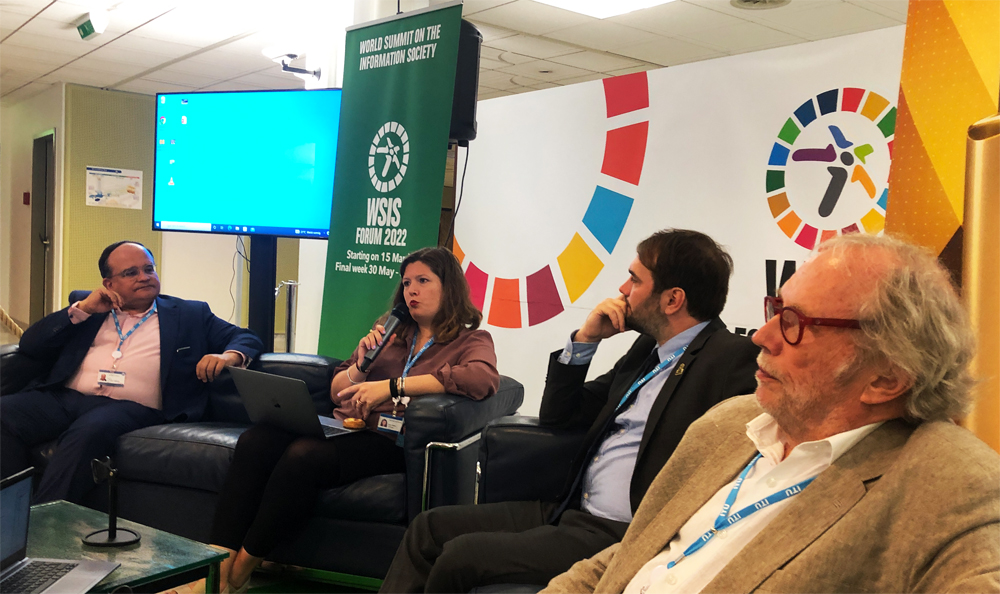
After two years of virtual WSIS events, it was a great pleasure to be back in Geneva during the week of 30th May-3rd June this year and excellent that so many of our Members, Affiliated Members and Partners could participate – both in person and online during the hybrid sessions. Congratulations to Gitanjali Sah and her team for putting on such an interesting and enjoyable week of events, which highlighted the great value of being there in person and holding conversations with old friends, as well as making new acquaintances.
Some of the highlights of our contributions included:
Paul Spiesberger (Affiliated Member and Chair of ict4d.at) served as a High Level Panel Facilitator throughout the event
Ahmed Imran (Affiliated Member and Director of RC-DISC at our partner, the University of Canberra), Tim Unwin (Chairholder) and others at the Academia Round Table on 1st June (Session 397)
Tim Unwin (Chairholder) Panellist in High-Level Dialogue on the Transforming Education Summit and the 2023 GEM Report on Technology and Education, 1st June (Session 298)
Tim Unwin (Chairholder) Panellist in Session 406 Academic perspectives on WSIS and the SDGs, 2nd June
Carlos Álvarez Pereira, Suay Ozkula, Paul Spiesberger, Knud Erik Skouby and Tim Unwin participating in Open Space Session on the Digital Environment System Coalition (Session 448), 2nd June
The WSIS Annual Forum remains one of the most valuable of the many duplicating and ovelapping digital technology events, conferences and summits organised by the UN and other agencies. It provides an important opportunity for governments, international agencies, companies and civil society to come together to discuss recent dvelopments in the broad field of digital tech for “development” focusing particularly around the Action Lines agreed almost 20 years ago by the UN system.
Members, Affiliated Members and Partners of the UNESCO Chair in ICT4D at Royal Holloway, University of London, look forward to paticipating in future WSIS events in the years to come.
Members of the UNESCO Chair in ICT4D are delighted to support this exciting new initiative – #KindnessMatters – by our colleagues at the Mahatma Gandhi Institute of Education for Peace and Sustainable Development (MGIEP). This aims to mobilize the world’s youth to achieve the 17 SDGs through transformative acts of kindness. The campaign attempts to create a positive culture of kindness, in which every young person’s selfless act matters!
As the UNESCO MGIEP says,
“Kindness is not defined by lofty stories, it exists all around us and needs to be celebrated at every moment of life because #KindnessMatters every day. We’re celebrating K3: kindness for self, others and nature, and invite you to share with us a simple act of kindness that you performed today – gave yourself some rest from daily routine, watered the plants, donated some blankets for a cause, or called your family. This exercise will take less than 30 seconds and will make you a part of our global kindness community. So, won’t you help us make the world a kinder place?”
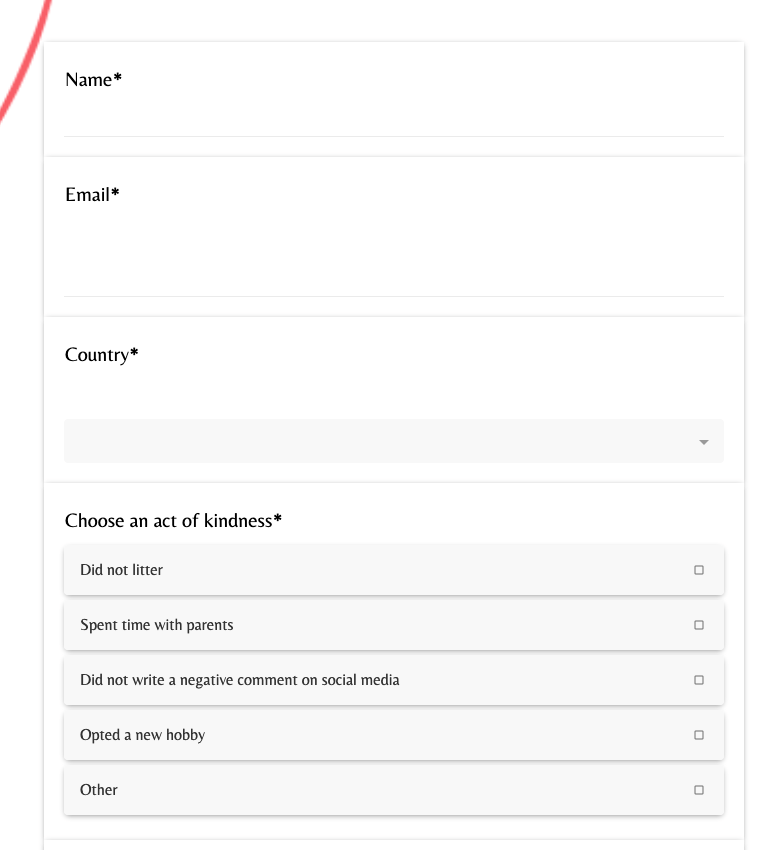
To share an act of kindness, all you have to do is complete a simple form that looks like this:
It won’t take long, and by so doing you can help contribute to their Global Youth Campaign. This is intended to help mobilize United Nations Member States to declare an International Decade on Acts of Kindness.
What is an act of kindness according to the MGIEP?
An Act of Kindness by any person is a generous, intentional gesture or action towards another person, being, or the environment. These acts may range in scale and impact, such as organizing a beach clean-up, working on clean energy projects, campaigning against gender inequality or violent extremism, or mobilizing a community drive to save an endangered species.
Get involved!
If you wish to find out more about how you can get involved, contact youth.mgiep@unesco.org
Do join us in supporting this important initiative, and encourage all the young people you know to share an act of kindness.
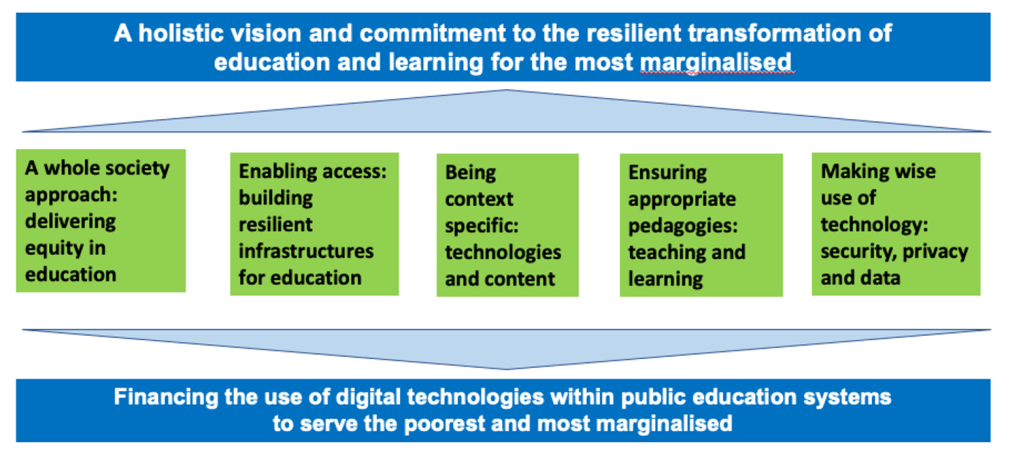
We are excited to release further details of the programme for the launch of the report on Education for the Most Marginalised post-COVID-19: Guidance for governments on the use of digital technologies in education which will be from 2pm-4pm GMT on Friday 18th December. Please register here to receive joining instructions. Further details about the initiative are available here.
Caroline Wright (Director General, British Education Suppliers Association)
Waleed Al Ali (General Co-ordinator Digital School Initiative, Mohammed Bin Rashid Global Initiatives, UAE) (by video)
Video reflections:
Amina Umohoza (Digital Opportunity Trust, Youth Leadership Advisory Board, Rwanda; CEO of Saye Company and the Founder of Dukataze)
Helen Crompton (Associate Professor Teaching and Learning, Old Dominion University)
Insights on the report’s Guidance Notes:
Ensuring resilient connectivity: Christopher Yoo (John H. Chestnut Professor of Law, Communication, and Computer and Information Science at the University of Pennsylvania Law School, and the founding director of the Center for Technology, Innovation, and Competition), Leon Gwaka (University of Pennsylvania) and Müge Haseki (University of Pennsylvania)
Keeping Safe and Local Context: Azra Naseem (Director, Blended and Digital Learning, Aga Khan University, Pakistan)
Small Island States and the importance of sustainable electricity: Javier Rua (former Director of Public Policy for Sunrun; former Chairman, Puerto Rico Telecommunications Regulatory Board)
The importance of OER and Creative Commons: Paul West (Senior Education Adviser, West and Associates; and South Africa Chapter Lead, Creative Commons)
The final programme, including any revisions will be available by 16th December.
Speakers will talk for a maximum of 5 minutes each, enabling there to be a lively and forthright discussion afterwards. We welcome all those committed to empowering the poorest and most marginalised through the use of digital technologies in education to join the conversation, and work together to implement the report’s recommendations.
Funded by the FCDO and World Bank through the EdTech Hub.
It was great to be able to participate as a UNESCO Chairholder in UNESCO’s first Partners’ Forum on 11th-12th September in Paris, and to contribute as a panellist in the session arranged by Indrajit Banerjee and his team on Responding to Opportunities and Challenges of the Digital Age. Much of the Forum focused on the successes of existing UNESCO partnerships, but our panel yesterday instead addressed practical issues where UNESCO’s Knowledge Societies Division could make a difference.
Marie-Helene Parizeau (Chair of World Commission on the Ethics of Scientific Knowledge and Technology)
Dr. Davina Frau-Meigs (Professor of Media Sociology at the Université Sorbonne Nouvelle, and Chairholder of UNESCO Chair for “savoir-devenir le développement numérique durable: maîtriser les cultures de l’information”)
Octavio Kulesz (Teseo, Argentina).
Our multilingual session had five themes, and there was a great audience who contributed hugely through their smiles! I note below some of the contributions that I sought to make:
Introductory comments
I focused on two main issues:
We must avoid an instrumental view of the world. AI, the Internet of Things, 5G… do not have any power to change anything themselves. They are created by global corporations – be they failing USAn ones, or rising Chinese ones – and by individuals in them who have particular interests. AI, for example, will not change the world of work. Those who are creating AI are doing so for a very particular set of reasons… We are responsible for the things we create.
Use of the term 4th Industrial Revolution is highly problematic. I guess there are two kinds of people – those who see the world as being revolutionary, and those who see it as evolutionary. The “revolutionary” people like to see the world as shaped by heroes (perhaps they want to be heroes themselves) – elite people such as Turnip Townsend or Thomas Coke of Holkham in the “agricultural revolution”, or Richard Arkwright who invented the water-powered spinning mill, Jean Baptiste Colbert here in France, or George Stephenson – people who led the so-called industrial revolution. However, the reality is that these changes evolved through the labour of countless millions of poor people across the world, and their lives were shaped by fundamental structural forces, most notably the driving forces and interests of capitalism – money bent on the accretion of money – that sought to reduce labour costs and increase market size. These forces still shape today’s world. There is no 4th Industrial Revolution
How can UNESCO leverage digital technologies to achieve SDGs?
I sought to raise challenging questions about the relationship between digital technologies and the SDGs, particularly around notions of sustainability:
First, most ICTs and digital technologies are based on fundamentally unsustainable business models – and there are therefore real challenges claiming that they can contribute positively to “sustainable development”. Just thinking about it. How often do you replace your mobile phone, or have to get new software because you have bought some new hardware with which it is incompatible, or instead need new hardware to run the latest memory and processor demanding software. Such obsolescence is a deliberate ploy of the major technology companies.
Second, the use of most such technologies is damaging to the environment – this is hardly sustainable – think about the satellite “waste” in outer space, or the electricity demands of server farms, or take blockchain; do you realise that Bitcoin mining consumes more electricity a year than does the whole of Ireland?
And then, the SDGs have failed already – most countries have not set their targets, and for many the baseline data simply do not exist. It is therefore not going to be possible to say whether many targets have been met or not. Take UNESCO’s Institute for Statistics date on SDG 4. In most parts of the world less than a third of countries have data for the educational indicators and targets. [http://uis.unesco.org/sites/default/files/documents/sdg4-data-book-2018-en.pdf]. Indeed, it is often said that the SDGs purely exist to give UN agencies something to do!
But being positive, the answer is simple – we need to concentrate our efforts first on the poorest and most marginalised. These new technologies have rapidly been used to make the world a more unequal place. It is good that we now have SDG 10 focusing on inequality, but few people ever mention it in the context of digital technologies. No-one else has mentioned it in any of the sessions at which I have yet been during this Forum. We should not always be talking about connecting the next billion – but instead of connecting the first billion – yes, the first and most important – those who are poorest and most marginalised – people with disabilities, street children, refugees, and women in patriarchal societies. We need to work with them, to craft new technologies that will help them achieve their empowerment.
How can we de-risk digital interactions and counter online challenges to privacy, human rights and freedom of expression?
I responded briefly, since other speakers addressed this at greater length and with more sophistication:
Ethics is incredibly important – Most people tend to think that new technology is necessarily good. But it is not. Technology is neither good nor bad – it simply “is”. But technologies can be made, and used, for good or bad purposes.
Two examples on which I have recently been working are:
Sexual harassment through mobile devices – Pakistan, India and Caribbean
Is it too late for “pure humans” to survive – or will we, are we already, all cyborgs?
How might we respond to these challenges
We need to focus as much on the negatives as on the positives of technologies in our education systems and media.
We need more open public debate and discussion on the ethics of digital technologies – governments tend not to trust their citizens to engage in these very difficult issues.
What forms of multi-stakeholder mechanisms/government frameworks will foster global dialogue around the use of advanced ICTs?
Again, towards the end of the session, there was little time to discuss this, but I noted:
Everyone talks about partnerships, but few actually succeed
Back in 2005 I actually wrote about multi-sector partnerships as part of UNESCO’s contribution to WSIS – and most of what I wrote then still applies!
We must stop competing and instead work together creatively and collaboratively in the interests of the poorest and most marginalised. This applies particularly both within and between UN agencies!
Concluding remarks
This is what I think I said:
I have huge admiration for many of the staff in UNESCO; the organisation has the most important mandate of any UN agency – focusing as it does on Education, Science and Culture. There are three simple, and easy things that UNESCO could do, but they require a fundamental change of mentality:
Focus on understanding the needs of the poorest and most marginalised
Work with, not for, the poorest and marginalised
Develop digital solutions that will serve the interests of the poorest and most marginalised.
And of course, UNESCO could take much more advantage of the expertise of the many Chairholders in its UNITWIN and UNESCO Chairs networks!
Thanks again to all those in UNESCO who made the Forum such an interesting event.
Paris –The Chairperson of the Executive Board of UNESCO, Mr. Michael Worbs, today officially announced the names of the nine candidates received for the post of Director-General of UNESCO.
The nominees are listed below in the order of receipt of their candidature, within the deadline set by the Executive Board.
Name of candidate
Date complete file received
Proposed by
Mr Polad BÜLBÜLOGLU
09.03.2017
Azerbaijan
Mr PHAM Sanh Chau
13.03.2017
Viet Nam
Ms Moushira KHATTAB
13.03.2017
Egypt
Mr Hamad bin Abdulaziz AL-KAWARI
14.03.2017
Qatar
Mr Qian TANG
14.03.2017
China
Mr Juan Alfonso FUENTES SORIA
15.03.2017
Guatemala
Mr Saleh AL-HASNAWI
15.03.2017
Iraq
Ms Vera EL-KHOURY LACOEUILHE
15.03.2017
Lebanon
Ms Audrey AZOULAY
15.03.2017
France
The Director-General is nominated by the Executive Board and appointed by the General Conference for a period of four years. These nine candidates will be interviewed during the 201st Board session on Wednesday 26 and Thursday 27 April 2017. The person to be nominated by the Executive Board shall be chosen by secret ballot, during a vote that will take place during the Board’s 202nd session in October 2017. Subsequently, the Chairperson of the Board shall inform the General Conference, during its 39th session in November 2017, of the candidate nominated by the Board. The General Conference shall consider this nomination and then elect, by secret ballot, the person proposed by the Executive Board.
Information pertaining to the candidates, together with the procedure for the nomination of the Director-General of UNESCO, is available on the Executive Board website at: http://en.unesco.org/executive-board/dg-candidates-2017.


















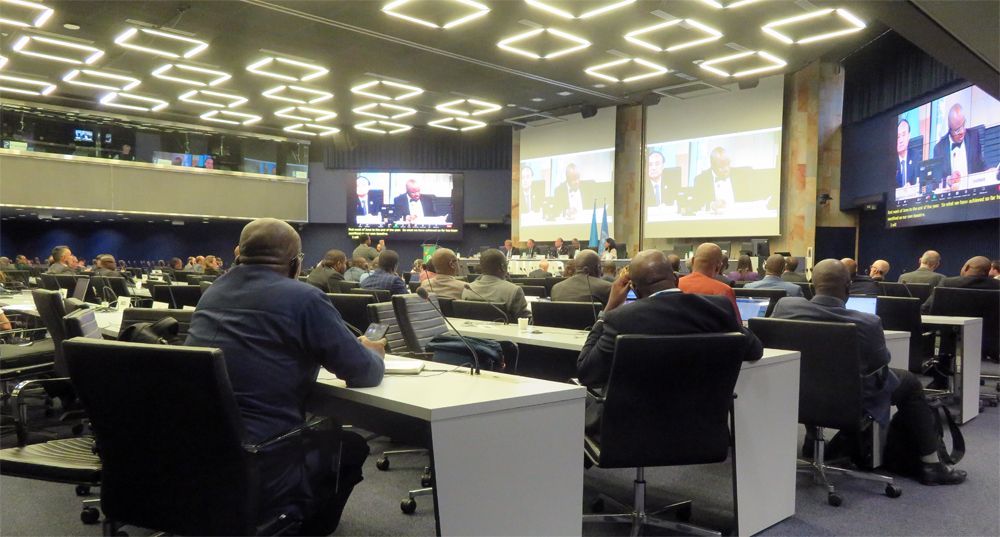
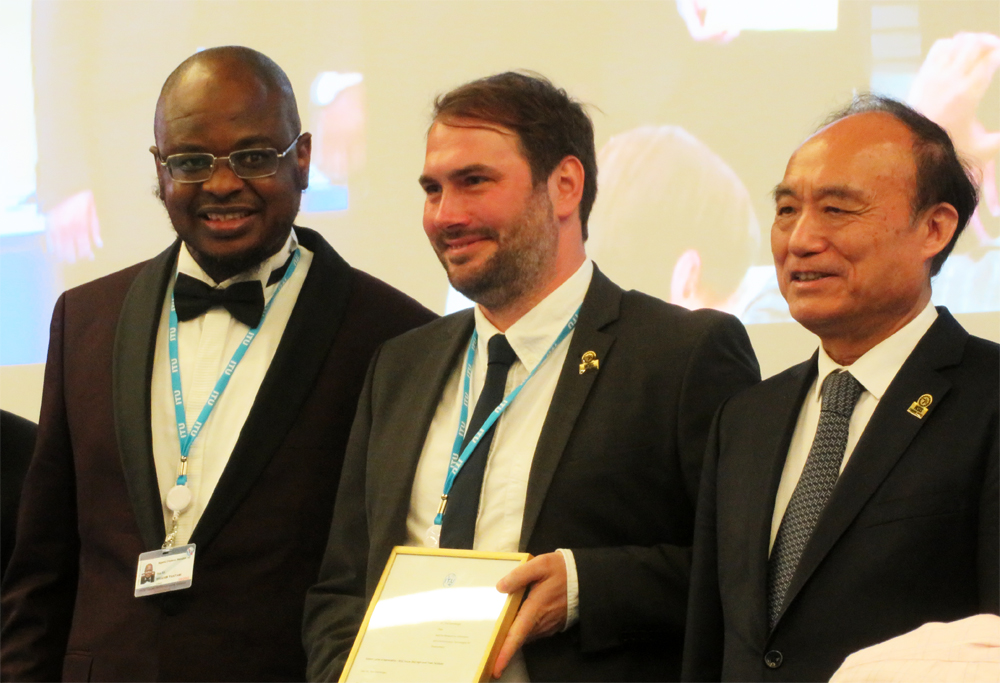
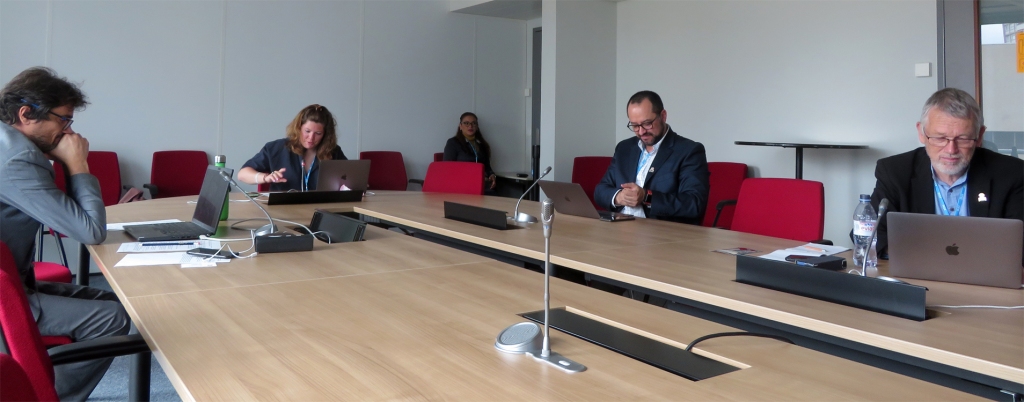
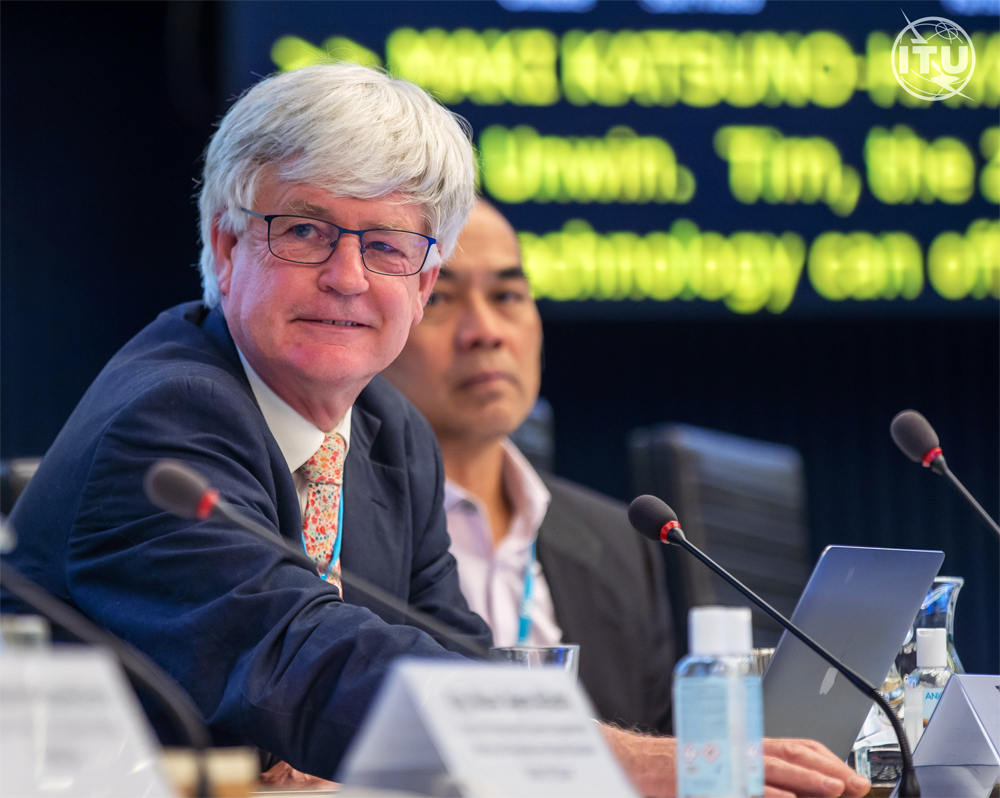

 It was great to be able to participate as a UNESCO Chairholder in UNESCO’s first Partners’ Forum on 11th-12th September in Paris, and to contribute as a panellist in the session arranged by Indrajit Banerjee and his team on Responding to Opportunities and Challenges of the Digital Age. Much of the Forum focused on the successes of existing UNESCO partnerships, but our panel yesterday instead addressed practical issues where UNESCO’s Knowledge Societies Division could make a difference.
 Our panel also consisted of:
 ICT4D Collective