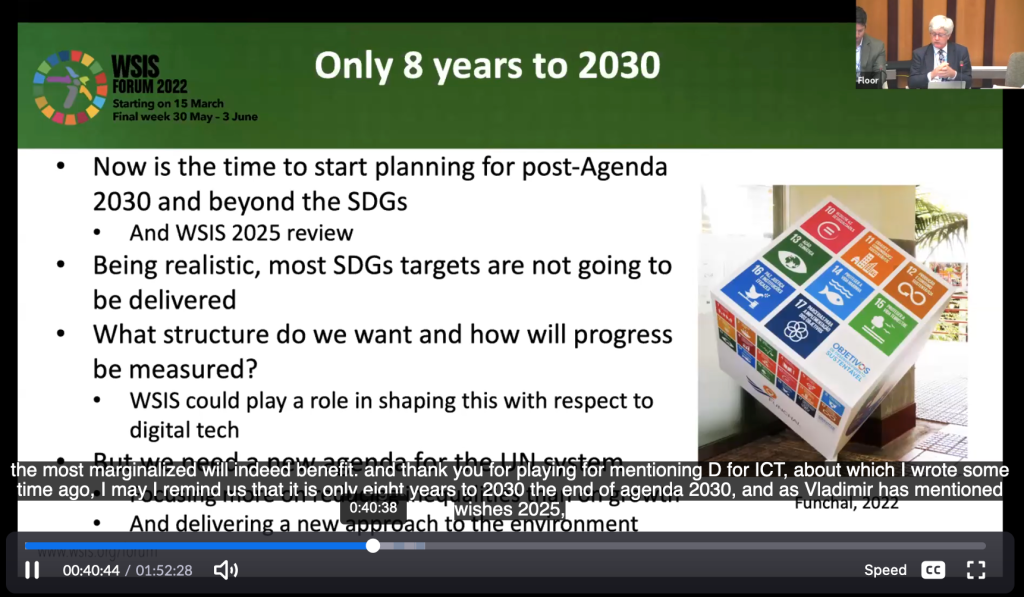
The multistakeholder digital tech communities associated with the UN system seem unlikely to deliver on the SDGs by 2030, despite the efforts of those involved in developing and implementing the Global Digital Compact (2024). In particular, SDG10 on reducing inequalities remains insufficiently addressed, with much emphasis instead continuing to be placed on maximising economic growth through innovation. All too often the most marginalised, especially those with disabilities, LGBTIQ communities, women in patriarchal societies, the elderly, ethnic minorities and refugees, are in practice made yet more marginal through the adoption of the latest digital tech by those more powerful and richer than they are.
UNDESA, ECOSOC/CSTD, many other UN agencies, and the IGF process are all conducting widespread consultations about the future of “digital and development” and the WSIS Process, but these have still not sufficiently addressed the tendency for digital tech to be used to increase inequalities, rather than to address issues of inequality and equity. Our interactive session is the culmination of a consultation process during the three months before the annual WSIS Forum through which people across our different networks have contributed their ideas to what the five highest priorities should be for governments, the private sector, civil society and the UN system in creating greater equity in the use of digital tech. The findings of this process will be presented during the session, and participants invited during the session to add to the recommendations through the interactive development of a mind map on marginalization that will provide a very specific output to feed into the wider ongoing debate within the UN system about digital tech and equity.
Please make your voice heard beforehand
Everyone is invited to contribute before the session through a short (max 10 minute) online survey available at: https://app.onlinesurveys.jisc.ac.uk/s/rhul/digital-equity-wsis2025. This will form the basis of our conversations in Geneva, and so even if you cannot attend in person please do copmplete this survey about what needs to be done to ensure that the poorest and most marginalised can indeed benefit from the use of digital tech.
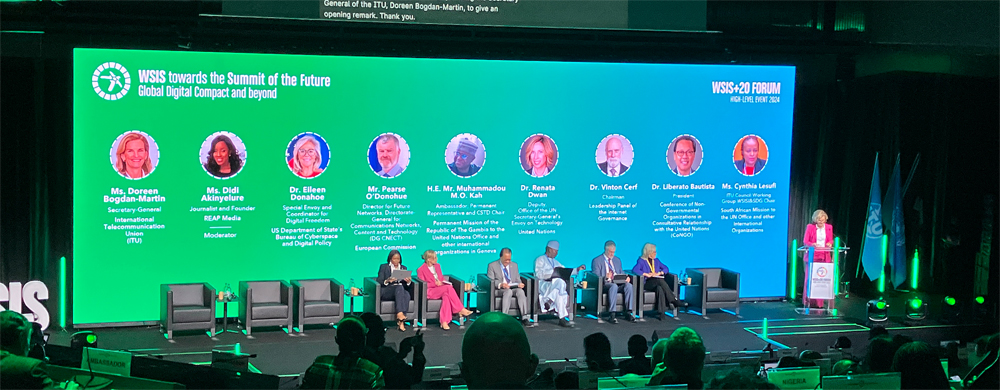
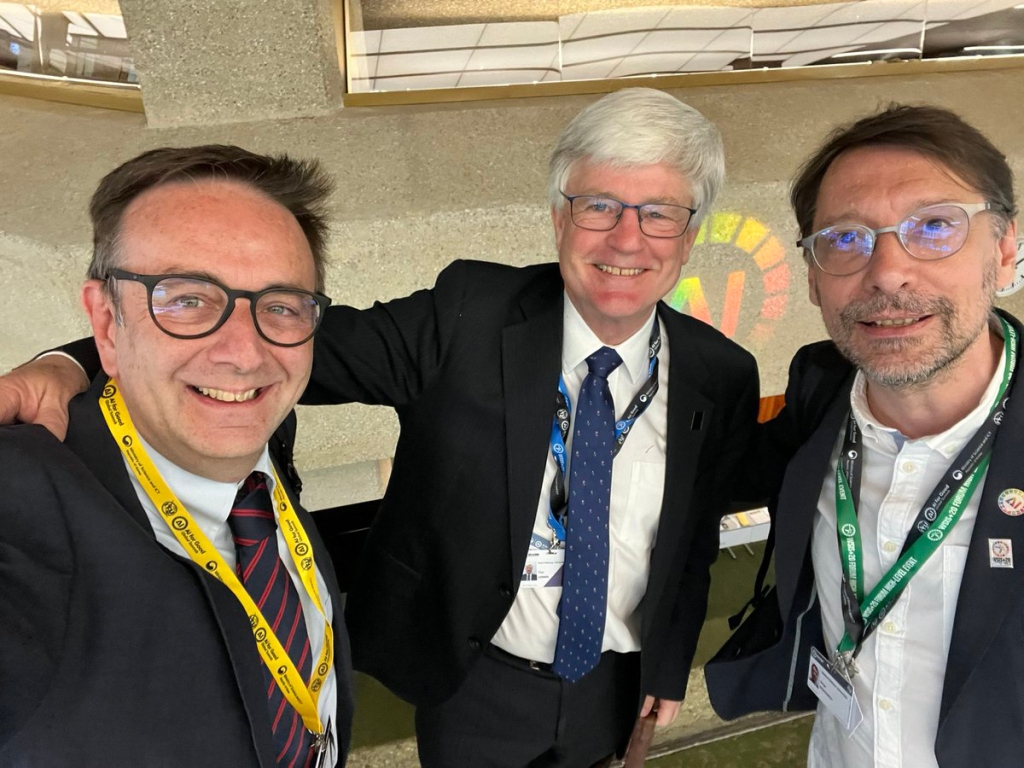
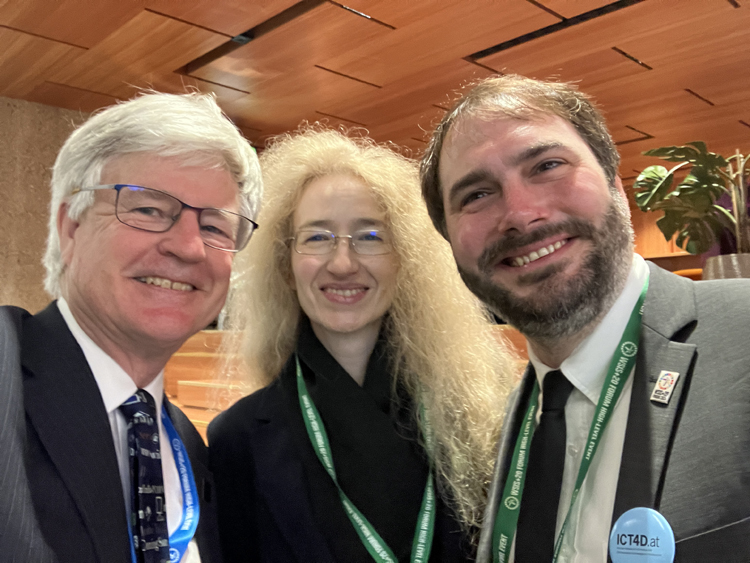
Members of the ICT4D Collective and friends had an exciting and very busy time in Geneva during the 20th anniversary meeting of the World Summit on the Information Society between 26th and 31st May, 2024. Our full agenda is available here, but we summarise below details of the two main sessions that we convened.
Community Media Networks: envisioning the future (Session 331)
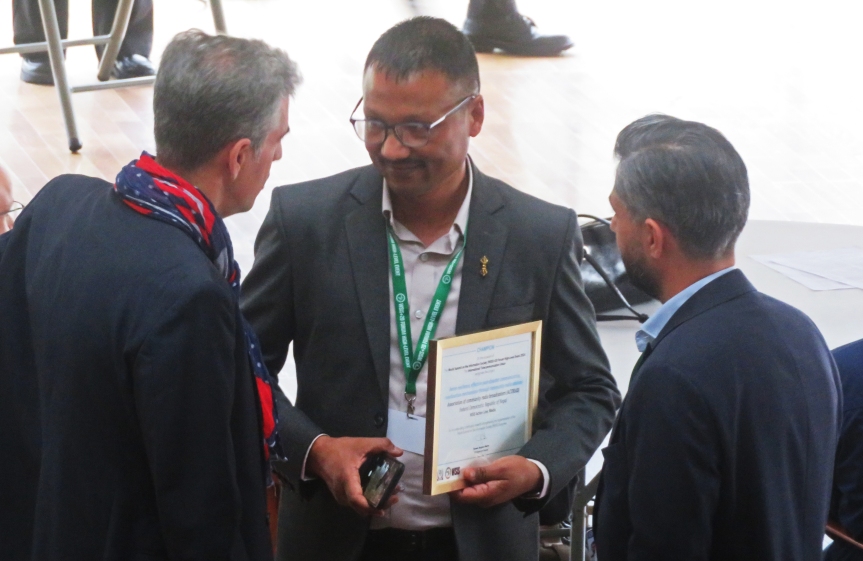
We convened this session on 29th May with ACORAB/CIN , BNNRC, TaC-Together, Youth IGF, Cape Town TV, CEMCA, and ICT4D.at, highlighting the importance of community media in reaching some of the world’s most isolated and marginalised people. Our very distinguished line-up of speakers and moderators included (in order of speaking): Pramod Tandukar (Executive Director, ACORAB, Nepal), AHM Bazlur Rahman (CEO, Bangladesh NGOs Network for Radio and Communication), Dr. R Sreedher (Tele Learning and Community Radio Practitioner), and Philomena Gnanapragasam (CEO Asia-Pacific Institute for Broadcasting Development), with Tim Unwin (ICT4D Collective) and Paul Spiesberger (ICT4D.at) also being moderators.
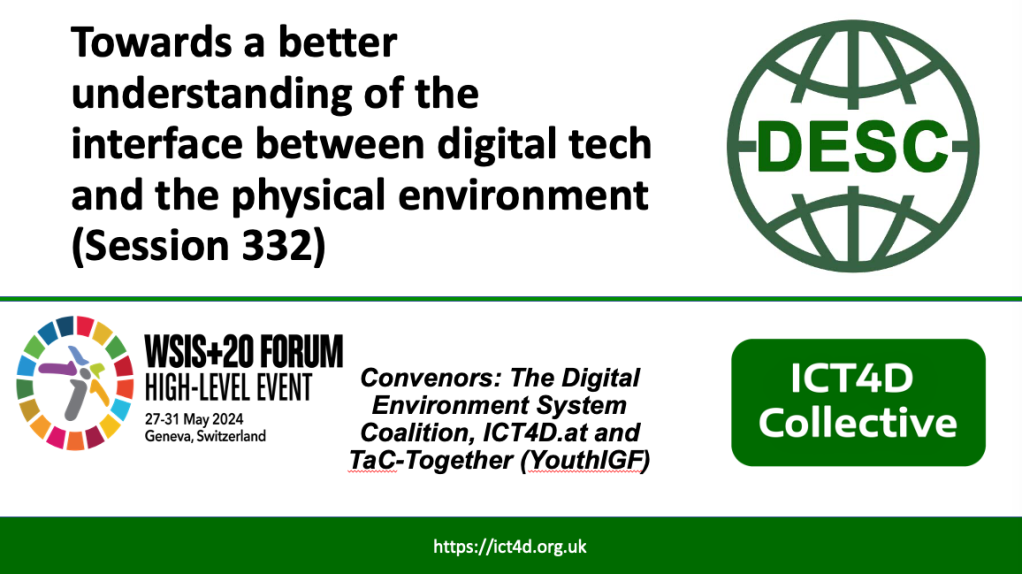
Towards a better understanding of the interface between digital tech and the physical environment (Session 332)
This session (convened by The Digital Environment System Coalition, ICT4D.at and TaC-Together with YouthIGF) provided an overview of the agenda being developed by the Digital-Environment System Coalition (DESC), and an outline of our proposed contribution to the ITU’s Partner2Connect initiative. It emphasised the need for a completely new was of understanding the interactions between digital tech and the environment, that is much more holistic than the existing emphasis of the “global community” mainly on climate change, carbon emissions, and e-waste.
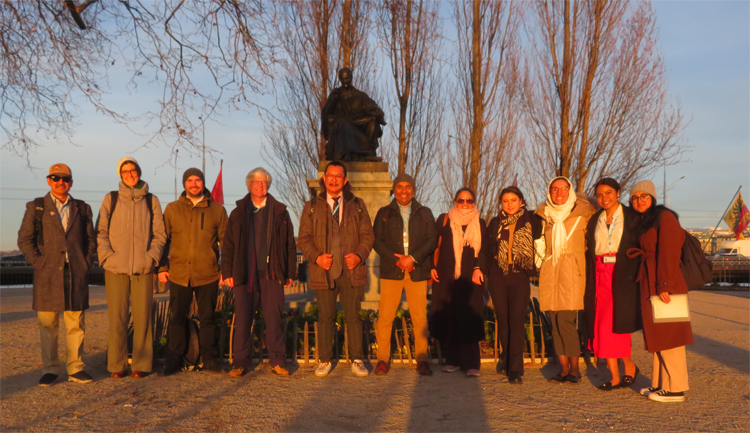
Particiants on the DESC walk photographes beneath the statue of Rousseau as the sun sets
The Digital Environment System Coalition (DESC) convened two sessions (403 and 204) on 16th and 18th March at this year’s WSIS Annual Forum held in Geneva. The first was a walk which we believe to be the first ever such event held during a WSIS annual forum, and the second was a more traditional session within the cavernous CIGG. Both sessions were convened by the UNESCO Chair in ICT4D at Royal Hollloway, University of London which provides the Secretariat to DESC, in association with INIT (the Inter-Islamic Network on IT), the WWRF (Wireless World Research Forum), ICT4D.AT, and RC-DISC (the Research Cluster for Digital Inequality and Social Change at the University of Canberra).
Experiencing digital environment interactions in the “place” of Geneva (Session 403): the DESC Walk
We experience things differently when we walk, when we talk together, and when we interact with the real physical environment. We feel the fresh air on our faces, smell the vegetation, hear the noise of running water, and touch the rough rocks on the slopes. We interact differently with each other. We pause and contemplate where we are. Our minds engage in ways that are so, so different from when we sit in large conference halls.
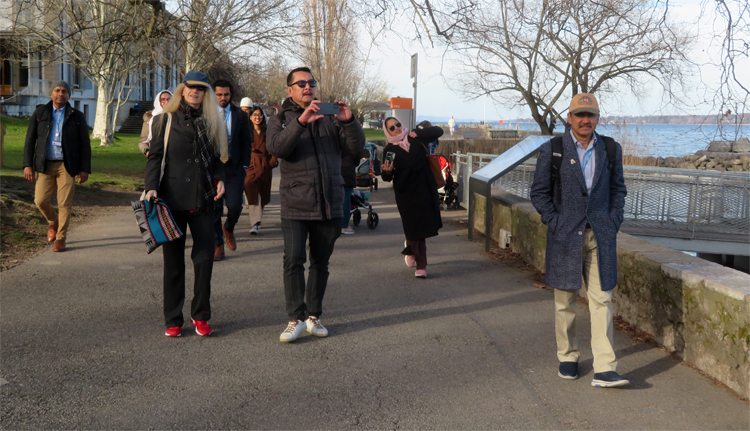
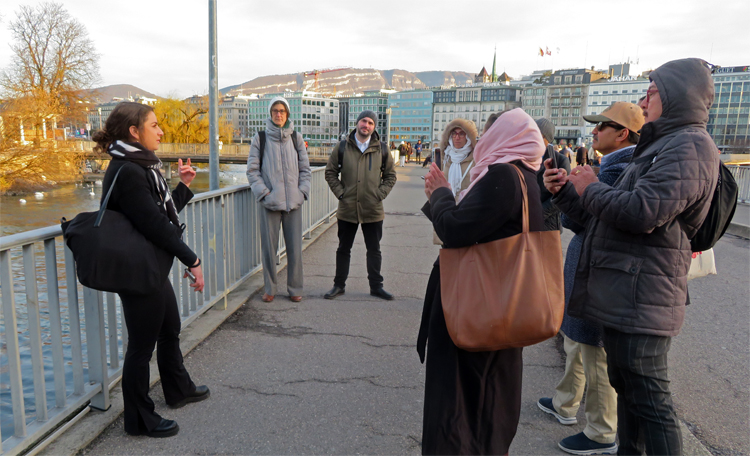
This DESC walk provided an opportunity for participants (i) to share their own research and practice relating to the interactions between digital tech and the environment, (ii) to discuss the positive and negative impacts of digital tech specifically on the biosphere, hydrosphere, atmosphere and lithosphere, and (iii) to make recommendations concerning the further development of YouthDESC. In essence, individual participants brought the group to a halt at locations that they felt were most appropriate for them along the walk and shared information about themselves and their research/practice, and we also stopped at five pre-planned locations to discuss each of the main themes as a group. Moderators of each main stop sought to encourage the participants to highlight three positive and three native interactions between digital tech and the environment.
Parc Mon Repos – the biosphere (led by Paul Spiesberger). Issues discussed included the positives of being able to share nature through digital images, use of remote sensed imagery to monitor the biosphere, and the use of digital tech to enhance agricultural production. Negatives included digital pollution of plants and green spaces, potentially adverse effects on human health (including mental health), and increased urban exploitation of rural environments through digital tech.
Poste Filial – YouthDESC (led by Tasfia Rahman). This began with a visit inside the building to discover the ways through which it is now necessary to use virtual/digital systems to post a physical/real card. We also recognized the important links between postal communication in the past and digital communication at present. The Instagram account of @YouthDESC was discussed, alongside the pros and cons of different social media platforms for engaging youth
Pont des Bergues – the hydrosphere (led by Ahmed Imran). It was recognised that unlike the biosphere and lithosphere, the impact of digital tech on the hydrosphere is less immediately visible. However, negatives include the impact of deep sea mining for rare earth minerals, and the heating of water in cooling systems. The use of water warmed by the heat produced by servers was, though, also seen as a benefit.
Ile Rousseau – the atmosphere (led by Zumana Imran). Beneath the feet of the philosopher Rousseau, our thoughts turned to the atmosphere above us, and focused on the positives of the use of satellites for monitoring environmental change and enabling communication in isolated places, whilst also recognizing the harms of treating outer space as we used to treat the oceans (global commons), the impact on dark space, and space junk. It was also recognised that different cultures have differing views about the environment, and we must engage with indigenous communities.
Auditoire de Calvin – the lithosphere (led by Tim Unwin). As dusk came upon us, few people remained to walk up the steps to the Cathedral and Auditoire de Calvin, but we nevertheless discussed the impact of mining for minerals used in digital tech, the impact of waste especially in landfill, and also the potential benefits in land management.
Scenes from the DESC walk in Geneva, 16 March 2023
Reimagining the Interface between Digital Tech and the Physical Environment (Session 204)
This formal workshop session had three main aims:
to share an updated overview of DESC’s emerging model that challenges much existing work being undertaken on digital tech and climate change;
to provide an update on its ongoing activities since WSIS 2022; and
to do this in a lively and interactive way.
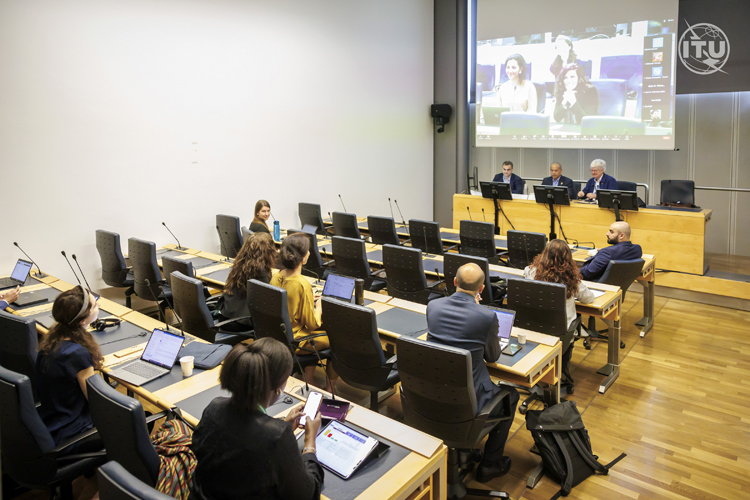
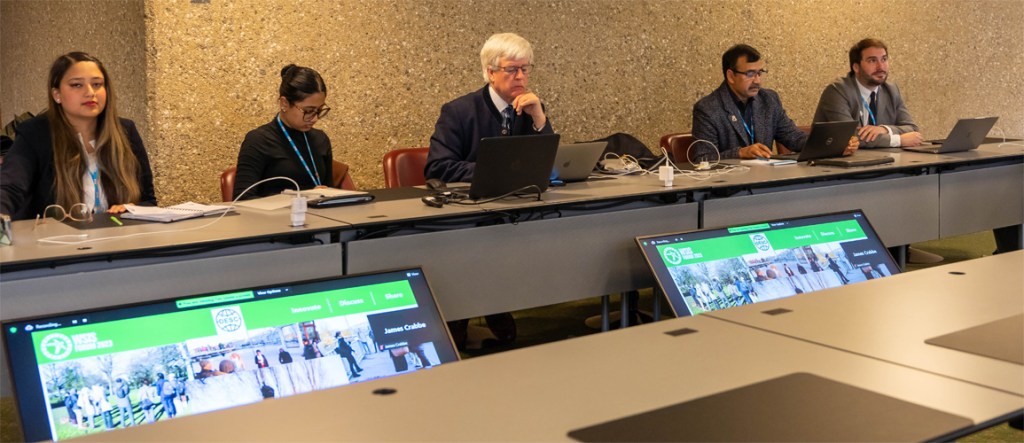
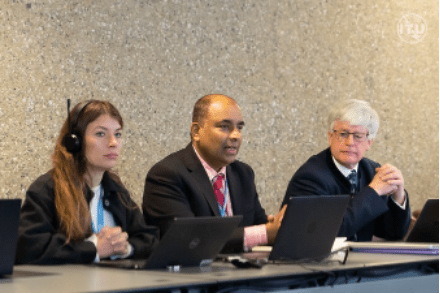
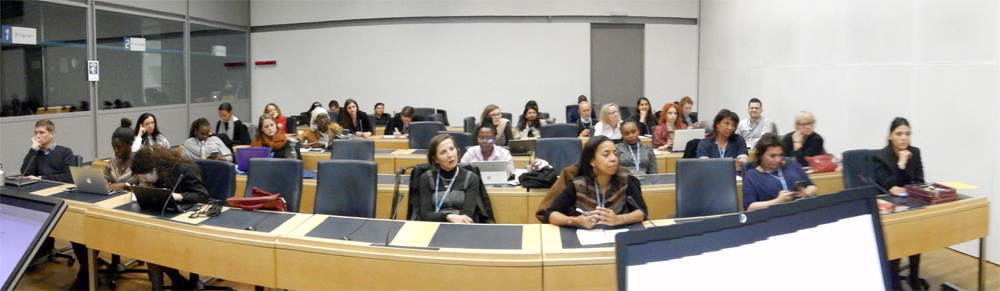
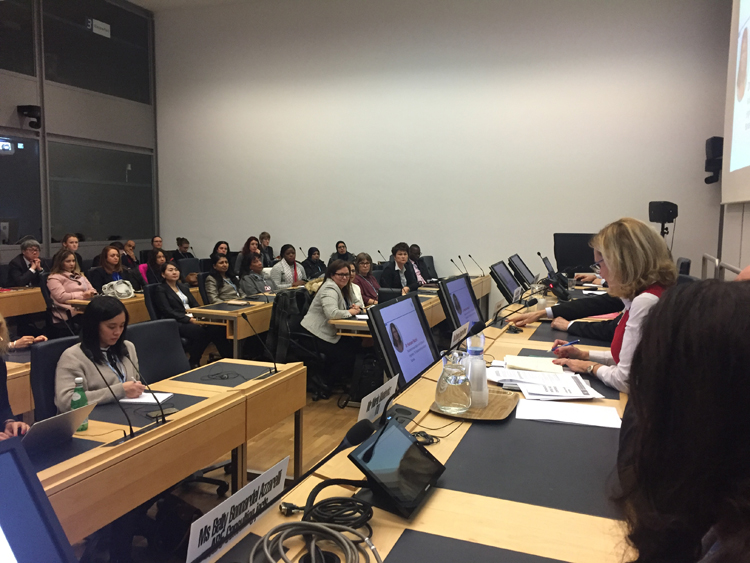
Official ITU photograph from WSIS Session 204
The session was structured as follows:
Introduction to DESC, highlighting the need to adopt a holistic approach focusing on the interaction between digital technologies and the totality of the physical environment (including the lithosphere, hydrosphere, biosphere and atmosphere – see diagram below) rather than just climate change. Indeed, a focus primarily on human-induced climate change is likely to lead to seriously adverse impacts on other dimensions of the physical environment.
Summaries of the key points of discussion explored during the DESC walk (WSIS Session 403) the previous day, presented by the five discussion moderators (including the YouthDESC session).
Highlights of two examples from the activities of DESC’s Working Groups emphasizing why these issues matter:
The indigenous DESC Working Group (Poline Bala’s sliodes were presented by Tim Unwin). This highlighted that indigenous peoples are insufficiently represented at events such as WSIS, and that they can contribute significantly to new ways of addressing the interface between digital tech and the physical environment
A video presentation by James Crabbe on the importance of omics for informing policy on deep sea mining.
This was followed by an introduction to the toolkit being developed by DESC for all those who have pledged to the ITU-led Partner2Connect initiative to enable them to consider and address the environmental impact of their proposed interventions.
The final element was a lively discussion around the issues raised, that included new commitments from participants to explore collaboration on implementing the DESC toolkit
DESC in Geneva
The general consensus from both sessions was that they were enjoyable and informative – and that DESC should offer to convene another walk in 2024 when we can delve once again into both the positive and negative impacts of the design and use of digital tech on the environment.
The session, which aligned especially with SDG10 and WSIS Action Lines C3, C4, C5, C7(iii, iv,v), C8 and C10, was structured around our digital interventions from Nepal and South Africa using a series of short-form videos ‘created by migrants for migrants’ as a framing device for the discussion. The contributions highlighted many inequalities faced by migrants and how digital tech can meaningfully address them as well as how digital tech can support personal life choices, offer networking opportunities, and become a peer-to-peer learning tool. The overarching theme was the need for all actors at the interface of digital tech and migration to be mindful of the need to ensure the safe, secure and wise use of digital tech by migrants.
Despite increasing evidence of the challenges to the beneficial use of digital tech by vulnerable migrants, actors such as tech companies, international and local organisations continue to design technologies aimed at migrants without due regard to their unintended consequences. International organisations and fora such as WSIS that are at the forefront of digital inclusion must recognise not just the opportunities offered by digital tech for migrants but also the risks and harms associated with them. This is especially important given the pervasive structural inequalities and limited digital capabilities that characterise many migrant contexts.
WP9 co-lead Prof G Hari Harindranath led the session with Prof Tim Unwin and Dr Maria Rosa Lorini while Bryce Hartley from GSMA (online) and Julien Varlin from ILO Geneva served as discussants. The highly interactive hybrid session was attended by senior government officials and representatives from international organisations, CSOs and tech companies as well as researchers.
We also used the in-person WSIS Forum in beautiful Geneva as an opportunity to discuss pathways to impact for our work with colleagues at IOM and ILO.
We are delighted that members of the UNESCO Chair in ICT4D at Royal Holloway, University of London, are involved in the following four sessions at this year’s WSIS Annual Forum in Geneva between 13th and 16th March 2023 (listed in chronological order):
Session 184: International Conference on Digital Transformation of Education: Road towards SDG 4 (Guest of Honour and Panellist), Thursday 16 March 09.00-09.45
Session 403: DESC Experiencing digital environment interactions in the “place” of Geneva (convenor) – this is a discussion-walk around Geneva commencing at the main entrance of CICG on Thursday 16 March from 16.00-18.30 (more details)
Session 204: DESC Reimagining the Interface between Digital Tech and the Physical Environment (convenor), Friday 17 March, 10.00-10.45 (more details)
Session 329: MIDEQ WP9 What migrants want: digital tech, inequality and migration (convenor), Friday 17 March, 11.00-11.45
Please do join us at these sessions, the last two of which will also be available for those wishing to join online. More information is available on the DESC sessions here.
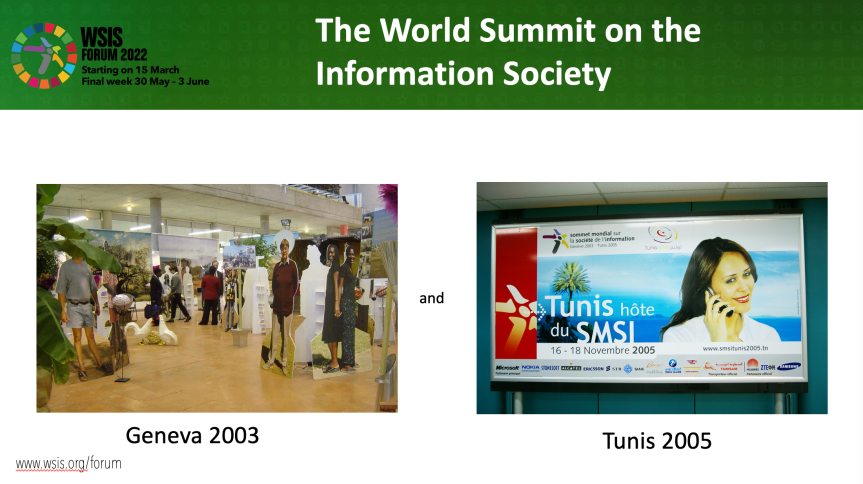
Members of the UNESCO Chair in ICT4D have been involved in the World Summit for the Information Society (WSIS) since its inception in 2003 (Geneva) and 2005 (Tunisia), and have participated in many of the subsequent Annual Forums held in Geneva.
After two years of virtual WSIS events, it was a great pleasure to be back in Geneva during the week of 30th May-3rd June this year and excellent that so many of our Members, Affiliated Members and Partners could participate – both in person and online during the hybrid sessions. Congratulations to Gitanjali Sah and her team for putting on such an interesting and enjoyable week of events, which highlighted the great value of being there in person and holding conversations with old friends, as well as making new acquaintances.
Some of the highlights of our contributions included:
Paul Spiesberger (Affiliated Member and Chair of ict4d.at) served as a High Level Panel Facilitator throughout the event
Ahmed Imran (Affiliated Member and Director of RC-DISC at our partner, the University of Canberra), Tim Unwin (Chairholder) and others at the Academia Round Table on 1st June (Session 397)
Tim Unwin (Chairholder) Panellist in High-Level Dialogue on the Transforming Education Summit and the 2023 GEM Report on Technology and Education, 1st June (Session 298)
Tim Unwin (Chairholder) Panellist in Session 406 Academic perspectives on WSIS and the SDGs, 2nd June
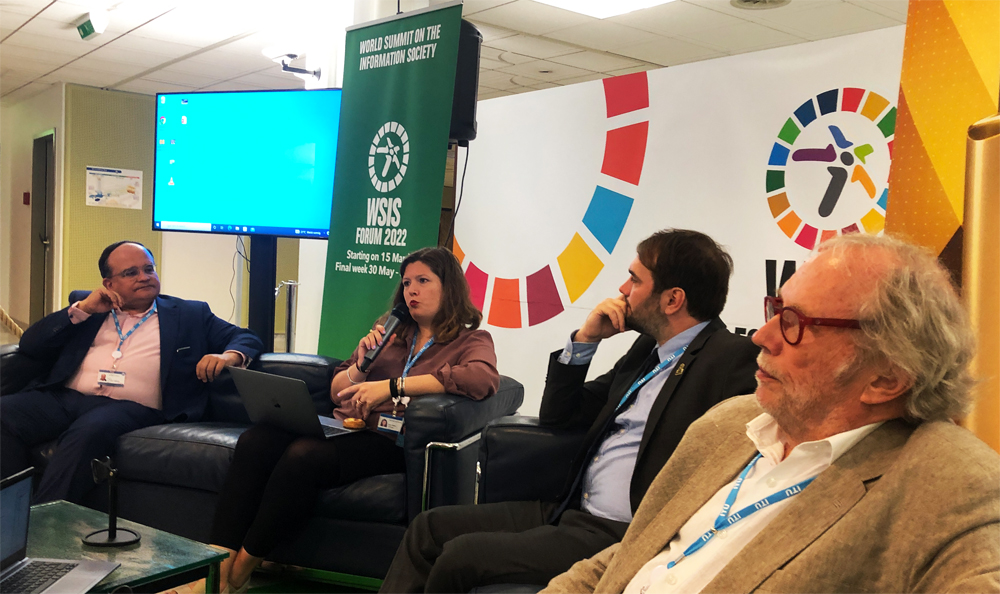
Carlos Álvarez Pereira, Suay Ozkula, Paul Spiesberger, Knud Erik Skouby and Tim Unwin participating in Open Space Session on the Digital Environment System Coalition (Session 448), 2nd June
The WSIS Annual Forum remains one of the most valuable of the many duplicating and ovelapping digital technology events, conferences and summits organised by the UN and other agencies. It provides an important opportunity for governments, international agencies, companies and civil society to come together to discuss recent dvelopments in the broad field of digital tech for “development” focusing particularly around the Action Lines agreed almost 20 years ago by the UN system.
Members, Affiliated Members and Partners of the UNESCO Chair in ICT4D at Royal Holloway, University of London, look forward to paticipating in future WSIS events in the years to come.
The Coalition has four Focus Areas, and having participated actively in its meetings over the last six months, we are focusing our engagement primarily on the second of these: how the poor and marginalised can empower themselves through the use of digital technologies.
We are delighted to report that our pledge to Partner2Connect has now been validated. This is to advise, engage and involve Partner2Connect partners in delivering effective and empowering interventions with the world’s most marginalised people and communities.
We are offering the Coalition and its partners three main things:
An opportunity to engage directly in and contribute to our ongoing and future initiatives working with poor and marginalised communities and people who choose to use digital technologies for their empowerment. This will focus on five main areas:
Our work with migrants (especially in Nepal and South Africa as part of MIDEQ) to craft digital interventions that will reduce the inequalities associated with migration (led by Hari Harindranath and Maria Rosa Lorini)
Our work with people with disabilities, especially with our partner the Inter Islamic Network on IT throughout the Islamic world (led mainly by Akber Gardezi and Tahir Naeem)
Our work through TEQtogether on changing men’s attitudes to women and digital tech, especially in patriarchal societies (with the support of ICT4D.at, and led by Tim Unwin, Liz Quaglia and Paul Spiesberger)
Work on entrepreneurship. This has mainly been focused since 2018 in Kazakhstan and Central Asia on empowering creative local start-ups with entrepreneurship skills for growth and development (led by Endrit Kromidha)
Contributing expertise in research and practice to the further conceptual development of Focus Area 2 so that all activities are developed in accordance with the latest understanding of inclusive, equal and safe access and use of ICTsfor all. We recognise that there are many differing views about empowerment, and we relish the opportunity to engage with other partner organisations to develop shared understandings of benefit to P2C and to the world’s least connected peoples.
Offering training in empowerment theory and practice to partners within P2C. We look forward to the opportunity to engage actively with other P2C partners through workshops and other forms of tailored training to share our experiences of delivering digital interventions with and for the most marginalised, focusing especially on the notion of empowerment that lies at the heart of Focus Area 2.
We are one of the few academic entities yet to pledge commitments to Partner2Connect, and look forward to continuing to engage with and contribute to its actitivites, especially helping to ensure that the world’s poorest and most marginalised do indeed benefit from the increased global connectivity that the Coalition seeks to provide.
Please use our Contacts Page should you wish to find out more or to work with us in driving these pledges forward
This year’s Telecom World event convened by the ITU and hosted by the Hungarian Government from 9th-12th September in Budapest was one of the most interesting and useful such events in recent years. The Forum programme contained many thought provoking presentations and discussions, and the government’s hospitality was generous, featuring an inspiring musical evening and a drone display over the Danube. There was also a very diverse exhibition, with particularly impressive displays from China about the Digital Silk Road.
David Banes speaking at ITU Telecom World
The UNESCO Chair in ICT4D was delighted to participate in and contribute to several sessions. In particular, David Banes was a speaker in an important session on Accessibility matters: dismantling the barriers of disability with technology on 12th September. This session noted that technology can enable better access to health, education, government services and the job market for all those affected by disabilities, but also asked what more can be done, in both emerging and developed markets? It explored how existing solutions can be scaled and adapted, and sought to identify whether there is a business case for digital inclusion solutions?
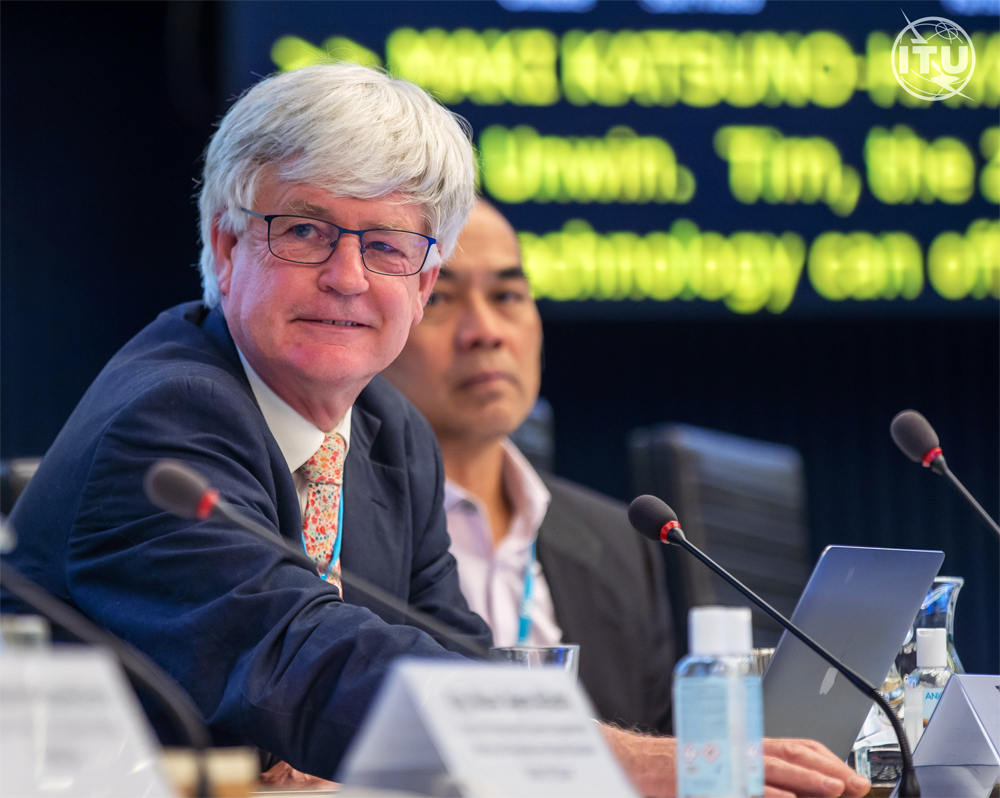
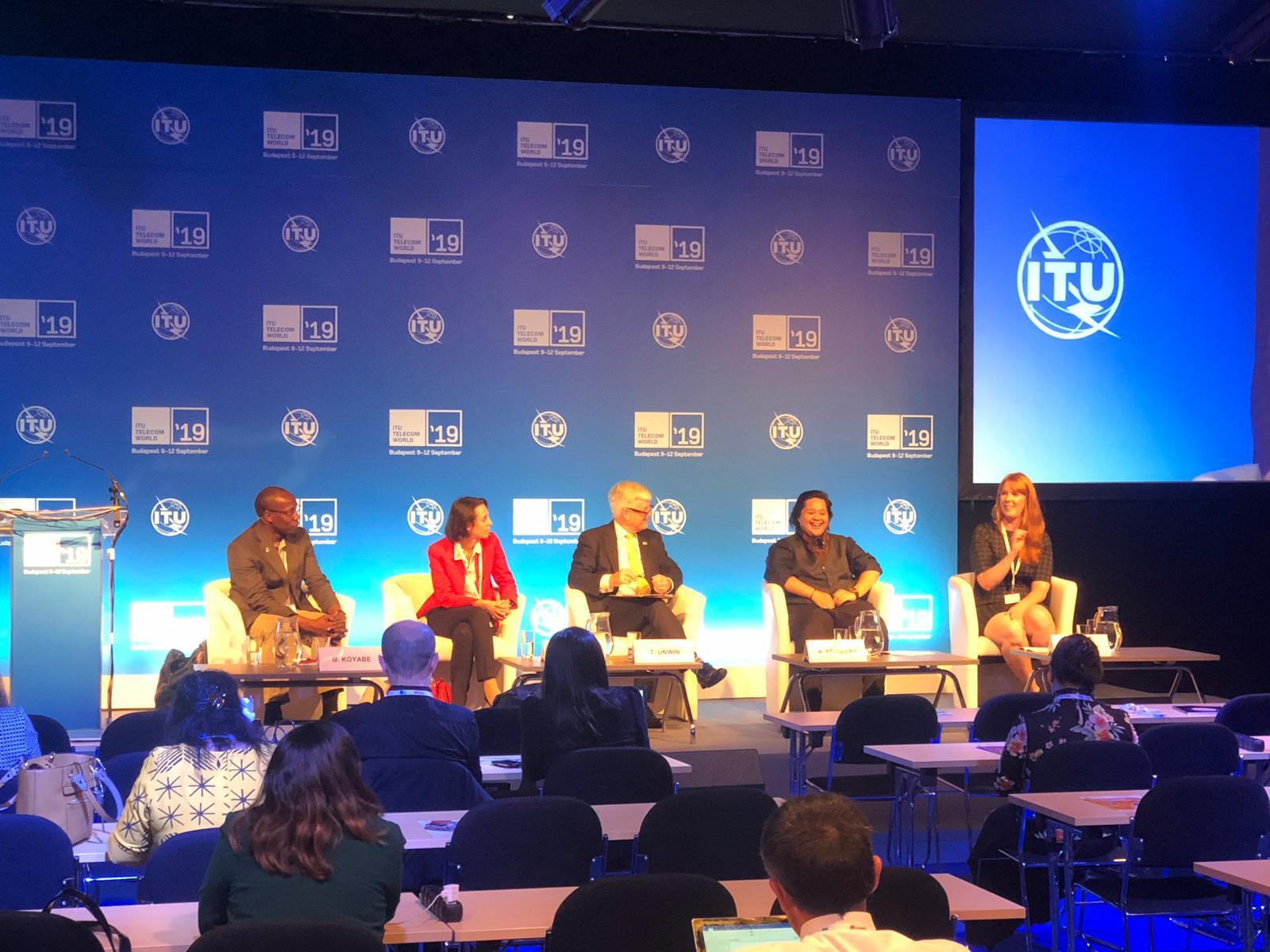
Tim Unwin moderating AI and gender session (Source: ITU)
Our Chairholder (Tim Unwin) also moderated two sessions, on Diversity by design: mitigating gender bias in AI and the launch of the ITU-CISCO Digital Transformation Center Initiative, as well as speaking in the Huawei sponsored session on Fixed wireless technology for affordable broadband development. These provided a good opportunity to highlight the work of the UNESCO Chair in ICT4D and also our TEQtogether initiative changing men’s attitudes to women in technology.
The ITU is strongly committed to achieving gender equality across its organisational structures, and has been one of the driving forces for achieving gender equality in and through ICTs across the world, not least through its involvement in creating the EQUALS initiative.
One of the key international gatherings convened by the ITU has been the series of World Radiocommunication Conferences held periodically to reach international agreements on Radio Regulations, with new and revised Resolutions and Recommendations. Traditionally, these have been very male dominated, and the ITU has therefore taken steps to encourage greater involvement of women at all levels in its decision-making processes. One aspect of this has been the creation of the Network of Women for WRC-19 (NOW4WRC19), led by Dr. Hanane Naciri, which aims to encourage increased participation of women in the conference being held in 2019. Its main objectives are to have a better gender balance among delegates, to prepare women for key roles in WRC-19, and to grow the women’s community capacity and contribution.
As part of this process, the ITU and the UNESCO Chair in ICT4D convened Session 113 at the WSIS Forum 2018. This began with a lively panel discussion, opened by Dr Hanane Naciri (Radiocommunication and Software Engineer, Radiocommunication Bureau, ITU), with Sahiba Hasanova (Vice-Chairman, ITU-R Study Group 4 / Leading Adviser, Ministry of Transport, Communications and High Technologies, the Republic of Azerbaijan), Caitlin Kraft-Buchman (CEO/Founder Women@theTable, Geneva, Switzerland) and Brigitte Mantilleri (Director of the Equal opportunities office of the University of Geneva). The speakers shared some of their experiences of leadership in the field of ICT, commented on the challenges facing women who wish to participate in such events, and suggesting what needs to be done to involve more women at all levels in such processes (summary).
Building on these inspirational introductions, participants then shared their experiences, insights and suggestions for what still needs to be done to ensure that women contribute fully and appropriately to international ICT decision making, and especially to WRC-19. Twelve themes were identified, and these were captured in a mind map which is available on the ITU and UNESCO Chair in ICT4D sites:
Top leadership and champions: it is essential that top leadership supports the increased participation of women, and that champions are identified who can promote such participation;
Ensuring that women are in powerful positions: women need to be supported throughout their lives, and particularly encouraged to take leadership roles;
Building and promoting networks: it is essential that we work together in intergenerational networks that can support and advise women participating in such decision-making activities;
Involving men: we must have male feminists as well as female ones who are willing to help change attitudes and cultures of oppression;
Training: more effective training programmes are necessary, particularly ones that help men to understand the relevant issues;
Organisational structures: addressing elements of organizational culture is key, and it is important to equip women to survive and flourish in the environments where they work;
Awareness and communication: the need to provide much more information about how women can contribute to such decision-making gatherings, and to confront people who have negative behaviours;
Changing norms: the need to address and revisit many underlying assumptions;
Incentivisation: the need to provide incentives to organisations and individual women to participate in such events;
The role of recruitment: recruitment agents can play a key role in ensuring balanced interview panels and processes, and in supporting a charter code of practice on gender;
Remember that inclusion is not the same as diversity: diversity is not enough and we need to be inclusive to ensure that women feel comfortable in whatever environment they find themselves; and finally
Recognising it may not happen overnight: given how slow change has been so far, we need to recognize it may not happen swiftly, but we must develop the momentum so that it will happen as quickly as possible.
Participants were committed to supporting EQUALS and working with the ITU to ensure that there is much greater involvement of women at all levels in WRC-19.
EQUALS is a global initiative committed to achieving gender equality in the digital age. Its founding partners are the ITU, UN Women, UNU Computing and Society (UNU-CS) institute, the International Trade Centre, and the GSMA, and Royal Holloway, University of London, is one of the first group of 25 partners for the initiative. We were delighted that the Principal of Royal Holloway, Professor Paul Layzell, was able to attend the first Principal’s meeting in New York during the UNGA in September 2017 (image to the right). There are three Coalitions within EQUALS, for Skills (led by GIZ and UNESCO), Access (led by the GSMA) and Leadership (led by the ITC), and these are supported by a Research Group, led by the UNU-CS. The UNESCO Chair in ICT4D has been very active across all areas of EQUALS’ work since its original conception during the discussions held at the WSIS Forum in May 2016, and has been particularly involved in contributing to the work of the Skills Coalition.
The first face-to-face physical (rather than virtual) meeting of the Research Group was convened by the UNU-CS in Macau from 5th-6th December (official press release), and it was great that the UNESCO Chair in ICT4D could be represented by both Liz Quaglia and Tim Unwin at this meeting. This week’s gathering brought together researchers and policymakers from 21 organizations around the world. It established the group’s research agenda, drafted its work plan for 2018, and finalized the content and schedule of its inaugural report due to be published in mid-2018. In particular, it provided a good opportunity for researchers to help shape the Coalitions’ thinking around gender and equality in the three areas of skills, access and leadership, and also to identify ways through which they could contribute new research to enable the coalitions to be evidence-led in their activities.
This slideshow requires JavaScript.
Huge thanks are due to Araba Sey, who convened the meeting with amazing enthusiasm, insight and professionalism, and all of the other staff at UNU-CS who contributed so much to the meeting. It was a great occasion when some of the world’s leading researchers in gender and ICTs could meet together, not only to discuss EQUALS, but also to explore other areas of related research, and to build the trust and openness necessary to increase gender equality both in the field of ICTs, and also through the ways that ICTs influence every aspect of people’s lives.
The UNESCO Chair in ICT4D was delighted to represent Royal Holloway, University of London at the first Focal Point meeting of the EQUALS initiative held on the side of the UN High-Level Political Forum in New York on 18th July 2017 .
EQUALS is a global initiative founded by the ITU, UN Women, the ITC, GSMA and the UNU, and delivered by a partnership of more than 20 corporate leaders, governments, non-profit organizations, communities and individuals around the world working together to bridge the digital gender divide – by bringing women to tech, and tech to women.
Royal Holloway, University of London, was created from two of the leading women’s university institutions in the UK: Bedford College founded in 1849 as the first women’s higher education institution in the country; and Royal Holloway College, founded in 1879, also as an all-women College. The wealth of expertise of Royal Holloway, University of London’s researchers and teachers, especially those involved in the UNESCO Chair of ICT4D in fields such as information security, business management, computer science and geography, is highly relevant to the EQUALS agenda of enabling gender equality in the digital age. The Chair is also one of the first 20 research organisations committed to working as part of EQUALS Research Group led by the UNU-Computing and Society Institute, and looks forward to participating actively in the group.
This first Focal Point meeting brought together the founders and partners to explore ways through which the work of EQUALS can best be delivered through three coalitions of partners:
Access: Ensuring that women and girls have full access to digital technologies, devices and services;
Skills: Empowering women and girls to acquire skills to become both ICT users and creators in the digital world as well as in broader STEM (science, technology, engineering and maths) fields; and
Leadership: Promoting leadership opportunities for women in the digital workforce including women’s entrepreneurship.
Despite all of the global initiatives undertaken so far to use technology to empower women, digital inequality has increased. As UNESCO reported in March 2017 “the global Internet user gender gap grew from 11% in 2013 to 12% in 2016, with the estimated gap highest in Least Developed Countries (LDCs) (31%) and Africa (23%). Moreover, Internet penetration rates remain higher from men than women in all regions of the world”. EQUALS aims to use new approaches to reverse this trend, ensuring that women across the world have the access, skills and leadership to enable them to benefit from ICTs to the same extent as do men.
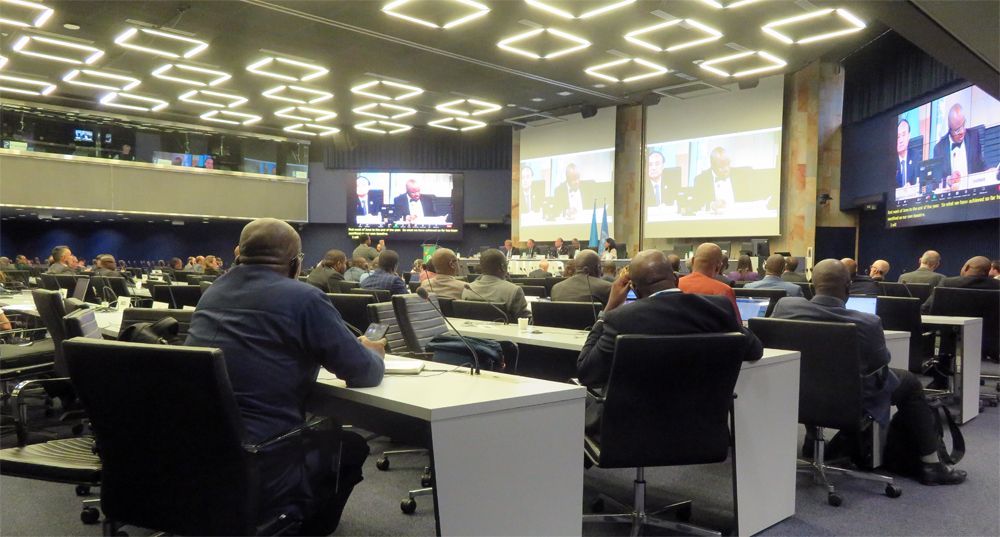
Members of the UNESCO Chair in ICT4D participated in the ITU’s World Radiocommunication Seminar 2016 (WRS-16) held in Geneva from 12th-16th December 2016. This provided an excellent opportunity to gain detailed updated information on both terrestrial and space services, covering technical and regulatory issues including publications, databases and tools for countries to use in managing radiocommunications.
the big picture of women in the ICT/radiocommunication sector;
how to encourage women to take ownership of the group; and
the role that ITU should play in supporting this type of action.
As well as participating in the formal aspects of WRS-16 this was also an excellent opportunity to engage with national delegations and participants, especially from Pakistan and Kenya, as well as officials and friends in the ITU to discuss how the UNESCO Chair in ICT4D can further contribute to the ITU’s activities.
















 Its founding partners are the
  The UNESCO Chair in ICT4D was delighted to represent
  This first Focal Point meeting brought together the founders and partners to explore ways through which the work of EQUALS can best be delivered through three coalitions of partners:
 Members of the UNESCO Chair in ICT4D participated in the
  It also enabled us to engage in the kick-off meeting of the
  ICT4D Collective