
Volume 2 Issue 10 October 2017
 The OECD suggests that regulations and the industrialisation of agriculture have contributed to both economic growth and poverty reduction. However, with time, regardless of the higher connectivity and spread of ICTs, many people have become more detached from the land and from the farmers who cannot yet be replaced by machines. Many such farmers are still living in poverty in the Equatorial belt, although some of their exotic products such as coffee and cocoa are sold at premium prices in supermarkets in the richer countries. A rethinking of digital platforms and ICTs could help to re-establish the relationship between consumers and farmers in global food markets.
The idea of using ICTs in agriculture for development is not new. The FAO (Food and Agriculture Organisation) has always had a keen interest on ICT Uses for Inclusive Agricultural Value Chains. e-Agriculture also undertakes valuable research and policy work on ICT for sustainable agriculture and rural development. Kiva Labs has identified three problems where crowdsourcing can help: flexible credit, access to market infrastructure, and training. However, for a better understanding of ICTs for inclusive innovation in global food markets the focus needs to shift away from countries and regions, and towards entrepreneurs, the farmers and their interests.
Crowdsourcing is often presented as a mean for entrepreneurs to access resources from the many, the crowd. In agriculture it can help farmers to access capital for growth, innovation and better access to global food markets, and also improve collaboration with customers, suppliers and partners. Patch of Land, a real estate crowdsourcing platform promotes projects like Athena Organic Farm + Eco-Retreat in Canada as setting the stage by businesses offering a farm-based experience rather than only products, expanding into the digital space through crowd social entrepreneurship and innovation. But can farmers from developing countries harness the power of digital crowdsourcing to come closer to global food markets and consumers?
In developing countries such as Indonesia, the idea of crowdsourcing has been seen particularly positively. While several international crowdsourcing platforms offer global mutual programs, Indonesia has various local platforms in the Bahasa language. Some of them focus on a particular issue such as health (WeCare.id) and culture (GerakanSejutaBudaya), while others focus on important general social issues supporting personal or social creative issues (GandengTangan, KitaBisa). Some of the crowdsourcing platforms are even available in applications from smartphones, making them more reachable.
 In a pilot study conducted for this Briefing we decided to focus on two initiatives in Indonesia. First we examined BigTreeFarms a sustainable agriculture U.S. company sourcing organic cocoa, coconut and other ingredients for their products sold in global markets. Talking with their Head of Corporate Quality, Food Safety and Management, it was clear that one of their key challenges is educating their 10,000+ local farmer partners about organic food producing standards and ensuring that such practices are followed. Second, we spoke with GandengTangan (meaning ‘Hand-in-Hand’). This is a relatively new crowdsourcing platform designed to help individuals and Small and Medium Enterprises (SMEs) in Indonesia to secure funding for growth and better access to local and global markets. Testimonials from successfully-funded projects on the platform show that the scheme has provided new hope to expand businesses in a different way. The two case studies lead us to ask whether the micro-crowdsourcing model and the large sustainable farming investment model can be combined together for a more integrated system.
Regardless of the many crowdsourcing initiatives and inclusive innovations in developing countries, few farmers use and leverage ICTs to expand their skills and gain better access to funding and global food markets. The challenge for crowdsourcing platforms in developing countries is not only to link the global crowd to fundraisers, but also to educate and mentor both parties to collaborate better in the international market arena. Further consideration of important aspects such as local culture, contexts, and trust, as well as useful training or mentoring that might help support them including language, global marketing, farming entrepreneurshis, information and financial literacy is necessry. There is much that ICTs can do, but further research is needed in this direction.


 September 2017
 The world is now characterised by news and social media platforms’ intent on delivering alternative facts, fake news and fake research results. Alongside this they harvest insights through algorithms that analyse our online behaviours and preferences. ‘Big data’ becomes big business driven by a global internet machine which if we are not careful will support the interests of ‘the few not the many’ (to turn around an overused party-political phrase!). So, what are our options for creating a future where we can retain a sense of identity, values and freedoms? I certainly do not claim to have the solutions to such huge global challenges facing society, but offer three suggestions to the ICT4D community, all of which underpin the way knowledge can be created and shared in a digital age:
 In the run-up to this year’s UN General Assembly, the Office of the DG of the UN Office in Geneva has launched a novel initiative on big conversations driving the big goals of the SDGs as part of their Perception Change Project. The UNESCO Chair in ICT4D is delighted to have been invited to participate in
  Volume 2 Issue 8 August 2017
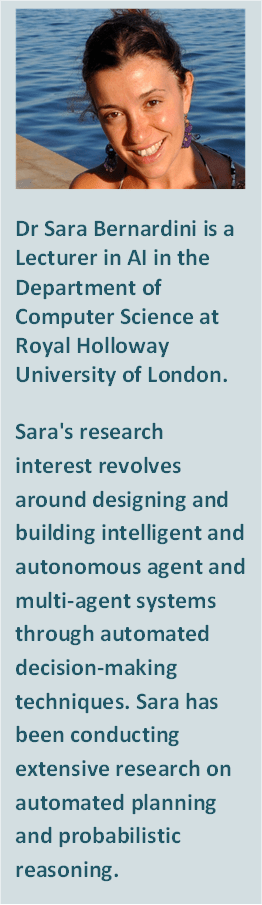
 At the Summit, Professor Virginia Dignum formulated three principles on which AI development should be based, which I find particularly relevant:
 Volume 2 Issue 7 July 2017
 We heard many concerns around all the above.
 Volume 2 Issue 6 June 2017
 Volume 2 Issue 5 May 2017
 Volume 2 Issue 4 April 2017
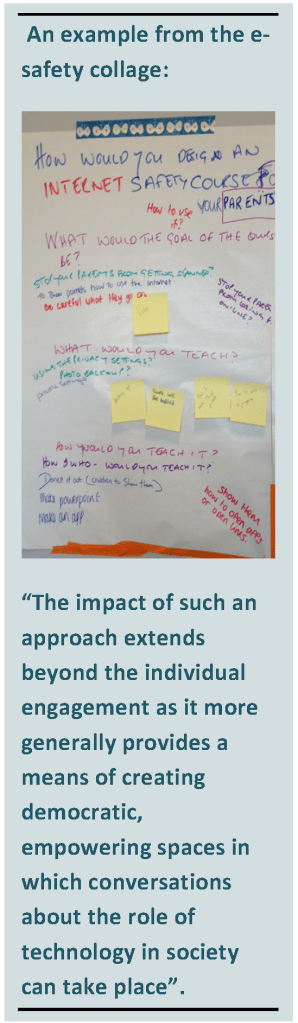 people. The youth workers at the centre decided to focus on e-safety in the context of parental advice and the role they would like parents to play. It was agreed that creative methods would be used to enable this discussion. The researcher worked as a facilitator to help the youth workers and young people to develop the conversation through the co-creation of a wall collage.
 March 2017
 Developers recognise a need to establish a consistent style regardless of the local version of a product. Later localisation is facilitated if a clear style guide for design is developed which includes the use of universal graphics and icons wherever possible.
 In 2016, the Colombian Government had already envisaged a clear direction for the role of information and communication technologies (ICTs) to support post-conflict. According to
 India’s Aadhaar project is the biggest biometric project worldwide, and a good example of ICTs and datafication for development. Aadhaar provides a unique 12-digit number to those who enrol, capturing their fingerprints and iris scan. Its purpose is that of semplifying delivery of social services, enabling rapid identification of those entitled. Biometric details are linked to citizens’ data, hence a fingerprint is enough to access subsidised foodgrains or other benefits. My research on Aadhaar reveals two important points about the datafication of anti-poverty programmes. First is their technical rationale, and second are the political consequences that the new data architecture produces.
