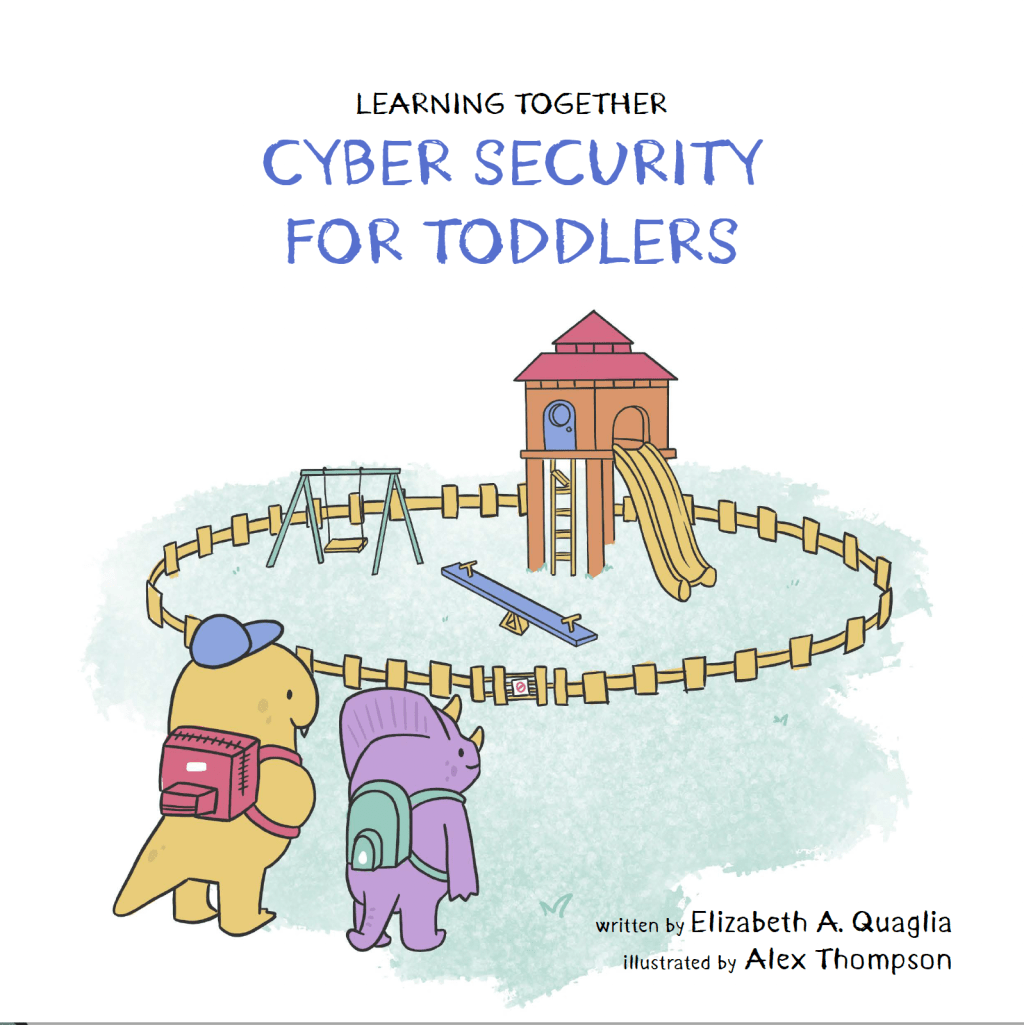
These are excellent learning guides aimed at children and adults who care for them, and introduce fundamental concepts in cyber security and cryptography. Glossaries at the end of each book provide really useful, clear explanations of what key terms in cybersecurity and cryptography mean, and how they have been used in the books – as illustrated below:
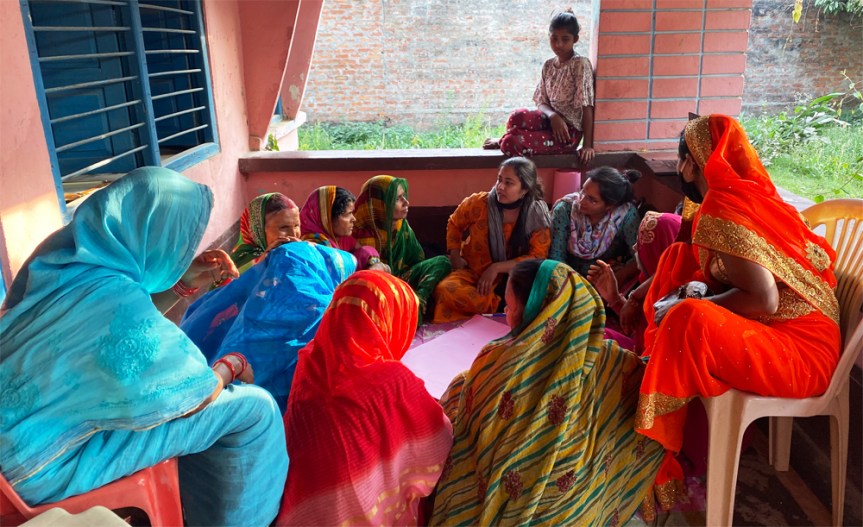
The ICT4D Collective was delighted to be involved in delivering an online workshop/seminar with our partners ACORAB (the Association of Community Radio Broadcasters) and CIN (Community Information Network) in Nepal on 24th July. This drew on our previous work in Nepal, as well as the session on community radio that we ran earlier in the year at WSIS+20 together with other organisations and partners. These form part of our increasing work on cyber-security. Some 70 participants, mostly journalists from community radio stations, participated in the two-and-a-half hour workshop which had four main aims:
To share information and ideas about the work that members of the Collective have been doing, mainly with migrants, on the safe, wise and secure use of digital tech in Nepal, South Africa, Brazil and Mozamibique;
To provide participants with advice that will hopefully be of value to them both personally and in their professional lives;
To share resources on cyber-security that can be used through community radio to advise listeners in Nepal; and
An opportunity for discussion and dialogue between participants
The slide deck used for the workshop is available here, and we would love to hear any feedback or suggestions about the content through our contact page.
During one of our research visits to South Africa in January 2024 it became abundantly clear that many small and poorly resourced civil society organisations have little experience of using digital tech safely, wisely and securely. Drawing on good practices across the world, as well as our subsequent experiences in and with colleagues from Brazil, Nepal and Mozambiaue, we have therefore produced a short (12 page) guide to help such organisations understand the risks they are at from the use of digital tech and how they can be mitigated. This contains useful tips, graphics that can be copied and reversioned into posters, as well as links to more detailed sourcers of information, and it is freely available in English under a Creative Commons CC BY SA license.
Please get in touch using our contact page should you have any comments on how this could be improved or to discuss developing versions in other languages or for other contexts, and do please share information about this resource through your own networks.
Members of the UNESCO Chair in ICT4D are leading Work Package 9 of the MIDEQ hub (funded by UKRI GCRF and Royal Holloway, University of London) and are exploring how digital tech can be used to reduce the inequalities associated with migration, especially in four corridors: Nepal-Malaysia, Ethiopia-South Africa, China-Ghana, and Haiti-Brazil. The second of our working papers presenting data on the uses of digital technologies by Nepali migrants and their families has just been published within the UNESCO Chair in ICT4D’s publication series. Key findings and abstract are as follows.
Key findings
1. Nepali migrants and their familes make extensive use of digital technologies – especially smart phones and the Internet for a wide range of purposes, and not just for audio and video calls
2. Very few migrants make any use at all of apps that have been developed specifically for migrants – and even those 8.7% that claim to do so may not have actually used such apps
3. Migrant use of digital technologies increases through the migration journey – only 46.4% had used digital tech daily before migrating, whereas 85.4% used them daily while in the migration destinations.
Abstract
This working paper forms part of the output of Work Package 9 on technology, inequality and migration within the MIDEQ Hub, a multi-disciplinary research project in 12 countries of Latin America, Africa and Asia, including the Nepal-Malaysia migration corridor. It presents the results of an online survey of 266 respondents in and from Nepal, 58.5% of whom identified themselves as migrants, with 28.1% being family members of migrants, and 13.4% being returned migrants. Following a summary of the methodology, which explains why an online survey was used to replace the originally planned interviews and focus groups, the paper provides an overview of the most important results and analysis, focusing on the potential influence of age, gender, countries of origin and destination, migration status, and occupational status on the ways in which respondents use digital technologies and for what purposes. Three important conclusions for Phase Two of our research are: first, the vast majority of Nepali respondents have smart phones and access the internet very frequently for a wide range of purposes; second, simply designing another new app may not be particularly valuable; and third, it might well be wise to work with, or build on, technologies and apps already in existence, so as to improve them in ways that could increasingly empower migrants.
To read this paper in full (v.5 .pdf) please use this link.
Other UNESCO Chair in ICT4D Publications are available here.



 ICT4D Collective