Join the ICT4D Collective at our session on digital tech and the most marginalised at the WSIS+20 High-Level Event in Geneva on 8th July

We are delighted to be jointly convening a session (306) at the WSIS+20 High-Level Event in Geneva on 8th July at 09.00 in Room L, Palexpo, Geneva. The joint convenors are the ICT4D Collective and Microsoft (UN and International Organisations UNIO), supported by Bangladesh NGOs Network for Radio and Communication, ICT4D.at, and YouthIGF.

Session Outline

The multistakeholder digital tech communities associated with the UN system seem unlikely to deliver on the SDGs by 2030, despite the efforts of those involved in developing and implementing the Global Digital Compact (2024). In particular, SDG10 on reducing inequalities remains insufficiently addressed, with much emphasis instead continuing to be placed on maximising economic growth through innovation. All too often the most marginalised, especially those with disabilities, LGBTIQ communities, women in patriarchal societies, the elderly, ethnic minorities and refugees, are in practice made yet more marginal through the adoption of the latest digital tech by those more powerful and richer than they are.

UNDESA, ECOSOC/CSTD, many other UN agencies, and the IGF process are all conducting widespread consultations about the future of “digital and development” and the WSIS Process, but these have still not sufficiently addressed the tendency for digital tech to be used to increase inequalities, rather than to address issues of inequality and equity. Our interactive session is the culmination of a consultation process during the three months before the annual WSIS Forum through which people across our different networks have contributed their ideas to what the five highest priorities should be for governments, the private sector, civil society and the UN system in creating greater equity in the use of digital tech. The findings of this process will be presented during the session, and participants invited during the session to add to the recommendations through the interactive development of a mind map on marginalization that will provide a very specific output to feed into the wider ongoing debate within the UN system about digital tech and equity.

Please make your voice heard beforehand

Everyone is invited to contribute before the session through a short (max 10 minute) online survey available at:  https://app.onlinesurveys.jisc.ac.uk/s/rhul/digital-equity-wsis2025. This will form the basis of our conversations in Geneva, and so even if you cannot attend in person please do copmplete this survey about what needs to be done to ensure that the poorest and most marginalised can indeed benefit from the use of digital tech.
The ICT4D Collective at WSIS+20

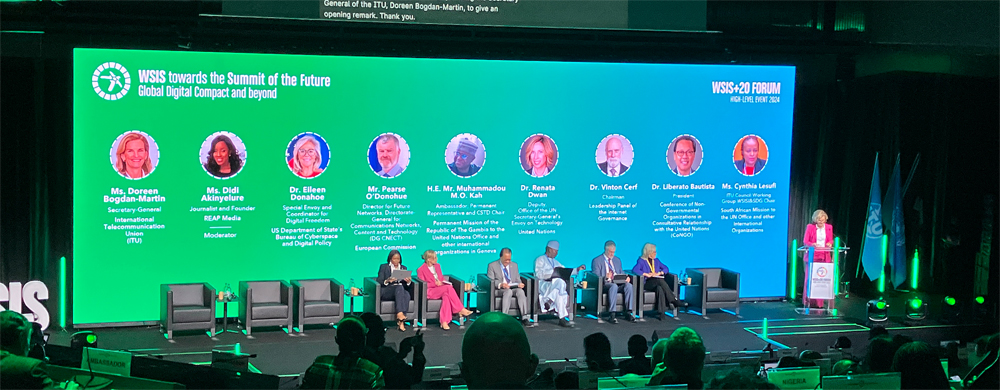
Members of the ICT4D Collective and friends had an exciting and very busy time in Geneva during the 20th anniversary meeting of the World Summit on the Information Society between 26th and 31st May, 2024. Our full agenda is available here, but we summarise below details of the two main sessions that we convened.


Community Media Networks: envisioning the future (Session 331)

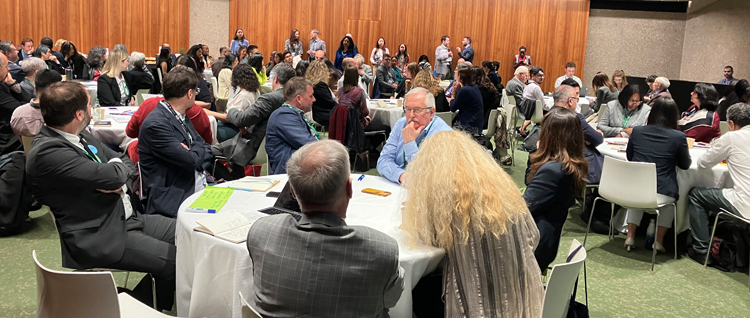
We convened this session on 29th May with ACORAB/CIN , BNNRC, TaC-Together, Youth IGF, Cape Town TV, CEMCA, and ICT4D.at, highlighting the importance of community media in reaching some of the world’s most isolated and marginalised people. Our very distinguished line-up of speakers and moderators included (in order of speaking): Pramod Tandukar (Executive Director, ACORAB, Nepal), AHM Bazlur Rahman (CEO, Bangladesh NGOs Network for Radio and Communication), Dr. R Sreedher (Tele Learning and Community Radio Practitioner), and Philomena Gnanapragasam (CEO Asia-Pacific Institute for Broadcasting Development), with Tim Unwin (ICT4D Collective) and Paul Spiesberger (ICT4D.at) also being moderators.


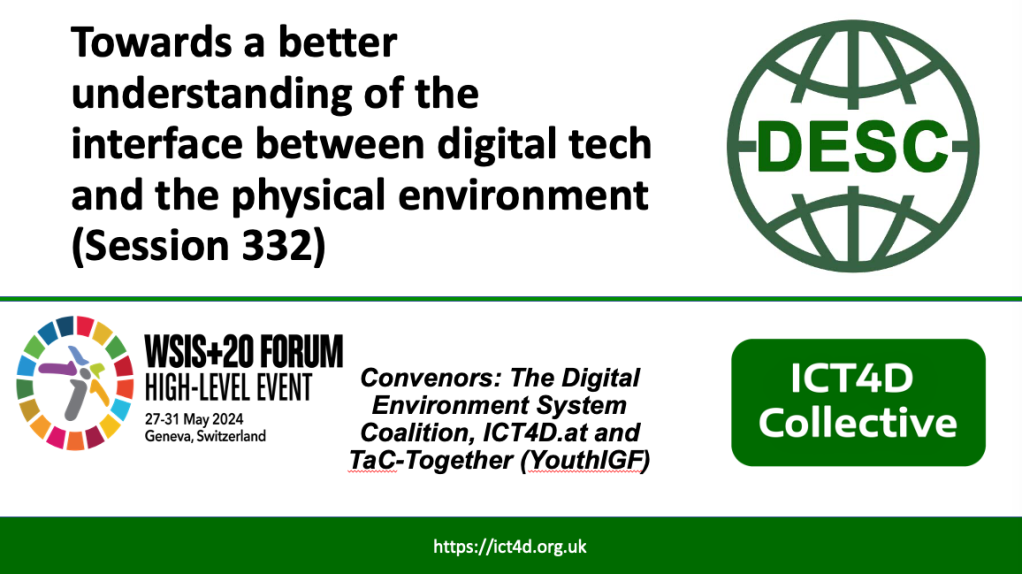
Towards a better understanding of the interface between digital tech and the physical environment (Session 332)

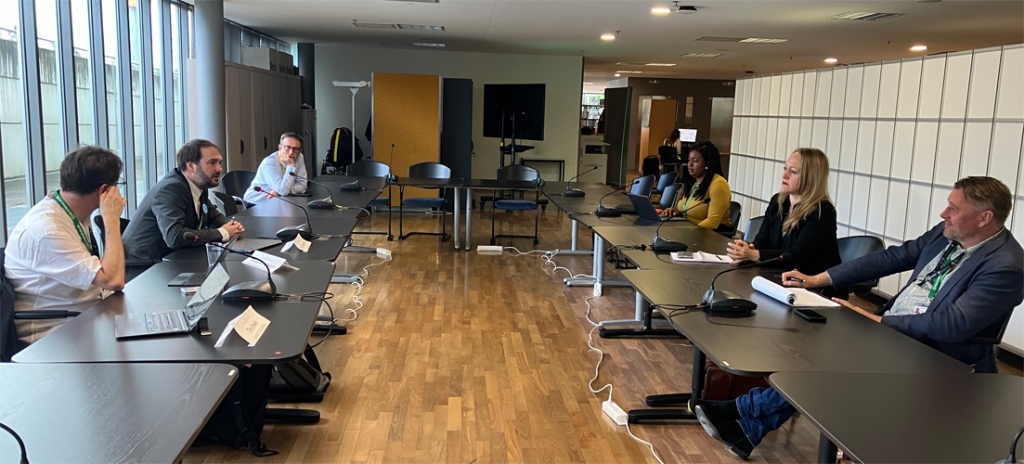
This session (convened by The Digital Environment System Coalition, ICT4D.at and TaC-Together with YouthIGF) provided an overview of the agenda being developed by the Digital-Environment System Coalition (DESC), and an outline of our proposed contribution to the ITU’s Partner2Connect initiative. It emphasised the need for a completely new was of understanding the interactions between digital tech and the environment, that is much more holistic than the existing emphasis of the “global community” mainly on climate change, carbon emissions, and e-waste.


Other sessions in which members of the ICT4D Collective were involved.

We would also all like to share a special word of thanks to Gitanjali Sah and the ITU Interns who worked so hard to make WSIS+20 such a success

Do read Paul Spiesberger’s reflective piece at https://www.ict4d.at/2024/06/world-summit-on-the-information-society-wsis20-forum-high-level-event-2024/ for more details.

The ICT4D Collective at WSIS+20, Geneva, 26-31 May 2024

The ICT4D Collective is delighted to be participating actively in the upcoming WSIS+20 week of activities in Geneva, especially since 2024 is also the 20th anniversary of the foundation of the Collective, which was created in 2004 to conduct the highest possible quality of research in the field of ICT4D primarily in the interests of poor people and marginalised communities, and making the results of this available freely to the global community.

Geneva from the ITU

Members of the Collective are actively engaged mainly in the following sessions at WSIS+20:

All of these events have been convened jointly with our partners and friends or we have been invited to participate in their sessions as speakers and moderators, and we are most grateful to them for such collaboration. Please do join us at WSIS+20 – we promise to try to make our involvement exciting, interactive and challenging. Should you wish to contact us and arrange meetings during WSIS, do please use our contacts page.

Our new identity as the ICT4D Collective

As of 1st August 2023, the UNESCO Chair in ICT4D at Royal Holloway, University of London has reverted to its original identity as the ICT4D Collective. We are a group of very diverse researchers and practitioners from across the world, bound together by our commitment to the highest possible quality of research-practice relating to the use of digital technologies in the interests of the world’s poorest and most marginalised people.

Meeting staff and students at the NIC's ICT and Electronics Innovation Lab in Pokhara,  Nepal, July 2023
Our last engagement as members of the UNESCO Chair in ICT4D: meeting staff and students at the NIC’s ICT and Electronics Innovation Lab in Pokhara, Nepal, July 2023

The Collective and the UNESCO Chair in ICT4D

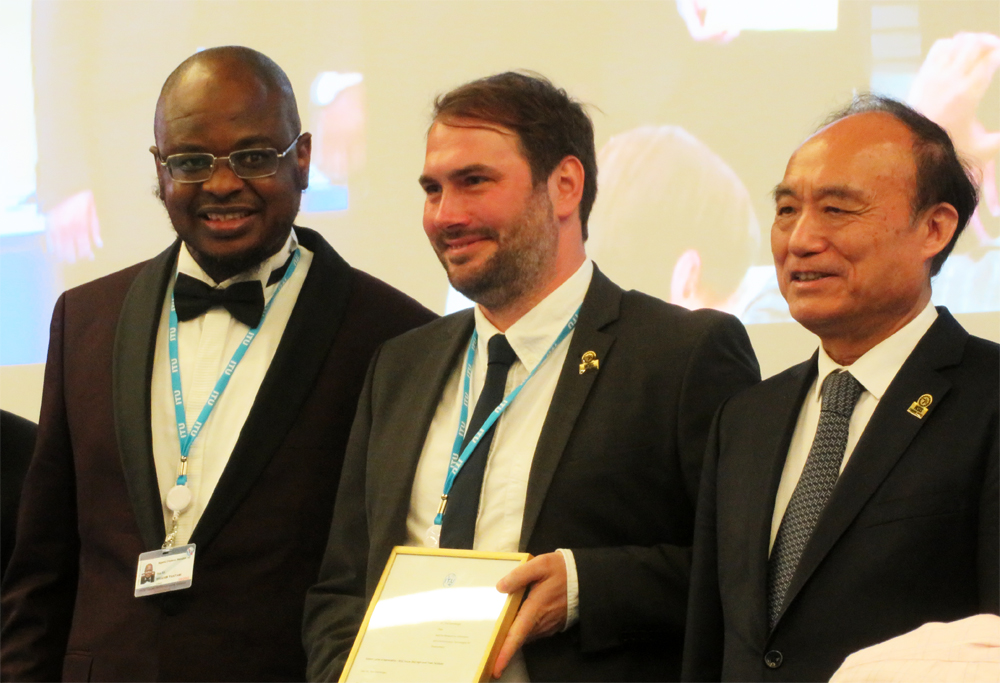
The original ICT4D Collective was created in 2004, and evolved through an agreement in 2007 between UNESCO and Royal Holloway, University of London into the UNESCO Chair in ICT4D (Information and Communication Technologies for Development). UNESCO Chairs are groups of researchers in specific institutions undertaking work of direct relevance to UNESCO’s fields of competence, and they promote “international inter-university cooperation and networking to enhance institutional capacities through knowledge sharing and collaborative work”. Members of our UNESCO Chair have been very proud to have been associated with UNESCO for the last 16 years, and to have collaborated closely with many good friends in UNESCO’s Paris headquarters and field offices. We were also honoured that Houlin Zhao, the Secretary General of the International Telecommunications Union (ITU) between January 2015 and January 2023, and Jean Philbert Nsengimana, former Minister of Youth and Information and Communication Technology (MYICT) from Rwanda, were our Honorary Patrons.

The following are some of the things we have particularly enjoyed engaging in over the last 16 years:

  • Working together collegially in a truly multidisciplinary context, involving colleagues from Computer Science, Geography, Information Security, Law and Managament at Royal Holloway, University of London.
  • Creating one of the largest groups of postgraduates completing PhDs in the field of ICT4D during the late 2000s and early 2010s.
  • Crafting an extensive partnership network involving governments, the private sector and civil society, and sharing the lessons we have learnt about making partnerships successful.
  • Contributing our experiences in global discussions around the role of digital tech in international development, especially in the UN’s WSIS process (since its origins in 2003), and UNESCO’s many gatherings relating to education and technology.
  • Playing a leading role in the World Economic Forum and UNESCO’s Partnerships for Education initiative.
  • Working on the ground in support of diverse groups of marginalised people, especially those with disabilities, out of school youth, women in patriarchal societies, and migrants and refugees.
  • Being recognised as the 7th most influential global think tank in science and technology in the Go To Think Tanks Index Report for 2015 (we remained 15th in the 2020 index)

Quick links to aspects of our new identity

We are now re-energised as the ICT4D Collective, with 22 founding members drawn from 13 countries – we welcome new members who share our aims and principles. Quick links to our research and practice are available below:

An exciting future…

We all look forward to continuing the work started by the original ICT4D Collective almost 20 years ago, although we remain very sad that the new leadership team at Royal Holloway, University of London did not see value in the institution continuing to have a UNESCO Chair. Perhaps we represented voices from the past; perhaps we have been too critical and anarchic; perhaps we have just been honest and spoken truth to power. Whatever the reason, we will continue to have fun working together, we will continue to challenge the status quo, we will continue to point out the many harms caused by the use of digital tech, and we will continue to work with and support the world’s poorest and most marginalised peoples.

What migrants want: digital tech, inequality and migration’ – MIDEQ WP9 convenes thematic workshop at WSIS 2023, Geneva.

Following the success of our online thematic workshop held during the World Summit on the Information Society (WSIS) 2022 meeting, the MIDEQ WP9 (digital tech, inequality and migration) team convened a hybrid thematic workshop at the WSIS Annual Forum 2023 in Geneva on 17th March examining ‘what migrants want’ in relation to the use of digital technologies as opposed to the numerous apps that are supposedly designed for them. Building on our ongoing research (see https://ict4d.org.uk/technology-inequality-and-migration/ and https://www.mideq.org/en/themes/digital-technologies-and-inequality/), we explored how co-design with migrants can help craft digital interventions that can usefully address migrant-defined inequalities.

The session, which aligned especially with SDG10 and WSIS Action Lines C3, C4, C5, C7(iii, iv,v), C8 and C10, was structured around our digital interventions from Nepal and South Africa using a series of short-form videos ‘created by migrants for migrants’ as a framing device for the discussion. The contributions highlighted many inequalities faced by migrants and how digital tech can meaningfully address them as well as how digital tech can support personal life choices, offer networking opportunities, and become a peer-to-peer learning tool. The overarching theme was the need for all actors at the interface of digital tech and migration to be mindful of the need to ensure the safe, secure and wise use of digital tech by migrants.

Despite increasing evidence of the challenges to the beneficial use of digital tech by vulnerable migrants, actors such as tech companies, international and local organisations continue to design technologies aimed at migrants without due regard to their unintended consequences. International organisations and fora such as WSIS that are at the forefront of digital inclusion must recognise not just the opportunities offered by digital tech for migrants but also the risks and harms associated with them. This is especially important given the pervasive structural inequalities and limited digital capabilities that characterise many migrant contexts.

WP9 co-lead Prof G Hari Harindranath led the session with Prof Tim Unwin and Dr Maria Rosa Lorini while Bryce Hartley from GSMA (online) and Julien Varlin from ILO Geneva served as discussants. The highly interactive hybrid session was attended by senior government officials and representatives from international organisations, CSOs and tech companies as well as researchers.

We also used the in-person WSIS Forum in beautiful Geneva as an opportunity to discuss pathways to impact for our work with colleagues at IOM and ILO.

Prof G. ‘Hari’ Harindranath

20/3/2023

The UNESCO Chair in ICT4D at the WSIS Annual Forum 2023

We are delighted that members of the UNESCO Chair in ICT4D at Royal Holloway, University of London, are involved in the following four sessions at this year’s WSIS Annual Forum in Geneva between 13th and 16th March 2023 (listed in chronological order):

  • Session 184: International Conference on Digital Transformation of Education: Road towards SDG 4 (Guest of Honour and Panellist), Thursday 16 March 09.00-09.45
  • Session 403: DESC Experiencing digital environment interactions in the “place” of Geneva (convenor) – this is a discussion-walk around Geneva commencing at the main entrance of CICG on Thursday 16 March from 16.00-18.30 (more details)
  • Session 204: DESC Reimagining the Interface between Digital Tech and the Physical Environment (convenor), Friday 17 March, 10.00-10.45 (more details)
  • Session 329: MIDEQ WP9 What migrants want: digital tech, inequality and migration (convenor), Friday 17 March, 11.00-11.45

Please do join us at these sessions, the last two of which will also be available for those wishing to join online. More information is available on the DESC sessions here.

Members of the UNESCO Chair in ICT4D at in-person WSIS 2022

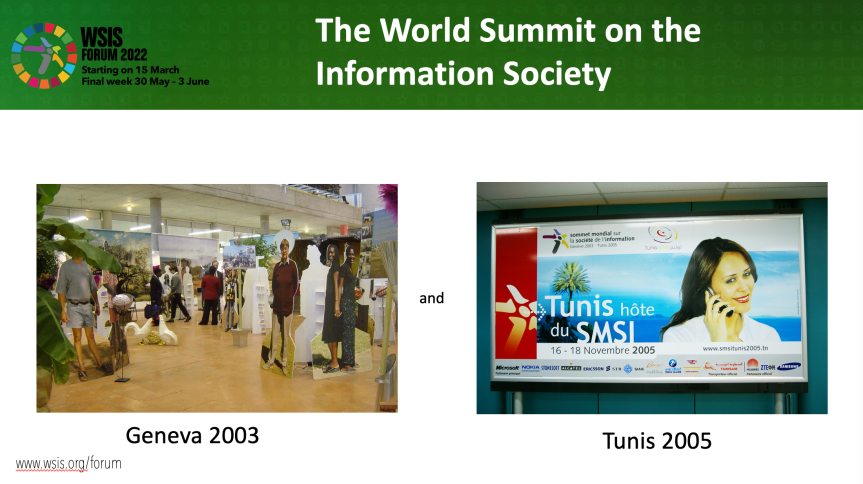
Members of the UNESCO Chair in ICT4D have been involved in the World Summit for the Information Society (WSIS) since its inception in 2003 (Geneva) and 2005 (Tunisia), and have participated in many of the subsequent Annual Forums held in Geneva.

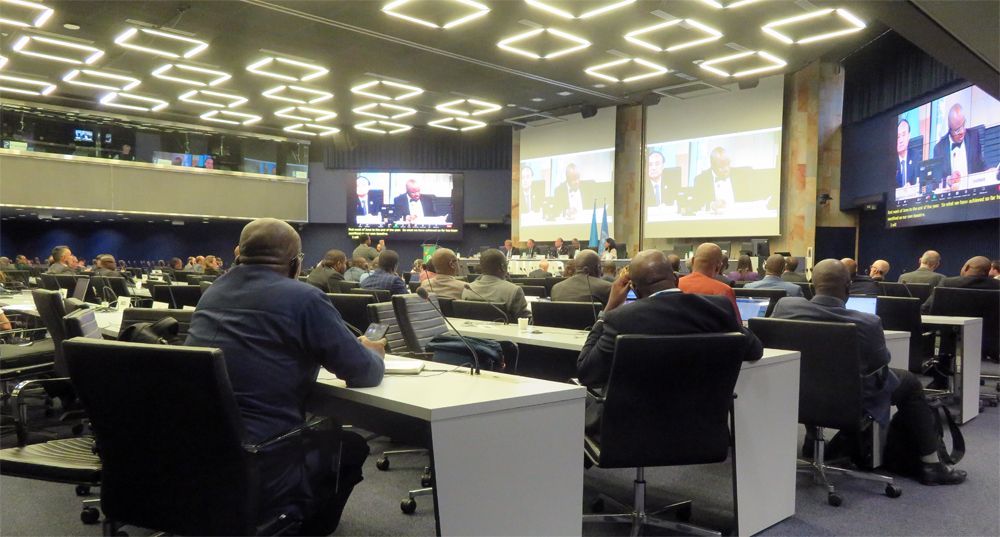
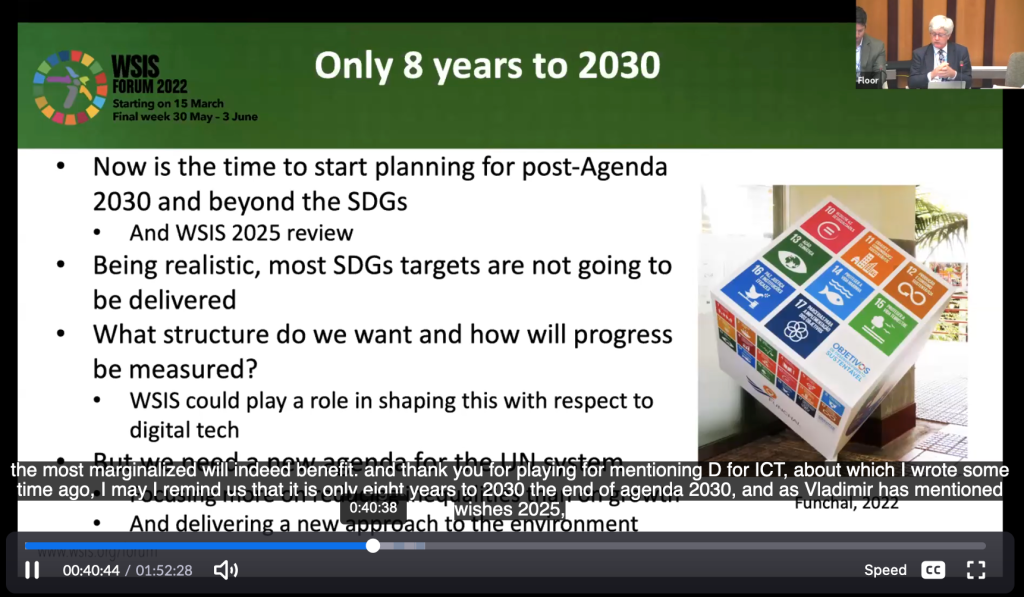
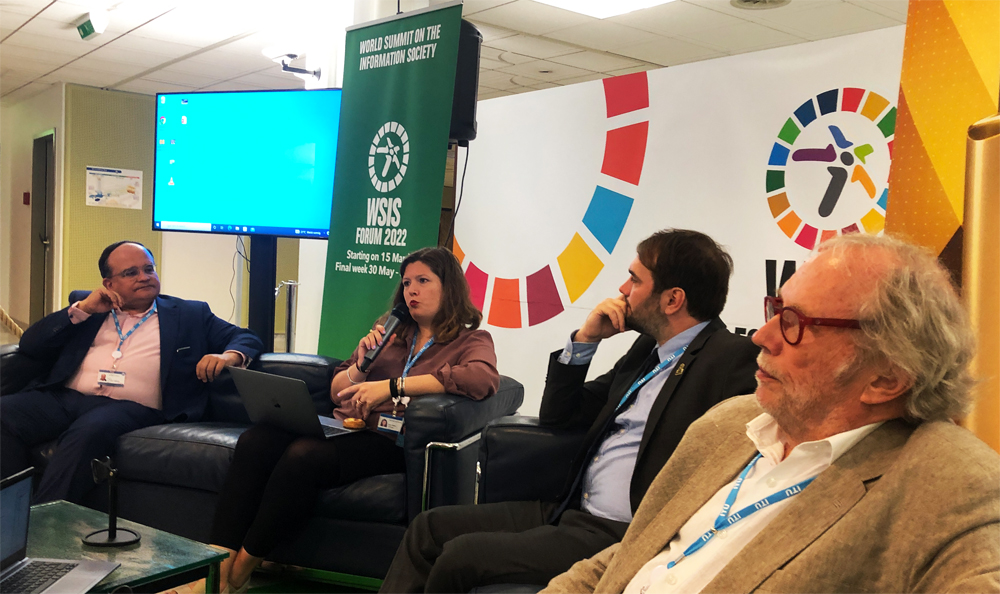
After two years of virtual WSIS events, it was a great pleasure to be back in Geneva during the week of 30th May-3rd June this year and excellent that so many of our Members, Affiliated Members and Partners could participate – both in person and online during the hybrid sessions. Congratulations to Gitanjali Sah and her team for putting on such an interesting and enjoyable week of events, which highlighted the great value of being there in person and holding conversations with old friends, as well as making new acquaintances.

Some of the highlights of our contributions included:

Paul Spiesberger (Affiliated Member and Chair of ict4d.at) served as a High Level Panel Facilitator throughout the event

Ahmed Imran (Affiliated Member and Director of RC-DISC at our partner, the University of Canberra), Tim Unwin (Chairholder) and others at the Academia Round Table on 1st June (Session 397)

Tim Unwin (Chairholder) Panellist in High-Level Dialogue on the Transforming Education Summit and the 2023 GEM Report on Technology and Education, 1st June (Session 298)

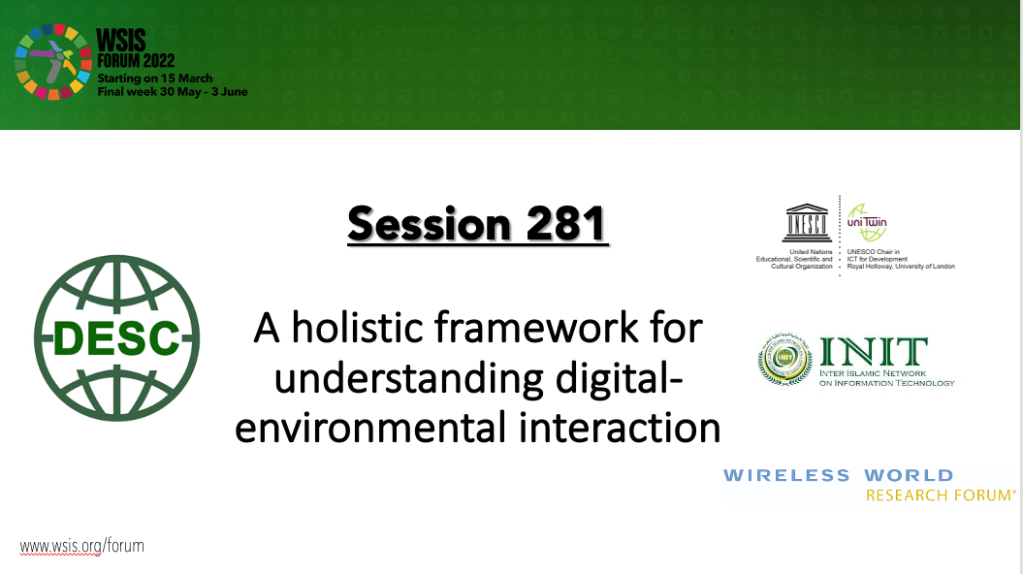
Providing summary of DESC Session 281 during HIghlights and Key Outcomes Session 489, 30th May

Tim Unwin (Chairholder) Panellist in Session 406 Academic perspectives on WSIS and the SDGs, 2nd June

Carlos Álvarez Pereira, Suay Ozkula, Paul Spiesberger, Knud Erik Skouby and Tim Unwin participating in Open Space Session on the Digital Environment System Coalition (Session 448), 2nd June

The WSIS Annual Forum remains one of the most valuable of the many duplicating and ovelapping digital technology events, conferences and summits organised by the UN and other agencies. It provides an important opportunity for governments, international agencies, companies and civil society to come together to discuss recent dvelopments in the broad field of digital tech for “development” focusing particularly around the Action Lines agreed almost 20 years ago by the UN system.

Members, Affiliated Members and Partners of the UNESCO Chair in ICT4D at Royal Holloway, University of London, look forward to paticipating in future WSIS events in the years to come.

Members of UNESCO Chair in ICT4D pledge commitments to Partner2Connect

The UNESCO Chair in ICT4D accepted an invitation in 2021 to join the UN’s Partner2Connect Coalition (P2C), which has been created with the aim of being “a leadership level platform to engage all stakeholders to mobilize and announce new resources, partnerships, and commitments to achieve universal and meaningful connectivity”. The ITU is the overall convener of the Coalition, working in close collaboration with the Office of the Secretary-General’s Envoy on Technology, the UN Office of the High Representative for the Least Developed Countries, Landlocked Developing Countries and Small Island Developing States (UN-OHRLLS), and line with the UN Secretary General’s Roadmap for Digital Cooperation.

The Coalition has four Focus Areas, and having participated actively in its meetings over the last six months, we are focusing our engagement primarily on the second of these: how the poor and marginalised can empower themselves through the use of digital technologies.

We are delighted to report that our pledge to Partner2Connect has now been validated. This is to advise, engage and involve Partner2Connect partners in delivering effective and empowering interventions with the world’s most marginalised people and communities.

We are offering the Coalition and its partners three main things:

  • An opportunity to engage directly in and contribute to our ongoing and future initiatives working with poor and marginalised communities and people who choose to use digital technologies for their empowerment. This will focus on five main areas:
    • Our work with migrants (especially in Nepal and South Africa as part of MIDEQ) to craft digital interventions that will reduce the inequalities associated with migration (led by Hari Harindranath and Maria Rosa Lorini)
    • Our work with people with disabilities, especially with our partner the Inter Islamic Network on IT throughout the Islamic world (led mainly by Akber Gardezi and Tahir Naeem)
    • Our work through TEQtogether on changing men’s attitudes to women and digital tech, especially in patriarchal societies (with the support of ICT4D.at, and led by Tim Unwin, Liz Quaglia and Paul Spiesberger)
    • Indigenous peoples and small island developing states (SIDS), especially with our partners RC-DISC at the University of Canberra and ISITI at the University of Malaysia Sarawak (UNIMAS) (involving Roger Harris and Ahmed Imran)
    • Work on entrepreneurship. This has mainly been focused since 2018 in Kazakhstan and Central Asia on empowering creative local start-ups with entrepreneurship skills for growth and development (led by Endrit Kromidha)
  • Contributing expertise in research and practice to the further conceptual development of Focus Area 2 so that all activities are developed in accordance with the latest understanding of inclusive, equal and safe access and use of ICTs for all. We recognise that there are many differing views about empowerment, and we relish the opportunity to engage with other partner organisations to develop shared understandings of benefit to P2C and to the world’s least connected peoples. 
  • Offering training in empowerment theory and practice to partners within P2C. We look forward to the opportunity to engage actively with other P2C partners through workshops and other forms of tailored training to share our experiences of delivering digital interventions with and for the most marginalised, focusing especially on the notion of empowerment that lies at the heart of Focus Area 2.

We are one of the few academic entities yet to pledge commitments to Partner2Connect, and look forward to continuing to engage with and contribute to its actitivites, especially helping to ensure that the world’s poorest and most marginalised do indeed benefit from the increased global connectivity that the Coalition seeks to provide.


Please use our Contacts Page should you wish to find out more or to work with us in driving these pledges forward

The UNESCO Chair in ICT4D at ITU’s Telecom World 2019 in Budapest

This year’s Telecom World event convened by the ITU and hosted by the Hungarian Government from 9th-12th September in Budapest was one of the most interesting and useful such events in recent years.  The Forum programme contained many thought provoking presentations and discussions, and the government’s hospitality was generous, featuring an inspiring musical evening and a drone display over the Danube.  There was also a very diverse exhibition, with particularly impressive displays from China about the Digital Silk Road.

David
David Banes speaking at ITU Telecom World

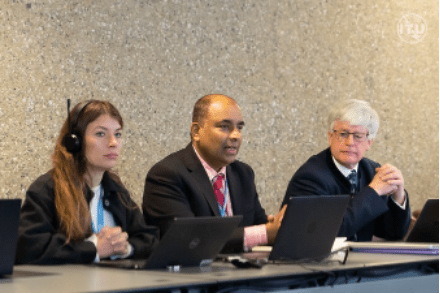
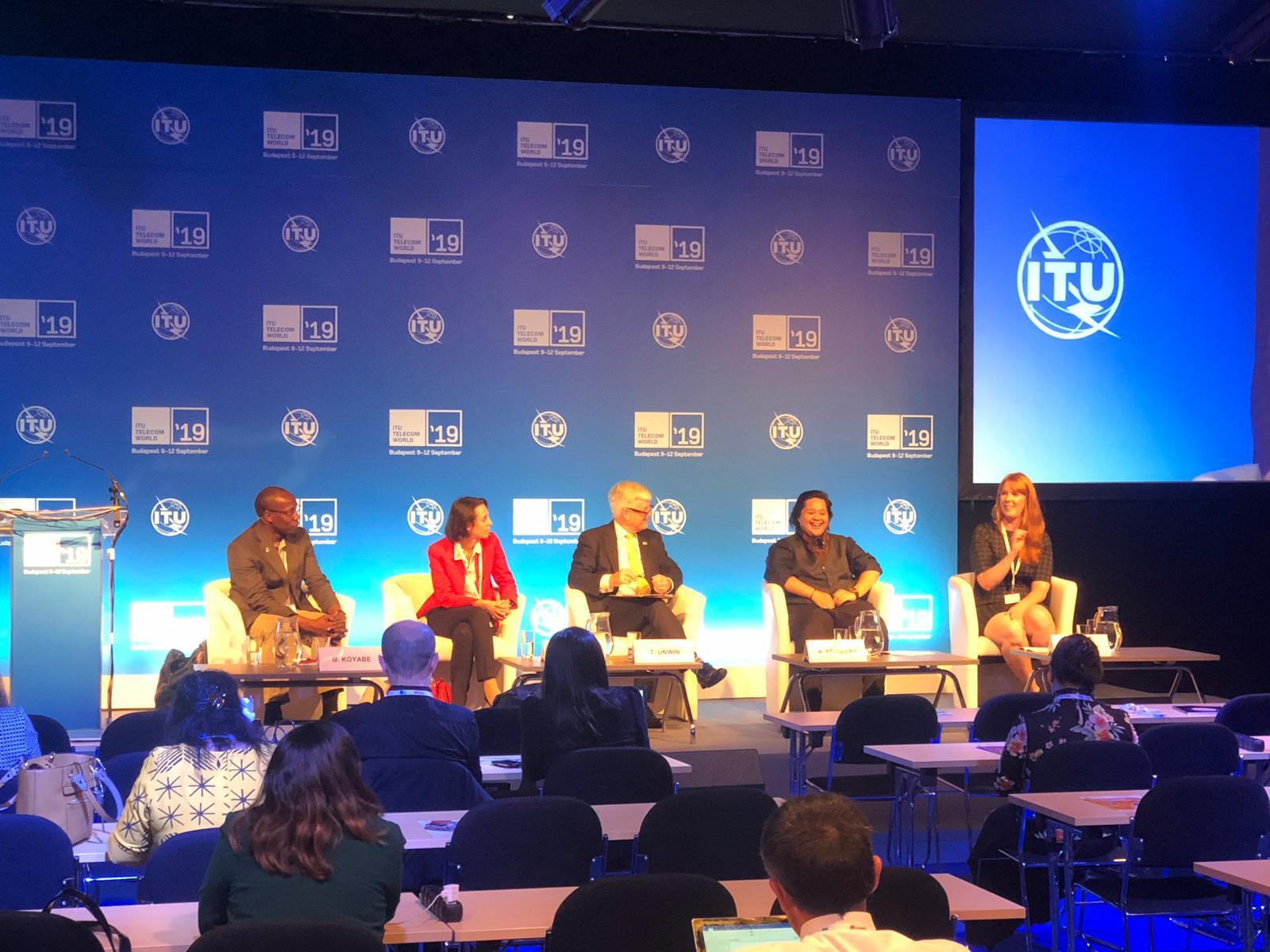
The UNESCO Chair in ICT4D was delighted to participate in and contribute to several sessions.  In particular, David Banes was a speaker in an important session on Accessibility matters: dismantling the barriers of disability with technology on 12th September.  This session noted that technology can enable better access to health, education, government services and the job market for all those affected by disabilities, but also asked  what more can be done, in both emerging and developed markets? It explored how existing solutions can be scaled and adapted, and sought to identify whether there is  a business case for digital inclusion solutions?

23eaf6ed-e0e1-456d-915f-e10a2f72881a
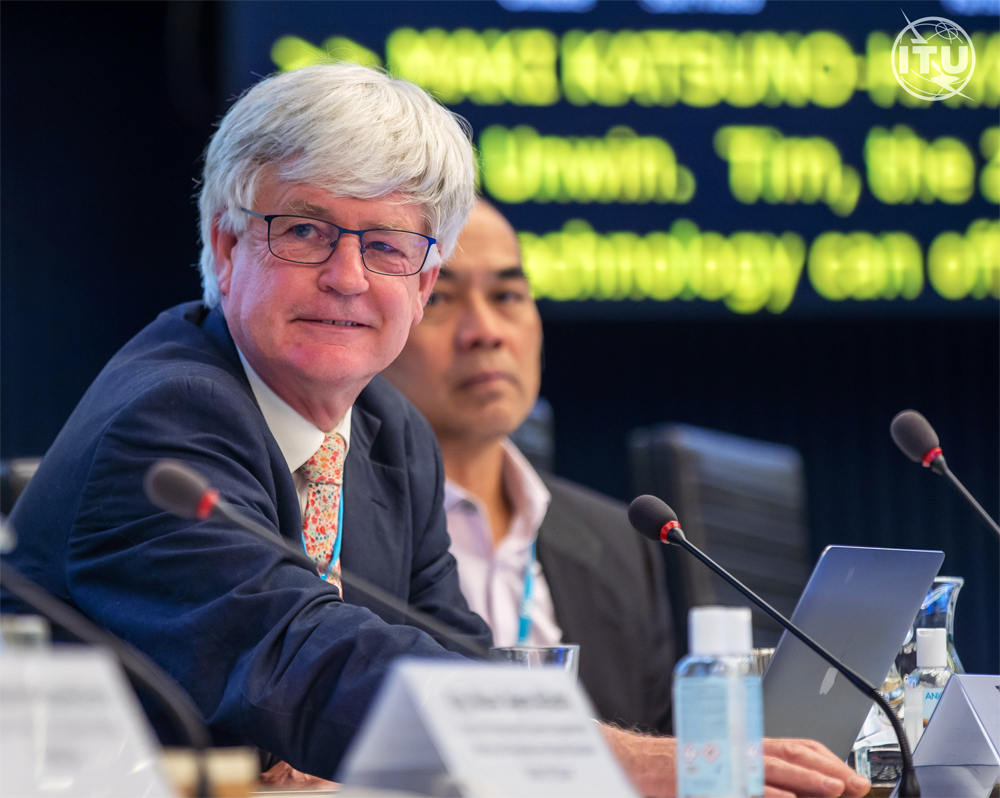
Tim Unwin moderating AI and gender session (Source: ITU)

Our Chairholder (Tim Unwin) also moderated two sessions, on Diversity by design: mitigating gender bias in AI and the launch of the ITU-CISCO Digital Transformation Center Initiative, as well as speaking in the Huawei sponsored session on Fixed wireless technology for affordable broadband development.  These provided a good opportunity to highlight the work of the UNESCO Chair in ICT4D and also our TEQtogether initiative changing men’s attitudes to women in technology.

TEQtogether workshop at WSIS 2019: changing men’s attitudes and behaviours to women and technology

TEQtogether 1Members of TEQtogether, working with colleagues in the UNESCO Chair in ICT4D, were delighted to have convened a workshop on 11th April at WSIS 2019 in Geneva on Changing men’s attitudes and behaviours to women and technology.  This represents part of Royal Holloway, University of London’s commitment to the global EQUALS partnership designed to increase gender digital equality.  The session began with three short opening presentations:

  • An overview of the work of TEQtogether
    • informing men about how their actions impact digital gender inequality (see  Resources and Other Initiatives pages);
    • Identifying actions that men can take to enhance gender equality in the tech workplace (see  Guidance Notes)
    • Recommending actions that men can take to reduce digital violence against women
    • Encouraging reverse mentoring through which women mentor men at all levels in tech organisations.
  • An introduction to TEQtogether’s Guidance Notes by Paul Spiesberger (ict4d.at), focusing especially on guiding for when running a computer programing workshop
  • An overview of work on the use of mobiles for sexual harassment by Bushra Hassan (International Islamic University, Islamabad).

TEQtogether 2The main part of the workshop then built on these presentations to discuss what needs to be done to change men’s and boys’ attitudes and behaviours towards women and girls in technology.  The co-created mindmap developed during the workshop is illustrated below (link to detailed .pdf file of the mindmap).2 Changing men’s attitudes and behaviours to women & technologyThe four most important issues identified that require attention were:

  • Education (especially gender sensitivity materials and unconscious bias)
  • Family roles (especially in early life)
  • The resocialization of men
  • Tech industry and employment

A second tier of issues focused on:

  • Cultural change – takes time
  • Diversity and inclusion
  • Awareness raising
  • Role models (both men and women)
  • Virtual reality (so that men can experience the difficulties faced by women)
  • Legislation
  • Practical women’s empowerment.

TEQtogether is committed to take forward actions that will make a difference to all of the above, through its guidance notes and future workshops.

Digital technologies and accessibility: from rhetoric to reality – at WSIS 2019

Accessibillity 1Members of the UNESCO Chair in ICT4D and our colleagues at the Inter-Islamic Network on Information Technology (INIT) were delighted to have convened and hosted the first session on Accessibility Day (8th April) at this year’s tenth anniversary WSIS Annual Forum held in Geneva.  The theme was “Digital technologies and accessibility: from rhetoric to reality”, and our session began with three short opening presentations:

Building on these inspiring presentations, participants then turned their attention to discussing what still needs to be done to turn rhetoric into reality with respect to the empowerment of people with disabilities through ICTs.  This was captured in the mind map below (link to a detailed and expandable .pdf file of the mind map):

What must we do to turn rhetoric into reality so that people with disabilities can be empowered through digital technologies

This discussion highlighted the continuing need for work in ten main areas:

  • Holistic approaches
  • Enabling voices of people with disabilities
  • Policies and legislation
  • Partnerships
  • Leadership
  • Differentiation between universal inclusion and assistive technologies
  • Training, awareness and capacity building
  • Building appropriate technologies
  • Finances
  • Delivering commitments

Working together, we can all contribute to the empowerment of people with disabilities (details of some of the UNESCO Chair in ICT4D’s activities and resources supporting people with disabilities).

UNESCO Chair in ICT4D at WSIS Annual Forum 2019

Screenshot 2019-03-27 at 22.33.08.pngMembers of the UNESCO Chair in ICT4D and TEQtogether are playing an active role in this year’s WSIS Annual Forum between 8th and 12th April in Geneva.  We are delighted to be involved in the following sessions:

  • Workshop with the Inter-Islamic Network on IT on Digital technologies and accessibility: from rhetoric to reality as part of the special WSIS Accessibility day on Monday 8th April (Room T103, 0900-10.45)
  • Moderating Academia Round Table Action Line C4 Facilitation Meeting on Capacity Building, New teaching approaches for higher learning in the digital era,  (Room L2, 11.00-13.00)
  • Moderating High Level Policy Session on Gender Mainstreaming on Wednesday 10th April (Session 10, Room 2 CICG, 10.00-11.00)
  • Panellist in EQUALS session on How ICTs could be useful tools against gender discrimination, Thursday 11th April (Room C2, 11.00-13.00)
  • TEQtogether workshop on Changing men’s attitudes and behaviours to women & technology, with the New York Academy of Sciences and Global Scribes, Thursday 11th April (H2, 14.30-16.15) as part of our contribution to EQUALS.
  • Delivering one of the inaugural WSIS TALKX

Please do join us for these sessions.  We intend to try to make them as interactive and participatory as possible!