Further new material for migrants shared in Nepal through our partners ACORAB and CIN

Following our last update on 14th February ACORAB, the Association of Community Radio Broadcasters, Nepal, and CIN, their Community Information Network, have broadcast a further radio programme on 17th February that builds on some of the resources we developed with our partners in Nepal, and sharing information about their activities.

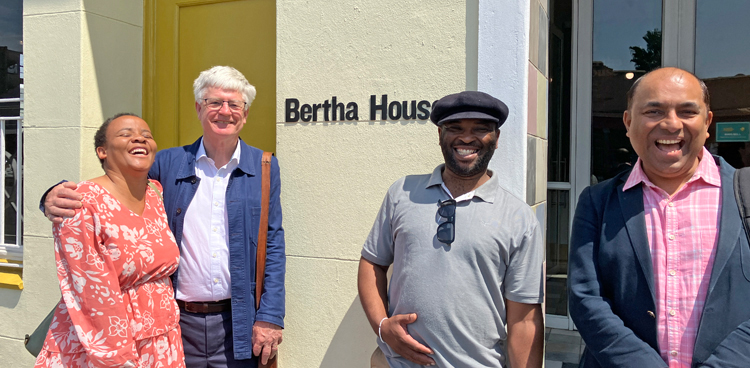
This second segment centred on the secure utilization of information technology for safe migration, and featured Swarna Kumar Jha, the Coordinator of the National Network for Safe Migration-NNSM Nepal, and Sindhu Aryal, the Secretary General of Pourakhi Nepal, both of whom have worked tirelessly with us over the last couple of years in helping to develop the https://pardesi.org.np portal and training resources on the safe, wise and secure use of digital tech (as part of the work of the MIDEQ Hub funded by UKRI GCRF). It was broadcast on February 17, 2024, immediately following the Sajha Khabar news bulletin at 7 am, as part of their regular programme “Sajha Nepal”. It has already garnered 243 views on their Facebook channel. However, “Sajha Khabar” is also distributed to over 300 community radio stations throughout Nepal, reaching over 6.7 million people, which will significantly extend the reach of the social media channel for this episode.

The programme also incorporates vox pops from survivors who have recounted their challenges while employed as migrant workers, and a report presented by Ms. Sushila Shrestha (from the 19:10-minute mark to the 22:20-minute mark) greatly enhances the programme’s interest.

Listen to the programme at https://fb.watch/qlC97bx-gA.

DWAZ uses our resources to deliver online training on safe, wise and secure use of digital tech to 1911 of their members in Southern Africa

We are delighted to hear that the training resources on safe, wise and secure use of digital tech by migrants, originally developed in Nepal (as part of the MIDEQ Hub, funded by UKRI GCRF) and reversioned specifically for women in Southern Africa have recently been used by our good friends at the Domestic Workers Association Zimbabwe (DWAZ) to deliver training to 1911 of their members in Zimbabwe, South Africa, Botswana and Namibia. DWAZ was set up by Mendy Lusaba in 2021 (see this interview about her in Lionesses of Africa), and it has a centre in Zimbabwe that offers training in housekeeping, cooking and baking, gardening and care work. They also have a domestic worker netball team for the mental health of domestic workers. 

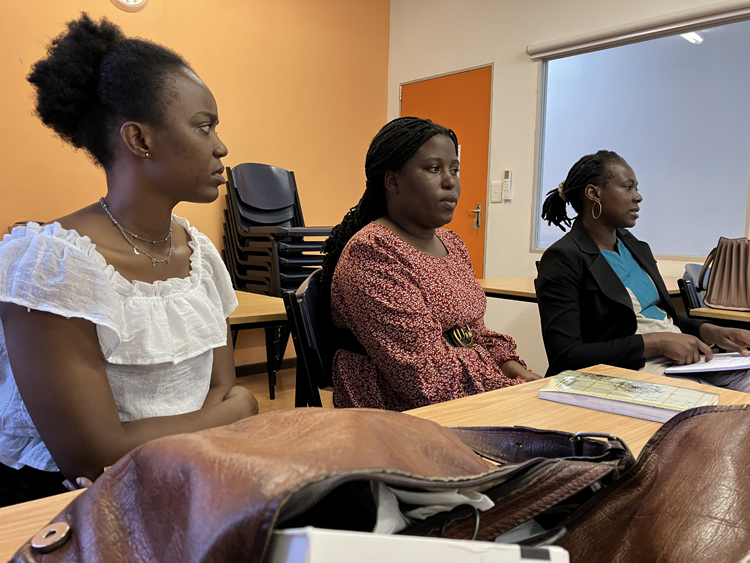
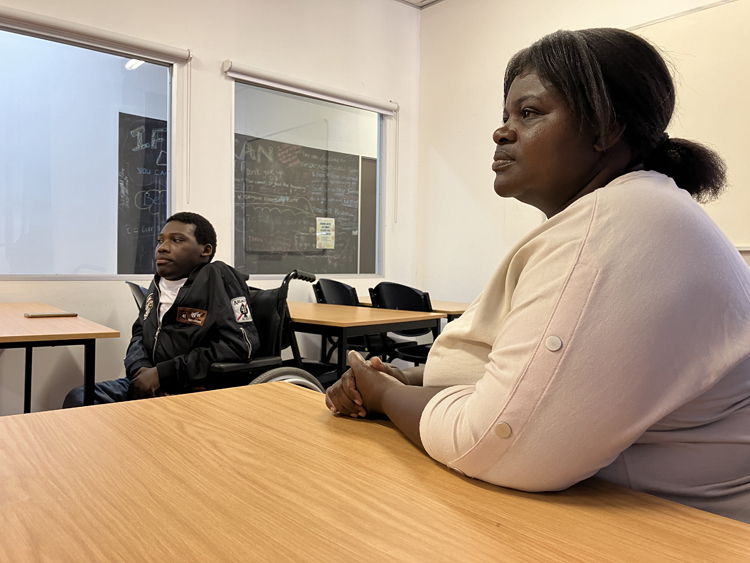
In January this year, we met up with Mendy in Johannesburg, where she joined the launch of our work in South Africa that had trained migrants in video making amd the safe use of digital tech, and she made the astute observation that little digital literacy training available in the region includes sessions on the safe, wise and secure use of digital tech (watch this short video where she speaks about this). Working with her and others in South Africa, we therefore reversioned our resources specifically so that they focused on the needs of women and girl migrants there, and it is great to see them being used in this way. The resources include a slide deck and guidance notes on how they can be used and adapted by trainers, and is available freely under a CC BY-SA licence. We are continuing to develop this and we are currently working in Brazil to produce a Portuguese language version that can also be adapted for countries such as Mozambique and Angola.

Everyone is vulnerable to the many harms enabled through the use of digital tech, and it is very important that these are mitigated so that people can indeed benefit from them. Women and girls in Southern Africa are particularly vulnerable to online sexual harassment, scams, bullying, being tracked, exploitation, fake news and identity theft. The training deck is designed for people with little previous knowledge about using digital tech, and includes specific guidance on how to avoid these harms. It was developed together with migrants and migrant oprganisations, and combines this practical approach with existing good practices recommended in the relevant literature. It is divided into four main sections: an introduction covering digital literacy basics, the safe use of digital tech, how to use these technologies wisely, and how to use them privately and securely, and it also includes a short list of recommendations for further reading.

Example of final slide from the training resources

Should you use these resources, please let us know and share suggestions for how they could be improved, and don’t forget to satisfy the requirements of the CC BY-SA licence so that iothers can also benefit from your work.