What migrants want: digital tech, inequality and migration’ – MIDEQ WP9 convenes thematic workshop at WSIS 2023, Geneva.

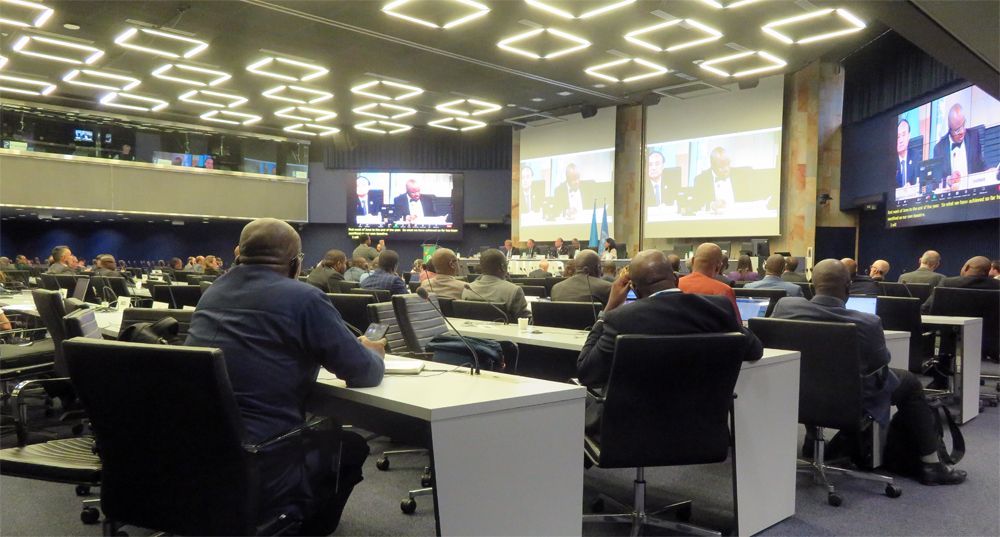
Following the success of our online thematic workshop held during the World Summit on the Information Society (WSIS) 2022 meeting, the MIDEQ WP9 (digital tech, inequality and migration) team convened a hybrid thematic workshop at the WSIS Annual Forum 2023 in Geneva on 17th March examining ‘what migrants want’ in relation to the use of digital technologies as opposed to the numerous apps that are supposedly designed for them. Building on our ongoing research (see https://ict4d.org.uk/technology-inequality-and-migration/ and https://www.mideq.org/en/themes/digital-technologies-and-inequality/), we explored how co-design with migrants can help craft digital interventions that can usefully address migrant-defined inequalities.
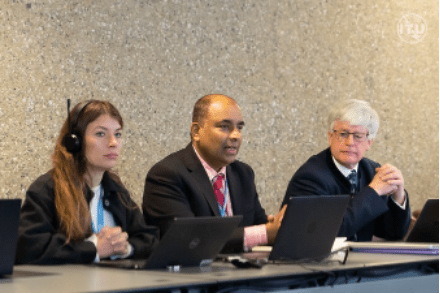
The session, which aligned especially with SDG10 and WSIS Action Lines C3, C4, C5, C7(iii, iv,v), C8 and C10, was structured around our digital interventions from Nepal and South Africa using a series of short-form videos ‘created by migrants for migrants’ as a framing device for the discussion. The contributions highlighted many inequalities faced by migrants and how digital tech can meaningfully address them as well as how digital tech can support personal life choices, offer networking opportunities, and become a peer-to-peer learning tool. The overarching theme was the need for all actors at the interface of digital tech and migration to be mindful of the need to ensure the safe, secure and wise use of digital tech by migrants.

Despite increasing evidence of the challenges to the beneficial use of digital tech by vulnerable migrants, actors such as tech companies, international and local organisations continue to design technologies aimed at migrants without due regard to their unintended consequences. International organisations and fora such as WSIS that are at the forefront of digital inclusion must recognise not just the opportunities offered by digital tech for migrants but also the risks and harms associated with them. This is especially important given the pervasive structural inequalities and limited digital capabilities that characterise many migrant contexts.

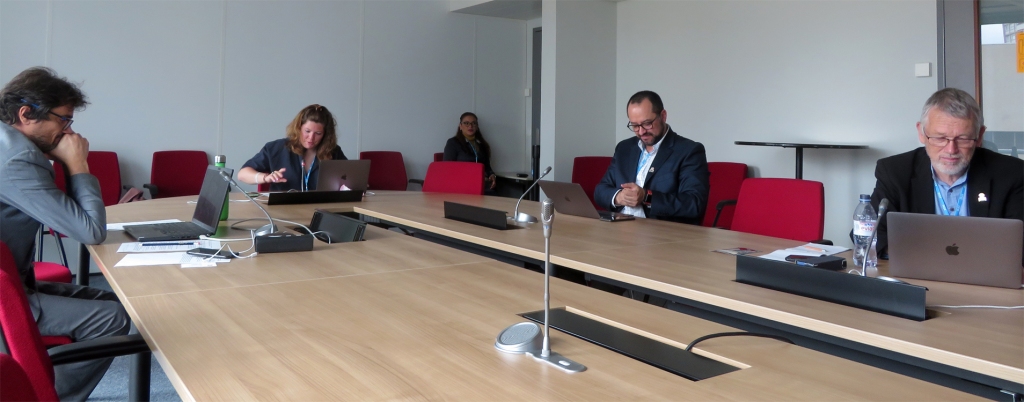
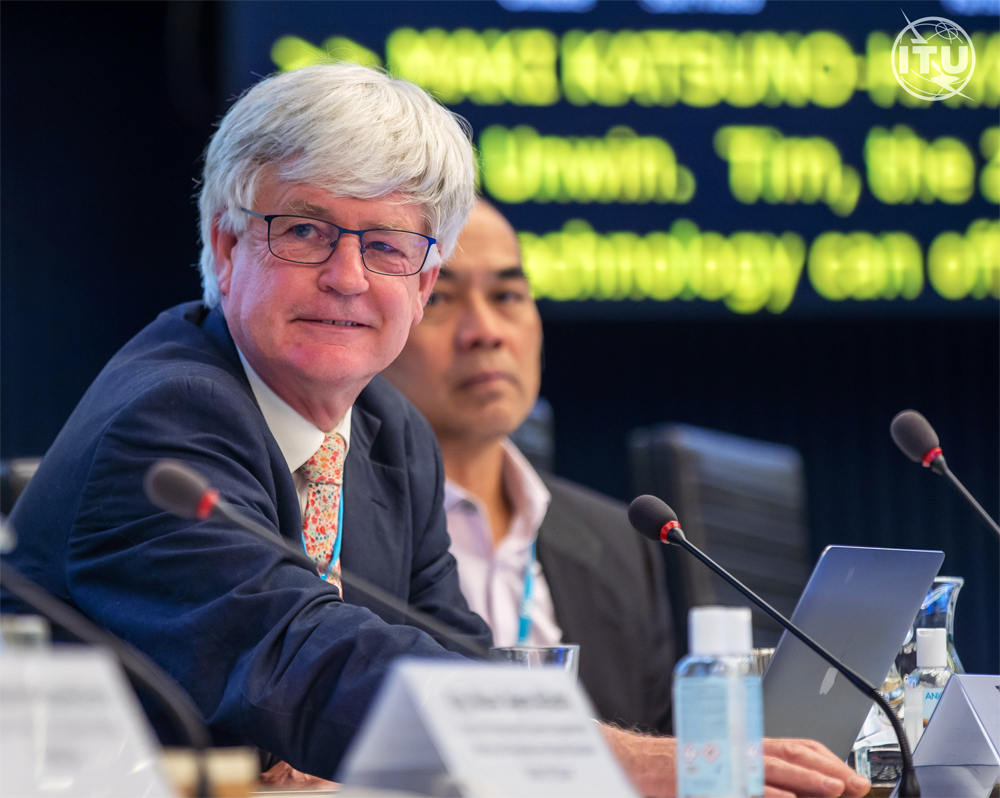
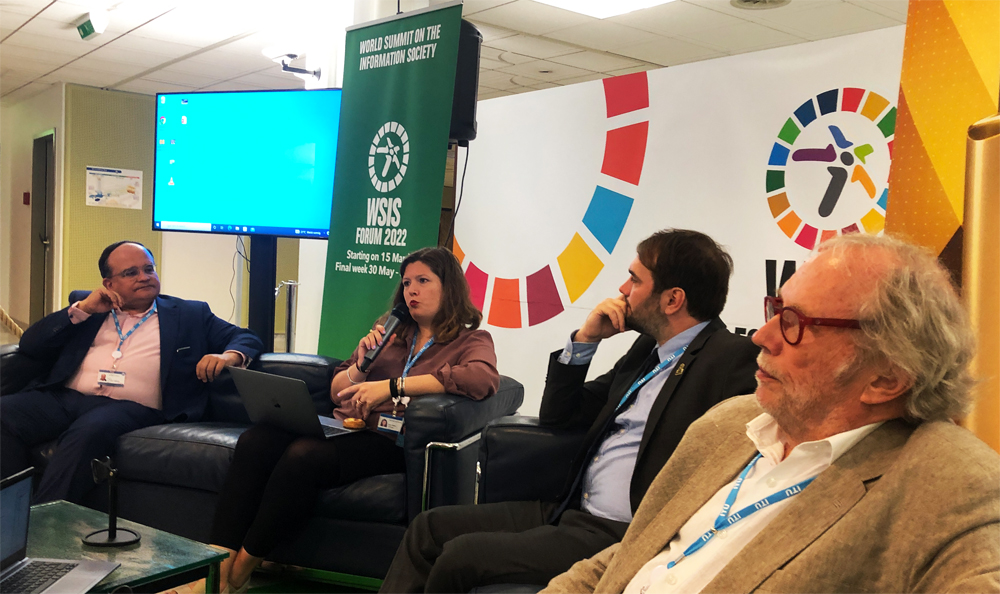
WP9 co-lead Prof G Hari Harindranath led the session with Prof Tim Unwin and Dr Maria Rosa Lorini while Bryce Hartley from GSMA (online) and Julien Varlin from ILO Geneva served as discussants. The highly interactive hybrid session was attended by senior government officials and representatives from international organisations, CSOs and tech companies as well as researchers.

We also used the in-person WSIS Forum in beautiful Geneva as an opportunity to discuss pathways to impact for our work with colleagues at IOM and ILO.

Prof G. ‘Hari’ Harindranath

20/3/2023
The UNESCO Chair in ICT4D at the WSIS Annual Forum 2023

We are delighted that members of the UNESCO Chair in ICT4D at Royal Holloway, University of London, are involved in the following four sessions at this year’s WSIS Annual Forum in Geneva between 13th and 16th March 2023 (listed in chronological order):

  • Session 184: International Conference on Digital Transformation of Education: Road towards SDG 4 (Guest of Honour and Panellist), Thursday 16 March 09.00-09.45
  • Session 403: DESC Experiencing digital environment interactions in the “place” of Geneva (convenor) – this is a discussion-walk around Geneva commencing at the main entrance of CICG on Thursday 16 March from 16.00-18.30 (more details)
  • Session 204: DESC Reimagining the Interface between Digital Tech and the Physical Environment (convenor), Friday 17 March, 10.00-10.45 (more details)
  • Session 329: MIDEQ WP9 What migrants want: digital tech, inequality and migration (convenor), Friday 17 March, 11.00-11.45

Please do join us at these sessions, the last two of which will also be available for those wishing to join online. More information is available on the DESC sessions here.

Members of the UNESCO Chair in ICT4D at in-person WSIS 2022

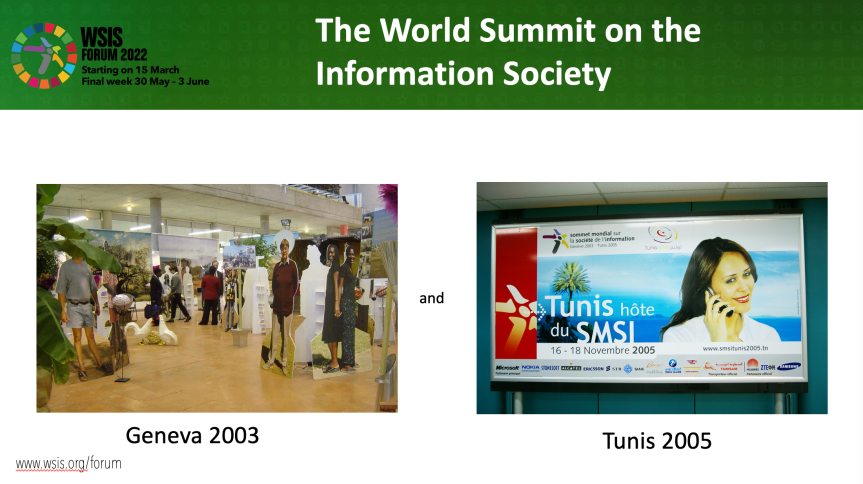
Members of the UNESCO Chair in ICT4D have been involved in the World Summit for the Information Society (WSIS) since its inception in 2003 (Geneva) and 2005 (Tunisia), and have participated in many of the subsequent Annual Forums held in Geneva.

After two years of virtual WSIS events, it was a great pleasure to be back in Geneva during the week of 30th May-3rd June this year and excellent that so many of our Members, Affiliated Members and Partners could participate – both in person and online during the hybrid sessions. Congratulations to Gitanjali Sah and her team for putting on such an interesting and enjoyable week of events, which highlighted the great value of being there in person and holding conversations with old friends, as well as making new acquaintances.

Some of the highlights of our contributions included:

Paul Spiesberger (Affiliated Member and Chair of ict4d.at) served as a High Level Panel Facilitator throughout the event

Ahmed Imran (Affiliated Member and Director of RC-DISC at our partner, the University of Canberra), Tim Unwin (Chairholder) and others at the Academia Round Table on 1st June (Session 397)

Tim Unwin (Chairholder) Panellist in High-Level Dialogue on the Transforming Education Summit and the 2023 GEM Report on Technology and Education, 1st June (Session 298)

Providing summary of DESC Session 281 during HIghlights and Key Outcomes Session 489, 30th May

Tim Unwin (Chairholder) Panellist in Session 406 Academic perspectives on WSIS and the SDGs, 2nd June

Carlos Álvarez Pereira, Suay Ozkula, Paul Spiesberger, Knud Erik Skouby and Tim Unwin participating in Open Space Session on the Digital Environment System Coalition (Session 448), 2nd June

The WSIS Annual Forum remains one of the most valuable of the many duplicating and ovelapping digital technology events, conferences and summits organised by the UN and other agencies. It provides an important opportunity for governments, international agencies, companies and civil society to come together to discuss recent dvelopments in the broad field of digital tech for “development” focusing particularly around the Action Lines agreed almost 20 years ago by the UN system.

Members, Affiliated Members and Partners of the UNESCO Chair in ICT4D at Royal Holloway, University of London, look forward to paticipating in future WSIS events in the years to come.

UNESCO Chair in ICT4D signs partnership with the University of Canberra

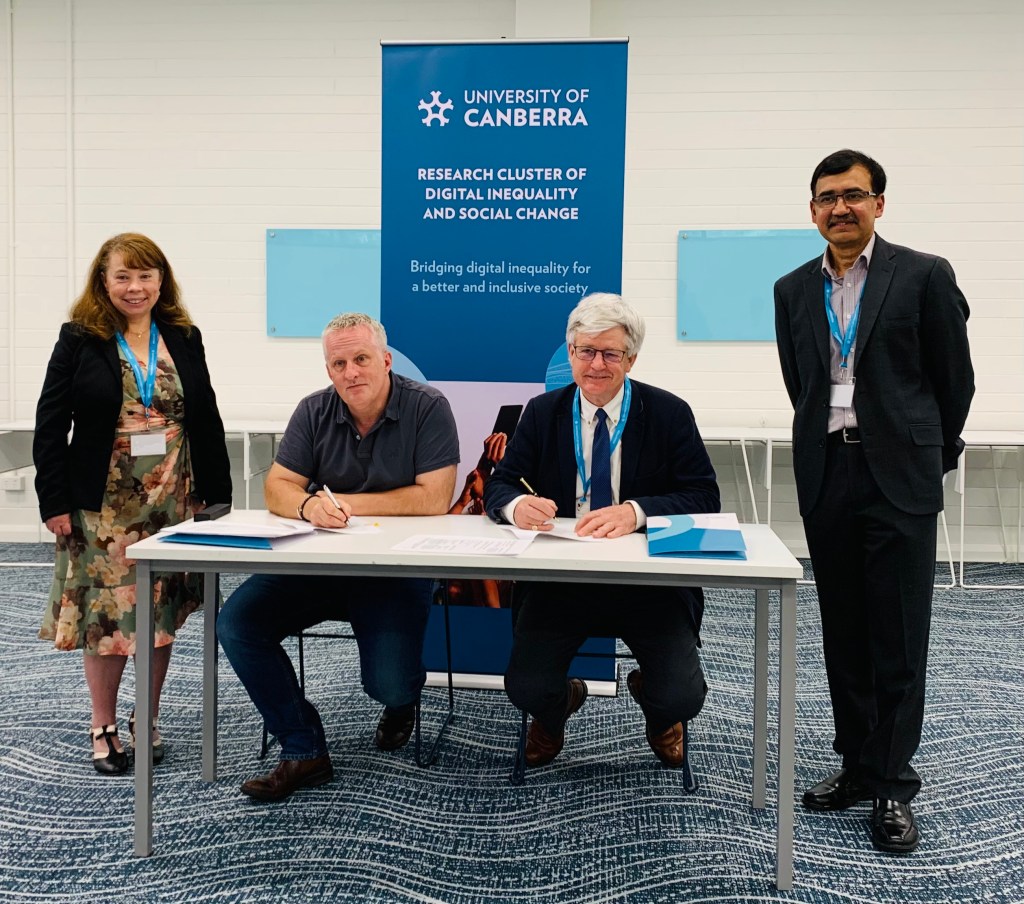
Paddy Nixon, Vice Chancellor and President of the University of Canberra, signing the MoU with Tim Unwin, Chairholder of the UNESCO Chair in ICT4D at Royal Holloway, University of London

The UNESCO Chair in ICT4D signed a partnership Memorandum of Understanding with the University of Canberra on 28th March during the International Symposium on Digital Inequality and Social Change (ISDISC) convened by the University’s Research Cluster for Digital Inequality and Social Change (RC-DISC), led by Dr. Ahmed Imran, who is also an Affiliated Member of the UNESCO Chair in ICT4D.

The MoU provides the basis for extensive collaboration between the two research groups, focusing particularly on:

  • Research collaboration
  • Workshop and conference convening
  • Research visits and exchanges, especially for early career researchers
  • Collaborative grant applications
  • Implementation of practices to reduce digital inequalities
  • Policy recommendations

This closely reflects the University of Canberra’s interests in developing research in the field of ICT4D, building its transnational networks, and increasing its reputation in digital inequality research and practice, while also reinforcing the UNESCO Chair in ICT4D’s commitment to crafting partnerships with cognate bodies, developing new ways to reduce digital inequalities, and developing collaborative research activities. It will also provide opportunities to build closer collaboration between colleagues from other disciplines in both institutions.

ISDISC was a hybrid event held at the Univeristy of Canberra and brought together researchers and practitioners from diverse disciplines across Australia, with many virtual contributions also coming from elsewhere in the world.

The International Symposium on Digital Inequalities and Social Change being opened by the Executive Dean of the Univeristy of Canberra’s Faculty of Science and Technology, Prof. Janine Deakin, with Dr. Ahmed Imran in attendance.
Participants at the ISDISC conference held at the University of Canberra, 28th-29th March 2022

Tim Unwin’s keynote address at ISDISC on Marginalisation and empowerment: exploring digital inequalities is available here.

Draft progamme for the launch of Education for the Most Marginalised

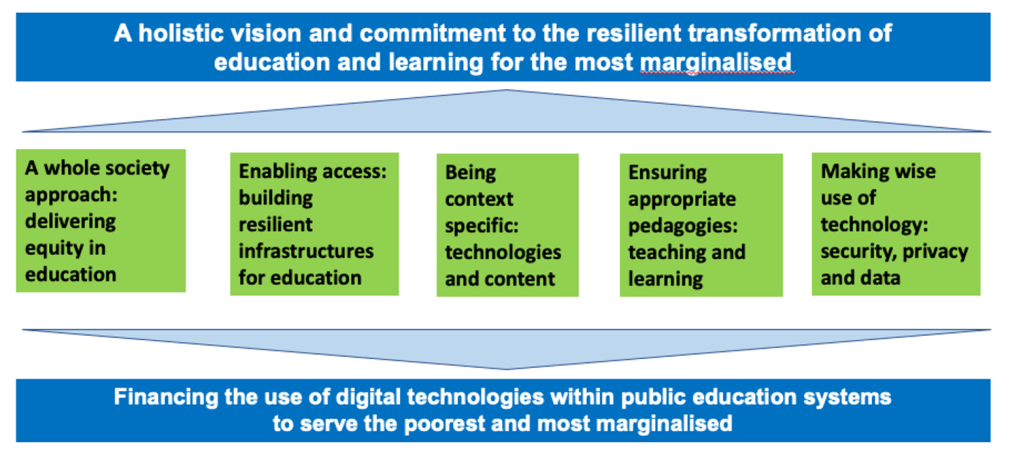
We are excited to release further details of the programme for the launch of the report on Education for the Most Marginalised post-COVID-19: Guidance for governments on the use of digital technologies in education which will be from 2pm-4pm GMT on Friday 18th December. Please register here to receive joining instructions. Further details about the initiative are available here.

  • Opening: Molly Jamieson Eberhardt (Program Director R4D, and Director EdTech Hub)
  • Welcome: Michael Trucano (Global Lead for Innovation in Education and Senior Education and Technology Policy Specialist, World Bank)
  • Introduction to the report: Tim Unwin (Chairholder, UNESCO Chair in ICT4D and Co-Founder of TEQtogether)
  • High-level panel:
  • Video reflections:
    • Amina Umohoza (Digital Opportunity Trust, Youth Leadership Advisory Board, Rwanda; CEO of Saye Company and the Founder of Dukataze)
    • Helen Crompton (Associate Professor Teaching and Learning, Old Dominion University)
  • Insights on the report’s Guidance Notes:
    • Ensuring resilient connectivity: Christopher Yoo (John H. Chestnut Professor of Law, Communication, and Computer and Information Science at the University of Pennsylvania Law School, and the founding director of the Center for Technology, Innovation, and Competition), Leon Gwaka (University of Pennsylvania) and Müge Haseki (University of Pennsylvania)
    • Keeping Safe and Local Context: Azra Naseem (Director, Blended and Digital Learning, Aga Khan University, Pakistan)
    • Small Island States and the importance of sustainable electricity: Javier Rua (former Director of Public Policy for Sunrun; former Chairman, Puerto Rico Telecommunications Regulatory Board)
    • The importance of OER and Creative Commons: Paul West (Senior Education Adviser, West and Associates; and South Africa Chapter Lead, Creative Commons)

The final programme, including any revisions will be available by 16th December.

Speakers will talk for a maximum of 5 minutes each, enabling there to be a lively and forthright discussion afterwards. We welcome all those committed to empowering the poorest and most marginalised through the use of digital technologies in education to join the conversation, and work together to implement the report’s recommendations.

Funded by the FCDO and World Bank through the EdTech Hub.

The UNESCO Chair in ICT4D at the virtual IGF 2020

Members of the UNESCO Chair in ICT4D were delighted to participate in the virtual IGF 2020 gathering earlier this month – although most of us would have much preferred actually to have been on the ground in Katowice enjoying Polish hospitality and the opportunity to network and discuss ideas together face-to-face! Thanks to everyone who made this event possible and so successful.

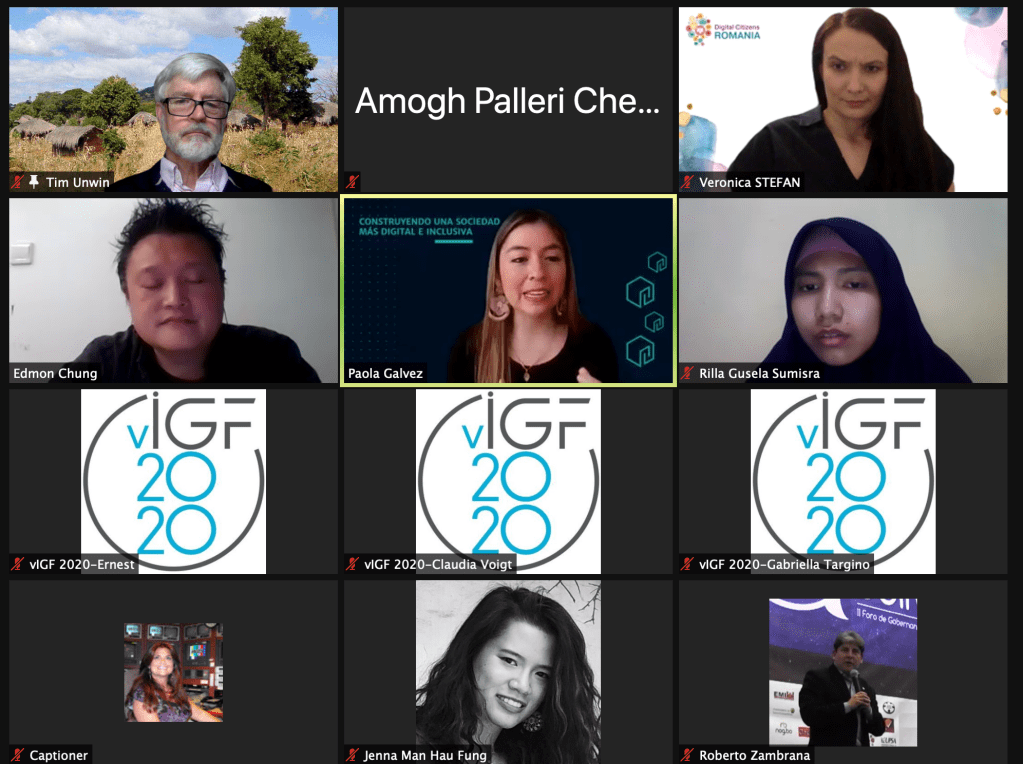
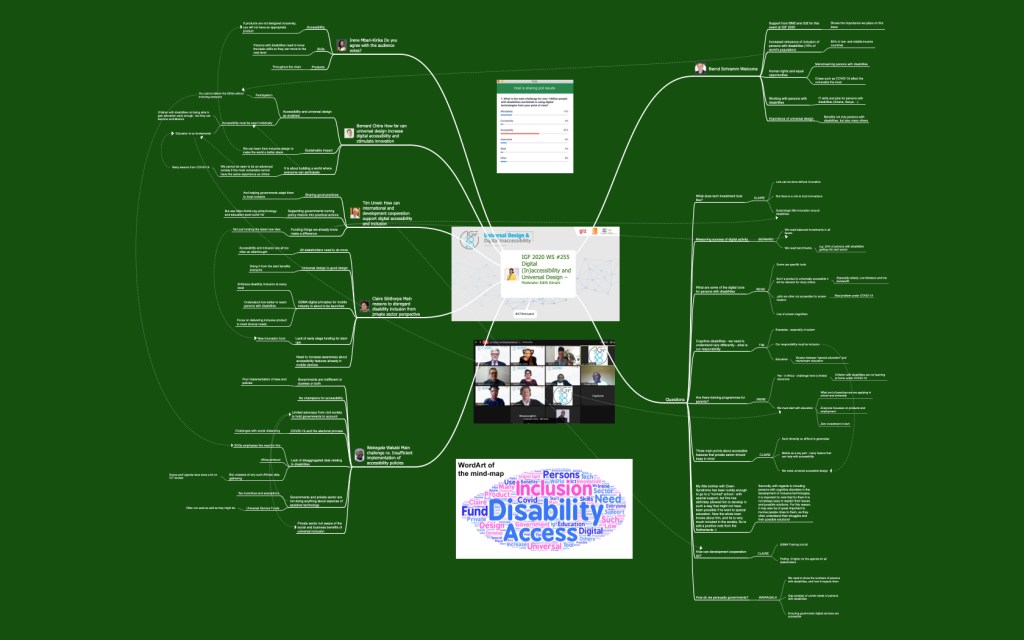
In particular the Chairholder participated in the following three sessions:

The Virtual ICT4D Non-Conference 2020 Summary Report

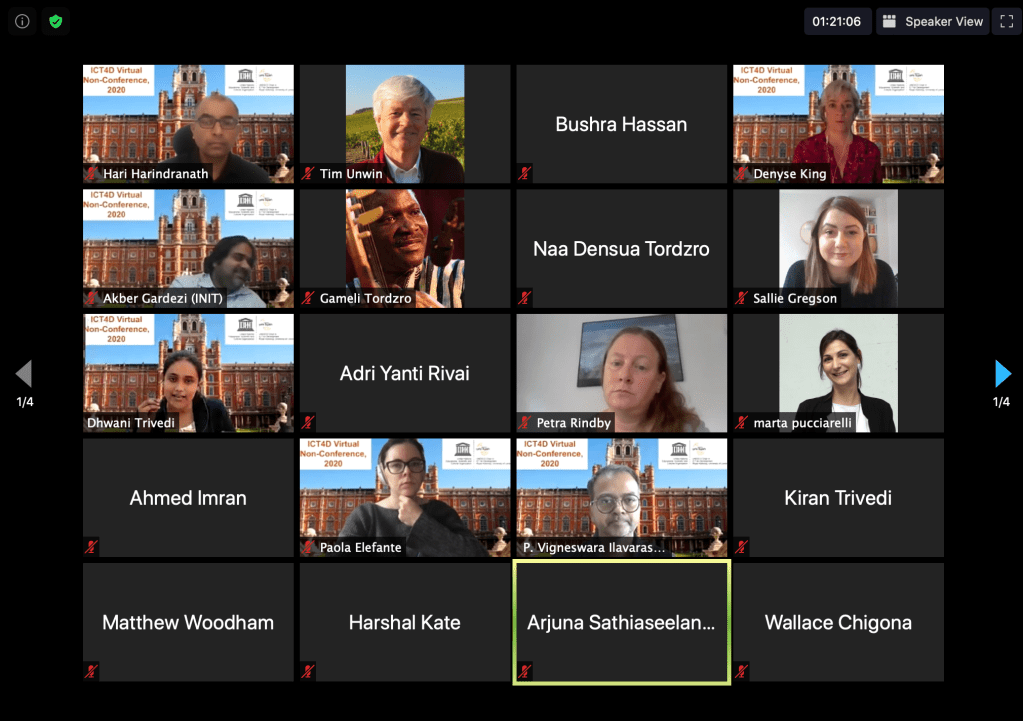
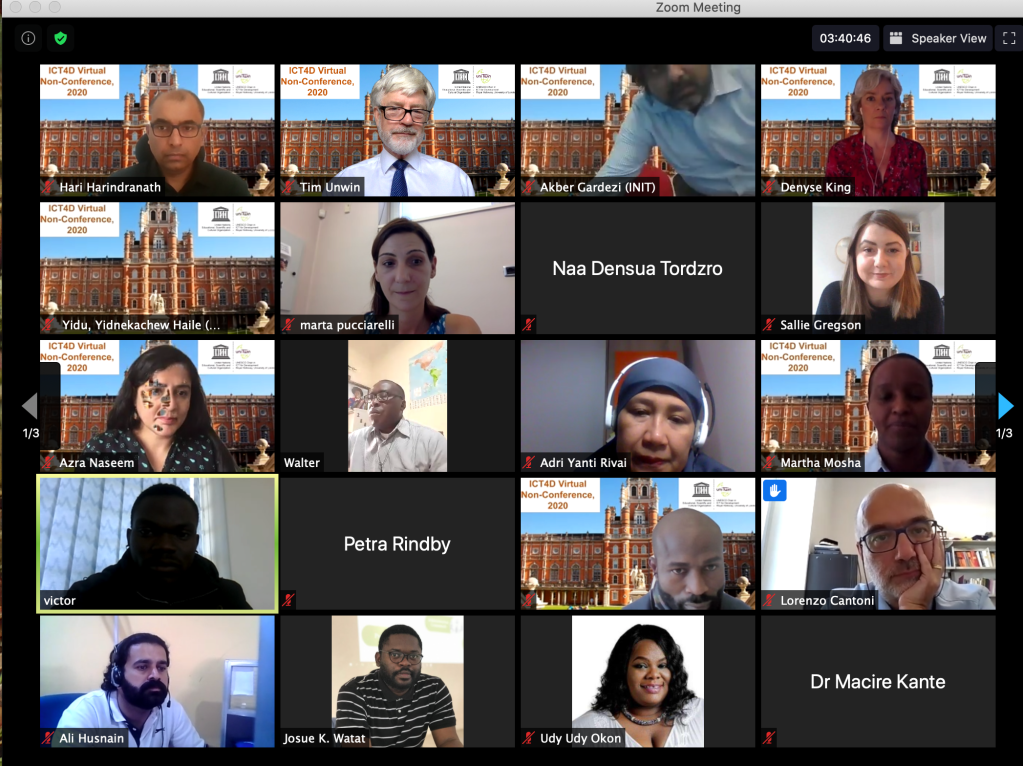
The UNESCO Chair in ICT4D was delighted to convene the first Virtual ICT4D Non-Conference on 16th September 2020 (#virtualict4d2020). COVID-19 had meant that it was impossible to hold the original ICT4D Non-Conference that had been scheduled for 15-17 September, and so we decided instead to bring together all those whose papers and demos had been accepted for a day long conversation – the Virtual ICT4D Non-Conference. All of the posters and demos were made available for participants to read before the event, and to have open on their own devices during the various sessions (these are still available for people to access at the Virtual ICT4D Non-Conference site).

The Programme

The full programme ran for eight hours live on Zoom from 09.00-17.00 UK time on 16th June. In line with the emphasis of the original non-conference, no presenters were permitted to use slide decks for their presentations. Fifteen posters and four demos were presented during the day, with there being more countries represented amongst the authors than there were presentations (because several papers had multiple authors from different countries). Eight were presented by women, and two of the six moderators were women.

Details and highlights of the day included:

  • Opening ceremony, with speeches by:
    • Tahir Naeem (COMSATS University, Islamabad, and Executive Director, Inter-Islamic Network on IT) on behalf of partner organisations, and
    • Jose Maria Diaz Batanero (Head, Project Support Division, ITU) on behalf of the ITU
    • And a moving musical interlude by Gameli Kodzo Tordzro while we reflected on all those whose lives had been transformed by COVID-19
  • Thematic sessions from:
    • Asia
      • Business perspectives, employment and health (Moderated by Vigneswara Ilavarasan)
      • Content, learning and the darker side of technology (Moderated by Akber Gardezi)
    • Africa and Europe
      • Government, security and indigenous perspective (Moderated by Azra Naseem)
      • Health (Moderated by Uduak Okon)
      • Education (Moderated by John Traxler)
    • The Americas (Moderated by Jose Maria Diaz Batanero)
  • Special session on migration and technology, moderated by Hari Harindranath, including five distinguished speakers from across the world.
  • Closing ceremony, with reflections by Revi Sterling, Hari Harindranath, Sallie Gregson, David Banes, and Lorenzo Cantoni

The awards

Emerald Publishing generously offered a £1000 award to be split between the top three posters presentations. A panel of reviewers read all of the posters in advance, and a subset of these reviewers also attended all of the sessions; 62.5% of the final score was derived from the poster itself, and 37.5% from the actual presentation and wider

The standards were high, and the three prize-winning posters and presentations were (in alphabetical order of first name):

Three poster presentations were also commended:

Participation and feedback

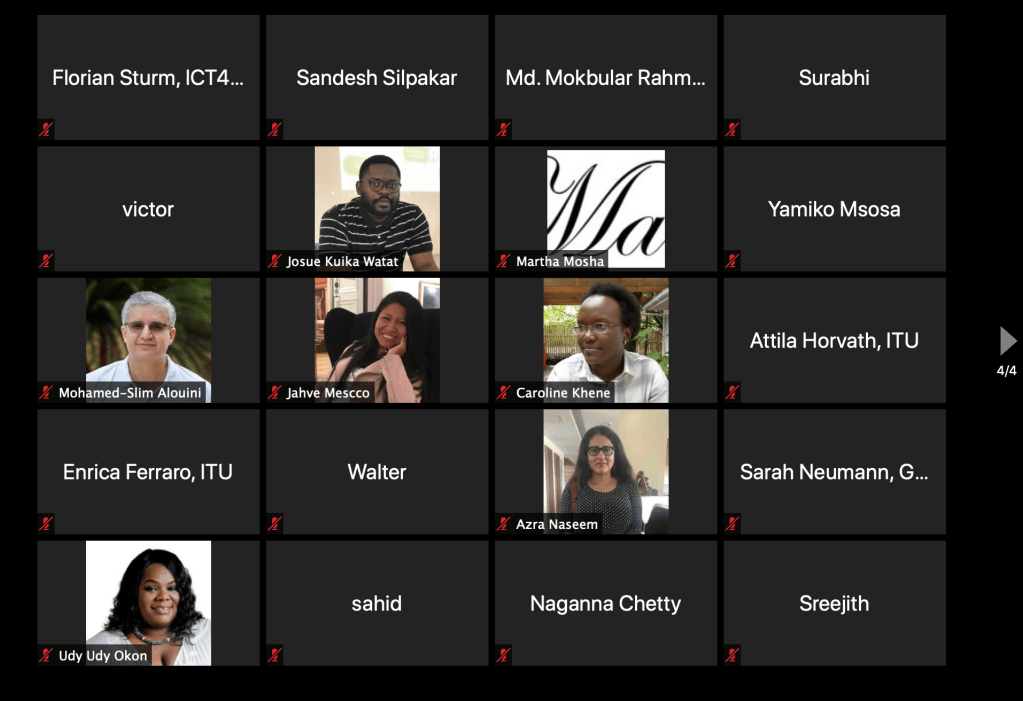
Approximately one hundred and fifty people had registered to participate in the Virtual ICT4D Non-Conference, and between 40 and 80 people participated at any one time during the day. The morning (UK time) sessions were scheduled for Asia, the middle of the day for Africa and Europe, and the afternoon for the Americas. This was so that the time zones were as convenient as possible for people to attend from across the world. We think that the country further east (from the UK) from which participants attended was New Zealand and the furthest west was the USA. Most participants came from South Asia and Africa.

The Virtual Non-Conference programme page received 600 views on the day (and 1331 views since 1st August; see map of September site views up to 19th below) with the posters submitted by Azra Naseem, Marcelo Fornazin, Djenana Jalovcic and Bushra Hassan each being downloaded more than 110 times.

We are delighted that participants also seemed to enjoy the event so much, not least as reflected in comments on Twitter (#virtualict4d2020):

  • “Thank you! Congratulations for the amazing Virtual ICT4D Non-Conference!
  • “It was an honor for me to discuss about my poster at #virtualict4d2020 along with all the panelists and being moderated by P. Vigneswara Ilavarasan”
  • “This was a milestone achievement during this COVID-19 pandemic. There were Great engaging and interesting debates all through. I was proud to have been part and parcel of the presenters and participants”
  • “Indeed a great success.Brilliant ideas were shared.Thanks so much for organising this wonderful and inspiring conference!!!”
  • “having a great interactive experience and the audience are so disciplined. #virtualict4d2020
  • “Feeling grateful for this #ICT4D community and events like the #virtualICT4D2020 to share, discuss and learn”
  • “A day full of discussions on what’s to me the most exciting subject in this world”
  • “This #VirtualICT4D2020 promises virtual walks together during breaks, sharing of music and other virtual treats. AMAZING!”

Looking to the future

Comments such as these inspire us to think about doing another Virtual ICT4D Non-Conference next year! We very much hope that we will indeed be able to meet up face to face before too long, but if not let’s plan to meet again in a year’s time for another virtual event! Thanks to everyone for making it such an enjoyable, interesting and exhausting day!