
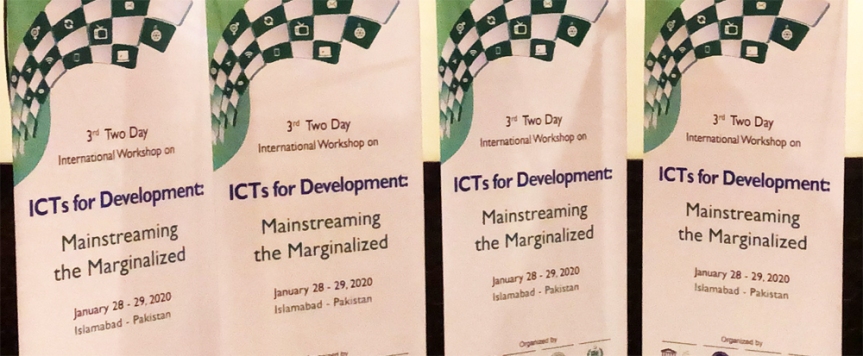
 The UNESCO Chair in ICT4D was delighted to contribute to the 3rd ICT4D workshop convened by the Inter Islamic Network on IT (INIT) and COMSATS University in Islamabad, also supported by the Ministry of IT and Telecom in Pakistan on the theme of Mainstreaming the Marginalised, which was held at the Ramada Hotel in Islamabad on 28th and 29th January 2020. This was a very valuable opportunity for academics, government officials, companies, civil society organisations and donors in Pakistan to come together to discuss practical ways through which digital technologies can be used to support economic, social and political changes that will benefit the poorest and most marginalised. The event was remarkable for its diveristy of participants, not only across sectors but also in terms of the diversity of abilities, age, and gender represented. It was a very real pleasure to participate in and support this workshop, which built on the previous ones that were held in Islamabd in 2016 and 2017.
The inaugural session included addresses by Prof Dr Raheel Qamar (President INIT and Rector COMSATS University, Islamabad), Mr. Shoaib Ahmed Siddiqui (Federal Secretary Ministry of IT & Telecom) and Dr. Tahir Naeem (Executive Director, INIT), as well as a short keynote by our Chairholder Tim Unwin on Digital Technologies, Climate Change and Sustainability. This was followed by six technical sessions spread over two days:
- Future of learning and technology
- Policy to practice: barriers and challenges
- Awareness and inclusion: strategizing through technology
- Accessibility and Technology: overcoming barriers
- Reskilling the marginalised: understandng role reversals
- Technical provisio: indigenisation for local needs.
These sessions included a wide diversity of activities, ranging from panel sessions, practical demonstrations, and mind-mapping exercises, and there were plenty of opportunities for detailed discussions and networking.
Highlights amongst the many excellent presentations included:
- Recollections by Prof Abdful Mannan and Prof Ilyas Ahmed of the struggles faced by people with disabilities in getting their issues acknowledged by others in society, and of the work that they and many others have been doing to support those with a wide range of disabilities here in Pakistan
- The inspirational presentations by Julius Sweetland of his freely available Open Source Optikey software enabling those with multiple disbilities to use only their eyes to write and control a keyboard
- Meeting the young people with Shastia Kazmi (Vision 21 and Founder of Little Hands), who have gained confidence and expertise through her work and are such an inspiration to us all in continuing our work to help some of the pooorest and most marginalised to be empowered through digital technologies.
- The very dynamic discussions around practical actiona that we can all take to enable more inclusive use of digital technologies (mindmaps of these available below)


Enormous thanks must go to Dr. Tahir Naeem (COMSATS University and Executive Director of INIT) and his team, especially Dr. Akber Gardezi (an Affilated Member of our UNESCO Chair) and Atiq-ur-Rehman, for all that they did to make this event such a success.
A shortened version of this workshop was also subsequently held on Monday 3rd February at the University of Sindh in Jamshoro, thanks to the support and facilitation of Dr. Mukesh Khatwani (Director of the Area Study Centre for Far East and Southeast Asia) and his colleagues. This also focused on the practical ways through which some of the most marginalised can benefit from the appropriate use of digital technologies, and it was once again good to have the strong involvement of persons with disabilities.


Quick links to workshop materials and outputs:
- Tim Unwin’s short keynote on Digital Technologies, Climate Change and Sustainability given at both workshops.
- Introduction to Technical Session I. The future of learning and technology: understanding the deprived context.
- Introduction to Technical Session III. Awareness and inclusion: strategising through technology.
- Introduction to Technical Session IV. Accessibility and technology: overcoming barriers.
- Introduction to Technical Session V. Reskilling the marginalised: women and technology.
- Mindmap of workshop discussion on How can we best change men’s attitudes and behaviours so that gender digital equality improves in Pakistan?
- Mindmap of workshop discussion on How can digital technologies be used better to support learning in deprived contexts?

 een a very active member of the Young Women Writers Forum, and had recently passed away battling Multiple Sclerosis. The Forum did not have any funding available and so they contacted Sightsavers with whom they had an existing MoU to help and support Blind Women Writers in Pakistan. The first “award” (but not in a physical sense) was a small gathering of like minded people who supported the cause of empowering women and overall inclusion more generally. As the years passed by this gathering which always took place around the 15th of October began a regular feature to honour visually impaired people who had done substantial work within the community. For the last 3-4 years they have also sought nominations from the wider community to include sighted people working for the service of visually impaired people.
 Akber writes “I am deeply humbled and thankful to my vision impaired friends who recommended my name for this award. This is very special for me as it links me to the memory of the late Saima Ammar. She was a symbol of activism and defiance; she is someone who fought the cause for access to education for people with disabilities in Pakistan. She is someone who did not let blindness be a burden on her life, but rather used it as a motivation. She did not lead a very comfortable and luxurious life herse
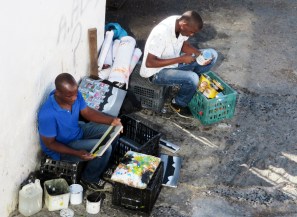 MIDEQ provides an opportunity to do things differently. It has the potential to change our understandings and influence policy, but only if we truly listen to the voices of migrants in the many different contexts where they live and work.


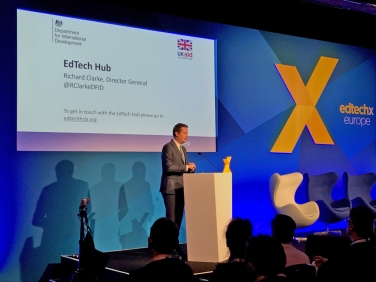 Richard Clarke, Director General
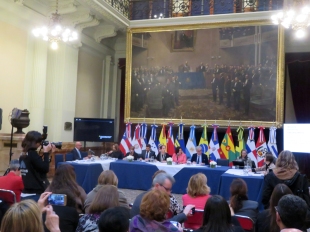 The Forum of Minister and Secretaries of Culture was held in the very impressive Congress of the Argentine Nation, and provided an excellent opportunity for senior government officials from across the region to share presentations and discuss the theme of Libraries, Access to Information and the Sustainable Development Goals. Welcoming participants, IFLA President Glòria Pérez-Salmerón reminded them of the theme of her presidency – Motors of Change – and underlined the difference that libraries can make, for so many people, in so many ways. IFLA Secretary-General Gerald Leitner stressed to the ministers of the power they had in their hands, and made the case for ensuring that they – and libraries – are included fully in national development plans. A key outcome of the meeting was the signing of the
 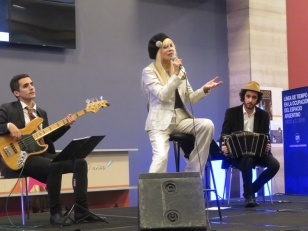 A dance performance in two parts by the Arte Ballet Compañía: the Don Quijote suite, and Tiempos de Tango, with ideation, choreography and direction by María Fernanda Blanco.
 Members of
  The main part of the workshop then built on these presentations to discuss what needs to be done to change men’s and boys’ attitudes and behaviours towards women and girls in technology. The co-created mindmap developed during the workshop is illustrated below (
 The four most important issues identified that require attention were:
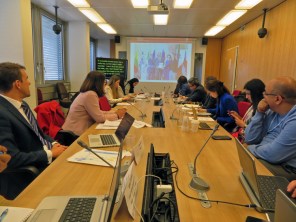 Members of the UNESCO Chair in ICT4D and our colleagues at the Inter-Islamic Network on Information Technology (
 Members of the UNESCO Chair in ICT4D and
  ICT4D Collective