Digital Inclusion in an Unequal World (Episode 9) – Emily Hickson’s contribution to “Nigel Hickson: a digital life well lived for others”

This is the ninth episode of our podcast based on the vignettes contributed by friends and colleagues to Tim Unwin’s new book Digital Technologies in an Unequal World: An Empancipatory Manfesto. Our dear friend and colleague, Nigel Hickson was to have written one of these vignettes based on his wealth of experience working on Internet Governance, especially for the British Government and ICANN, but his untimely death meant that he was unable to complete it. Instead, some of his friends have contributed very short pieces on what it was that made him so special, and a model to follow for anyone wishing to work at the policy level to ensure that the poorest and most marginalised can benefit from the use of digital tech. The full vignette can be read here.

All audio files relating to the book are also available on our podcast with a new episode every week.

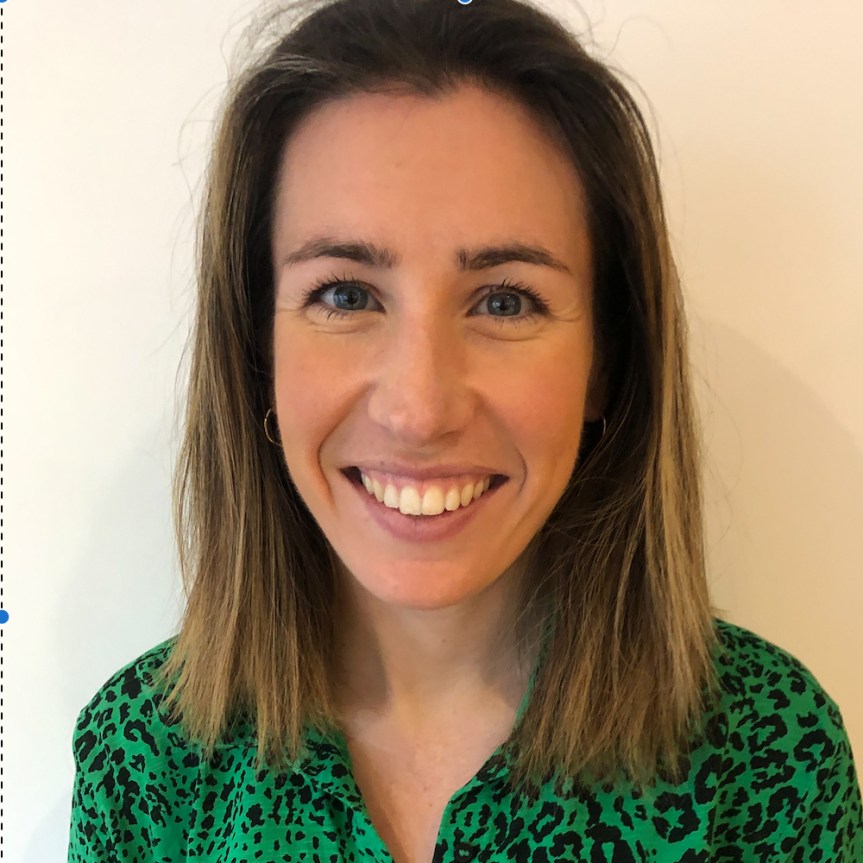
Emily is an international climate politics expert, having advised businesses and civil society on the UN Climate Negotiations (COPs) for the last decade. She is also a local government councillor in London (UK). We are especially grateful that she could take the time to contribute this short piece about her father and our friend.

Full details of the book are available through the following links:


Other recent episodes

Inclusion numérique dans un monde inégalitaire (Épisode 13 en français) – Yuliya Morenets sur « Au-delà du rôle symbolique: repenser l’inclusion des jeunes dans les forums mondiaux » ICT4D Collective » ICT4D

Yuliya est avocate, experte en gouvernance numérique et fondatrice du Youth IGF. Figure reconnue de la coopération numérique internationale, elle conseille les gouvernements en matière de cybersécurité et de cybercriminalité. Forte de plus de 15 ans d’expérience internationale, elle est également une fervente défenseure de l’inclusion numérique dans les pays du Sud (France). Vous trouverez … Continue reading Inclusion numérique dans un monde inégalitaire (Épisode 13 en français) – Yuliya Morenets sur « Au-delà du rôle symbolique: repenser l’inclusion des jeunes dans les forums mondiaux »
  1. Inclusion numérique dans un monde inégalitaire (Épisode 13 en français) – Yuliya Morenets sur « Au-delà du rôle symbolique: repenser l’inclusion des jeunes dans les forums mondiaux »
  2. Digital Inclusion in an Unequal World (Episode 13 in English) – Yuliya Morenets on “Beyond the Token Seat: Rethinking Youth Inclusion in Global Forums”
  3. Digital Inclusion in an Unequal World (Episode 12) – David Hollow on “Evidence-driven decision-making in the use of digital technologies in education”

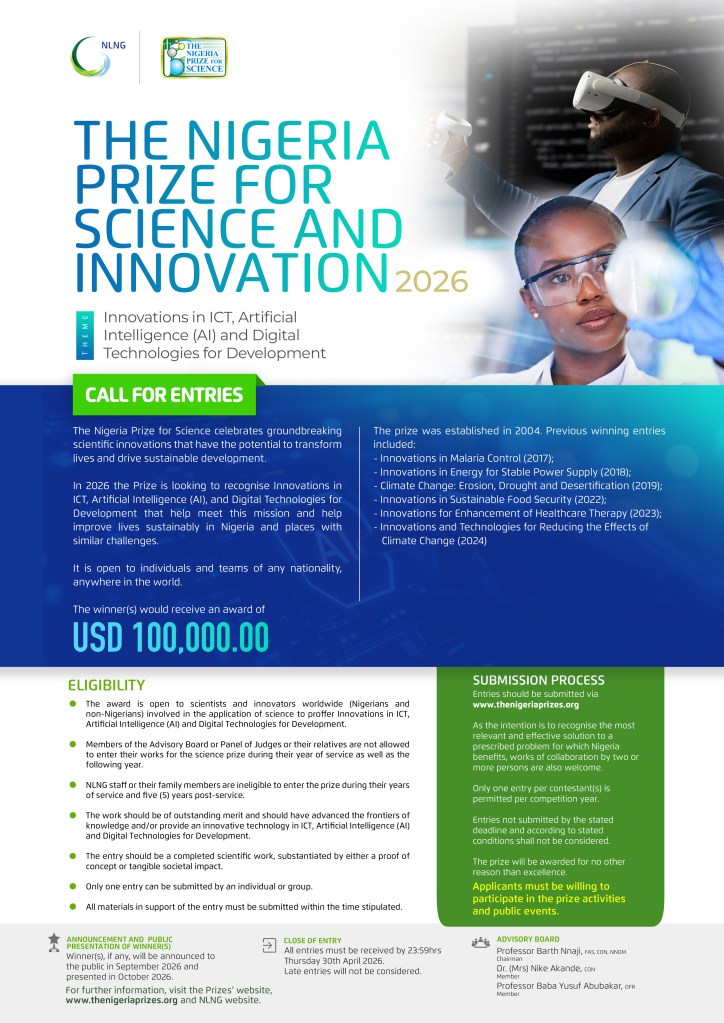
The Nigeria Prize for Science and Innovation, 2026

Do you know anyone involved in the application of science to support innovations in ICT, AI and digital tech for development. If so, do encourage them to submit an application by 30 April 2026 for THE NIGERIA PRIZE FOR SCIENCE AND INNOVATION. Details are in the image below, or find out more at https://www.thenigeriaprizes.org/the…/nps_call_for_entry/. The award is worth $100,000.

Digital Inclusion in an Unequal World (Episode 8) – Judith Hellerstein’s contribution to “Nigel Hickson: a digital life well lived for others”

This is the eighth episode of our podcast based on the vignettes contributed by friends and colleagues to Tim Unwin’s new book Digital Technologies in an Unequal World: An Empancipatory Manfesto. Our dear friend and colleague, Nigel Hickson was to have written one of these vignettes based on his wealth of experience working on Internet Governance, especially for the British Government and ICANN, but his untimely death meant that he was unable to complete it. Instead, some of his friends have contributed very short pieces on what it was that made him so special, and a model to follow for anyone wishing to work at the policy level to ensure that the poorest and most marginalised can benefit from the use of digital tech. The full vignette can be read here.

All audio files relating to the book are also available on our podcast with a new episode every week.

Judith is a globally recognized expert in ICT policy, digital transformation, cyber, and digital development. She has over 30 years of experience in crafting policies that enable digital economies, build digital infrastructure, e-commerce frameworks, and digital trade. Judith is a passionate advocate for helping to bring connectivity and empower communities (USA).

Full details of the book are available through the following links:


Other recent episodes

Inclusion numérique dans un monde inégalitaire (Épisode 13 en français) – Yuliya Morenets sur « Au-delà du rôle symbolique: repenser l’inclusion des jeunes dans les forums mondiaux » ICT4D Collective » ICT4D

Yuliya est avocate, experte en gouvernance numérique et fondatrice du Youth IGF. Figure reconnue de la coopération numérique internationale, elle conseille les gouvernements en matière de cybersécurité et de cybercriminalité. Forte de plus de 15 ans d’expérience internationale, elle est également une fervente défenseure de l’inclusion numérique dans les pays du Sud (France). Vous trouverez … Continue reading Inclusion numérique dans un monde inégalitaire (Épisode 13 en français) – Yuliya Morenets sur « Au-delà du rôle symbolique: repenser l’inclusion des jeunes dans les forums mondiaux »
  1. Inclusion numérique dans un monde inégalitaire (Épisode 13 en français) – Yuliya Morenets sur « Au-delà du rôle symbolique: repenser l’inclusion des jeunes dans les forums mondiaux »
  2. Digital Inclusion in an Unequal World (Episode 13 in English) – Yuliya Morenets on “Beyond the Token Seat: Rethinking Youth Inclusion in Global Forums”
  3. Digital Inclusion in an Unequal World (Episode 12) – David Hollow on “Evidence-driven decision-making in the use of digital technologies in education”

Digital Inclusion in an Unequal World (Episode 7) – G. ‘Hari’ Harindranath – How May Academics Help to Empower Marginalised Communities Through Digital Tech?

This is the seventh episode of our podcast based on the vignettes contributed by friends and colleagues to Tim Unwin’s new book Digital Technologies in an Unequal World: An Empancipatory Manfesto. In it, Hari argues that “Empowering marginalised groups through our work with digital technologies, and striving to make the world a better place as a result may be lofty aspirations, but they are worth pursuing. That will require us all to get out of our comfort zones and find ways to prioritise outcomes, commit time and resources, and engage with communities on the ground, rather than in the ivory towers, to learn and gather evidence of impact and outcomes of using digital tech in the service of the world’s poorest and most marginalised”

The full vignette can be read in English here and all audio files relating to the book are also available on our podcast.

Hari is Professor of Information Systems at Royal Holloway, University of London, UK, exploring how digital tech shapes lives, work, and society. Hari is passionate about impact, collaborates with communities to address digital inequalities, and sometimes even gets policymakers to listen. He thinks research should do good, not just look good (UK).

Full details of the book are available through the following links:


Other recent episodes

Inclusion numérique dans un monde inégalitaire (Épisode 13 en français) – Yuliya Morenets sur « Au-delà du rôle symbolique: repenser l’inclusion des jeunes dans les forums mondiaux » ICT4D Collective » ICT4D

Yuliya est avocate, experte en gouvernance numérique et fondatrice du Youth IGF. Figure reconnue de la coopération numérique internationale, elle conseille les gouvernements en matière de cybersécurité et de cybercriminalité. Forte de plus de 15 ans d’expérience internationale, elle est également une fervente défenseure de l’inclusion numérique dans les pays du Sud (France). Vous trouverez … Continue reading Inclusion numérique dans un monde inégalitaire (Épisode 13 en français) – Yuliya Morenets sur « Au-delà du rôle symbolique: repenser l’inclusion des jeunes dans les forums mondiaux »
  1. Inclusion numérique dans un monde inégalitaire (Épisode 13 en français) – Yuliya Morenets sur « Au-delà du rôle symbolique: repenser l’inclusion des jeunes dans les forums mondiaux »
  2. Digital Inclusion in an Unequal World (Episode 13 in English) – Yuliya Morenets on “Beyond the Token Seat: Rethinking Youth Inclusion in Global Forums”
  3. Digital Inclusion in an Unequal World (Episode 12) – David Hollow on “Evidence-driven decision-making in the use of digital technologies in education”

FraudBoom: twenty years of lawbreaking, abuses and censorship by the world’s most popular social media

Facebook (FB) was founded in 2004, and more than twenty years later it is time to take stock. More than three billion active users seem to provide evidence of its undisputed global ‘success’. It is a tool that has changed the lives of many people, but is not easy to say whether this has been for better or for worse. In the meanwhile, it seems that we can no longer do without FB or any of Zuckerberg’s other tools, such as Instagram or WhatsApp. Every now and then, the media talks about the psychological and cognitive damage caused by social media, especially among young people. Sometimes they also talk about the misuse of our data, but these are phenomena that are not very visible and difficult to quantify. Despite dozens of books, investigations, academic research, and even films denouncing the abuses of FB (and the whirlwind career of its founder) could fill up entire libraries and websites, most people seem largely uninterested in its harms.

In an attempt to raise users’ awareness, we started to review the political, economic, social, cognitive, ethical, and privacy costs of this addiction. We selected around fifty of the best-known and verifiable categories of event documented in the media between 2007 and 2025, and these are listed here. These range from the illegal use of user data to its deliberate manipulation for commercial and political purposes, from the exploitation of workers in the global south (click farms) to collaboration with authoritarian governments, from million-dollar fines to silencing the voices of Palestinians in Gaza. All events and allegations are known to an audience of experts and insiders but seeing it all together gives us an idea of the temporal dimensions and the extent of those misdeeds. Our work is a preliminary and non-exhaustive “catalogue of horrors” that will form part of a data base project starting in Spring 2026 in the Digital Humanities laboratory at the Department of Humanities of the University of Roma Tre. If you think that we have missed some important Zuckerberg-related abuses or misdeeds, please do contact the authors at domenico.fiormonte@uniroma3.it .

Among the questions I would like to ask in the workshop, there is one that I know will be particularly unpopular with students: isn’t it time to abandon Zuckerberg and the GAFAM empire (which is also an inherent part of the genocide economy)? Abandoning these platforms is part of a necessary and urgent process of epistemic decolonization. The first step in this direction is to counter the narrative that “there are no alternatives”, when in fact there are now more and more, such as those listed by llaborda.org. Software that is free or at least not programmed to extract data and personal lives from individuals has always been available, but its adoption requires, in Gramscian terms, a new consciousness followed by an adequate literacy.

We must develop awareness and mastery of a system of signs in which languages and media, programs and devices, software and hardware constitute the frameworks of thought and knowledge. The second step is to rediscover (and defend) the web as a protocol and open space for cultural diversity, uncensored communication and sharing, in contrast to the cages of commercial platforms and corresponding apps as standardized models of thought and global surveillance. In short, it is up to us to become active and aware digital literates, rejecting a digital world that has been disfigured by Big Tech deception, misrepresentation, and exploitation. The battle for freedom of expression, for the right to the exclusive use of our digital corpus, and for the creative and conscious use of the internet is still ongoing. However, given the increasingly widespread weaponization of digital spaces—as demonstrated by the EU Council substantial approval of Chat Control—we cannot completely rule out the possibility of a gradual DigitalExit. Perhaps, in the not-so-distant future, disconnecting from the internet will be the only way to save it.

Authors: Domenico Fiormonte and Kassandra Wilhelm

4 December 2024