Prof. Harindranath participates in the ILO’s 10th anniversary celebrations of the Fair Recruitment Initiative

Prof G. ‘Hari’ Harindranath was honoured to be invited to contribute to the panel on ‘Leveraging digital innovations to enhance fair recruitment and combat abusive practices’ at the International Labour Organization‘s Global Conference on ‘Fair Recruitment Initiative: The Way Forward, from Policy to Practice’ held in Geneva between 19th and 20th May 2025. This event marked ten years of the ILO’s Fair Recruitment Initiative and brought together representatives from government, employers, trade unions and ILO’s UN partners including the IOM, WHO and UNHCR.
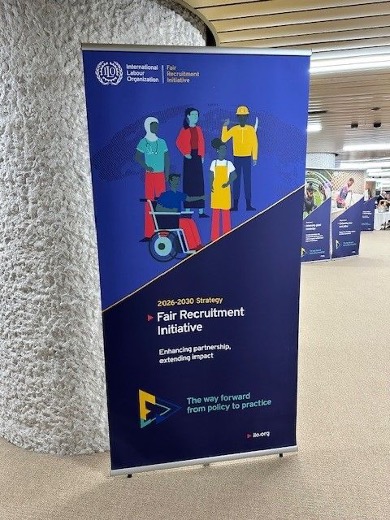
Digital technology is rapidly transforming the way migrant workers are recruited, bringing both new opportunities and serious risks. The interactive panel session examined emerging digital solutions that aim to promote fair recruitment – from tools used by workers to platforms leveraged by governments, inspectors and employers – and unpacked the associated risks and opportunities, and discussed actionable insights from participants on what works, what doesn’t, and how digital tech can be better harnessed to protect migrant workers.

Hari participated in a panel that also included representatives from the International Trade Union Confederation and The Adecco Group, one of the world’s largest human resources and temporary staffing firm.

Hari’s contribution questioned the uncritical application of digital tech in contexts of vulnerability that can cause harms, exacerbate existing inequalities and even create new ones. If digital technologies are to be used to advance fair recruitment of labour migrants, then it requires responsible digital practices that balance tech with supportive human interventions and a sustained focus on the safe, wise and secure use of digital tech by migrants.
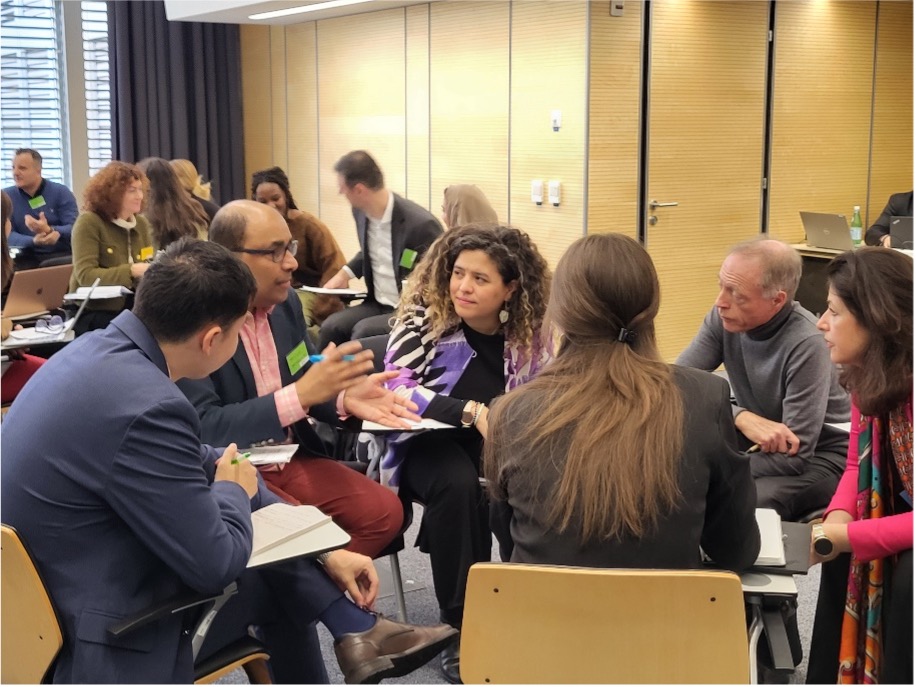
Hari had previously been invited to contribute to the Global Forum on Migration and Development’s (GFMD) preparatory roundtables on ‘New Technologies and Digitalization: Improving Migration Management and Regular Migration Pathways’ in Geneva during February 2025 (and online in November 2024) in preparation for the 2025 GFMD Summit in Colombia.

Created in 2007, the Global Forum on Migration and Development (GFMD) is a state-led process connecting governments with civil society, the private sector, local and regional governments, youth, the UN system and other relevant stakeholders to helps shape the global debate on migration and development.

These significant policy engagement opportunities evidence the impact of our research-practice with vulnerable groups including migrants undertaken over the past six years, initially funded through a major UKRI GCRF grant and then through Royal Holloway’s Research England ODA and Social Purpose Research and Innovation Hub (SPRIH) grants (all in Nepal and South Africa) and through SSIA funding (in Brazil). Further details of this ongoing work can be found here (on the safe, wise and secure use of digital tech) and here (on our research-practice with migrants).

Prof. G. ‘Hari’ Harindranath, 29 May 2025

Outputs of collaboration with the Scalabrini Institute for Human Mobility in Africa

As part of our contribution to the UKRI GCRF funded MIDEQ project (2019-24), members of the ICT4D Collective (Dr. Maria Rosa Lorini, Prof. Tim Unwin and Prof. G ‘Hari’ Harindranath) worked with colleagues at the Scalabrini Institute for Human Mobility in Africa (SIHMA) in Cape Town to help train a group of migrants in video production. Our overall research-practice explored how migrants in South Africa (and other countries) wanted to use digital tech to improve their lives, and one of the things that these migrants to South Africa wished to learn was how to make better quality videos about their lives, their work and how to use digital tech safely (see here for more information).

Launch of Through Their Lives, in Cape Town, January 2024.

One output of this work was a powerful 30 minute film about their lives and aspirations entiteld Through Their Lives. Another was their creation of the Fusion Avenue channel on YouTube where they continue to post useful videos on all aspects of migrant life, as well as the safe use of digital tech. We also sought to introduce these migrants to organisations who might be able to use and further develop the skills they had gained, not least so that our work would have more sustainable outcomes lasting beyond the limited period of GCRF funding. A return visit to South Africa in October 2024 provided a valuable opportunity to explore ways further to enhance this process.

We have been delighted recently to receive positive and constructive feedback from SIHMA about how this work has continued, without our direct involvement.

Through your funding, we were able to support a group of migrant amateur media practitioners to co-create a series of short videos reflecting experiences and perspectives of people on the move. The project unfolded with both valuable successes and learning opportunities. (Fr. Filippo Ferraro, SIHMA Executive Director)

Our MIDEQ funding had only provided limited resources for training the migrants on the ground, and ideally we would have liked to have worked with them for longer in a more sustained way to provide greater opportunities for them to practise and develop their video making skills (see their Fusion Avenue channel). It was also not always easy for the migrants to participate in the training and find the time to practise, especially given their needs to balance such training with their other day to day tasks and income generating activities. Our initial training undoutedly enhanced their skills (see their reflections on outomes of our work together eight months after the end of MIDEQ), and has enabled many of them to improve their business profiles on social media. However, it was insufficient for them to acquire the level of skills necessary to produce video work of sufficient quality to earn a living from this alone. We were delighted, though, that SIHMA was able to support them and help to improve their skills. Through a small amount of further funding from us they were also able to provide new equipment for the migrants to improve the quality of their videos on Fusion Avenue. These challenges were again highlighted by SIHMA:

While the initial recordings were promising, a number of videos required reshooting and further editing to meet the desired quality. In response, we engaged an experienced external migrant collaborator to assist with editing and technical guidance. This collaboration greatly enhanced the final production outcomes. We also welcomed new participants, since we were not able to connect with those previously interviewed. They contributed fresh perspectives through interviews, enriching the diversity and authenticity of the narratives. To ensure sustainable impact, we purchased video equipment for Fusion Avenue that enabled them to produce content of a higher standard — an investment that we believe will support future initiatives beyond the scope of this project. (Fr. Filippo Ferraro, SIHMA Executive Director)

This crucially show the importance of continued support to migrants in helping them gain new skills, and we are immensely grateful to SIHMA for this crucial contribution.

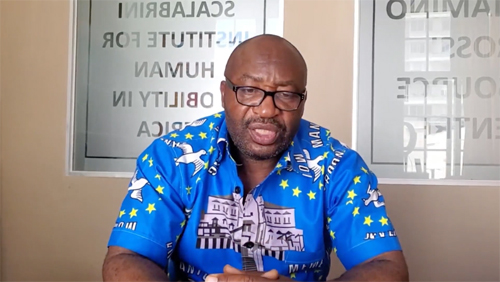
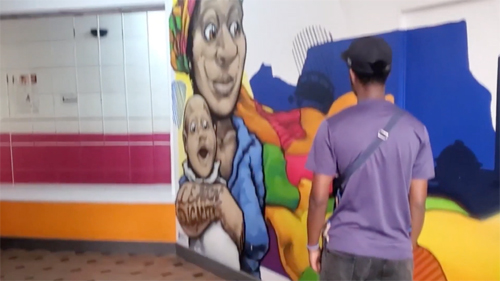
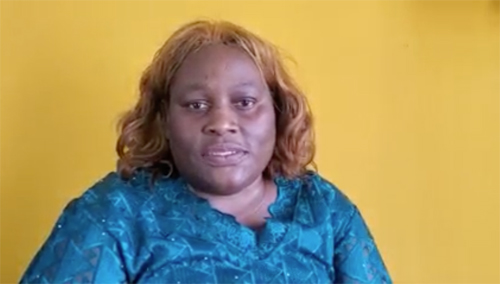
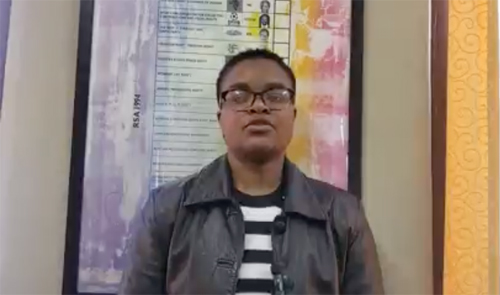
Five videos were produced as a contribution to SIHMA’s “Narratives on human mobility” and “Atlas of African Migration”, and these are also available below (just click on the images below to watch the videos):

From Cameroon

From DRC

From Somalia

From Zambia

From Zimbabwe

For larger versions of these videos see SIHMA’s Atlas of African Migration.

We are delighted that after a long process of ensuring that the quality and content were approproate, SIHMA was able to conclude that:


The final deliverables include a set of completed videos that stand as a testament to the creativity, resilience, and talent within migrant communities. These videos will be hosted on our SIHMA website and included in the initiatives “Narratives on human mobility” and “Atlas of African Migration”. This initiative has not only strengthened our training and outreach efforts, but it has also empowered beneficiaries with new technical skills and confidence in self-expression. (Fr. Filippo Ferraro, SIHMA Executive Director)

We look forward to continuing our work with migrants across southern Africa, to explore further how they can use digital tech to contibute positively to their lives. For our wider work on the Safe, Wise and Secure use of digital tech by economically poorer and more marginalised people across the world do access our resources here.