

Projectitis is the bane of much good research and practice, whereby often well-intentioned people get caught up in a vicious cycle of bidding for project funding, delivering outputs, producing evidence of success, and then bidding again for new projects. All too frequently, insufficient effort is expended on supporting those involved to continue delivering positive outcomes in the years following the end of a project. In 2019 we were fortunate enough to be part of a successful bid for UKRI GCRF funding for a five year research Hub focusing on migration for development and equality (MIDEQ). By its end in 2024 it was clear that our work package on how migrants might benefit from using digital tech had only really just begun to generate outputs and outcomes to benefit the lives of the migrants and migrant organisations with whom we were working in Nepal and South Africa, and that more work needed to be done to help ensure that these outcomes became a lasting legacy of our work together.
Some of our reflections at the end of 2023 about how migrants might actually benefit from the millions of pounds spent on the academic research undertaken during MIDEQ were published as Unwin, T., Casentini, G., Harindranath, G. and Lorini, M.R. (2023) What works for migrants: reflections on research practice in the interests of migrants (Egham: ICT4D Collective, Working Paper 1). This reinforced our determination to try to find ways through which we could continue to support those with whom we had started working during MIDEQ, and we have been very fortunate to benefit from small amounts of continued funding from Royal Holloway, University of London (ESRC Social Science Impact Accelerator, and a Research England Block Grant) which has enabled us to revisit colleagues in South Africa and Brazil to encourage deeper and wider impact and outcomes. We are very grateful to the Research Impact team (Emily Gow and Rachael Kendrew) for all of their support and flexibility in helping us take this forward.
Most recently, we have also benefitted from a further small grant from Royal Holloway, University of London’s Social Purpose Research and Knowledge Exchange Funds to enable Hari Harindranath and Tim Unwin to return to Nepal for a short visit in January 2024 to help put in place structures that will enable the work we initiated to become further embedded within the activities of our partner organisations, thereby helping to ensure outcome continuity. This work initially focused on three main areas: the Pardesi portal (https://pardesi.org.np), training resources on the safe, wise and secure/private use of digital tech by migrants, and cybersecurity guidance for small civil society organisations. However, the visit also provided an opportunity to explore future collaborative initiatives, especially with our partner organisation ACORAB/CIN, the Association of Community Radio Broadcasters in Nepal.
Pardesi.org.np: a portal for migrants in and from Nepal

Our original meetings with migrant organisations in Nepal in September 2022 had emphasised the need that they had identified for an overarching portal for migrants to provide accurate access to relevant and reliable information about all aspects of the migration process. This was not at all intended to duplicate existing information, but instead to provide a simple way for migrants to access the important information that they needed and that is already available on various disparate sites. Originally, we had supported many of the main migrant organisations and people within the local tech community to come together collectively to create this resource, not least so that all of the important entities felt involved in its creation and maintenance. However, it had become evident over the year since the end of MIDEQ that this needed to be complemented by firm direction and leadership to ensure effective updating and development of the portal, and as a result of meetings held during our visit we are delighted that Pourakhi, a human rights defender organization run by and for returnee Nepali women migrants, has agreed to take on this role.
Resources for migrants on the safe, wise and secure use of digital tech
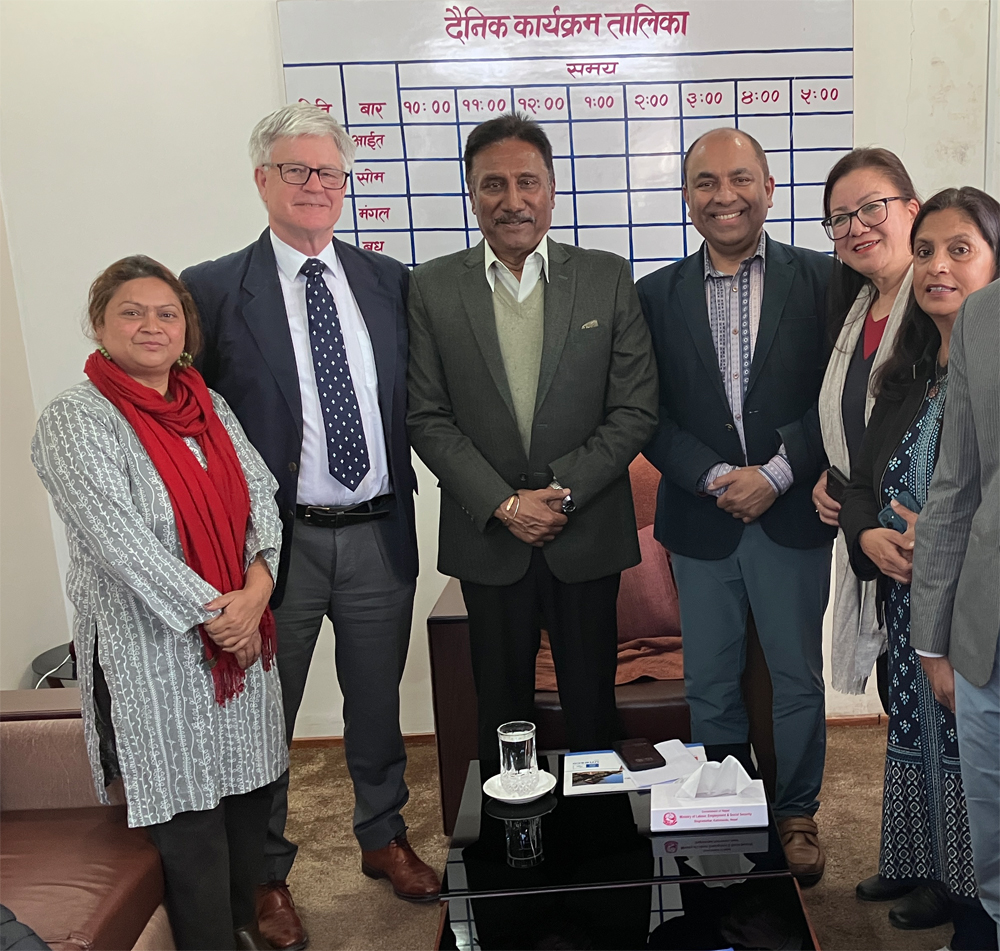
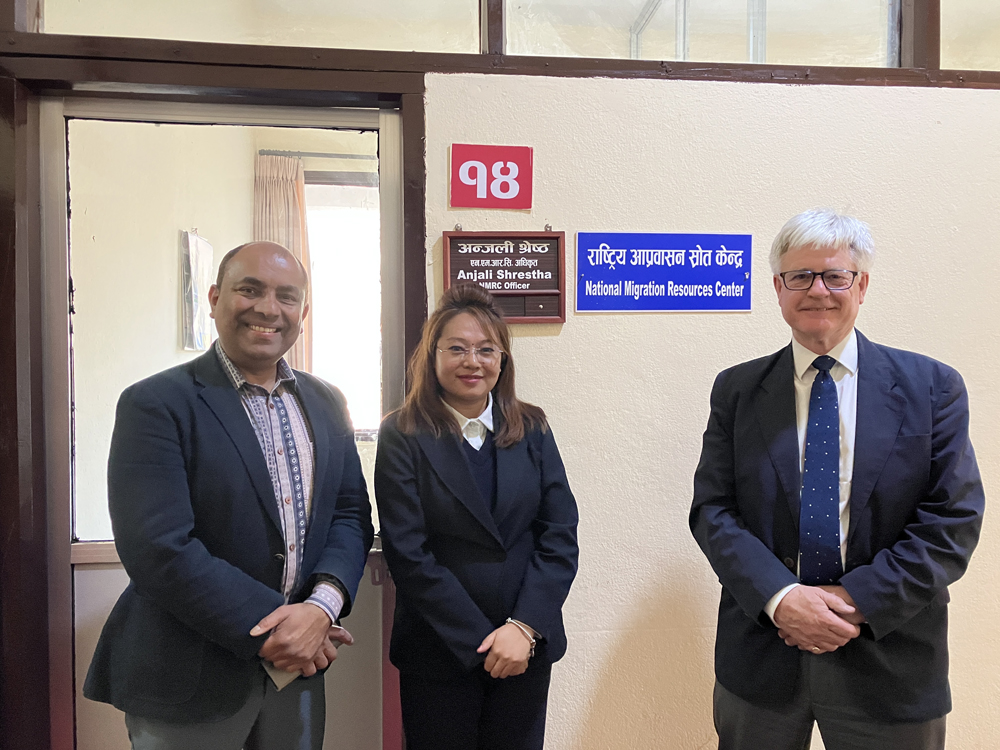
During our original MIDEQ project we had developed a set of training resources in the six main languages used in Nepal to empower migrants to use digital tech safely, wisely and securely, with the original intention that these could be rolled out through the training provided by the Migrant Resource Centres (MRCs) in every province of the country. Despite previous meetings with government officials over the previous three years, changes in official roles and the evolution of government policies meant that we had not yet achieved this aim. Persistence and continued commitment nevertheless pays off, and we were delighted that we were able to share information about our work on this visit with the new Minister of Labour, Employment and Social Security, and that our good friend Anjali Shrestha (the National Migrant Resource Center Officer) has committed to finding ways through which counsellors at the MRCs can receive training based on the resources that we have already developed, supplemented by new posters and advice on key messages (see section on new resources being developed with ACORAB below).
Developing our partnership with ACORAB/CIN

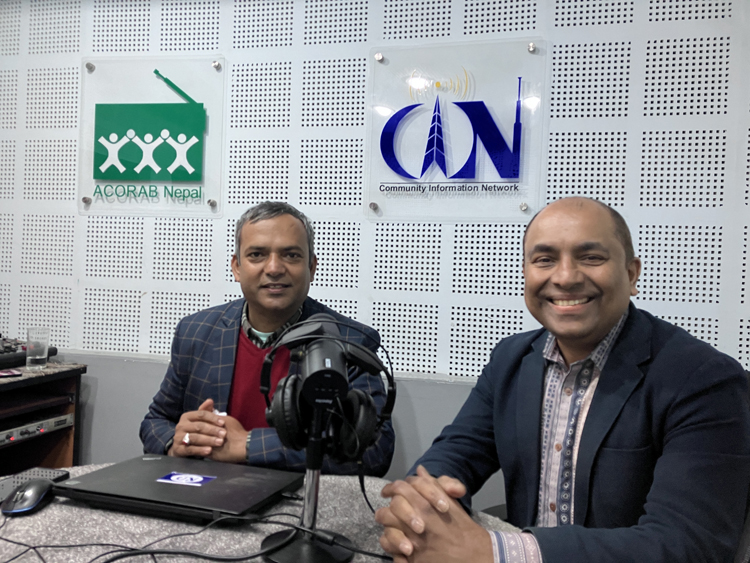
During our initial MIDEQ work we signed an official parntership Memorandum of Understanding with ACORAB/CIN, the Association of Community Radio Broadcasters in Nepal, who helped to disseminate our original resources on the safe, wise and secure use of digital tech to their regular audience of 6.7 million people across the country. We have comntinued to work together in training and advocacy, with ACORAB/CIN for example participating actively in the workshop we held at the WSIS+20 session on the future of community media in Geneva in May 2024. Our latest visit to Nepal helped to cement this relationship, with Tim Unwin delivering a seminar on Community Radio in an Increasingly Digital World, and agreements were also reached on the production and dissemination of new resources on the safe, wise and secure use of digital tech. These will include posters and podcasts on key issues of importance to migrant digital safety and privacy.
Sharing information and exploring new ideas with international organisations
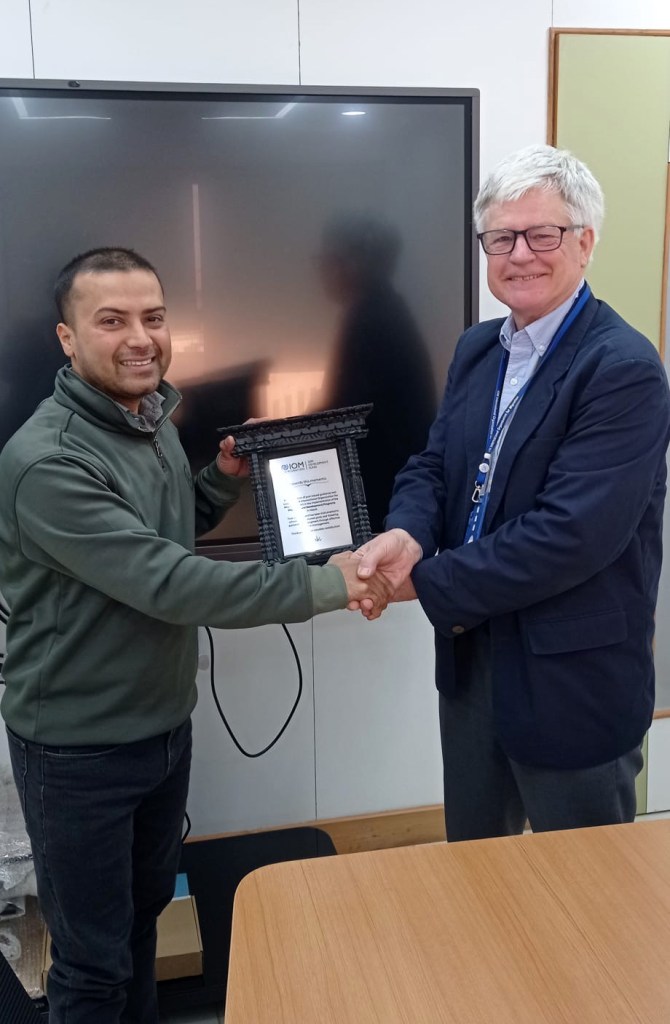

We worked closely with colleagues in international and bilateral organisations in Nepal during our original MIDEQ project and this visit provided a valuable opportunity to update colleagues in IOM, UNESCO, and the British Embassy about our work as well as to explore possible future synergies. All too often staff in these organisations move on to new roles and it is therefore very important to develop new personal relationships wtih their successors to ensure that valuable institutional links are maintained. This visit also provided a useful opportunity to meet with staff at BBC Nepal to learn about their work and relationships with ACORAB/CIN.
Meetings with migrant organisations and others involved in our MIDEQ work
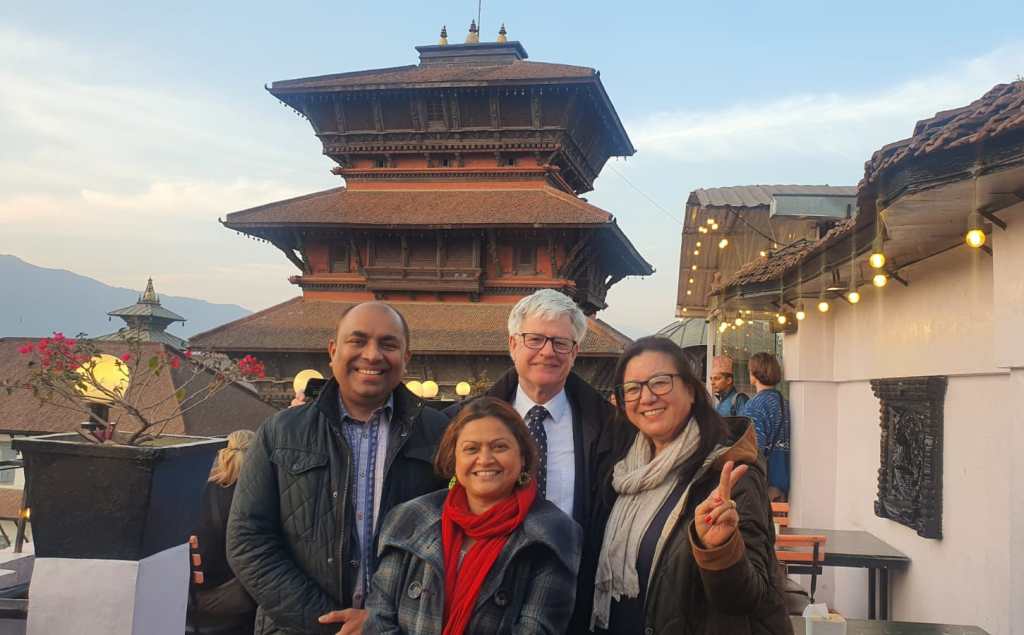

One of the main purposes of our visit was to meet with the local migrant organisations wth whom we had worked during MIDEQ to learn more about their current activities and how we might continue to work together both on the pardesi.org.np portal as well as on propagating messages about the safe, and secure use of digital tech. In addition to thos colleagues depicted above and below, we also met with Bijaya Kimari Rai Shrestha from AMKAS and Anita Ghimire from ISER-N.

Measuring impact and outcomes
Measuring the real outcomes of our work for the lives of individual migrants and their organisations remains difficult. We are very hopeful that as a result of our visit many new initiatives will take place that will help us together to achieve lasting outcomes:
- Under Pourakhi’s oversight, working with many of our original MIDEQ colleagues, the pardesi.org.np portal will regularlly be updated and enhanced.
- Our basic resources on the safe, wise and secure use of digital tech will be rolled out for all the counsellors in the 77 Migrant Resource Centres by the end of the year, and awareness raising posters and leaflets in relevant languages will also be made available for them.
- Our cybersecurity resources for civil society organisations will be translated into Nepali and distributed to relevant organisations in Nepal.
- ACORAB/CIN will continue to share information about the importance of cybersecurity at individual and organisational level through its support for local community radio stations.
- At an organisational level, we will continue to work with ACORAB to help them engage appropriately in relevant digitalisation processes, and with IOM in the delivery of their Migration School.
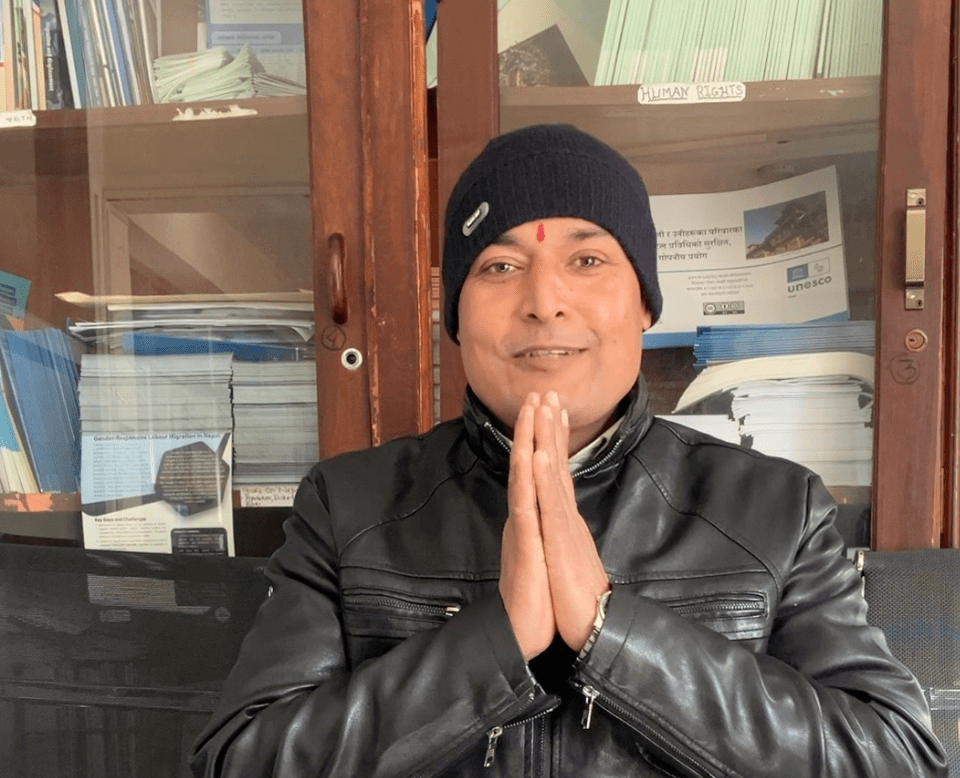
Across all of these initiatives, we have put in place mechanisms to enable us better to understand the outcomes of our research-practice, not least so that we can share further information about what works and what challenges remain so that others can learn from our experiences. We believe that hearing from migrants themselves is one of the best ways to share such understandings (see videos here), and so this post closes with a short commentary from Swarna Kumar Sha from NNSM, the umbrella organization of civil society organizations in Nepal working in the field of labour migration and development, about his experiences of working with us.

 ICT4D Collective