Digital tech and the most marginalised: what still needs to be done?

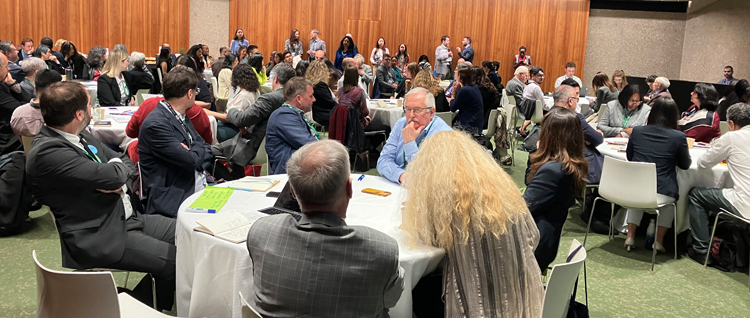
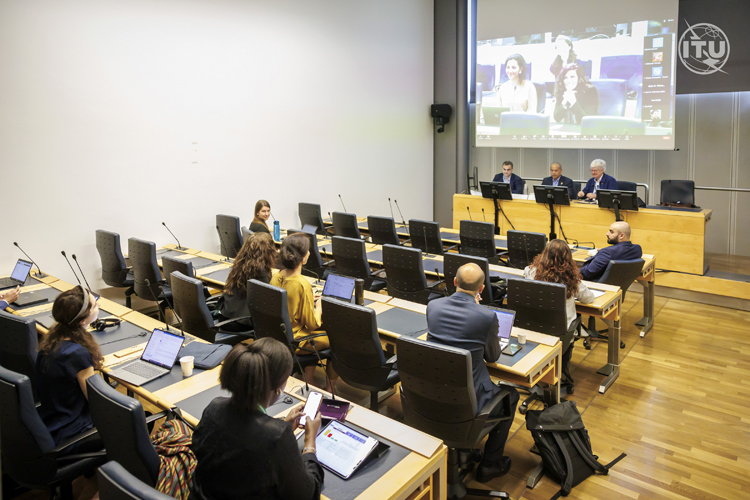
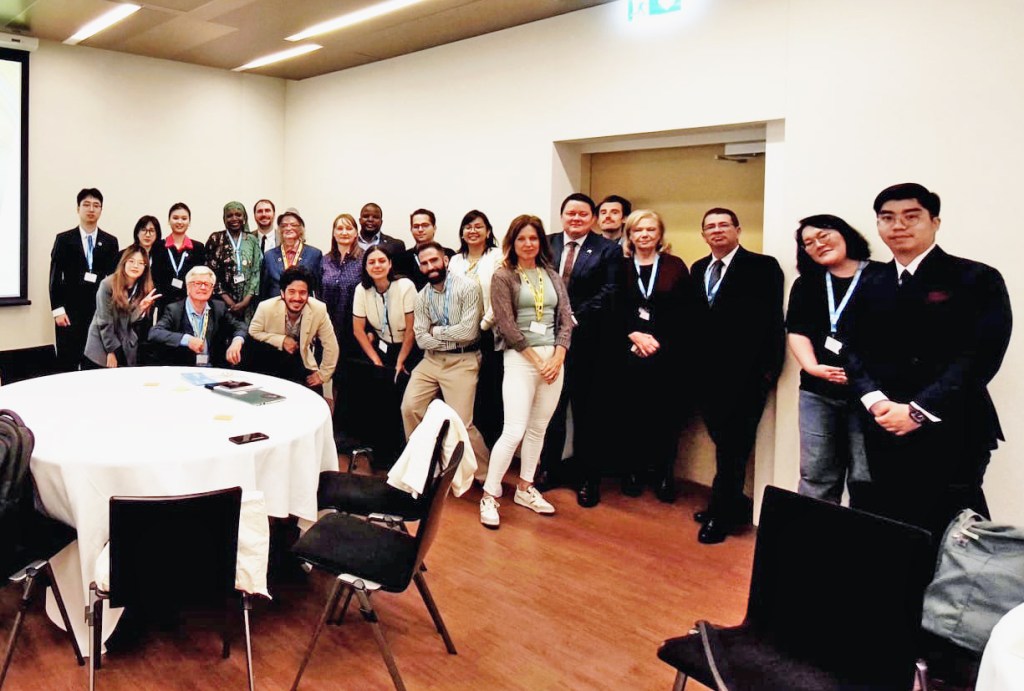
The ICT4D Collective and Microsoft (UN and International Organisations UNIO) (supported by Bangladesh NGOs Network for Radio and Communication, ICT4D.at, and YouthIGF) convened a very lively and interactive Session 360 this morning at the WSIS+20 gathering at Palexpo in Geneva. This began by recognising that digital tech will not be used successfully to deliver the SDGs (especially SDG10) by 2030, but then focused in a very positive way on what governments, the private sector and civil society can indeed do to try to ensure that the poorest and most marginalised can use digital tech to improve their lives.
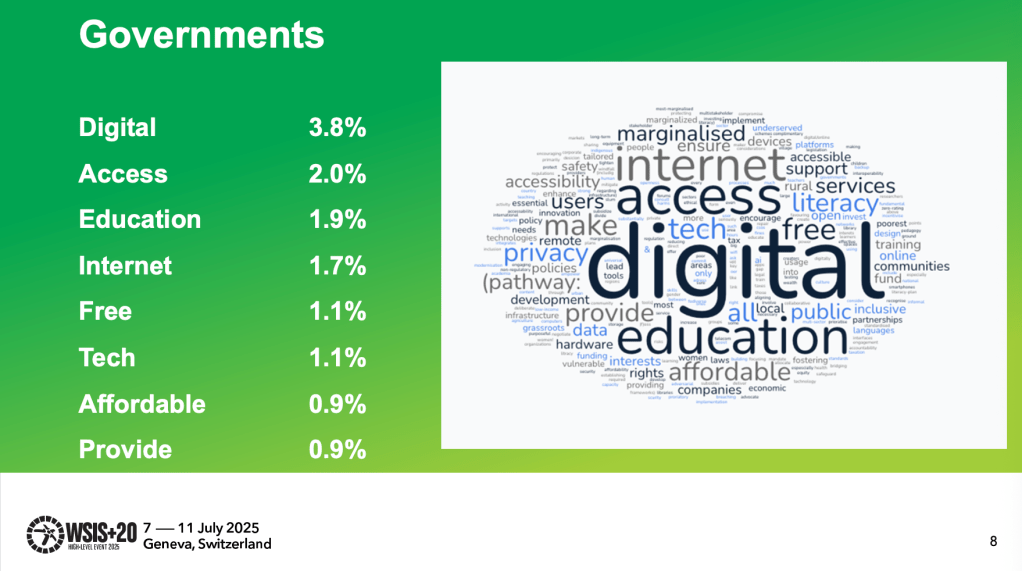
The session built on an online survey conducted in advance of the gathering to explore what people in our networks consider are the most important actions that can be done by governments, the private sector and civil society (as well as international organisations and academia). This is summarised in the slide deck used to guide the sessions (the whole deck is also available by clicking the image below).
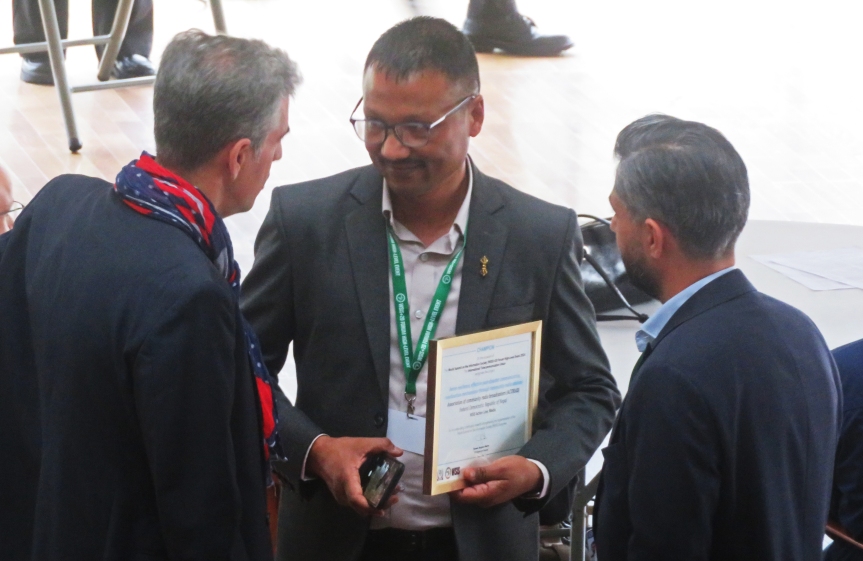
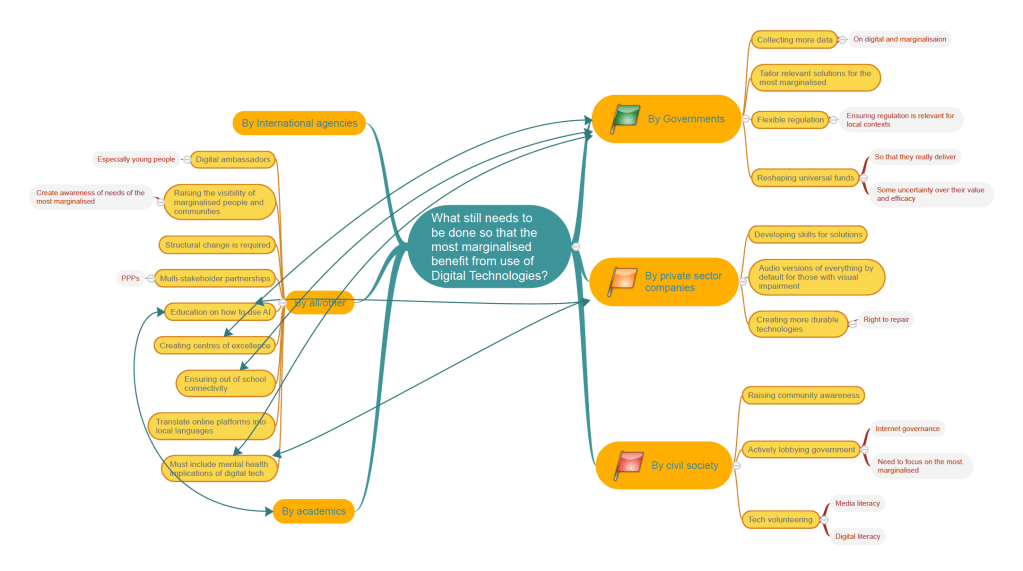
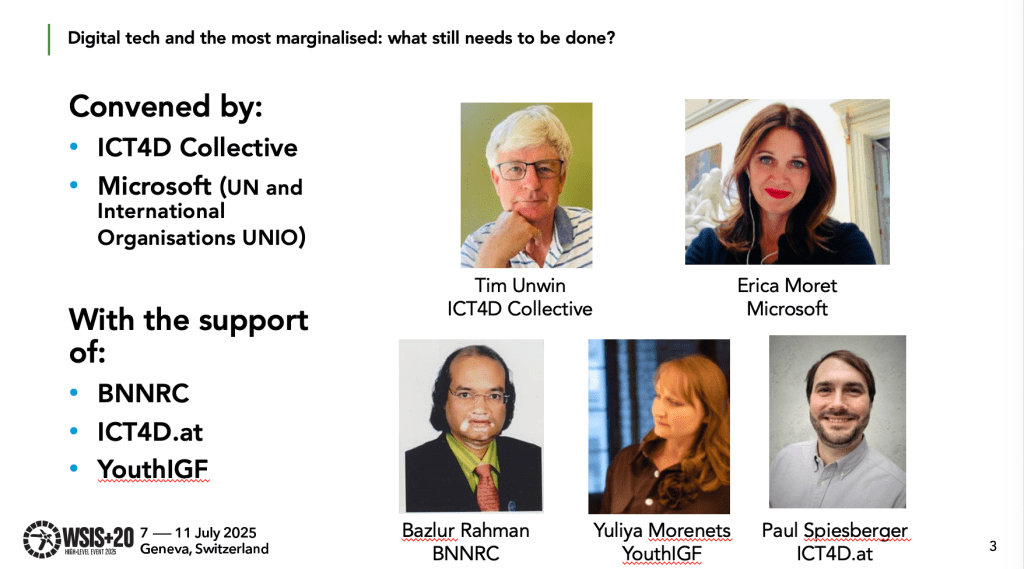
Lively introductory thought-provocations were given by Erica Moret (Microsoft), Bazlur Rahman (BNNRC), Paul Spiesberger (ict4d.at) and Yuliya Morenets (Youth.IGF), and the main focus of the session was then to create together a mind map from brainstorming by participants both in the room and also online (as well as using post-its). This generated a wide range of positive and constructive ideas for what we all need to do if we really care about helping the most marginalised use digital technologies to improve their lives. This discussion is summarised below (click on image for full sized .pdf file):
The session ended by participants re-committing themselves to doing something different in the interests of the poorest and most marginalised.
The ICT4D Collective at WSIS+20

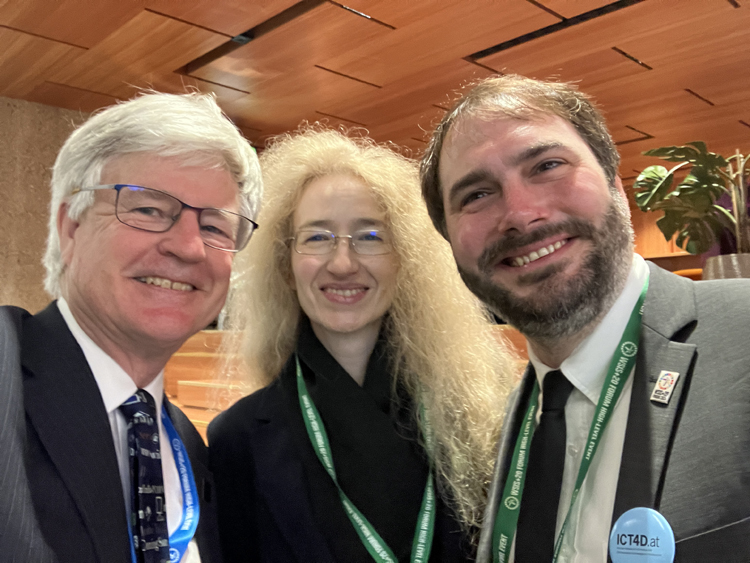
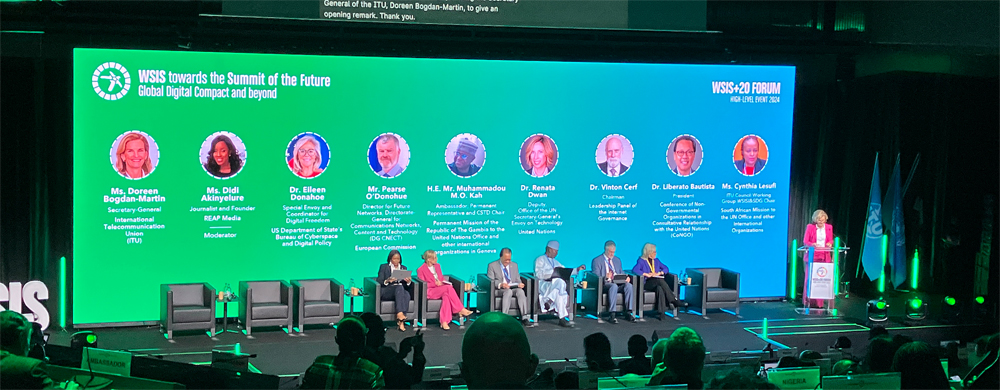
Members of the ICT4D Collective and friends had an exciting and very busy time in Geneva during the 20th anniversary meeting of the World Summit on the Information Society between 26th and 31st May, 2024. Our full agenda is available here, but we summarise below details of the two main sessions that we convened.


Community Media Networks: envisioning the future (Session 331)

We convened this session on 29th May with ACORAB/CIN , BNNRC, TaC-Together, Youth IGF, Cape Town TV, CEMCA, and ICT4D.at, highlighting the importance of community media in reaching some of the world’s most isolated and marginalised people. Our very distinguished line-up of speakers and moderators included (in order of speaking): Pramod Tandukar (Executive Director, ACORAB, Nepal), AHM Bazlur Rahman (CEO, Bangladesh NGOs Network for Radio and Communication), Dr. R Sreedher (Tele Learning and Community Radio Practitioner), and Philomena Gnanapragasam (CEO Asia-Pacific Institute for Broadcasting Development), with Tim Unwin (ICT4D Collective) and Paul Spiesberger (ICT4D.at) also being moderators.


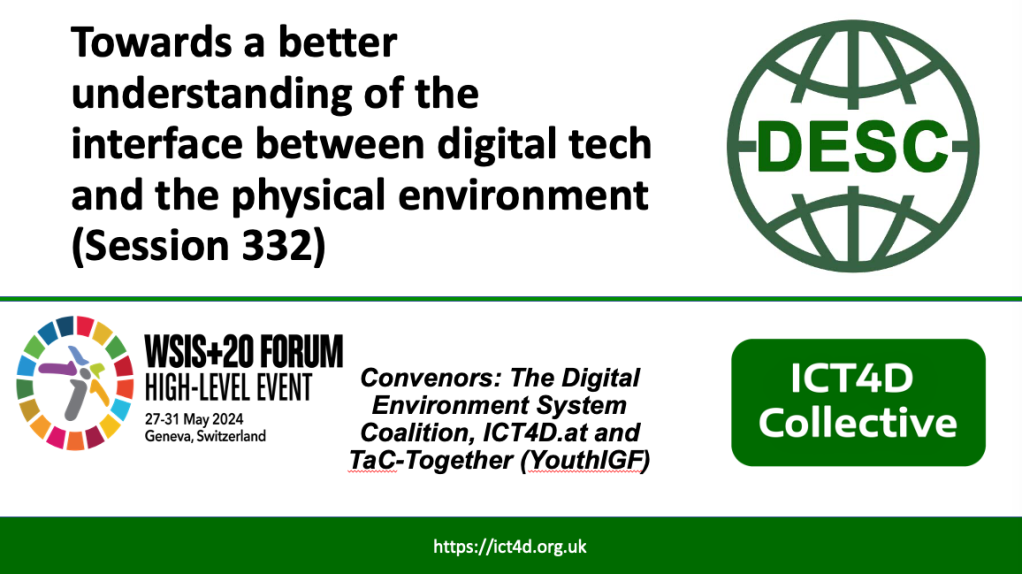
Towards a better understanding of the interface between digital tech and the physical environment (Session 332)

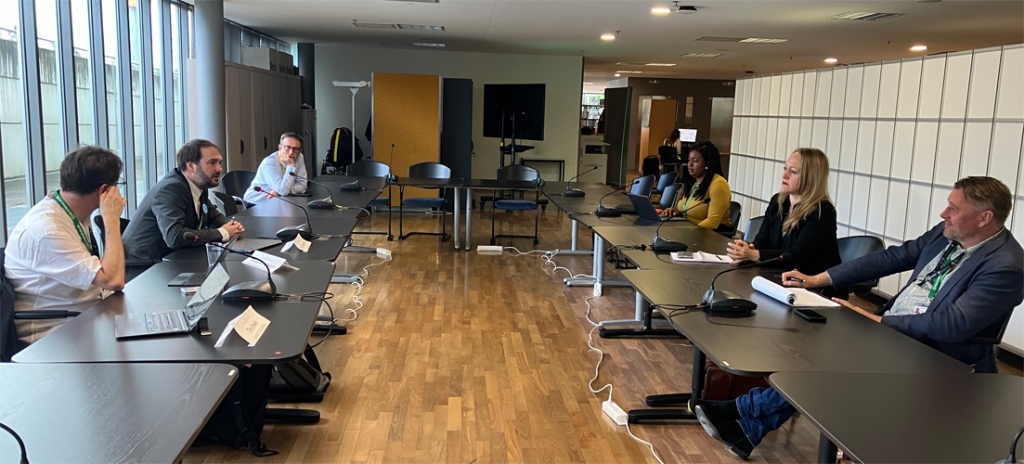
This session (convened by The Digital Environment System Coalition, ICT4D.at and TaC-Together with YouthIGF) provided an overview of the agenda being developed by the Digital-Environment System Coalition (DESC), and an outline of our proposed contribution to the ITU’s Partner2Connect initiative. It emphasised the need for a completely new was of understanding the interactions between digital tech and the environment, that is much more holistic than the existing emphasis of the “global community” mainly on climate change, carbon emissions, and e-waste.


Other sessions in which members of the ICT4D Collective were involved.

We would also all like to share a special word of thanks to Gitanjali Sah and the ITU Interns who worked so hard to make WSIS+20 such a success

Do read Paul Spiesberger’s reflective piece at https://www.ict4d.at/2024/06/world-summit-on-the-information-society-wsis20-forum-high-level-event-2024/ for more details.