Digital tech, inequality and migration

This post written by Prof G. Hari Harindranath was first published by MIDEQ at https://www.mideq.org/en/impact/digital-tech-inequality-and-migration on 20 December 2022, and is reproduced here with MIDEQ’s permission

Digital technologies and inequality is one of MIDEQ’s intervention work packages. As part of their Impact Initiatives, the team is currently working with migrants, migrant organisations, and tech companies with the support of international organisations to co-design and implement sustainable digital interventions that will help to reduce migrant-defined inequalities in Nepal and South Africa. The relationships the team has nurtured with stakeholders in Nepal and South Africa, especially with the help of the MIDEQ country leads there, provide a sound basis for the intervention plan.

These impact initiatives aim to contribute towards migrants’ well-being and empowerment through skills development, shared knowledge dissemination, increased networking amongst stakeholders (particularly international organisations, local organisations working with migrants, local technology developers and academia) and peer-to-peer encounters and exchanges.
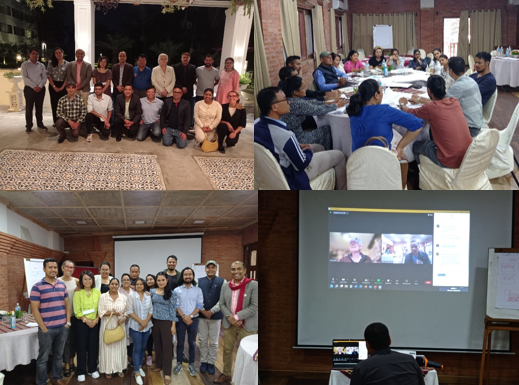
Work Package 9 Sandpit

Nepal

Work in Nepal kicked off in September 2022 with a sandpit and workshop led by MIDEQ colleagues Hari and Maria Rosa with Tim joining remotely. The event brought together five organisations representing migrants (AMKAS, Pourakhi, PNCC, NNSM and Helvetas’ SaMi project), five returnee migrants (two women and three men), six digital tech/media organisations (Ujyaalo Online, Hamro Patro, IME, AuraEd, NIC and GSMA), and six researchers (three from NISER Nepal and three facilitators from the UNESCO Chair in ICT4D at Royal Holloway, University of London) to collectively work together to arrive at ideas for one or more digital interventions that can be beneficial to migrants, returnees and their families in Nepal. The workshop resulted in three main ideas for digital interventions which are now in full swing with a further visit planned for late January 2023.

Migrant Navigator (Pardesiko Sarathy), a one-stop-shop for migrants using digital tech – This intervention aims to develop a digital gateway/portal that provides links to all migration related information in one place that can be trusted by migrants.

Preparing migrants for secure, safe and wise use of digital tech – Here the focus is on developing a one-hour digital preparedness programme on secure, safe and wise use of digital tech by migrants in the local languages.

Information sharing and awareness for migrants – This intervention will ensure that the first two are disseminated to address the widespread lack of awareness of migration related processes, apps and information.

The intervention work is also being supported by the National Innovation Centre in Kathmandu and Pokhara and Gandaki University in Pokhara where the team is engaging with a Migrant Resource Centre run in partnership with Helvetas’ SaMi project.

South Africa

In South Africa, the digital interventions aim to address inequalities and discrimination faced by migrants and to provide migrants the basic skills in using digital tech safely and wisely. Three sets of activities led by Maria Rosa in Johannesburg and Cape Town were completed in late 2022, with a subsequent visit planned in early-mid 2023. These were undertaken with the support and collaboration of local organisations working with migrants in Cape Town and Johannesburg including the Scalabrini Centre, DWAZ, UNISA, UCT, video production company (Stone in the Shoe), and digital literacy trainers. The team is working on the following below:

A series of videos by migrants for migrants developed in Johannesburg and Cape Town – These videos, created by migrants with the support of local professional video makers, cover a range of issues affecting migrants including the safe use of digital tech as well as lifestyle matters relevant to migrant communities. The videos help migrants share their knowledge while their role as content creators and presenters provide authenticity for the issues covered and create a trust effect among migrant communities. Check out some of the videos created by migrants here.
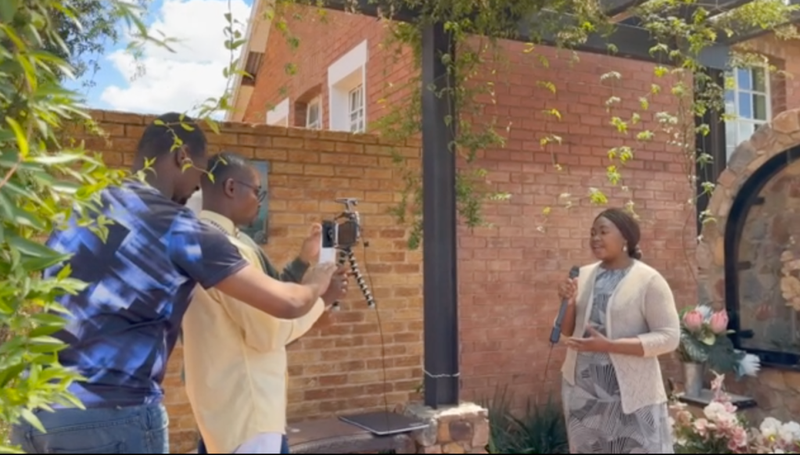
WP9

Workshops on communication, video creation and editing – The video creation intervention was accompanied by five-day workshops in both Cape Town and Johannesburg involving migrants and digital tech experts and professional video makers. The co-design workshops were based around themes of interest to the migrants leading to the creation of videos. The workshops also focused on the safe and secure use of digital technologies as well as ethical aspects related to the creation of video content.

Co-design workshops developing peer-to-peer networks and improving digital skills – This intervention involved workshops in both Johannesburg and Cape Town to train community leaders and activists in the building of safe offline solutions to connect groups of migrants residing in the same neighbourhood. Such networks will support those connected in emergency situations even when no mobile data is available, and they provide a means to coordinate support for vulnerable people as well as to share migrant-related information, including the videos created by migrants.

Follow-up visits to both Nepal and South Africa will include further collaborative efforts to learn lessons from the experiences as well as to ensure that these interventions are sustainable beyond the life of the MIDEQ project.
How and why do migrants use digital tech? Evidence from Malaysia, Nepal and South Africa

This post was first published on the MIDEQ site on 3 February 2022 at https://www.mideq.org/en/blog/how-and-why-do-migrants-use-digital-tech and is reproduced with permission

Digital interventions intended to benefit migrants are often developed by well-intentioned outsiders without sufficient understanding of migrants’ real needs or awareness of how they are already using such technologies. It is scarcely surprising that they fail to have their intended impact. Our approach within MIDEQ has begun to address this basic requirement by learning from migrants themselves at the very beginning of our intervention-research. After all, they know best about their own experiences.

The COVID-19 pandemic prevented us from using our preferred qualitative methods to understand these matters, and so we turned instead to using online surveys facilitated by the country teams in the China-Ghana, Ethiopia-South Africa, Haiti-Brazil and Nepal-Malaysia corridors in 2020 and 2021. This post highlights the main findings from these online surveys with migrants, returned migrants and migrants’ families in Malaysia, Nepal and South Africa (n > 250 in each country). We are subsequently supplementing these with online interviews and evidence from the MIDEQ wide comprehensive country surveys to provide the basis for more detailed analyses.

Five clear conclusions can already be drawn: context matters; most migrants never use apps specifically designed for them; the use of digital technologies increases through the migration process; migrants make very extensive use of smart phones and the Internet; and yet many migrants do not have sufficient skills or knowledge to be able to avail themselves safely of their full potential.

Context matters

It’s a truism, but migrants are very different from each other, not least in Africa, Asia and South America. Despite this, all too often digital “solutions” are developed for migrants (and refugees) as a monolithic uniform group. Our research has clearly shown that migrants in different occupations, and from different backgrounds tend to have significantly varying priorities in their uses of digital technologies. For example, those from Zimbabwe working in South Africa prioritised the use of digital tech for networking more than did those from Cameroon, Ethiopia or Ghana. Gender, though, was surprisingly not as significant a variable as we anticipated in influencing the usage of different types of technology or of what people liked or disliked about them. This was particularly so in our data from Malaysia and Nepal, although in South Africa there were some noticeable differences. Migrant women in South Africa liked the way that digital tech helps with networking and finding things out, whereas men placed greater emphasis on making money from their use. With dislikes, women in South Africa more than men particularly emphasised their potential to cause health problems and access to harmful materials.

What apps are used and why?

Our most important conclusion is that very few migrants ever use apps that have been specifically designed for them. Even when they claim that they have used such apps, almost all the “migrant apps” that they then named were generic ones such as Google, Facebook, WhatsApp or Imo. Only four of the 547 respondents in our surveys in Nepal and Malaysia, for example, mentioned that they used the Shuvayatra Safe Journey app which had been specifically designed for them.

Migrants and their families in these three countries make extensive use of a relatively small range of apps, almost exclusively those developed by global corporations from the USA. Questions were asked about the use of Chinese apps such as Alipay, Badu, QQ and WeChat, but these were very rarely used. Instead it was apps such as Facebook, Instagram, Messenger, WhatsApp and YouTube that were the daily go-tos for more than three quarters of all respondents. These were mainly used for contacting family members and friends, networking, and watching videos, although the preference of specific apps did vary a bit between countries.

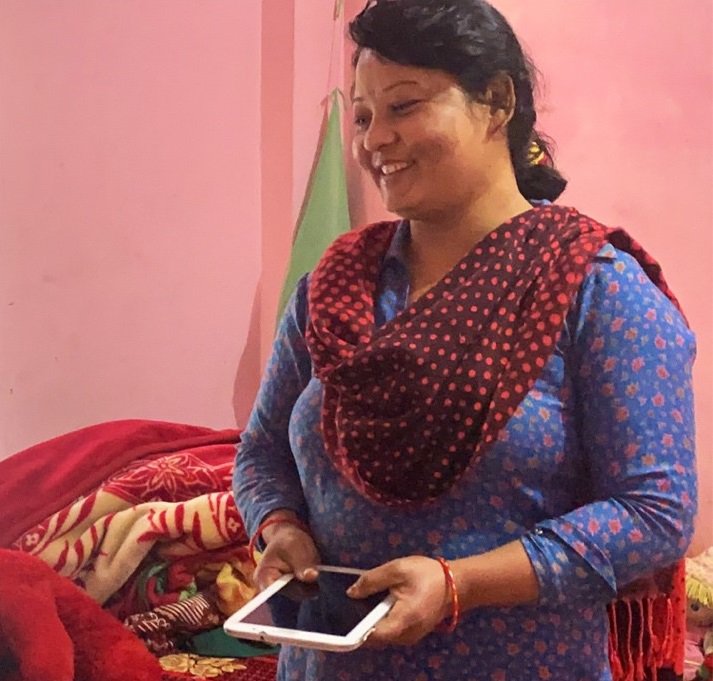
ICT image cropped - photo by Anita Ghimire.jpg
Migrant’s wife in Nepal proudly showing off the tablet sent to her by her husband (Source: Anita Ghimire, with permission)

Digital use through the migration process

A third interesting finding concerned how the use of digital tech varied at different stages in the migration process. Across all countries there was a general progression in the use of digital tech from thinking about migrating to their widespread use in the host countries. In the Nepal survey, for example, only 46% had used digital tech very frequently before migrating, whereas 85% used them very frequently while in the migration destinations. In the sample from South Africa, only 34% had used them very frequently before departure, with 89% do so while in their new locations. Migrants generally also served as a means through which digital tech was dispersed through their home communities, as illustrated in the image above. Enabling their families to have devices at home was a very important way through which they could continue to communicate together.

Which technologies are most used and why?

Mobile phones, especially smart phones, and the Internet were by far and away the dominant digital technologies used by migrants. In South Africa, 99% of the sample used mobile phones daily with the Internet being used daily by 94%; in Malaysia, the figures were very similar, with 98% using mobiles daily and 95% accessing the Internet daily. However, there were subtle differences in usage reported by migrants in the different countries for which we have now analysed data. In South Africa, for example, more than 90% of migrants used digital tech for all but one (work) of the 13 usage categories on which we focused, whereas in Nepal there were only five categories (audio calls, video calls, social networking, health and news updates) for which this was so. Laptops and desktop computers were generally used mostly for work, learning and education, as well as watching videos for entertainment. In Malaysia, digital technologies were liked mainly because they were easy to use and help with finding things out; in South Africa they were most liked for contacting people and accessing information.

How else do migrants want to use digital tech?

The most important findings for us were about what other things migrants wanted to use digital tech for, since this will guide the interventions that we facilitate with them and local tech communities in some of these countries. Interestingly, not many migrants or their families found it easy to respond to this question. However, those that did came up with a wide range of suggestions, including uses related to finance, communicating with family members, skills and employment, music, transport and visa checking. All of these are readily feasible now, which suggests that a key improvement in the digital lives of migrants might just be simply to help them better understand how to use their existing mobile devices. However, other suggestions provide novel potential uses for digital tech, such as “To do my house chores, e.g. cooking, cleaning, ironing etc.” and “to detect liars” or “evaluate what is true and false”. One interestingly said that “I would like to use it track other users. Knowing their communication angles and companion at the point of communication”.

Moving forward

Our intervention-research will use these findings along with those from our more qualitative research and the MIDEQ-wide survey to work with migrants and local tech developers to craft one or more interventions designed with them to reduce the inequalities associated with migration. Rather than reinventing the wheel, or building an app that might not be used by many migrants, we may well work in support of existing initiatives to help improve what they are already doing digitally by incorporating some of our findings. One of the most valuable interventions might simply be helping migrants use the tech that they already have more extensively, wisely and safely in their own interests. Including basic digital skills training in migrant programmes might after all be much more valuable than simply designing another app.

Our latest Working Paper: how migrants in South Africa use digital tech

Members of the UNESCO Chair in ICT4D are leading Work Package 9 of the MIDEQ hub (funded by UKRI GCRF and Royal Holloway, University of London) and are exploring how digital tech can be used to reduce the inequalities associated with migration, especially in four corridors: Nepal-Malaysia, Ethiopia-South Africa, China-Ghana, and Haiti-Brazil. The third of our working papers presenting data on the uses of digital technologies by migrants in South Africa has just been published within the UNESCO Chair in ICT4D’s publication series. Key findings and abstract are as follows.


Key findings

1. Migrants in South Africa are very diverse, making subtly different usage of digital tech – while smart phones and the Internet are the dominant technologies in use, context nevertheless matters in how they are used.  2. Very few migrants make any use at all of apps that have been developed specifically for migrants – and even those 3.7% that claim to do so may not have actually used apps that were deliberately designed for them  3. Many migrants have limited knowledge in how to use the full potential of
their mobile phones – basic training in digital skills and safety might therefore be a valuable intervention for them
 

Abstract

This working paper forms part of the output of Work Package 9 on technology, inequality and migration within the MIDEQ Hub, a multi-disciplinary research project in 12 countries of Latin America, Africa and Asia, including the Ethiopia-South Africa migration corridor.  It presents the results of an online survey of 297 respondents mostly currently living in South Africa (92.2%), and mainly from Ethiopia (59.8%); 92.7% of them identified themselves as migrants, with the remainder being family members of migrants (6.2%) or returned migrants (1.1%).  Following a summary of the methodology, which explains the impact of COVID-19 on this research and why an online survey was used to replace our originally planned interviews and focus groups, the paper provides an overview of the most important results and an exploratory data analysis, focusing on the potential influence of age, gender, countries of origin, migration status, and occupational status on the ways in which respondents use digital technologies and for what purposes.  Three important conclusions for the subsequent stages of our research on the inequalities associated with migration and how digital tech may be used to reduce these are: first, the migrants responding to this survey are from very different backgrounds, and these have some strong influences on their use of digital tech; second, very few migrants make any use at all of apps made specifically for them; and third, many migrants still appear to need basic training in the safe and secure use of digital technologies.


To read this paper in full (v.3 .pdf) please use this link.

Other UNESCO Chair in ICT4D Publications are available here.