Exploring art as language: extending and amplifying our research-practice on the safe, wise and secure use of digital tech in Brazilian peripheries

Following our impact activities in Brazil during 2024, Prof Hari Harindranath returned to Rio de Janeiro in June/July 2025 to work with our local research partner, Dr Heloisa Melino, and organisations there for a series of follow-on activities funded by Royal Holloway’s Social Science Impact Accelerator (SSIA). These included three main activities.

1. Amplifying the impact of our work through artistic means

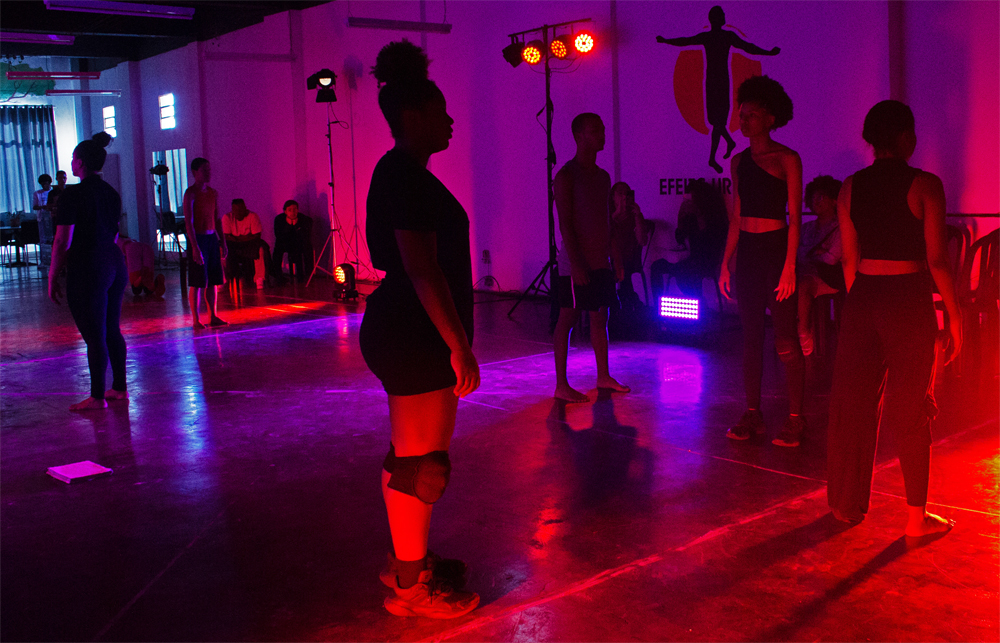
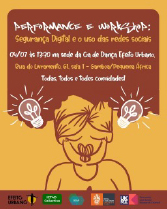
Efeito Urbano, an arts organisation and social project, based in the Providência favela of Rio de Janeiro, showcased a creative performance on digital safety in the periferias which drew on SSIA-funded work previously undertaken by Collective members, Prof Harindranath, Prof Tim Unwin and Dr Heloisa Melino and the experiences of the artists themselves with social networks and digital technologies.
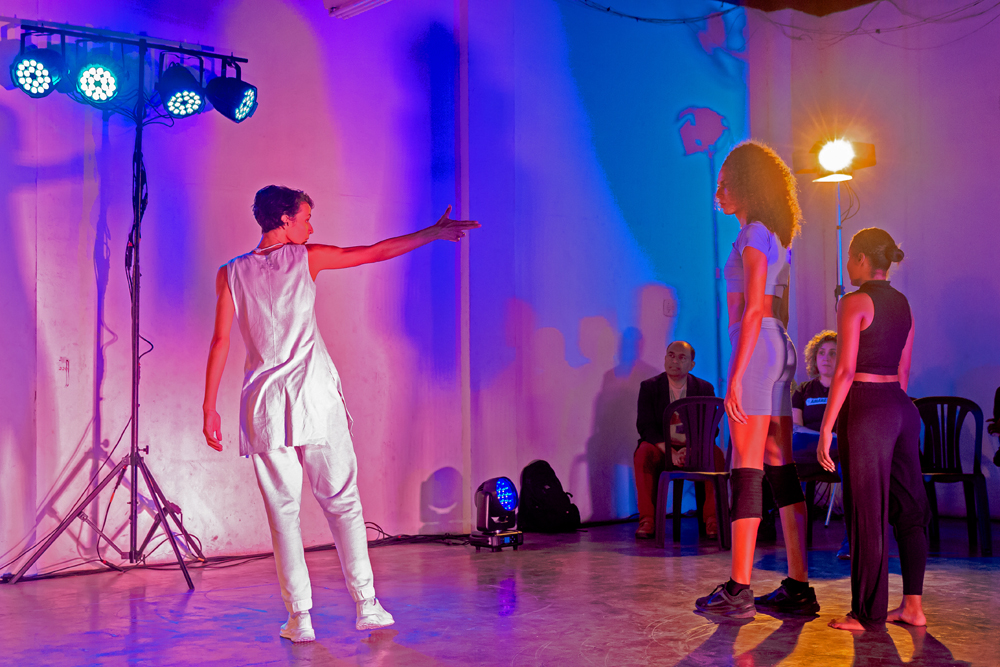
Efeito Urbano is the first professional dance company in Morro da Providência and has developed its own concept of creation and research, Dança Urbana Negra Periférica, based on the pillars of race, gender and territory as well as traditional and contemporary Afro-referenced dances, in addition to the diverse expressions and cultural manifestations of experiences in the favelas and peripheries
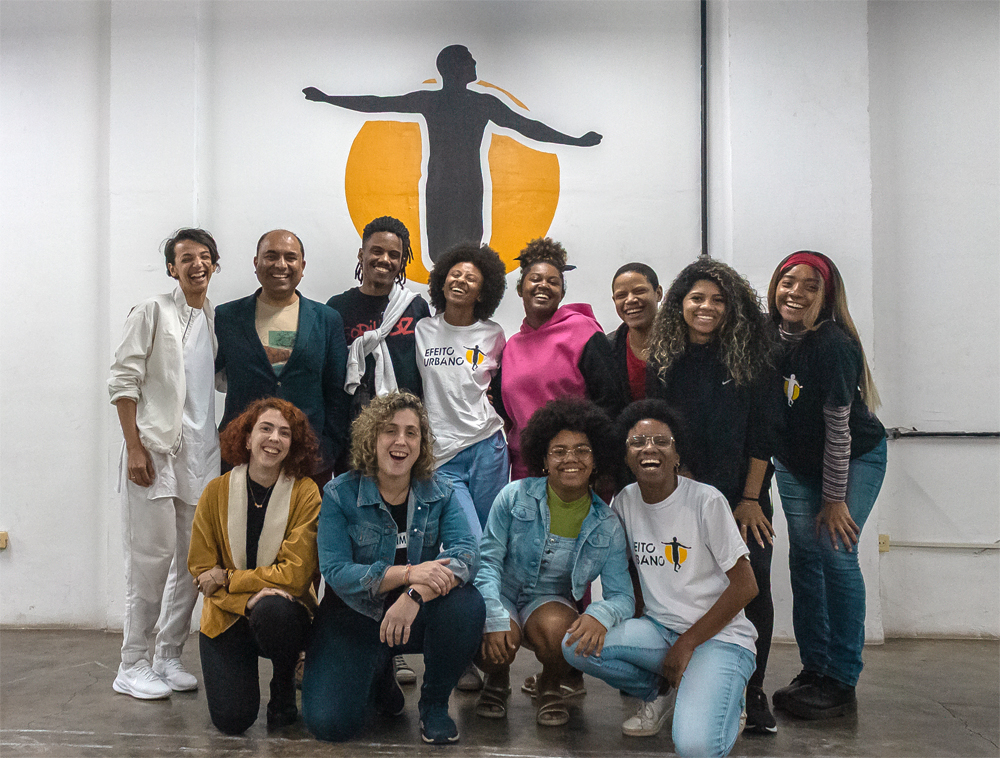
The dancers put on a stunning performance capturing the intertwining of physical and digital lives in the favelas of Rio (link here to a short video). Choreographer Juliana Mello explained that the performance was a starting point for their new residency aimed at reflecting, through the language of dance, how the peripheral body navigates, resists and reinvents itself in the digital environment, with its strengths, pitfalls and invisibilities. Producer Ellen Pereira da Costa talked about the importance of engaging young people through artistic means to spread important messages such as the safe, wise and secure use of digital tech in their contexts which are often characterised by scams, identity theft and violence, both physical and online. Their aim was “to explore the potential of art as a language that activates different senses compared to textual narratives, by engaging the body and movement in the exchange of knowledge on a topic as urgent and necessary as this – particularly among vulnerable populations, who make up the core audience of Instituto Efeito Urbano”.

2. Extending our work on the safe, wise and secure use of digital technologies by vulnerable groups

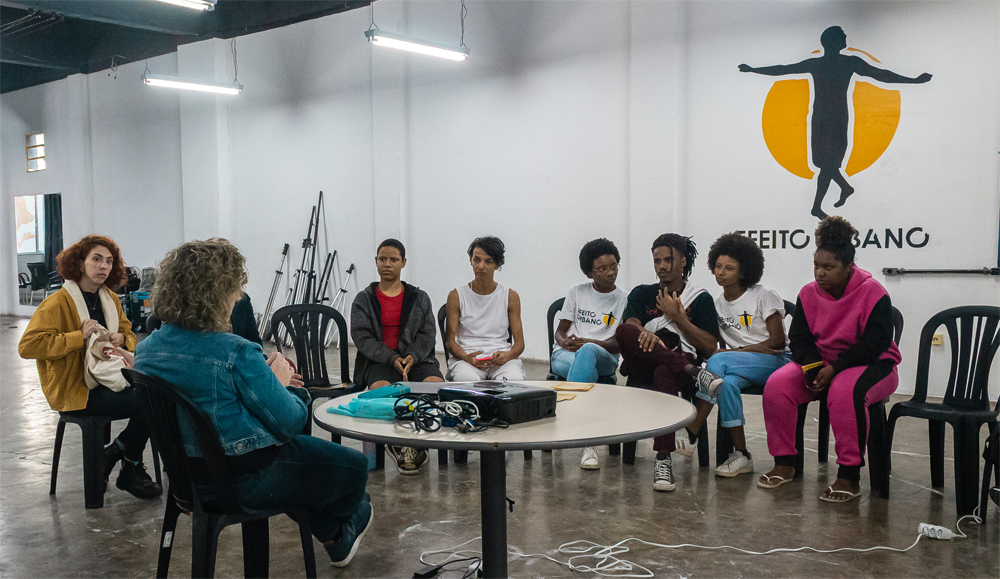
This visit allowed us to extend our work on digital safety nas periferias from our earlier focus on communities in the Maré favela of Rio de Janeiro to young people in the Morro da Providência favela and the surrounding areas. Following the Efeito Urbano performance, Hari and Heloisa led a workshop on the safe, wise and secure use of digital tech by vulnerable groups with some of the artists and members of the audience. Participants were keen to share their online experiences with each other and through the creation of a series of short videos.
3. Evidencing the impact of our ongoing work

We undertook an Outcomes Meeting to gather qualitative feedback on impacts and outcomes from our activities during 2024 with our main partner organisation, Casa Resistências in the Maré favela of Rio. The team at Casa Resistências, an LBT advocacy organisation and a shelter for women fleeing violence and abuse, had previously collaborated with us on activities relating to the safe, wise and secure use of digital technologies nas periferias including a workshop led by Dr Heloisa Melino and the creation of a range of beautiful resources on digital safety designed by local graffiti artist, JLo. These and related activities were aimed at helping activists and others remain safe online while they report on rights violations and undertake their advocacy campaigns. Hari’s visit offered the opportunity to reflect on our activities and their impacts and outcomes.  

Kimberly Veiga from Casa Resistências explained that our collaboration had helped build capacity and enabled them to undertake further activities with local partners such as Fiocruz University on online safety for activists and others in the favelas. She spoke of the impact of online harms for people in her context including online scams, digital identity theft and violence.

This collaboration has allowed us to think about technology as a route to access rights and it has opened another avenue for us to obtain wider support… It has helped us connect with wider networks of support. We now exchange experiences and access support from across the country, including psychological and therapeutic care…Thanks to this collaborative work, we have now created a new agenda on digital for our organisation

Kimberly Veiga, Casa Resistências

Kimberly spoke of the cascading effect of our collaboration that led them to undertake activities relating to the challenges faced by lesbian mothers and the creation of trustworthy resources to support them, similar to the ones we helped create on the safe, wise and secure use of digital tech by vulnerable groups in the Brazilian periferias. Fernanda highlighted the importance of our resources not only as a means to disseminate messages on online safety at all the events they attend but also as a means to enhance the visibility of the broader advocacy work being undertaken by Casa Resistências.

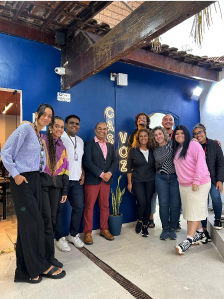
 The visit also enabled Hari and Heloisa to meet with Voz das Comunidades, a community media organisation based in the Complexo do Alemão (Alemão complex of favelas in Rio) where they presented their ongoing work on the safe, wise and secure use of digital tech in the peripheries. The team at Voz shared their experiences of working in the challenging context of the favelas and the importance of physical and online safety as they go about recording and reporting on community matters.

Voz das Comunidades and their Social Impact team expressed interest in working with us in the future. So, watch this space!
In summary, our impact agenda in Brazil funded by SSIA has allowed us to work with multiple organisations and communities in the peripheries of Rio to spread awareness on the safe, wise and secure use of digital tech by vulnerable groups, helped build capacity of both individuals and organisations and reach a broader range of groups through engaging workshops and creative activities and multimedia outputs relevant to the local contexts in Brazil. Hari hopes to continue further collaborative work in Brazil with Heloisa given the interest and enthusiasm shown by local organisations.

Prof G. ‘Hari’ Harindranath

19 July 2025
MoU signed with CIUEM, Mozambique

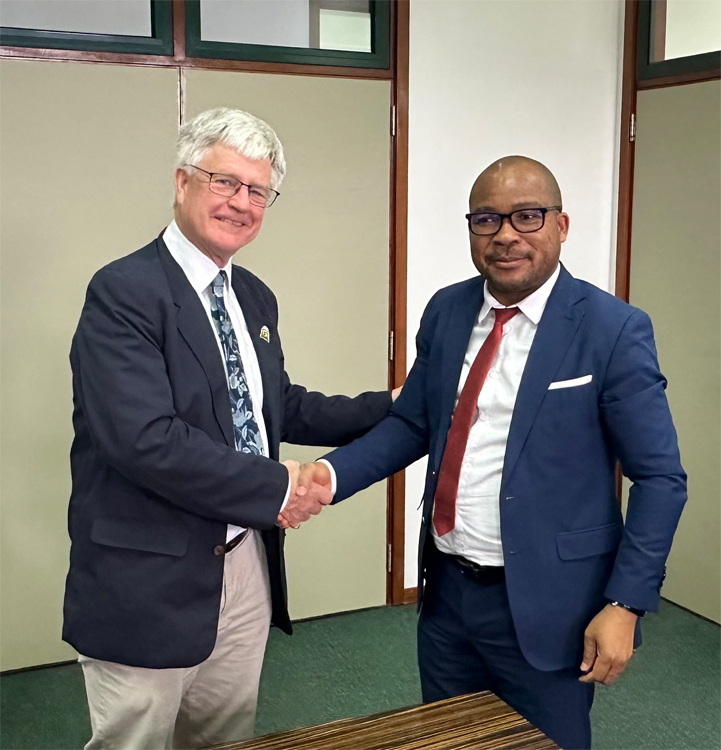
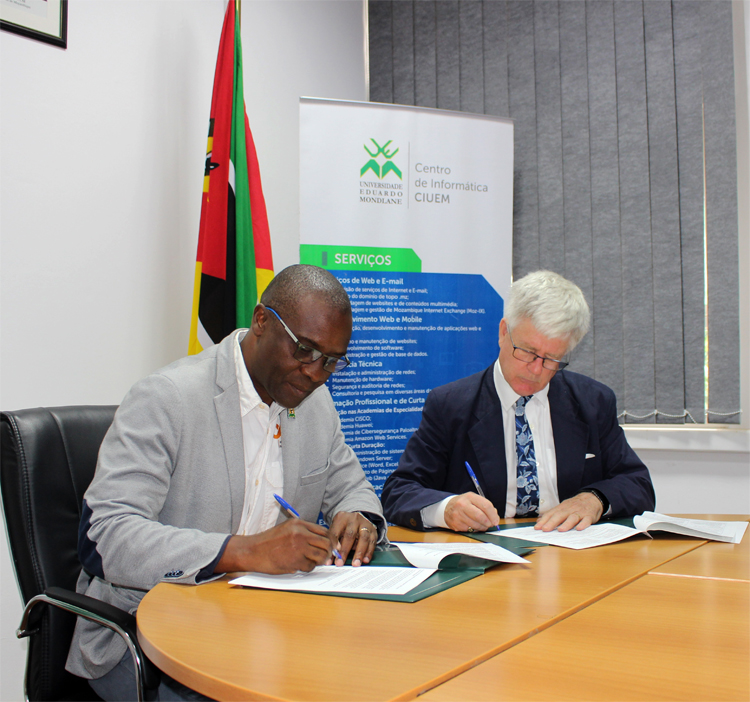
Professor Luis Neves Domingos and Tim Unwin signing a partnership Memorandum of Understanding between the Centro de Informática da Universidade Eduardo Mondlane (CIUEM), Mozambique, and the ICT4D Collective on Monday 30th September 2024 in Maputo.

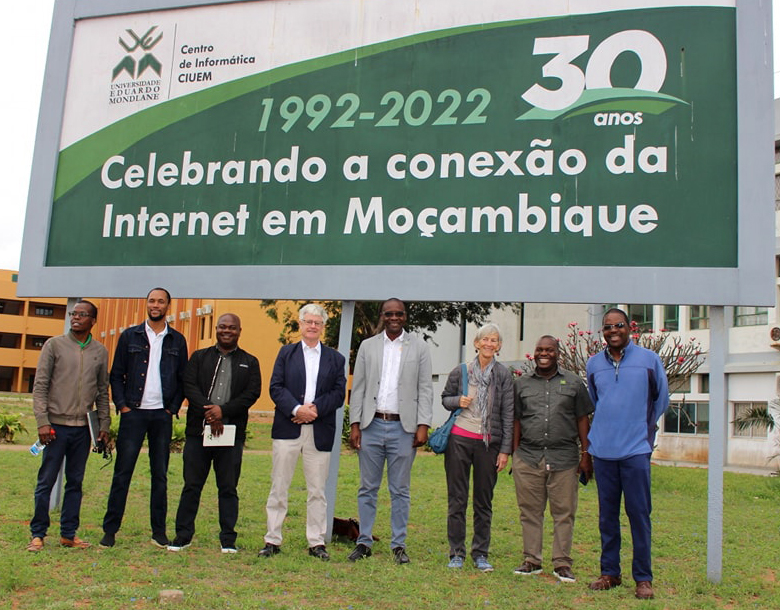
The ICT4D Collective is delighted to have signed its latest partnership agreement with the Centro de Informática da Universidade Eduardo Mondlane (CIUEM) at Eduardo Mondlane University in Maputo. This agreement builds on collaboration between the two organisations over more than 20 years, which began during the UK Government’s Imfundo initiative, and was then taken further through the Africa ICT4D university network that was funded by the UK’s Development Partnerships for Higher Education (DelPHE) scheme supported by DFID and the British Council, and subsequently by European EDULINK funding. This agreement has the following main intended outputs:

  • High quality research and practice on digital technologies, inequalities, social change and international development 
  • Joint workshops and conferences to explore aspects of the inter-relationships between digital technologies, inequalities, social change and international development  
  • Research visits and exchanges between partners, especially to enhance the experiences of early career researchers
  • Joint strategic interventions designed to enhance the wise and appropriate use of digital technologies, especially by marginalised communities and individuals
  • Joint research grant applications to relevant funding agencies and research councils
  • Policy recommendations on areas of mutual interests

More specifically, our work together will focus on developing and sharing local language training resources on the safe, wise and secure use of digital tech, and will initially concentrate on disseminating these resources to Community Radio stations through the agency of the Centro de Apoio à Informação e Comunicação Comunitária.

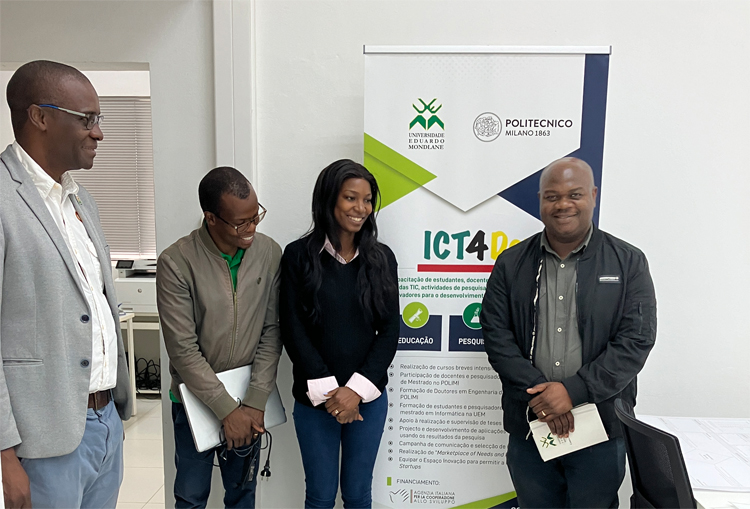
Signing this agreement also provided an opportunity for both Neves and Tim to discuss with the Rector of Eduardo Mondlane University, Prof. Dr. Manuel Guilherme Junior, further ways in which closer collaboration between Mozambican and UK-based researchers and practitioners in the field of digital tech for development can be developed in the interests of some of the poorest and most marginalised people in Mozambique.

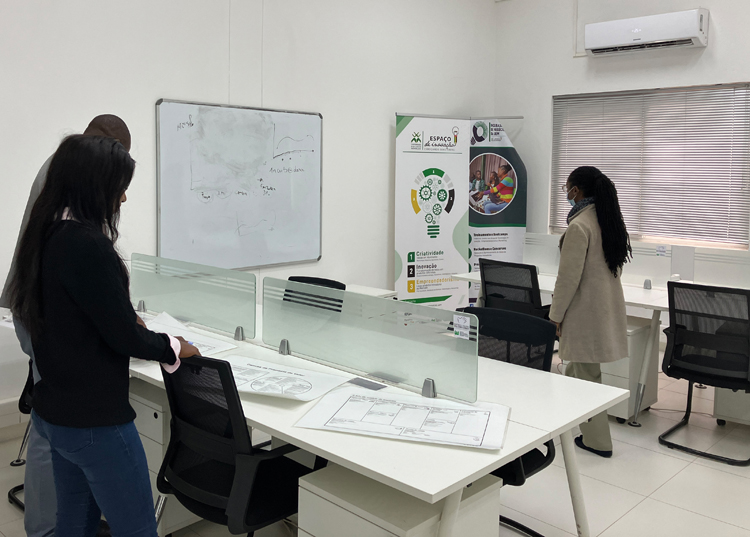
This was also an excellent opportunity to learn more about the CIUEM’s recent achievements, and the exciting new facilities that they are developing, especially in the field of of digital engtrepreneurship and capacity development.

The ICT4D Collective at WSIS+20, Geneva, 26-31 May 2024

The ICT4D Collective is delighted to be participating actively in the upcoming WSIS+20 week of activities in Geneva, especially since 2024 is also the 20th anniversary of the foundation of the Collective, which was created in 2004 to conduct the highest possible quality of research in the field of ICT4D primarily in the interests of poor people and marginalised communities, and making the results of this available freely to the global community.

Geneva from the ITU

Members of the Collective are actively engaged mainly in the following sessions at WSIS+20:

All of these events have been convened jointly with our partners and friends or we have been invited to participate in their sessions as speakers and moderators, and we are most grateful to them for such collaboration. Please do join us at WSIS+20 – we promise to try to make our involvement exciting, interactive and challenging. Should you wish to contact us and arrange meetings during WSIS, do please use our contacts page.

New partnership agreement with Gandaki University, Pokhara, Nepal

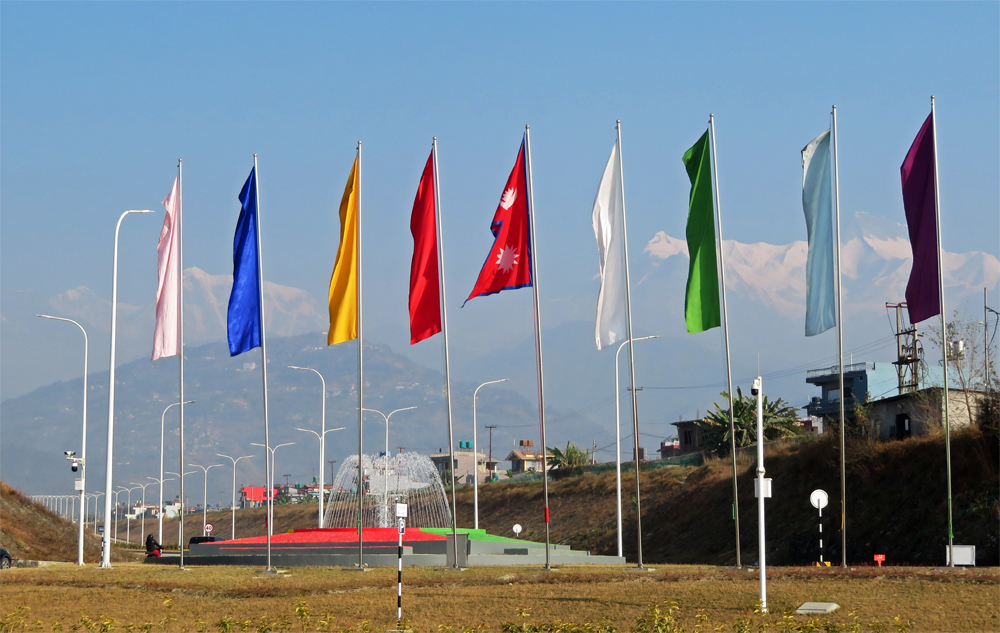
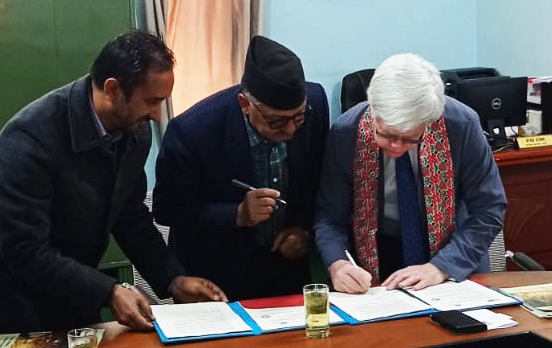
The UNESCO Chair in ICT4D at Royal Holloway, University of London signed a new partnership agreement with Gandaki University, Pokhara during a visit of our Chairholder, Tim Unwin, and Professor Harindranath to the university on 1st February 2023. The University, situated in the valley of the lakes below the Fishtail and Annapurna mountains, was established in 2019 to provide world class education in keeping with recent international trends in university education. It has particular interests in ways through which digital technologies can benefit Nepali society and economic development, and one of its first degree programmes is the Bachelor of Information Technology degree.

Signing the MoU with Gandaki University

Our partnership has five broad outputs:

  • Joint workshops, events and conferences to explore aspects of the inter-relationships between digital technologies, inequalities, social change and international development in the context of Nepal  
  • High quality research and publications on digital technologies, inequalities, social change and international development in Nepal
  • Research visits and exchanges between partners, especially to enhance the experiences of early career researchers
  • Joint funding applications to relevant funding agencies and research councils
  • Policy recommendations on areas of mutual interests

and is intended that these will in turn lead to the following outcomes:

  • Nepalese migrants and their families use digital technologies more safely, securely and wisely to improve their lives and livelihoods
  • Enhanced understanding globally, but especially in the UK and Nepal, about the creation and use of digital technologies, and their influence on social and economic inequalities
  • Wiser processes and activities implemented by companies in Nepal and the UK to mitigate the negative impacts of the development and use of digital technologies by migrants
  • Improvement in global policy making relating to the use of digital technologies by and for migrants
  • Enhanced collaboration between academics, policy makers and practitioners in effecting changes to the ways in which digital technologies are designed and used so that their potential harms are mitigated and their benefits for the poorest and most marginalised are enhanced, especially in the contexts of Nepal and migration 

The university is currently building a new campus on the eastern outskirts of Pokhara, and Tim and Hari were invited on 2nd February to see the progress on construction that has already been made, illustrated in the photographs below.

Department of Pharmacy

Valley running past the new campus

Invention and Innovation Centre

The catalyst for this partnership has been the work of the UNESCO Chair in ICT4D on technology, inequality and migration in Nepal as part of the UKRI GCRF funded MIDEQ Hub, but it is hoped that this will provide many further opportunities for future collaboration, and discussions are already underway with some of our Affiliated Members in the region exploring fiurther synergies.

Members of UNESCO Chair in ICT4D pledge commitments to Partner2Connect

The UNESCO Chair in ICT4D accepted an invitation in 2021 to join the UN’s Partner2Connect Coalition (P2C), which has been created with the aim of being “a leadership level platform to engage all stakeholders to mobilize and announce new resources, partnerships, and commitments to achieve universal and meaningful connectivity”. The ITU is the overall convener of the Coalition, working in close collaboration with the Office of the Secretary-General’s Envoy on Technology, the UN Office of the High Representative for the Least Developed Countries, Landlocked Developing Countries and Small Island Developing States (UN-OHRLLS), and line with the UN Secretary General’s Roadmap for Digital Cooperation.

The Coalition has four Focus Areas, and having participated actively in its meetings over the last six months, we are focusing our engagement primarily on the second of these: how the poor and marginalised can empower themselves through the use of digital technologies.

We are delighted to report that our pledge to Partner2Connect has now been validated. This is to advise, engage and involve Partner2Connect partners in delivering effective and empowering interventions with the world’s most marginalised people and communities.

We are offering the Coalition and its partners three main things:

  • An opportunity to engage directly in and contribute to our ongoing and future initiatives working with poor and marginalised communities and people who choose to use digital technologies for their empowerment. This will focus on five main areas:
    • Our work with migrants (especially in Nepal and South Africa as part of MIDEQ) to craft digital interventions that will reduce the inequalities associated with migration (led by Hari Harindranath and Maria Rosa Lorini)
    • Our work with people with disabilities, especially with our partner the Inter Islamic Network on IT throughout the Islamic world (led mainly by Akber Gardezi and Tahir Naeem)
    • Our work through TEQtogether on changing men’s attitudes to women and digital tech, especially in patriarchal societies (with the support of ICT4D.at, and led by Tim Unwin, Liz Quaglia and Paul Spiesberger)
    • Indigenous peoples and small island developing states (SIDS), especially with our partners RC-DISC at the University of Canberra and ISITI at the University of Malaysia Sarawak (UNIMAS) (involving Roger Harris and Ahmed Imran)
    • Work on entrepreneurship. This has mainly been focused since 2018 in Kazakhstan and Central Asia on empowering creative local start-ups with entrepreneurship skills for growth and development (led by Endrit Kromidha)
  • Contributing expertise in research and practice to the further conceptual development of Focus Area 2 so that all activities are developed in accordance with the latest understanding of inclusive, equal and safe access and use of ICTs for all. We recognise that there are many differing views about empowerment, and we relish the opportunity to engage with other partner organisations to develop shared understandings of benefit to P2C and to the world’s least connected peoples. 
  • Offering training in empowerment theory and practice to partners within P2C. We look forward to the opportunity to engage actively with other P2C partners through workshops and other forms of tailored training to share our experiences of delivering digital interventions with and for the most marginalised, focusing especially on the notion of empowerment that lies at the heart of Focus Area 2.

We are one of the few academic entities yet to pledge commitments to Partner2Connect, and look forward to continuing to engage with and contribute to its actitivites, especially helping to ensure that the world’s poorest and most marginalised do indeed benefit from the increased global connectivity that the Coalition seeks to provide.


Please use our Contacts Page should you wish to find out more or to work with us in driving these pledges forward