Finalising details with them of a portal to bring together existing information of relevance to migrants so that they can readily gain reliable advice on all aspects of migration. There are many existing apps and websites relating to migration for Nepali citizens, not least the advice provided by the government. However, migrant organisations told us early on in our work with them that there was a real need for such a one-stop-shop, and we have been supporting them as they have been creating this portal together with local tech developers. This is due to be launched in December 2023, and the migrants also made some short videos that will be used to promote the portal in advance of the launch.
A second element of work suggested by the organisations was the need for basic training guidance for migrants in multiple languages used in Nepal on the safe, wise and secure/private use of digital tech. Following the development of a training programme earlier in 2023, along with guidance notes on how the slide deck can be used, migrants rquested a more basic set of information. Having produced this before our visit, we tested it out again in Kathmandu, and following some further revisions this is now being translated into relevant languages, and will also be availabe at the launch in December.
The visit also provided an opportunity to meet with colleagues from different organisations based in Kathmandu, primarily to explore ways through which these resources can best be disseminated, notably the Government of Nepal’s Foreign Employment Bureau, the ILO Office in Kathmandu, and the UNESCO office in Kathmandu. We are very grateful for their strong support and the advice that they have given us. It was also good to meet with Nayan Pokhrel who has led on the translation of our work, and has provide much useful information about Nepal for us.
In Pokhara, we followed a similar pattern of work including:
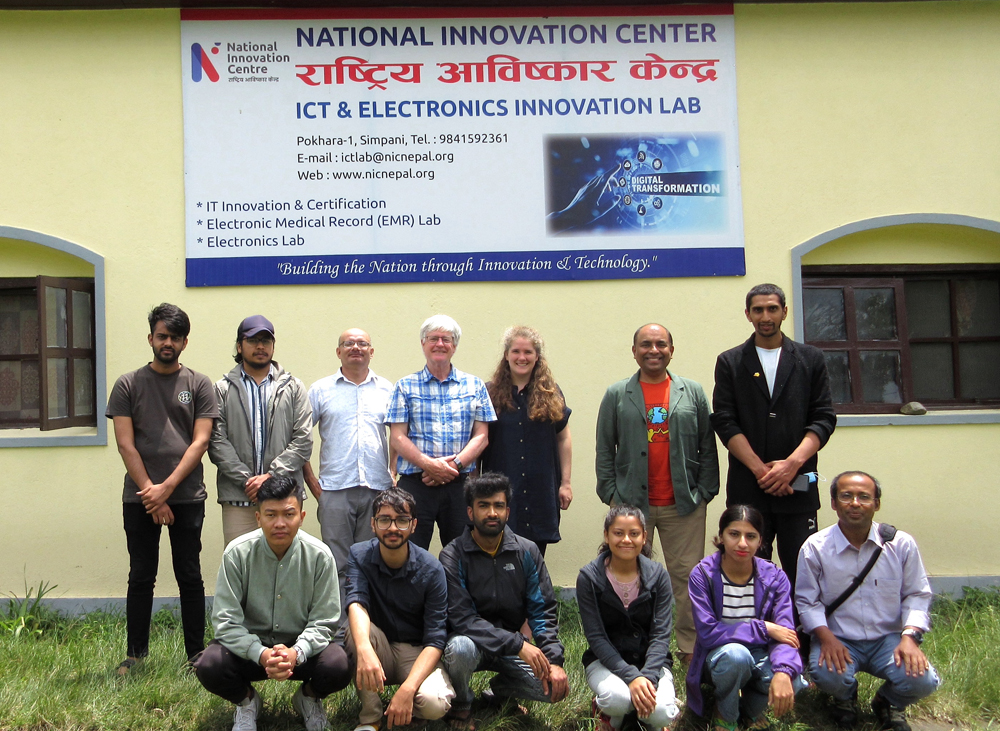
Meetings with our partners at Gandaki University as well as those involved in training young people in digital skills at the National Innovation Centre’s ICT & Electronics Innovation Lab, and staff at Gandaki Medical College and hospital.
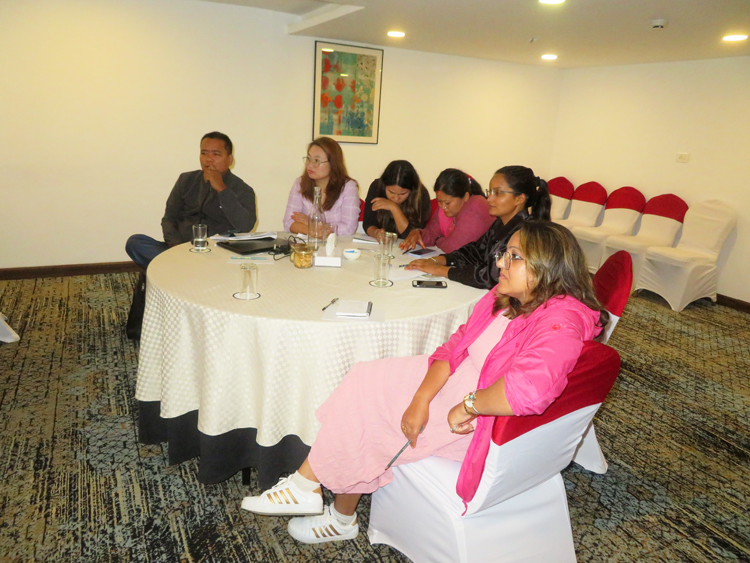
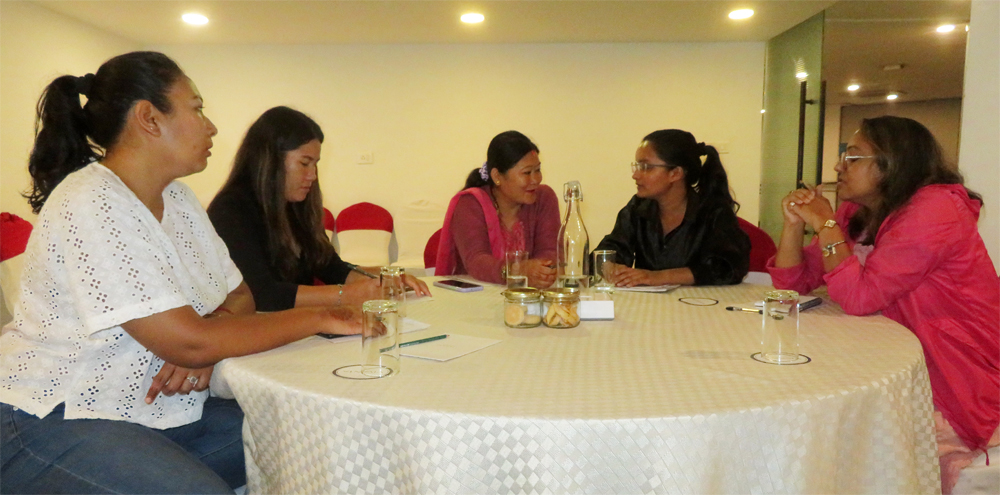
A review session on the basic training deck we have been creating together on the safe, wise and secure use of digital tech, with colleagues from Gandaki University, the MRC in Pokhara, and NEST in Pokhara.
We were also grateful to have an opportunity to see some of the wealth of cultural heritage of Nepal, especially around Patan Durbar Square and Kathmandu Durbar Square which have been so lovingly restored after the earthquake of 2015.
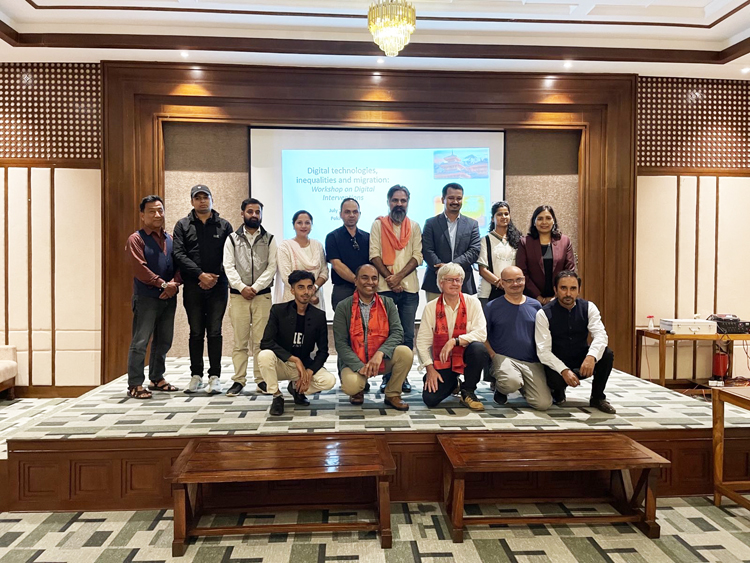
The session, which aligned especially with SDG10 and WSIS Action Lines C3, C4, C5, C7(iii, iv,v), C8 and C10, was structured around our digital interventions from Nepal and South Africa using a series of short-form videos ‘created by migrants for migrants’ as a framing device for the discussion. The contributions highlighted many inequalities faced by migrants and how digital tech can meaningfully address them as well as how digital tech can support personal life choices, offer networking opportunities, and become a peer-to-peer learning tool. The overarching theme was the need for all actors at the interface of digital tech and migration to be mindful of the need to ensure the safe, secure and wise use of digital tech by migrants.
Despite increasing evidence of the challenges to the beneficial use of digital tech by vulnerable migrants, actors such as tech companies, international and local organisations continue to design technologies aimed at migrants without due regard to their unintended consequences. International organisations and fora such as WSIS that are at the forefront of digital inclusion must recognise not just the opportunities offered by digital tech for migrants but also the risks and harms associated with them. This is especially important given the pervasive structural inequalities and limited digital capabilities that characterise many migrant contexts.
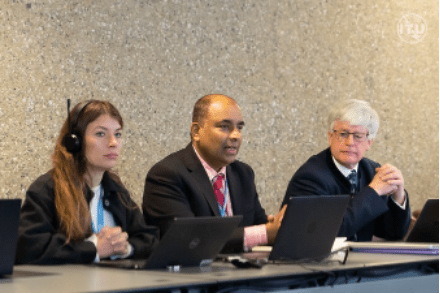
WP9 co-lead Prof G Hari Harindranath led the session with Prof Tim Unwin and Dr Maria Rosa Lorini while Bryce Hartley from GSMA (online) and Julien Varlin from ILO Geneva served as discussants. The highly interactive hybrid session was attended by senior government officials and representatives from international organisations, CSOs and tech companies as well as researchers.
We also used the in-person WSIS Forum in beautiful Geneva as an opportunity to discuss pathways to impact for our work with colleagues at IOM and ILO.
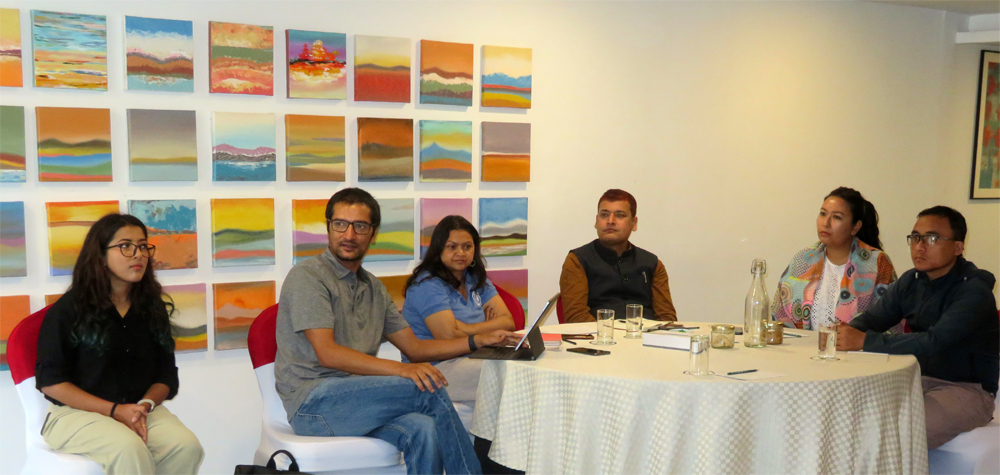
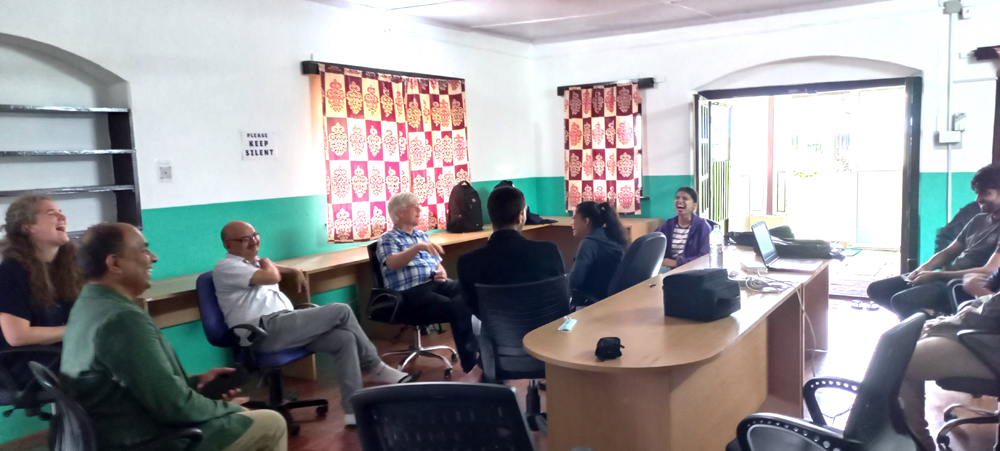
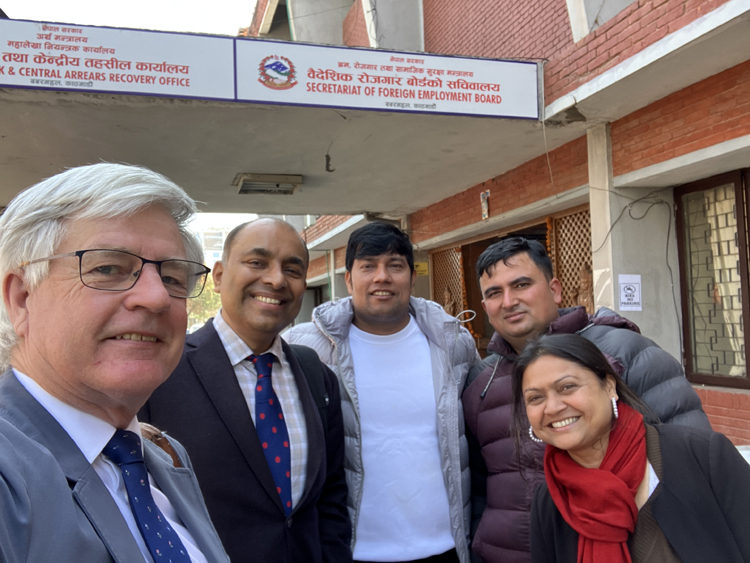
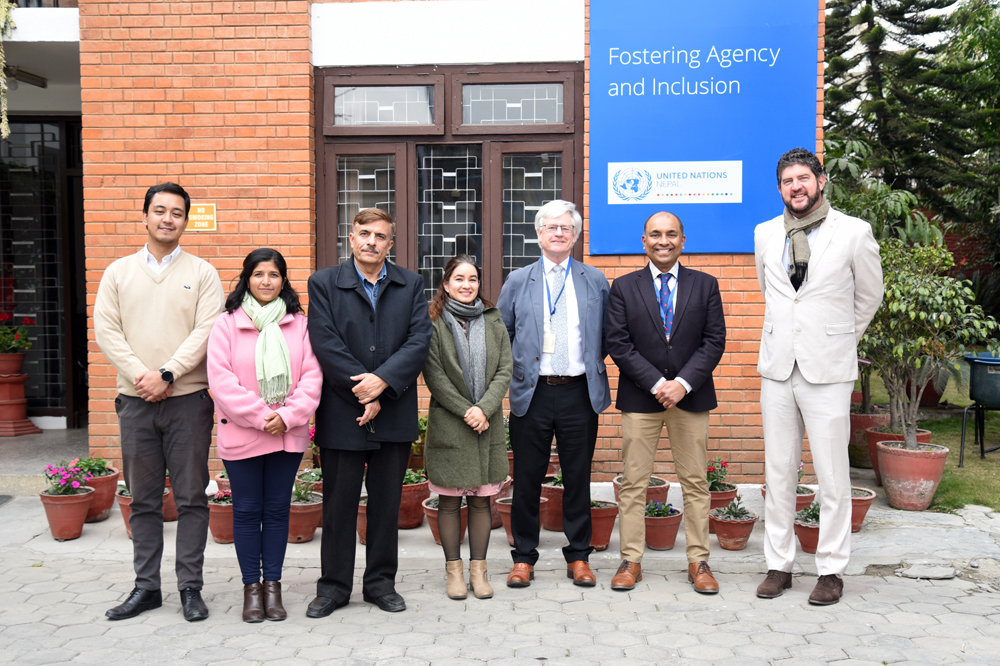
Hari Harindranath and Tim Unwin with migrants, migrant organisations and tech organisations in Kathmandu, January 2023
The UNESCO Chair in ICT4D leads Work Package 9 within the MIDEQ Hub (funded by UKRI GCRF) on technology, inequality and migration. This is explicitly an intervention package, designed to draw on research across the Hub to bring migrants, migrant organisations and tech developers together to craft practical interventions that can benefit their lives and reduce inequalities associated with migration. We have been working with NISER, our lead partner in Nepal, since 2019 undertaking research on how migrants already use digital tech (see our working papers), and building on this work Prof “Hari” Harindranath and Dr. Maria Rosa Lorini visited Nepal in September 2020 to initiate our intervention activities. Migrants identified two main areas where they felt that interventions could make a significant difference: appropriate training in the uses of safe, wise and secure digital tech, and creating a platform or portal as a digital one-stop-shop that would bring together the most important sources of information for Nepali migrants and ther families.
Hari returned to Nepal with Tim Unwin in January-February 2023 to convene workshops (on 28 and 29 January, and 3rd February) and meetings to take forward the implementation of these two interventions. Good progress was made in the following areas (further details here):
Designing the content structure for the platform, and setting in motion the work of the content team and the tech team who are going to take forward the digital one-stop-shop with a Beta version planned for May 2023.
Running a pilot workshop in Kathmandu for migrants based on the slide deck developed with migrant organisations over the previous couple of months. This was well received, with helpful comments having been suggested for improvement.
Running another workshop in Pokhara for students and staff from a Migrant Resouce Centre, which recommended that we need to develop a more basic introduction to the wise, safe and secure use of digital tech for those who have negligible prior knowledge of digital tech.
This visit to Nepal also provided the valuable opportunity to have a very productive visit to colleagues in the UNESCO Office in Kathmandu (30 January), to sign a partnership agreement and discuss collaborative research-practice with Gandaki University in Pokhara (1-2 February), to meet with tech companies including Hamro Patro and Ncell (3 February), to explore collaboration with government initiatives through the Foreign Employment Board (31 January), to engage with colleagues at the National Innovation Centre (31 January), and to meet with fellow researchers working in the field of digital tech and migration (see images below).
We would like to take this opportunity to thank all those who attended our workshops, and who contributed to this work. We are also grateful to the staff at the Hotel Himalaya, Lalitpur and the Landmark Hotel in Pokhara for facilitating our stay and meetings – and would recommend both for anyone visiting Kathmandu and Pokhara respectively.
Profs “Hari” Harindranath and Tim Unwin were delighted to visit colleagues at the UNESCO Office in Kathmandu during their recent visit to Nepal (26 January – 5th February) as part of our contribution to the work of the MIDEQ Hub (funded by the UKRI GCRF). This provided an excellent opportunity for them to brief the UNESCO Office team about our MIDEQ-related work in Nepal, and also the wider activities of our UNESCO Chair in ICT4D, including the use of digital tech in education, TEQtogether, and the Digital-Environment System Coalition. It was a real pleasure to learn from Michael Croft (Director) and his team about the various activitites on which the Office focuses, and to discuss ways of collabroating in the future.
We are already building on this visit, and are very grateful to them for their advice on developing training materials and a portal for Nepali migrants and their families to gain information about all aspects of the migration process. This visit was such a good example of how UNESCO Chairs can work closely with UNESCO’s offices around the world to help achieve the organisation’s overall goals. We were made to feel so welcome, and the conversations were full of enthusiasm and passion for how UNESCO and its Chairs can contribute together to support Nepal’s people. We very much hope that other colleagues in our UNESCO Chair as well as our partners will also consider ways through which they too can support the UNESCO Office in Kathmandu.
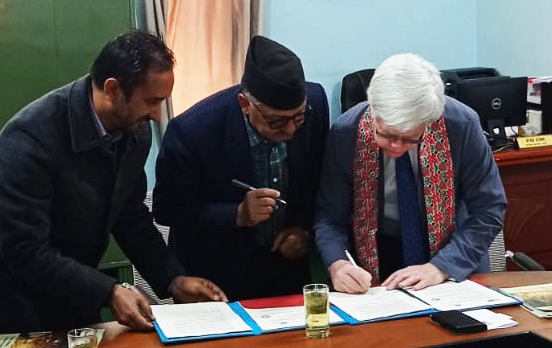
The UNESCO Chair in ICT4D at Royal Holloway, University of London signed a new partnership agreement with Gandaki University, Pokhara during a visit of our Chairholder, Tim Unwin, and Professor Harindranath to the university on 1st February 2023. The University, situated in the valley of the lakes below the Fishtail and Annapurna mountains, was established in 2019 to provide world class education in keeping with recent international trends in university education. It has particular interests in ways through which digital technologies can benefit Nepali society and economic development, and one of its first degree programmes is the Bachelor of Information Technology degree.
Signing the MoU with Gandaki University
Our partnership has five broad outputs:
Joint workshops, events and conferences to explore aspects of the inter-relationships between digital technologies, inequalities, social change and international development in the context of Nepal
High quality research and publications on digital technologies, inequalities, social change and international development in Nepal
Research visits and exchanges between partners, especially to enhance the experiences of early career researchers
Joint funding applications to relevant funding agencies and research councils
Policy recommendations on areas of mutual interests
and is intended that these will in turn lead to the following outcomes:
Nepalese migrants and their families use digital technologies more safely, securely and wisely to improve their lives and livelihoods
Enhanced understanding globally, but especially in the UK and Nepal, about the creation and use of digital technologies, and their influence on social and economic inequalities
Wiser processes and activities implemented by companies in Nepal and the UK to mitigate the negative impacts of the development and use of digital technologies by migrants
Improvement in global policy making relating to the use of digital technologies by and for migrants
Enhanced collaboration between academics, policy makers and practitioners in effecting changes to the ways in which digital technologies are designed and used so that their potential harms are mitigated and their benefits for the poorest and most marginalised are enhanced, especially in the contexts of Nepal and migration
The university is currently building a new campus on the eastern outskirts of Pokhara, and Tim and Hari were invited on 2nd February to see the progress on construction that has already been made, illustrated in the photographs below.
Department of Pharmacy
Valley running past the new campus
Invention and Innovation Centre
The catalyst for this partnership has been the work of the UNESCO Chair in ICT4D on technology, inequality and migration in Nepal as part of the UKRI GCRF funded MIDEQ Hub, but it is hoped that this will provide many further opportunities for future collaboration, and discussions are already underway with some of our Affiliated Members in the region exploring fiurther synergies.
Digital interventions intended to benefit migrants are often developed by well-intentioned outsiders without sufficient understanding of migrants’ real needs or awareness of how they are already using such technologies. It is scarcely surprising that they fail to have their intended impact. Our approach within MIDEQ has begun to address this basic requirement by learning from migrants themselves at the very beginning of our intervention-research. After all, they know best about their own experiences.
The COVID-19 pandemic prevented us from using our preferred qualitative methods to understand these matters, and so we turned instead to using online surveys facilitated by the country teams in the China-Ghana, Ethiopia-South Africa, Haiti-Brazil and Nepal-Malaysia corridors in 2020 and 2021. This post highlights the main findings from these online surveys with migrants, returned migrants and migrants’ families in Malaysia, Nepal and South Africa (n > 250 in each country). We are subsequently supplementing these with online interviews and evidence from the MIDEQ wide comprehensive country surveys to provide the basis for more detailed analyses.
Five clear conclusions can already be drawn: context matters; most migrants never use apps specifically designed for them; the use of digital technologies increases through the migration process; migrants make very extensive use of smart phones and the Internet; and yet many migrants do not have sufficient skills or knowledge to be able to avail themselves safely of their full potential.
Context matters
It’s a truism, but migrants are very different from each other, not least in Africa, Asia and South America. Despite this, all too often digital “solutions” are developed for migrants (and refugees) as a monolithic uniform group. Our research has clearly shown that migrants in different occupations, and from different backgrounds tend to have significantly varying priorities in their uses of digital technologies. For example, those from Zimbabwe working in South Africa prioritised the use of digital tech for networking more than did those from Cameroon, Ethiopia or Ghana. Gender, though, was surprisingly not as significant a variable as we anticipated in influencing the usage of different types of technology or of what people liked or disliked about them. This was particularly so in our data from Malaysia and Nepal, although in South Africa there were some noticeable differences. Migrant women in South Africa liked the way that digital tech helps with networking and finding things out, whereas men placed greater emphasis on making money from their use. With dislikes, women in South Africa more than men particularly emphasised their potential to cause health problems and access to harmful materials.
What apps are used and why?
Our most important conclusion is that very few migrants ever use apps that have been specifically designed for them. Even when they claim that they have used such apps, almost all the “migrant apps” that they then named were generic ones such as Google, Facebook, WhatsApp or Imo. Only four of the 547 respondents in our surveys in Nepal and Malaysia, for example, mentioned that they used the Shuvayatra Safe Journey app which had been specifically designed for them.
Migrants and their families in these three countries make extensive use of a relatively small range of apps, almost exclusively those developed by global corporations from the USA. Questions were asked about the use of Chinese apps such as Alipay, Badu, QQ and WeChat, but these were very rarely used. Instead it was apps such as Facebook, Instagram, Messenger, WhatsApp and YouTube that were the daily go-tos for more than three quarters of all respondents. These were mainly used for contacting family members and friends, networking, and watching videos, although the preference of specific apps did vary a bit between countries.
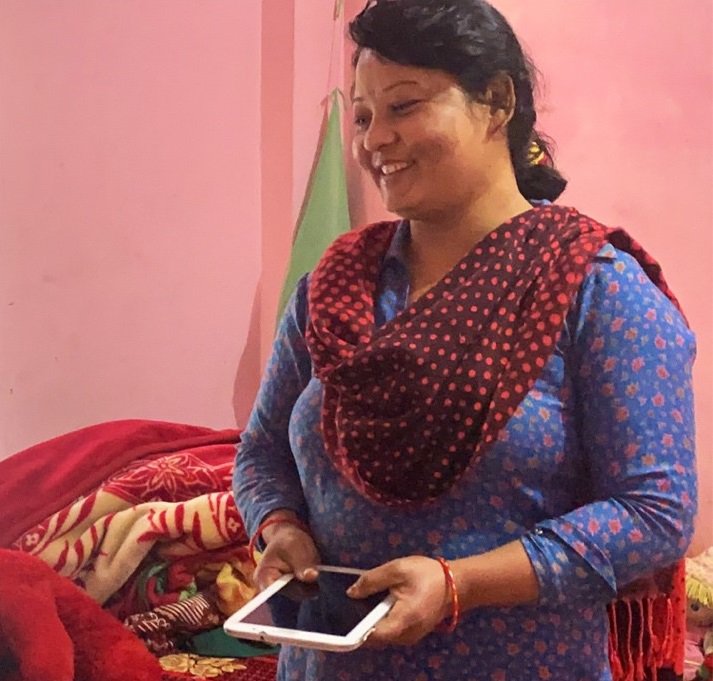
Migrant’s wife in Nepal proudly showing off the tablet sent to her by her husband (Source: Anita Ghimire, with permission)
Digital use through the migration process
A third interesting finding concerned how the use of digital tech varied at different stages in the migration process. Across all countries there was a general progression in the use of digital tech from thinking about migrating to their widespread use in the host countries. In the Nepal survey, for example, only 46% had used digital tech very frequently before migrating, whereas 85% used them very frequently while in the migration destinations. In the sample from South Africa, only 34% had used them very frequently before departure, with 89% do so while in their new locations. Migrants generally also served as a means through which digital tech was dispersed through their home communities, as illustrated in the image above. Enabling their families to have devices at home was a very important way through which they could continue to communicate together.
Which technologies are most used and why?
Mobile phones, especially smart phones, and the Internet were by far and away the dominant digital technologies used by migrants. In South Africa, 99% of the sample used mobile phones daily with the Internet being used daily by 94%; in Malaysia, the figures were very similar, with 98% using mobiles daily and 95% accessing the Internet daily. However, there were subtle differences in usage reported by migrants in the different countries for which we have now analysed data. In South Africa, for example, more than 90% of migrants used digital tech for all but one (work) of the 13 usage categories on which we focused, whereas in Nepal there were only five categories (audio calls, video calls, social networking, health and news updates) for which this was so. Laptops and desktop computers were generally used mostly for work, learning and education, as well as watching videos for entertainment. In Malaysia, digital technologies were liked mainly because they were easy to use and help with finding things out; in South Africa they were most liked for contacting people and accessing information.
How else do migrants want to use digital tech?
The most important findings for us were about what other things migrants wanted to use digital tech for, since this will guide the interventions that we facilitate with them and local tech communities in some of these countries. Interestingly, not many migrants or their families found it easy to respond to this question. However, those that did came up with a wide range of suggestions, including uses related to finance, communicating with family members, skills and employment, music, transport and visa checking. All of these are readily feasible now, which suggests that a key improvement in the digital lives of migrants might just be simply to help them better understand how to use their existing mobile devices. However, other suggestions provide novel potential uses for digital tech, such as “To do my house chores, e.g. cooking, cleaning, ironing etc.” and “to detect liars” or “evaluate what is true and false”. One interestingly said that “I would like to use it track other users. Knowing their communication angles and companion at the point of communication”.
Moving forward
Our intervention-research will use these findings along with those from our more qualitative research and the MIDEQ-wide survey to work with migrants and local tech developers to craft one or more interventions designed with them to reduce the inequalities associated with migration. Rather than reinventing the wheel, or building an app that might not be used by many migrants, we may well work in support of existing initiatives to help improve what they are already doing digitally by incorporating some of our findings. One of the most valuable interventions might simply be helping migrants use the tech that they already have more extensively, wisely and safely in their own interests. Including basic digital skills training in migrant programmes might after all be much more valuable than simply designing another app.
Members of the UNESCO Chair in ICT4D are leading Work Package 9 of the MIDEQ hub (funded by UKRI GCRF and Royal Holloway, University of London) and are exploring how digital tech can be used to reduce the inequalities associated with migration, especially in four corridors: Nepal-Malaysia, Ethiopia-South Africa, China-Ghana, and Haiti-Brazil. The second of our working papers presenting data on the uses of digital technologies by Nepali migrants and their families has just been published within the UNESCO Chair in ICT4D’s publication series. Key findings and abstract are as follows.
Key findings
1. Nepali migrants and their familes make extensive use of digital technologies – especially smart phones and the Internet for a wide range of purposes, and not just for audio and video calls
2. Very few migrants make any use at all of apps that have been developed specifically for migrants – and even those 8.7% that claim to do so may not have actually used such apps
3. Migrant use of digital technologies increases through the migration journey – only 46.4% had used digital tech daily before migrating, whereas 85.4% used them daily while in the migration destinations.
Abstract
This working paper forms part of the output of Work Package 9 on technology, inequality and migration within the MIDEQ Hub, a multi-disciplinary research project in 12 countries of Latin America, Africa and Asia, including the Nepal-Malaysia migration corridor. It presents the results of an online survey of 266 respondents in and from Nepal, 58.5% of whom identified themselves as migrants, with 28.1% being family members of migrants, and 13.4% being returned migrants. Following a summary of the methodology, which explains why an online survey was used to replace the originally planned interviews and focus groups, the paper provides an overview of the most important results and analysis, focusing on the potential influence of age, gender, countries of origin and destination, migration status, and occupational status on the ways in which respondents use digital technologies and for what purposes. Three important conclusions for Phase Two of our research are: first, the vast majority of Nepali respondents have smart phones and access the internet very frequently for a wide range of purposes; second, simply designing another new app may not be particularly valuable; and third, it might well be wise to work with, or build on, technologies and apps already in existence, so as to improve them in ways that could increasingly empower migrants.
To read this paper in full (v.5 .pdf) please use this link.
Other UNESCO Chair in ICT4D Publications are available here.
Members of the UNESCO Chair in ICT4D are leading Work Package 9 of the MIDEQ hub (funded by UKRI GCRF and Royal Holloway, University of London) and are exploring how digital tech can be used to reduce the inequalities associated with migration, especially in four corridors: Nepal-Malaysia, Ethiopia-South Africa, China-Ghana, and Haiti-Brazil. The first of our working papers presenting data on the use of digital tech by Nepali migrants in Malaysia has just been published within the UNESCO Chair in ICT4D’s publication series. Key findings and abstract are as follows.
Key findings
1. Digital technologies play an important part in the lives of Nepali migrants in Malaysia – especially mobile phones for personal communications, entertainment and games, as well as for gaining news updates
2. Very few migrants make any use at all of apps that have been developed specifically for migrants – 97.3% made no use of such apps
3. Migrant use of digital technologies increases through the migration journey – 94% had not used digital tech before migrating, whereas 66.1% used them very often while in Malaysia
Abstract
This working paper forms part of the output of Work Package 9 on technology, inequality and migration within the MIDEQ Hub, a multi-disciplinary research project in 12 countries of Latin America, Africa and Asia, including the Nepal-Malaysia migrant corridor. It presents the results of an online survey of 281 respondents in Malaysia, 98.2% of whom were migrants, with 1.8% being family members of migrants; 96.1% of the respondents had been born in Nepal. Following a summary of the methodology, which explains why an online survey was used to replace the originally planned interviews and focus groups, the paper provides an overview of the most important results. Smart phones and the Internet are widely used by migrants, mainly for audio calls, video calls, news updates, text messages, and watching videos for entertainment. Digital devices are liked mainly because they are easy to use and they help users network with others, but in contrast, they are disliked because of the costs of the devices and air-time. An important finding is that migrants increasingly used digital technologies as their migration journeys progressed; only 3.2% used them very often in deciding to migrate, whereas 66.1% used them while in Malaysia. Three pertinent conclusions for our future work with migrants and local tech developers on implementing a digital intervention to reduce the inequalities associated with migration are: simply designing another new app will not be particularly valuable; the widespread use of smartphones and access to the internet by migrants suggest that these might be appropriate areas on which to focus; and it might be wise to work with, or build on, technologies and apps already in existence, so as not to reinvent the wheel and add value in any interventions that we develop together.
Our next working paper (available in August) will be on the use of digital tech by migrants and their families in Nepal – preliminary results are interestingly different from those reported in this working paper!
To read this paper in full (v.4 .pdf) please use this link.
Other UNESCO Chair in ICT4D Publications are available here.















 ICT4D Collective