
Prof G. ‘Hari’ Harindranath visited Nepal in January 2026 funded by an ODA grant from Royal Holloway, University of London to work with partners there to develop new collaborations and help sustain digital interventions undertaken through the UKRI GCRF MIDEQ (2019-2024) project and over the past two years through other funding streams.
Launch of our new collaborative resources
A key highlight was an event to launch our multi-lingual, multimedia resources on the safe, wise, and secure use of digital technology by migrants and other vulnerable groups, developed in partnership with the Association of Community Radio Broadcasters (ACORAB), a network of 300+ community radio stations reaching every corner of Nepal
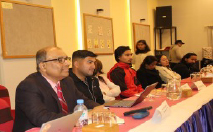
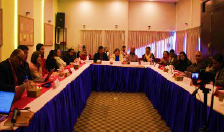
The event included a multi-stakeholder dialogue on digital safety among vulnerable groups in Nepal which brought together nearly 60 participants representing migrant and civil society organisations (female migrants, undocumented labour migrants, LGBTQ+ communities and migrant families from marginalised backgrounds), media and tech organisations including BBC Nepali and international NGOs as well as other international organisations.
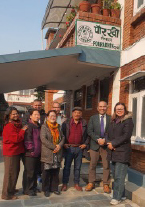
New partnership opportunities with Pourakhi
The visit led to new opportunities for partnership with organisations in Nepal that can help further the impact of our ongoing work in support of labour migrants’ use of digital technologies. Pourakhi Nepal, a migrant advocacy group that supports female migrants and returnee migrants, and a key partner for our MIDEQ work, has committed to taking guardianship of the migrant information portal, Pardesi.org.np, which was the result of our collaboration with several migrant organisations and a local tech NGO undertaken during our UKRI GCRF MIDEQ project. The portal will now become part of Pourakhi’s core activity ensuring that it remains updated and relevant to Nepali migrants and their family members.
Meetings with government officials and international organisations
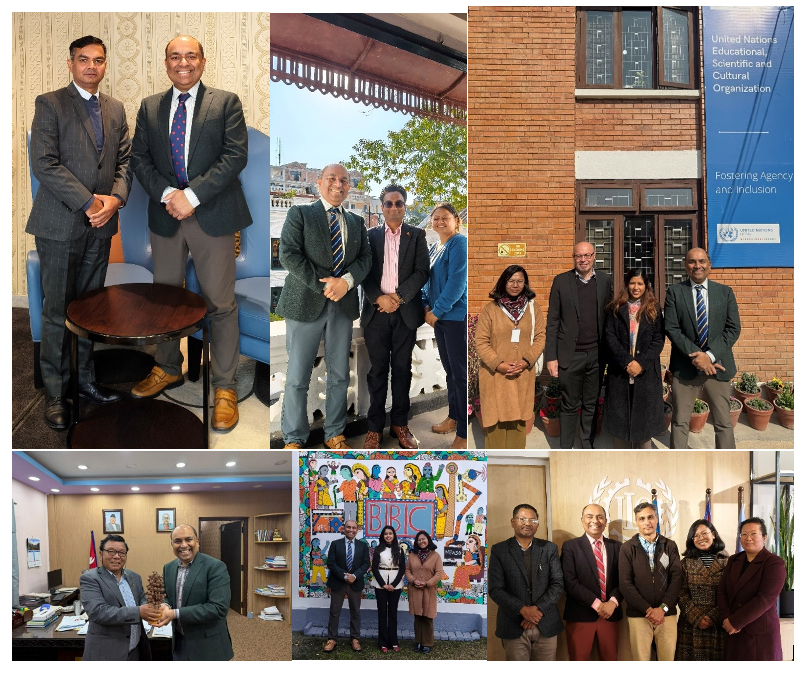
Hari was also able to meet with Nepal’s Minister for Education as well as senior officials at the Ministry of Labour, Employment and Social Security, migrant organisations, local tech and media organisations, and international organisations including UNESCO, IOM, ILO and Helvetas, all with a view to embed our digital interventions within the activities undertaken by our partners, thereby ensuring their sustained impact.
Hari Harindranath
23 January 2025
 ICT4D Collective