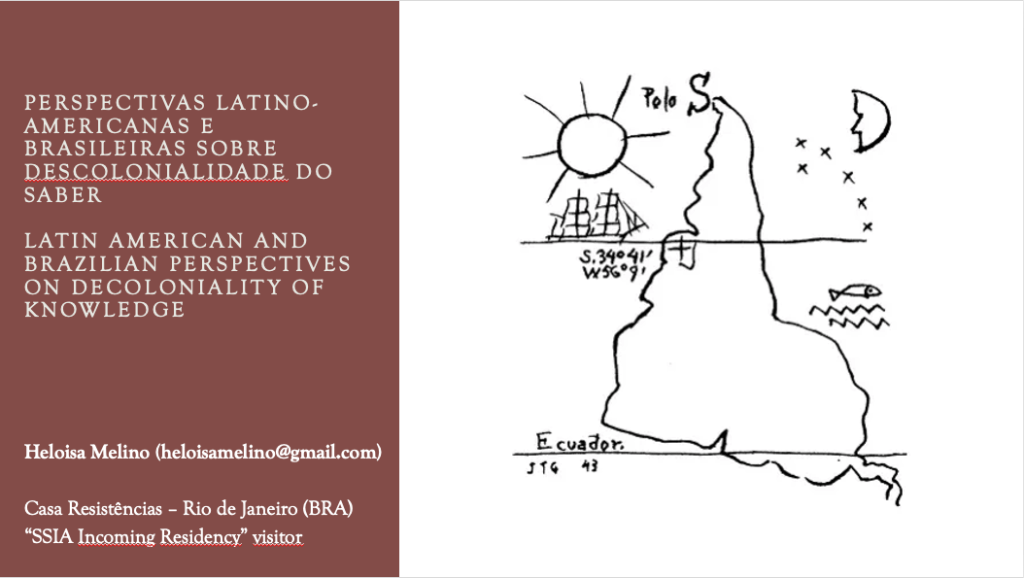
Heloisa Melino: seminar on “Perspectivas latino-americanas e brasileiras sobre descolonialidade do saber”

Heloisa Melino has been working in recent years together with Hari Harindranath and Tim Unwin on the use of digital technologies by those living on the periferias (peripheries) in the favelas of Rio de Janeiro, especially in Maré. Much of this research-practice has focused on developing resources and providing training on the safe, wise and secure use of digital tech within the LBT communities there, with some of our co-designed resources being launched at the Casa Resistências in Maré in September 2024. More recent activities including a rare dance performance on the use of digital tech by Efeito Urbano in Morro da Providência took place in June/July 2025, funded through Royal Holloway’s Social Science Impact Accelerator (SSIA).

As an extension of this work, Heloisa was granted a Social Science Impact Residency to spend the month of March 2026 based at Royal Holloway, University of London, to explore further collaborations and synergies that will extend our research-practice together and explore new openings for future cooperation. As part of this, she presented a fascinating and thought provoking seminar on Latin American and Brazilian Perspectives on Decoloniality of Knowledge on 12th March, which gave rise to much subsequent discussion
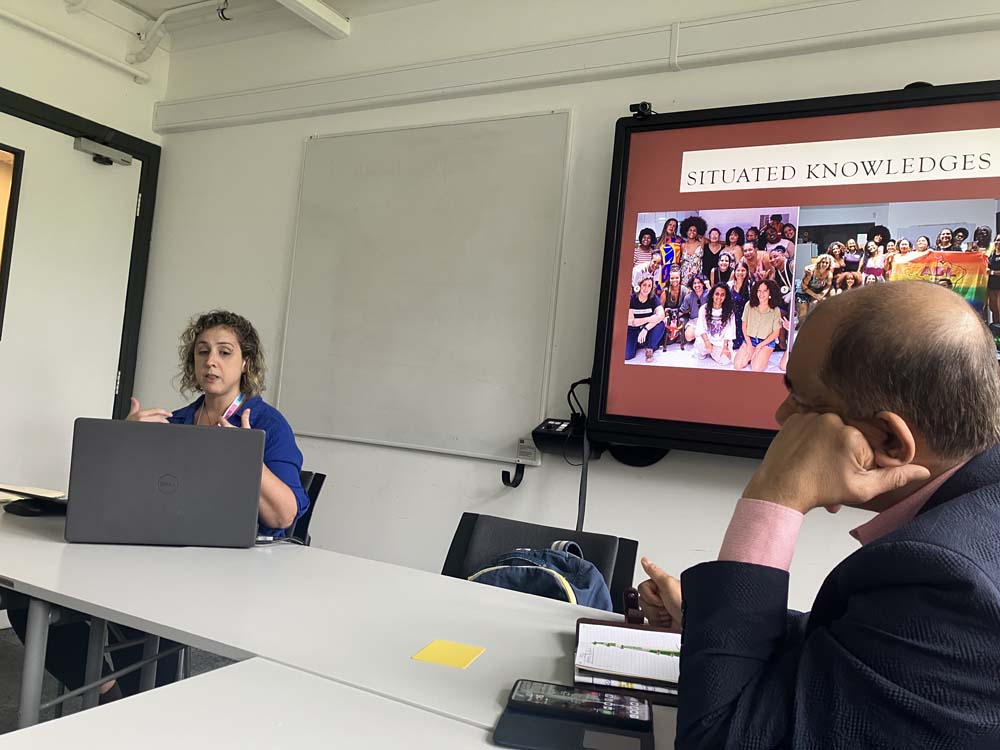
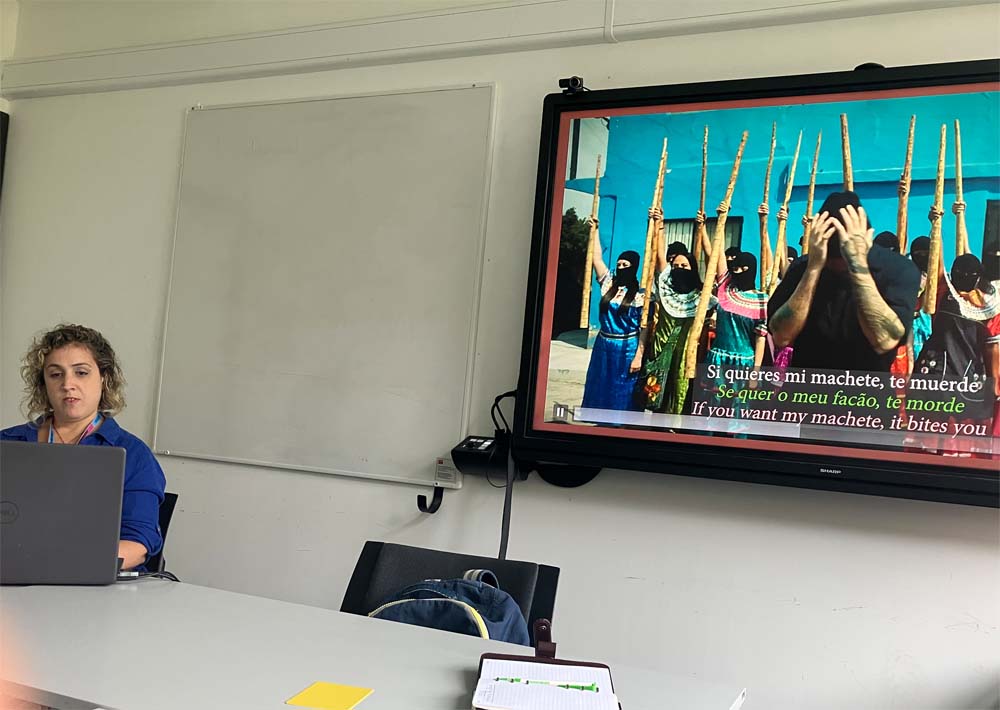
Her slide deck is available below (click on the image), excluding the 4 minute music video (Residente – This is Not America) on Slide 4 which can be accessed from the original on YouTube.
We are most grateful to Heloisa for spending this month with us and look forward to continued research practice with her and those she works with in the favelas of Rio de Janeiro in the years ahead.

Our latest Working Paper: Uses of digital technologies by migrants from Haiti and to Brazil

Members of the UNESCO Chair in ICT4D are leading Work Package 9 of the MIDEQ hub (funded by UKRI GCRF and Royal Holloway, University of London) and are exploring how digital tech can be used to reduce the inequalities associated with migration, especially in four corridors: Nepal-Malaysia, Ethiopia-South Africa, China-Ghana, and Haiti-Brazil. The fourth of our working papers presenting data on the Uses of digital technologies by migrants from Haiti and to Brazil has just been published within the UNESCO Chair in ICT4D’s publication series. Key findings and abstract are as follows.


Key findings

1. Context matters: groups of migrants from different countries and backgrounds use digital tech in varying ways and for different purposes.  There is no such thing as one size fits all.2. Many migrants aspire to use digfital tech for educational and employment purpose – yet these are things that digital tech could already be readily used for if they knew how.  3. Most migrants focused on the use of digital tech for increasing economic well-being – none specifically addressed their potential for reducing inequalities.

Abstract

This working paper is the fourth in the series produced as part of the output of Work Package 9 on technology, inequality and migration within the MIDEQ Hub, a multi-disciplinary research project in 12 countries of Latin America, Africa and Asia, including the Haiti-Brazil migration corridor.  It presents the results of three iterations of an online survey totalling 372 respondents most currently living in Brazil, and mainly from Haiti; 92.7% of those who reported their status identified themselves as migrants, with the remainder being family members of migrants (5.5%) or returned migrants (1.8%).   Following a summary of the methodology, which explains the impact of COVID-19 on our research practice and why an online survey was used to replace our originally planned interviews and focus groups, the paper provides an overview of the most important results and an exploratory data analysis, focusing on the potential influence of age, gender, countries of origin, migration status, and occupational status on the ways in which respondents use digital technologies and for what purposes.  Three important conclusions for the subsequent stages of our research on the inequalities associated with migration and how digital tech may be used to reduce these are: first, the migrants responding to this survey are from very different backgrounds, and these differences have a strong influence on their use of digital tech; second, many migrants aspire to use digital tech for purposes that they could readily do if they knew how; and third, none of the migrants specifically identified inequality or equity as issues that they would like to use digital tech to address.


To read this paper in full (v.4 .pdf) please use this link.

Other UNESCO Chair in ICT4D Publications are available here.