
Digital tech and the most marginalised: what still needs to be done?

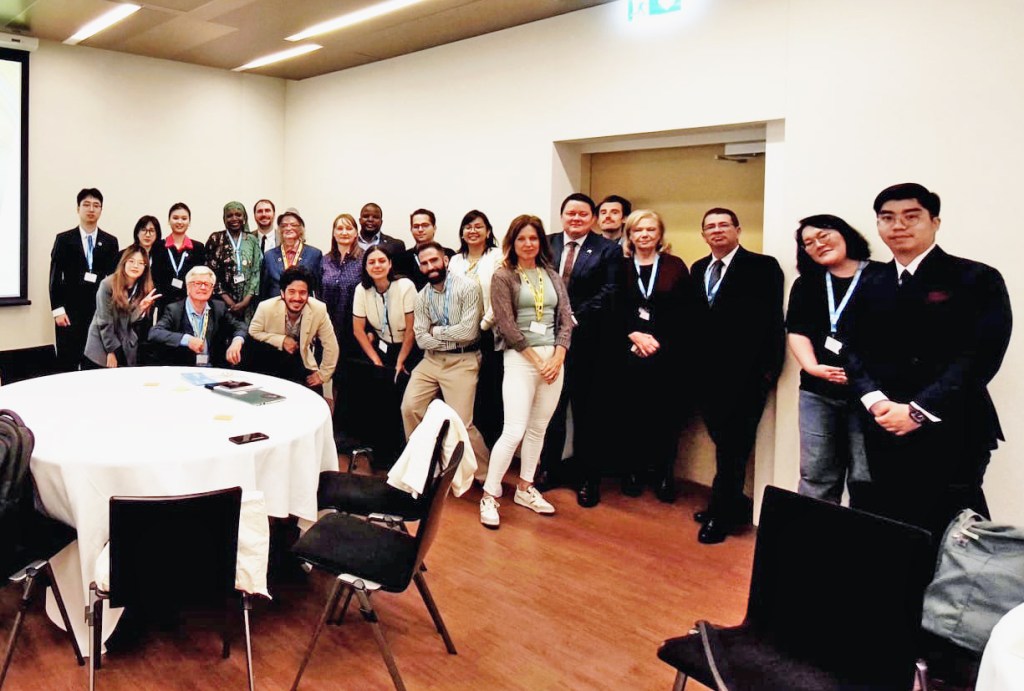
The ICT4D Collective and Microsoft (UN and International Organisations UNIO) (supported by Bangladesh NGOs Network for Radio and Communication, ICT4D.at, and YouthIGF) convened a very lively and interactive Session 360 this morning at the WSIS+20 gathering at Palexpo in Geneva. This began by recognising that digital tech will not be used successfully to deliver the SDGs (especially SDG10) by 2030, but then focused in a very positive way on what governments, the private sector and civil society can indeed do to try to ensure that the poorest and most marginalised can use digital tech to improve their lives.
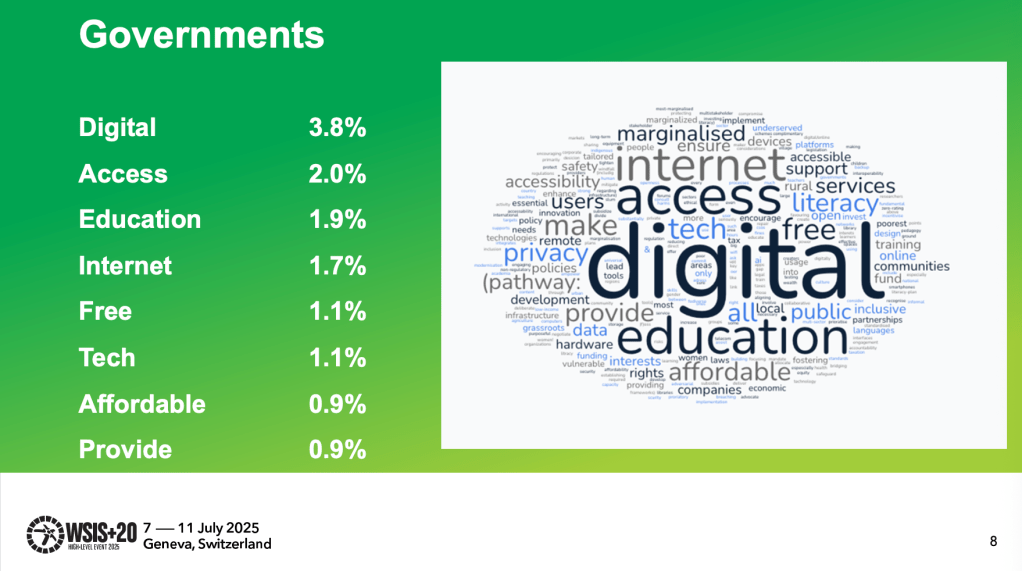
The session built on an online survey conducted in advance of the gathering to explore what people in our networks consider are the most important actions that can be done by governments, the private sector and civil society (as well as international organisations and academia). This is summarised in the slide deck used to guide the sessions (the whole deck is also available by clicking the image below).
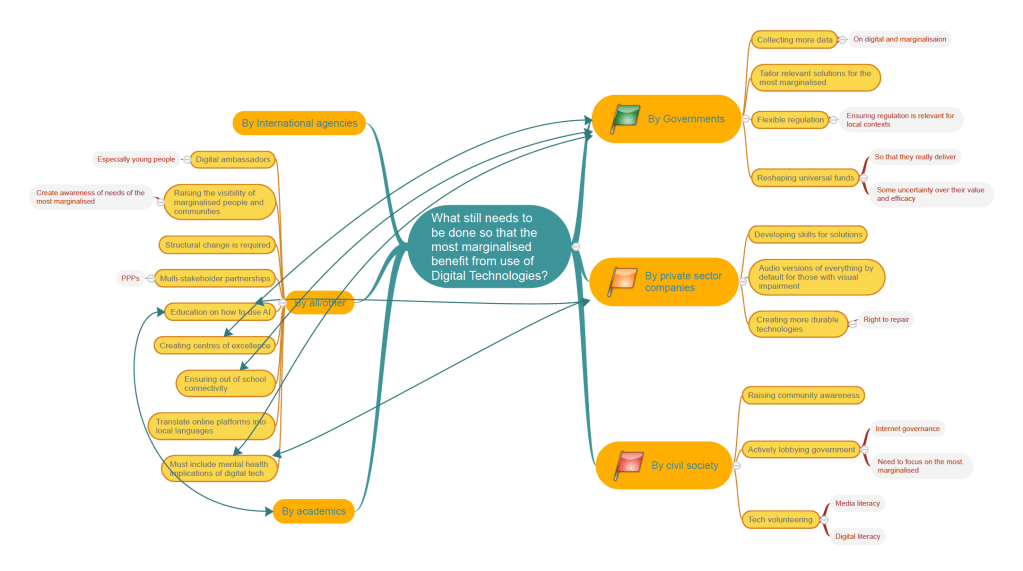
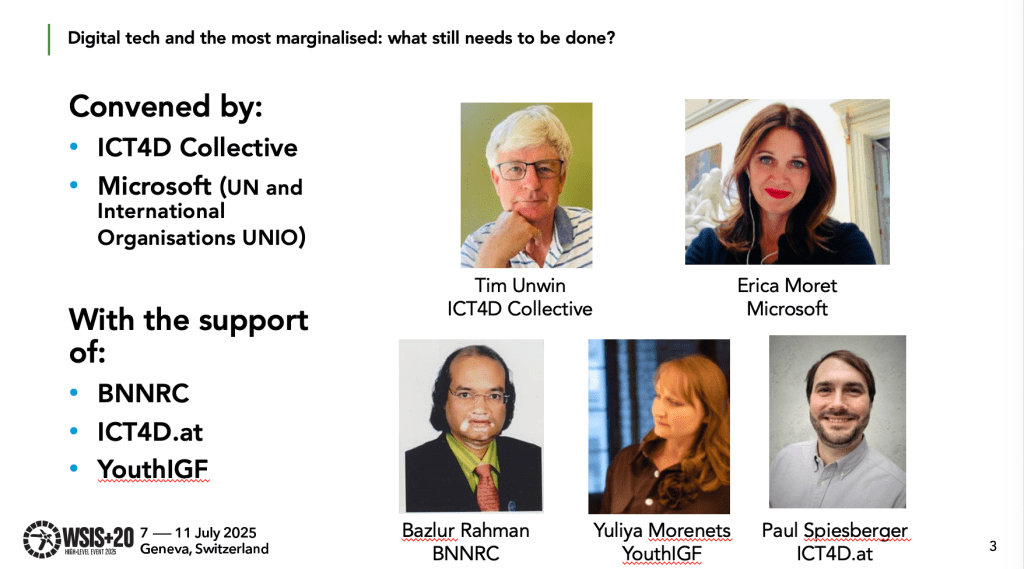
Lively introductory thought-provocations were given by Erica Moret (Microsoft), Bazlur Rahman (BNNRC), Paul Spiesberger (ict4d.at) and Yuliya Morenets (Youth.IGF), and the main focus of the session was then to create together a mind map from brainstorming by participants both in the room and also online (as well as using post-its). This generated a wide range of positive and constructive ideas for what we all need to do if we really care about helping the most marginalised use digital technologies to improve their lives. This discussion is summarised below (click on image for full sized .pdf file):
The session ended by participants re-committing themselves to doing something different in the interests of the poorest and most marginalised.
Join the ICT4D Collective at our session on digital tech and the most marginalised at the WSIS+20 High-Level Event in Geneva on 8th July

We are delighted to be jointly convening a session (306) at the WSIS+20 High-Level Event in Geneva on 8th July at 09.00 in Room L, Palexpo, Geneva. The joint convenors are the ICT4D Collective and Microsoft (UN and International Organisations UNIO), supported by Bangladesh NGOs Network for Radio and Communication, ICT4D.at, and YouthIGF.

Session Outline

The multistakeholder digital tech communities associated with the UN system seem unlikely to deliver on the SDGs by 2030, despite the efforts of those involved in developing and implementing the Global Digital Compact (2024). In particular, SDG10 on reducing inequalities remains insufficiently addressed, with much emphasis instead continuing to be placed on maximising economic growth through innovation. All too often the most marginalised, especially those with disabilities, LGBTIQ communities, women in patriarchal societies, the elderly, ethnic minorities and refugees, are in practice made yet more marginal through the adoption of the latest digital tech by those more powerful and richer than they are.

UNDESA, ECOSOC/CSTD, many other UN agencies, and the IGF process are all conducting widespread consultations about the future of “digital and development” and the WSIS Process, but these have still not sufficiently addressed the tendency for digital tech to be used to increase inequalities, rather than to address issues of inequality and equity. Our interactive session is the culmination of a consultation process during the three months before the annual WSIS Forum through which people across our different networks have contributed their ideas to what the five highest priorities should be for governments, the private sector, civil society and the UN system in creating greater equity in the use of digital tech. The findings of this process will be presented during the session, and participants invited during the session to add to the recommendations through the interactive development of a mind map on marginalization that will provide a very specific output to feed into the wider ongoing debate within the UN system about digital tech and equity.

Please make your voice heard beforehand

Everyone is invited to contribute before the session through a short (max 10 minute) online survey available at:  https://app.onlinesurveys.jisc.ac.uk/s/rhul/digital-equity-wsis2025. This will form the basis of our conversations in Geneva, and so even if you cannot attend in person please do copmplete this survey about what needs to be done to ensure that the poorest and most marginalised can indeed benefit from the use of digital tech.