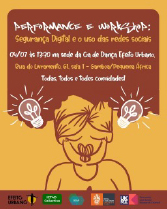
Heloisa Melino has been working in recent years together with Hari Harindranath and Tim Unwin on the use of digital technologies by those living on the periferias (peripheries) in the favelas of Rio de Janeiro, especially in Maré. Much of this research-practice has focused on developing resources and providing training on the safe, wise and secure use of digital tech within the LBT communities there, with some of our co-designed resources being launched at the Casa Resistências in Maré in September 2024. More recent activities including a rare dance performance on the use of digital tech by Efeito Urbano in Morro da Providência took place in June/July 2025, funded through Royal Holloway’s Social Science Impact Accelerator (SSIA).
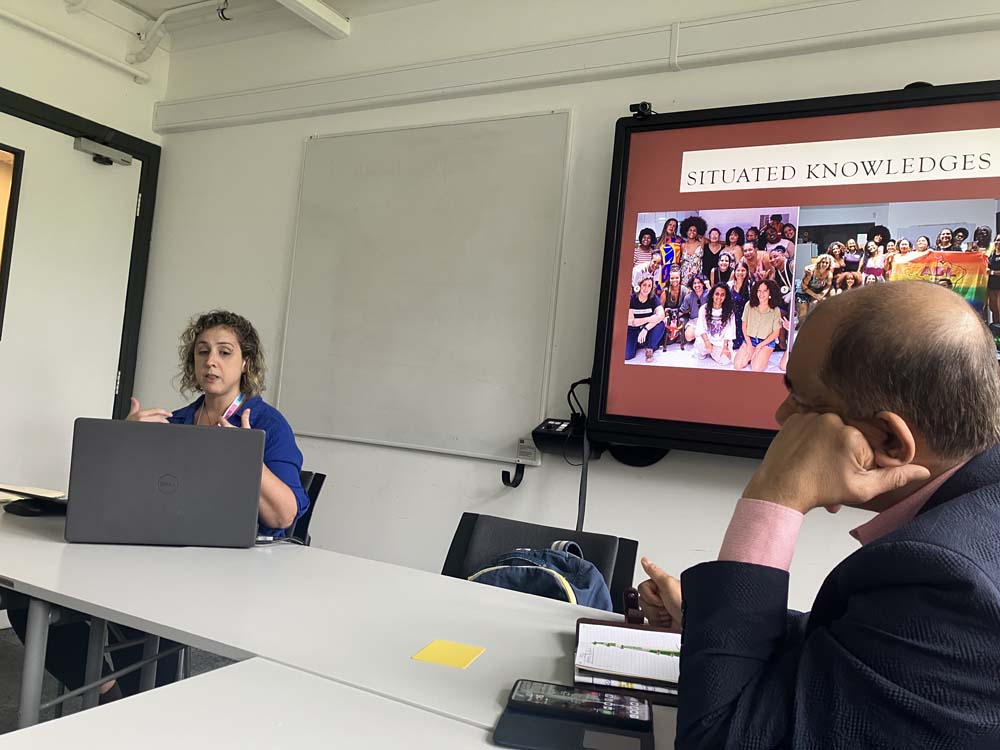
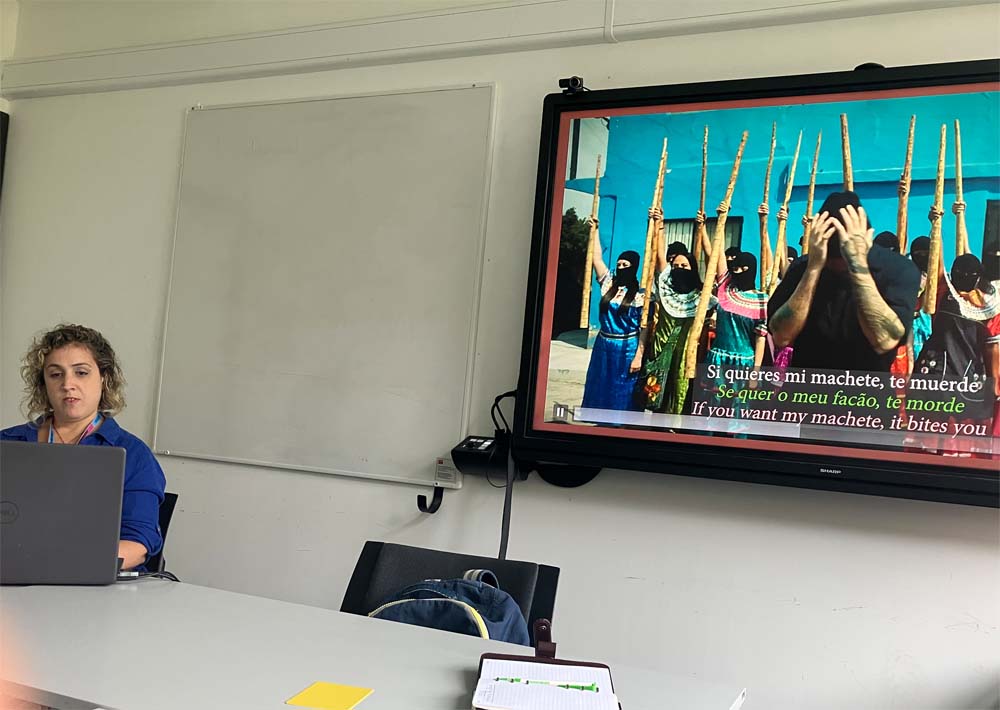
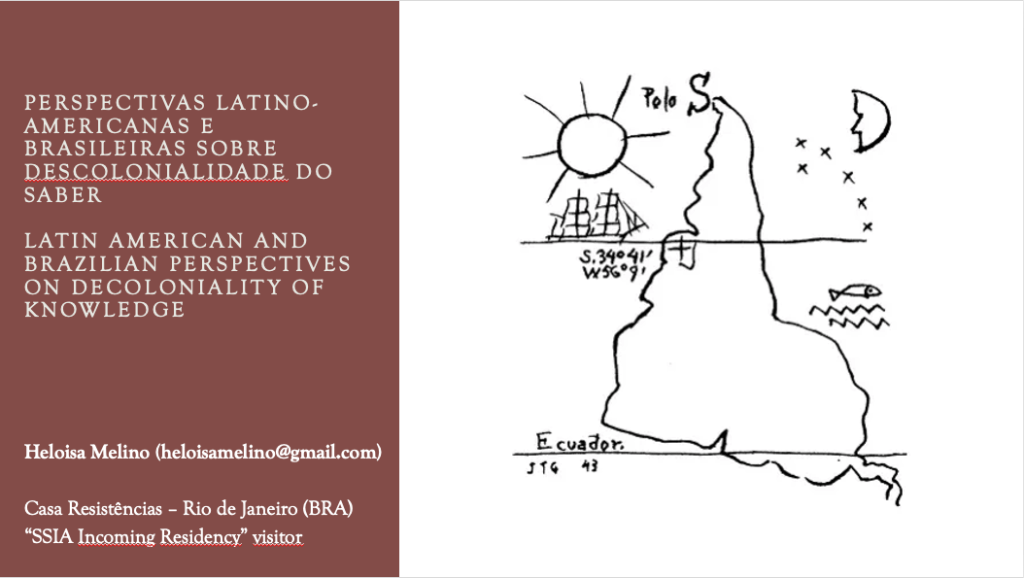
As an extension of this work, Heloisa was granted a Social Science Impact Residency to spend the month of March 2026 based at Royal Holloway, University of London, to explore further collaborations and synergies that will extend our research-practice together and explore new openings for future cooperation. As part of this, she presented a fascinating and thought provoking seminar on Latin American and Brazilian Perspectives on Decoloniality of Knowledge on 12th March, which gave rise to much subsequent discussion
Her slide deck is available below (click on the image), excluding the 4 minute music video (Residente – This is Not America) on Slide 4 which can be accessed from the original on YouTube.
We are most grateful to Heloisa for spending this month with us and look forward to continued research practice with her and those she works with in the favelas of Rio de Janeiro in the years ahead.
Following our impact activities in Brazil during 2024, Prof Hari Harindranath returned to Rio de Janeiro in June/July 2025 to work with our local research partner, Dr Heloisa Melino, and organisations there for a series of follow-on activities funded by Royal Holloway’s Social Science Impact Accelerator (SSIA). These included three main activities.
1. Amplifying the impact of our work through artistic means
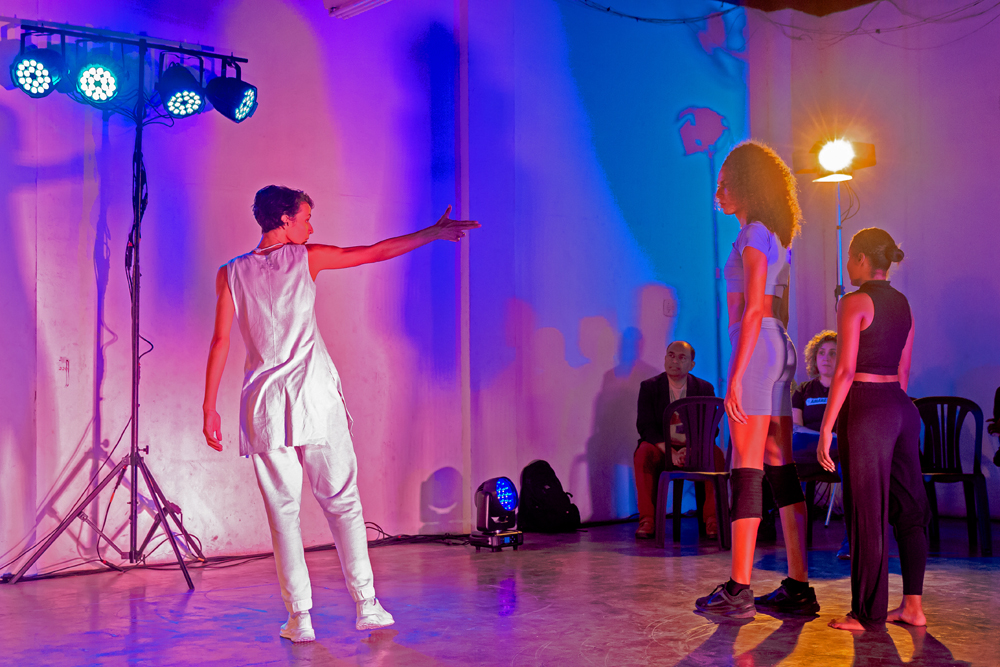
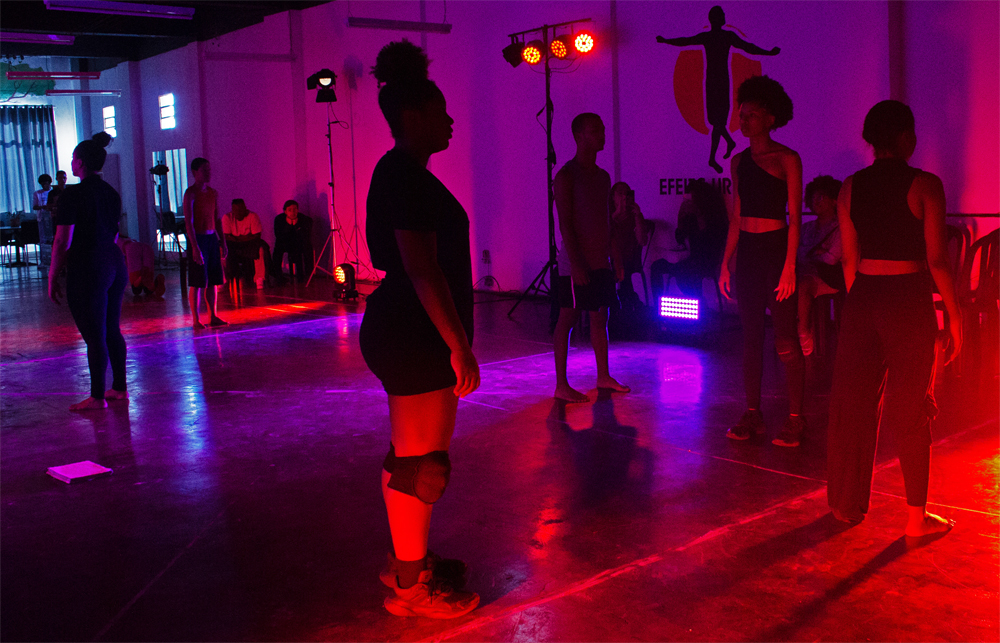
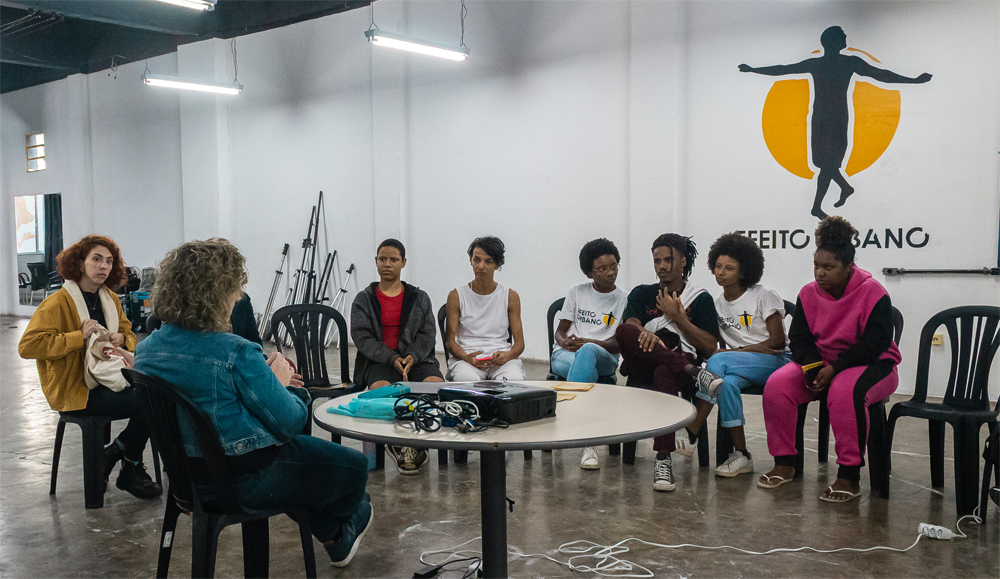
Efeito Urbano, an arts organisation and social project, based in the Providência favela of Rio de Janeiro, showcased a creative performance on digital safety in the periferias which drew on SSIA-funded work previously undertaken by Collective members, Prof Harindranath, Prof Tim Unwin and Dr Heloisa Melino and the experiences of the artists themselves with social networks and digital technologies.
Efeito Urbano is the first professional dance company in Morro da Providência and has developed its own concept of creation and research, Dança Urbana Negra Periférica, based on the pillars of race, gender and territory as well as traditional and contemporary Afro-referenced dances, in addition to the diverse expressions and cultural manifestations of experiences in the favelas and peripheries
The dancers put on a stunning performance capturing the intertwining of physical and digital lives in the favelas of Rio (link here to a short video). Choreographer Juliana Mello explained that the performance was a starting point for their new residency aimed at reflecting, through the language of dance, how the peripheral body navigates, resists and reinvents itself in the digital environment, with its strengths, pitfalls and invisibilities. Producer Ellen Pereira da Costa talked about the importance of engaging young people through artistic means to spread important messages such as the safe, wise and secure use of digital tech in their contexts which are often characterised by scams, identity theft and violence, both physical and online. Their aim was “to explore the potential of art as a languagethat activates different senses compared to textual narratives, by engaging the body and movement in the exchange of knowledge on a topic as urgent and necessary as this – particularly among vulnerable populations, who make up the core audience of Instituto Efeito Urbano”.
2. Extending our work on the safe, wise and secure use of digital technologies by vulnerable groups
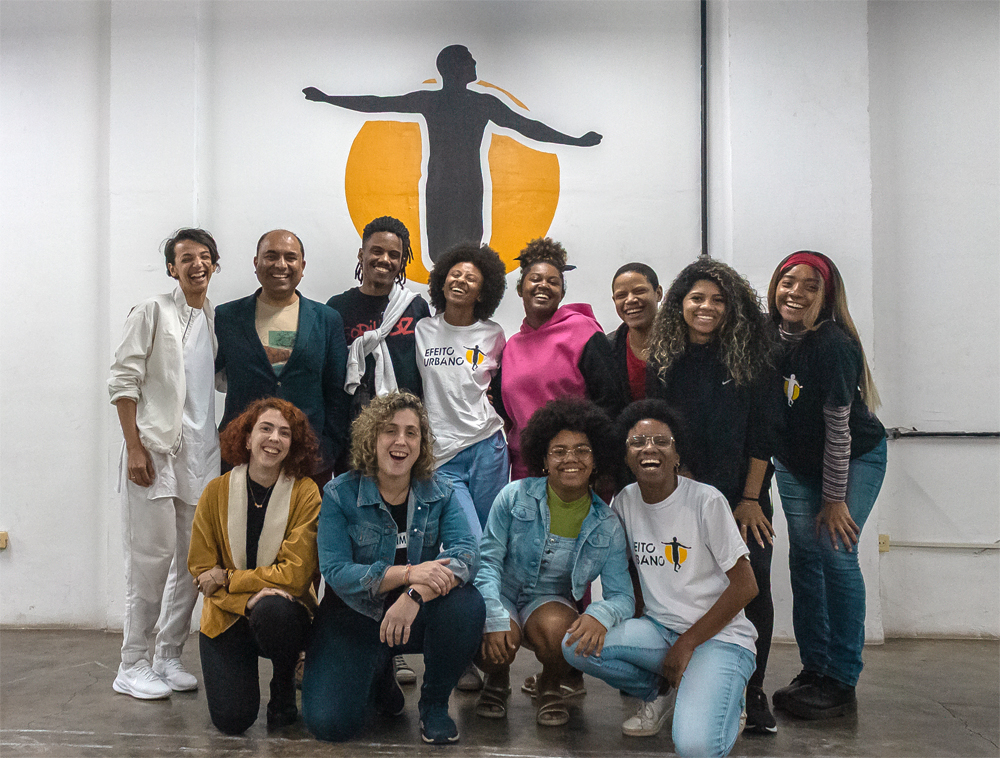
This visit allowed us to extend our work on digital safety nasperiferias from our earlier focus on communities in the Maré favela of Rio de Janeiro to young people in the Morro da Providência favela and the surrounding areas. Following the Efeito Urbano performance, Hari and Heloisa led a workshop on the safe, wise and secure use of digital tech by vulnerable groups with some of the artists and members of the audience. Participants were keen to share their online experiences with each other and through the creation of a series of short videos.
3. Evidencing the impact of our ongoing work
We undertook an Outcomes Meeting to gather qualitative feedback on impacts and outcomes from our activities during 2024 with our main partner organisation, Casa Resistências in the Maré favela of Rio. The team at Casa Resistências, an LBT advocacy organisation and a shelter for women fleeing violence and abuse, had previously collaborated with us on activities relating to the safe, wise and secure use of digital technologies nas periferiasincluding a workshop led by Dr Heloisa Melino and the creation of a range of beautiful resources on digital safety designed by local graffiti artist, JLo. These and related activities were aimed at helping activists and others remain safe online while they report on rights violations and undertake their advocacy campaigns. Hari’s visit offered the opportunity to reflect on our activities and their impacts and outcomes.
Kimberly Veiga from Casa Resistências explained that our collaboration had helped build capacity and enabled them to undertake further activities with local partners such as Fiocruz University on online safety for activists and others in the favelas. She spoke of the impact of online harms for people in her context including online scams, digital identity theft and violence.
This collaboration has allowed us to think about technology as a route to access rights and it has opened another avenue for us to obtain wider support… It has helped us connect with wider networks of support. We now exchange experiences and access support from across the country, including psychological and therapeutic care…Thanks to this collaborative work, we have now created a new agenda on digital for our organisation
Kimberly Veiga, Casa Resistências
Kimberly spoke of the cascading effect of our collaboration that led them to undertake activities relating to the challenges faced by lesbian mothers and the creation of trustworthy resources to support them, similar to the ones we helped create on the safe, wise and secure use of digital tech by vulnerable groups in the Brazilian periferias. Fernanda highlighted the importance of our resources not only as a means to disseminate messages on online safety at all the events they attend but also as a means to enhance the visibility of the broader advocacy work being undertaken by Casa Resistências.
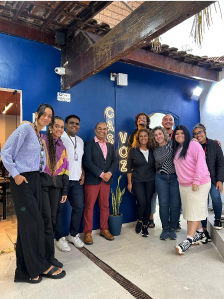
The visit also enabled Hari and Heloisa to meet with Voz das Comunidades, a community media organisation based in the Complexo do Alemão (Alemão complex of favelas in Rio) where they presented their ongoing work on the safe, wise and secure use of digital tech in the peripheries. The team at Voz shared their experiences of working in the challenging context of the favelas and the importance of physical and online safety as they go about recording and reporting on community matters.
Voz das Comunidades and their Social Impact team expressed interest in working with us in the future. So, watch this space!
In summary, our impact agenda in Brazil funded by SSIA has allowed us to work with multiple organisations and communities in the peripheries of Rio to spread awareness on the safe, wise and secure use of digital tech by vulnerable groups, helped build capacity of both individuals and organisations and reach a broader range of groups through engaging workshops and creative activities and multimedia outputs relevant to the local contexts in Brazil. Hari hopes to continue further collaborative work in Brazil with Heloisa given the interest and enthusiasm shown by local organisations.
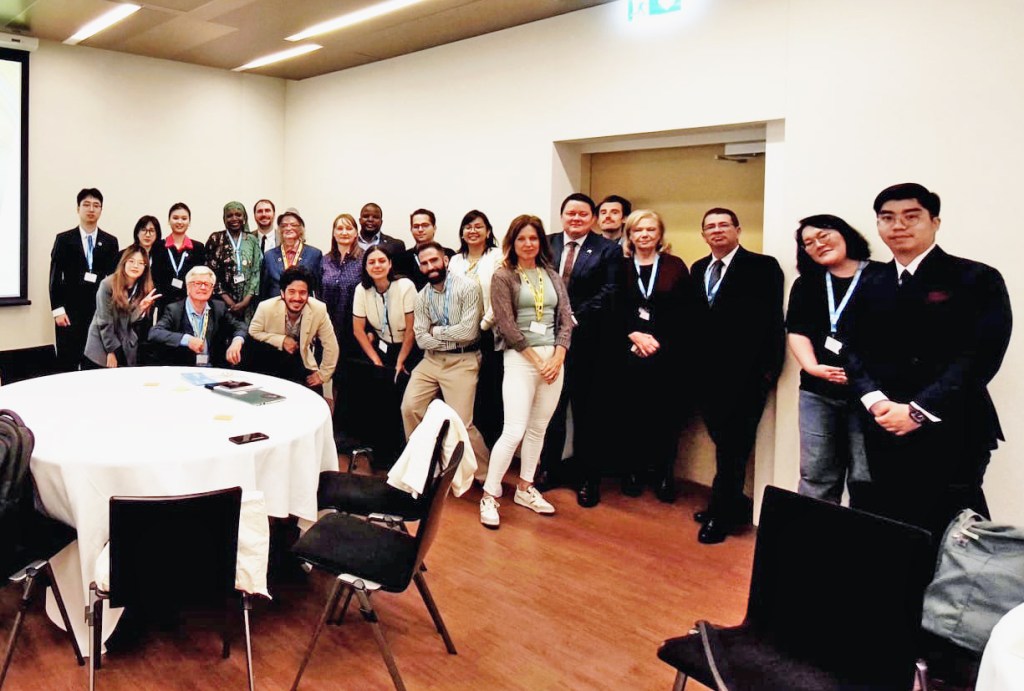
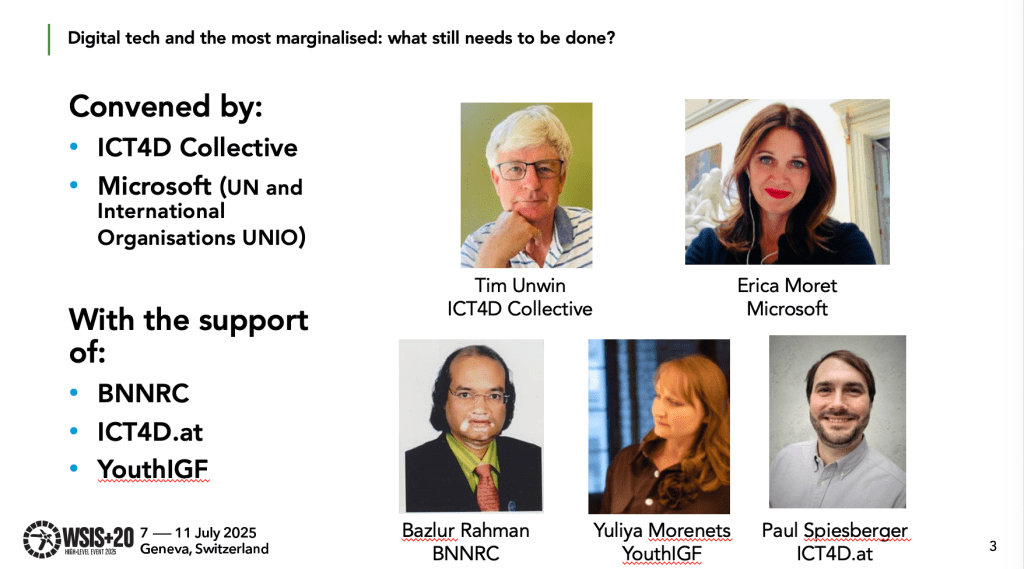
The ICT4D Collective and Microsoft (UN and International Organisations UNIO) (supported by Bangladesh NGOs Network for Radio and Communication, ICT4D.at, and YouthIGF) convened a very lively and interactive Session 360 this morning at the WSIS+20 gathering at Palexpo in Geneva. This began by recognising that digital tech will not be used successfully to deliver the SDGs (especially SDG10) by 2030, but then focused in a very positive way on what governments, the private sector and civil society can indeed do to try to ensure that the poorest and most marginalised can use digital tech to improve their lives.
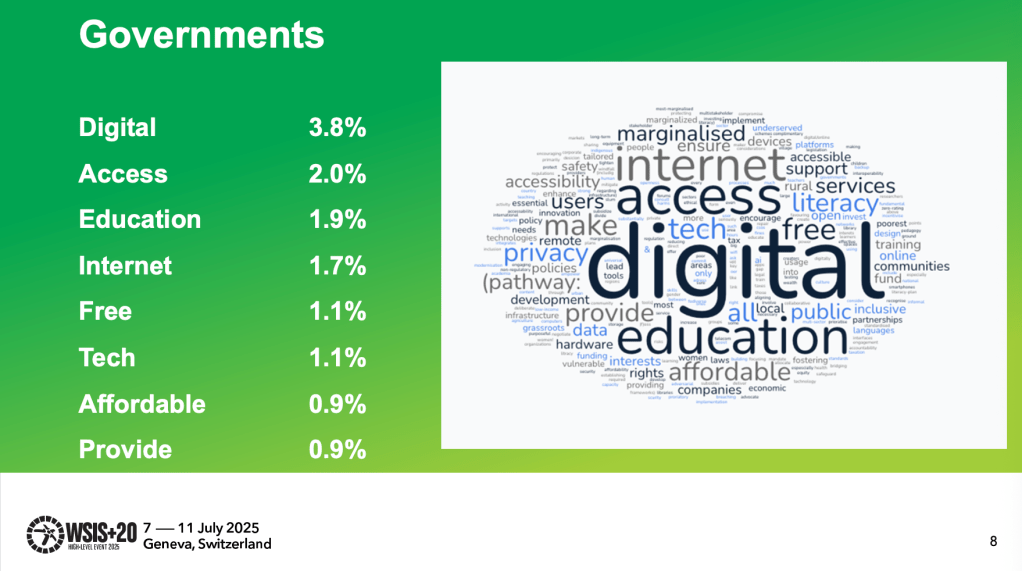
The session built on an online survey conducted in advance of the gathering to explore what people in our networks consider are the most important actions that can be done by governments, the private sector and civil society (as well as international organisations and academia). This is summarised in the slide deck used to guide the sessions (the whole deck is also available by clicking the image below).
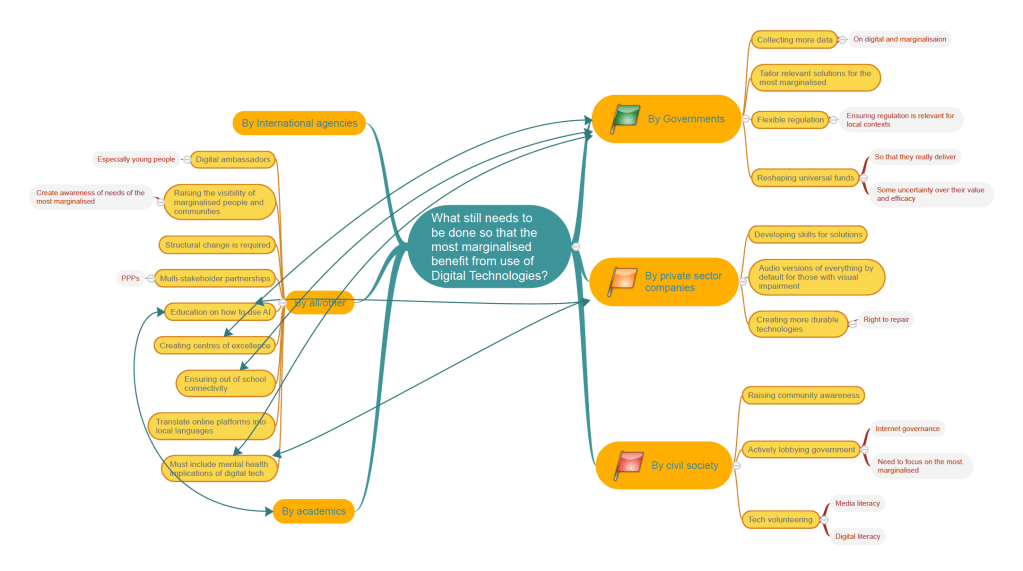
Lively introductory thought-provocations were given by Erica Moret (Microsoft), Bazlur Rahman (BNNRC), Paul Spiesberger (ict4d.at) and Yuliya Morenets (Youth.IGF), and the main focus of the session was then to create together a mind map from brainstorming by participants both in the room and also online (as well as using post-its). This generated a wide range of positive and constructive ideas for what we all need to do if we really care about helping the most marginalised use digital technologies to improve their lives. This discussion is summarised below (click on image for full sized .pdf file):
The session ended by participants re-committing themselves to doing something different in the interests of the poorest and most marginalised.
The multistakeholder digital tech communities associated with the UN system seem unlikely to deliver on the SDGs by 2030, despite the efforts of those involved in developing and implementing the Global Digital Compact (2024). In particular, SDG10 on reducing inequalities remains insufficiently addressed, with much emphasis instead continuing to be placed on maximising economic growth through innovation. All too often the most marginalised, especially those with disabilities, LGBTIQ communities, women in patriarchal societies, the elderly, ethnic minorities and refugees, are in practice made yet more marginal through the adoption of the latest digital tech by those more powerful and richer than they are.
UNDESA, ECOSOC/CSTD, many other UN agencies, and the IGF process are all conducting widespread consultations about the future of “digital and development” and the WSIS Process, but these have still not sufficiently addressed the tendency for digital tech to be used to increase inequalities, rather than to address issues of inequality and equity. Our interactive session is the culmination of a consultation process during the three months before the annual WSIS Forum through which people across our different networks have contributed their ideas to what the five highest priorities should be for governments, the private sector, civil society and the UN system in creating greater equity in the use of digital tech. The findings of this process will be presented during the session, and participants invited during the session to add to the recommendations through the interactive development of a mind map on marginalization that will provide a very specific output to feed into the wider ongoing debate within the UN system about digital tech and equity.
Please make your voice heard beforehand
Everyone is invited to contribute before the session through a short (max 10 minute) online survey available at: https://app.onlinesurveys.jisc.ac.uk/s/rhul/digital-equity-wsis2025. This will form the basis of our conversations in Geneva, and so even if you cannot attend in person please do copmplete this survey about what needs to be done to ensure that the poorest and most marginalised can indeed benefit from the use of digital tech.






 ICT4D Collective