
Members of the UNESCO Chair in ICT4D are leading Work Package 9 of the MIDEQ hub (funded by UKRI GCRF and Royal Holloway, University of London) and are exploring how digital tech can be used to reduce the inequalities associated with migration, especially in four corridors: Nepal-Malaysia, Ethiopia-South Africa, China-Ghana, and Haiti-Brazil. The fourth of our working papers presenting data on the Uses of digital technologies by migrants from Haiti and to Brazil has just been published within the UNESCO Chair in ICT4D’s publication series. Key findings and abstract are as follows.
Key findings
| 1. Context matters: groups of migrants from different countries and backgrounds use digital tech in varying ways and for different purposes. There is no such thing as one size fits all. | 2. Many migrants aspire to use digfital tech for educational and employment purpose – yet these are things that digital tech could already be readily used for if they knew how. | 3. Most migrants focused on the use of digital tech for increasing economic well-being – none specifically addressed their potential for reducing inequalities. |
Abstract
This working paper is the fourth in the series produced as part of the output of Work Package 9 on technology, inequality and migration within the MIDEQ Hub, a multi-disciplinary research project in 12 countries of Latin America, Africa and Asia, including the Haiti-Brazil migration corridor. It presents the results of three iterations of an online survey totalling 372 respondents most currently living in Brazil, and mainly from Haiti; 92.7% of those who reported their status identified themselves as migrants, with the remainder being family members of migrants (5.5%) or returned migrants (1.8%). Following a summary of the methodology, which explains the impact of COVID-19 on our research practice and why an online survey was used to replace our originally planned interviews and focus groups, the paper provides an overview of the most important results and an exploratory data analysis, focusing on the potential influence of age, gender, countries of origin, migration status, and occupational status on the ways in which respondents use digital technologies and for what purposes. Three important conclusions for the subsequent stages of our research on the inequalities associated with migration and how digital tech may be used to reduce these are: first, the migrants responding to this survey are from very different backgrounds, and these differences have a strong influence on their use of digital tech; second, many migrants aspire to use digital tech for purposes that they could readily do if they knew how; and third, none of the migrants specifically identified inequality or equity as issues that they would like to use digital tech to address.
To read this paper in full (v.4 .pdf) please use this link.
Other UNESCO Chair in ICT4D Publications are available here.

 On November 8, 2016, Indian Prime Minister Narendra Modi addressed the nation in a
 ary 2018
 Next Steps
 Recent years have seen an impressive rise in the adoption of technology throughout the world. In the global South (Africa, in particular), the use mobile technology has provided access to a wide variety of new services, from weather forecasting for farmers to medicine validation, which aim at enabling development and increasing people’s quality of life.
 In a project developed within REFLECT (
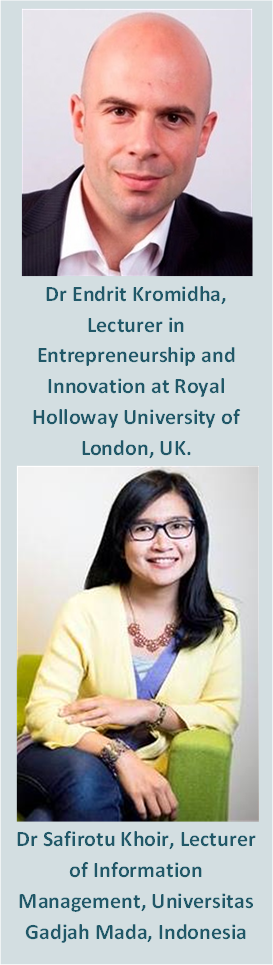 The
The 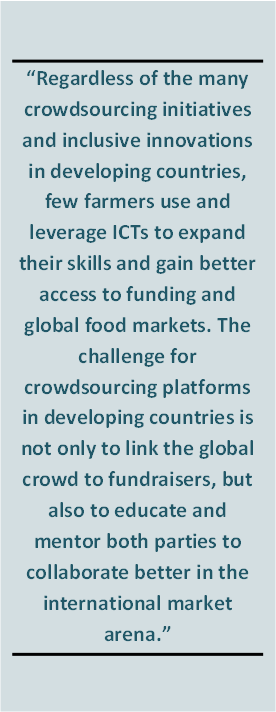 In a pilot study conducted for this Briefing we decided to focus on two initiatives in Indonesia. First we examined
  September 2017
 The world is now characterised by news and social media platforms’ intent on delivering alternative facts, fake news and fake research results. Alongside this they harvest insights through algorithms that analyse our online behaviours and preferences. ‘Big data’ becomes big business driven by a global internet machine which if we are not careful will support the interests of ‘the few not the many’ (to turn around an overused party-political phrase!). So, what are our options for creating a future where we can retain a sense of identity, values and freedoms? I certainly do not claim to have the solutions to such huge global challenges facing society, but offer three suggestions to the ICT4D community, all of which underpin the way knowledge can be created and shared in a digital age:
 Volume 2 Issue 8 August 2017
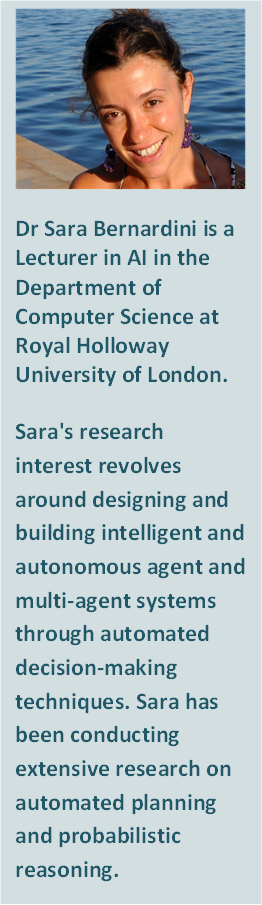
 At the Summit, Professor Virginia Dignum formulated three principles on which AI development should be based, which I find particularly relevant:
 Volume 2 Issue 7 July 2017
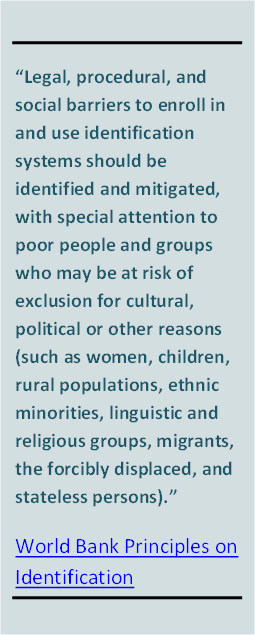 We heard many concerns around all the above.
 Volume 2 Issue 6 June 2017
 Volume 2 Issue 5 May 2017
 ICT4D Collective