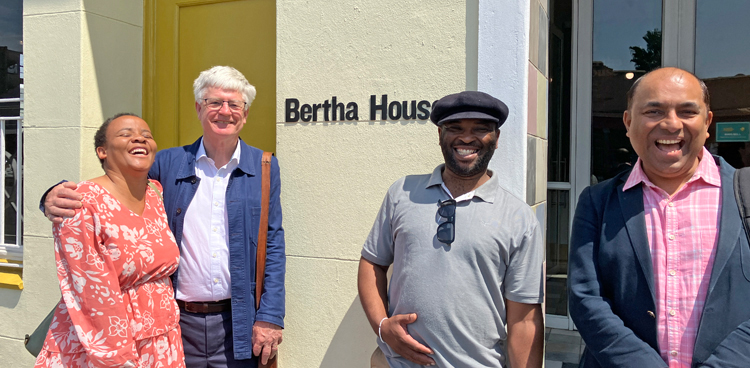
Many research (and practical) projects finish when the funding finishes; researchers and organisations quickly move on to the next source of funding, and new ideas. Even those who have the best intentions to measure real outcomes, rather than just outputs, very often do not have the time or funding to do so. As part of the UKRI GCRF funded MIDEQ initiative (2019-2024), members of the ICT4D Collective were from the beginning eager to try to work differently in their research with migrants on how digital technologies might be used to reduce inequalities. Some of our discussions around this have been published in our working paper Unwin, Casentini, Harindranath and Lorini (2023), but funding from a Research England Block Grant, the ICT4D Collective, and our own personal resources has recently enabled “Hari” Harindranath and Tim Unwin to return to South Africa in September and October 2024, eight months after MIDEQ funding had ceased, to meet with organisations and migrants in Johannesberg and Cape Town to learn from them about the outcomes of our work so far, and what lessons we mght learn from our engagement together, so that we can improve similar work that we might undertake in the future. Our findings are briefly summarised at https://ict4d.org.uk/technology-inequality-and-migration/zaoutcomes/, which includes some encouraging and inspirational videos from the migrants with whom we worked.
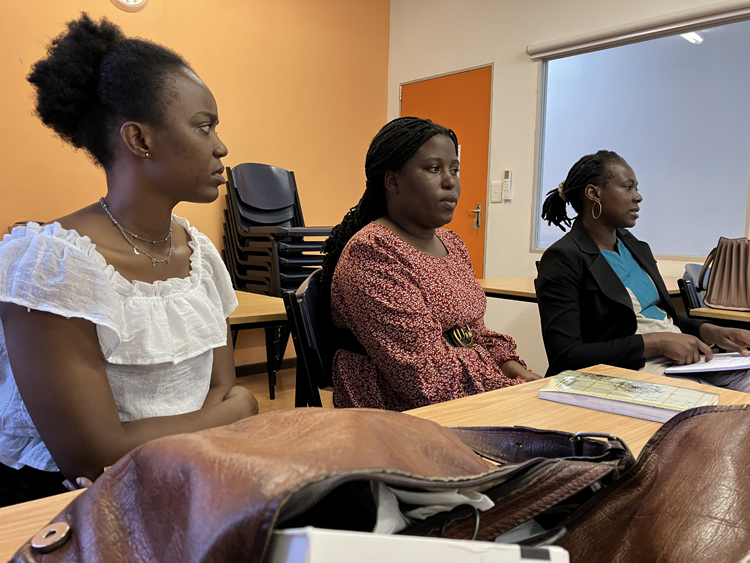
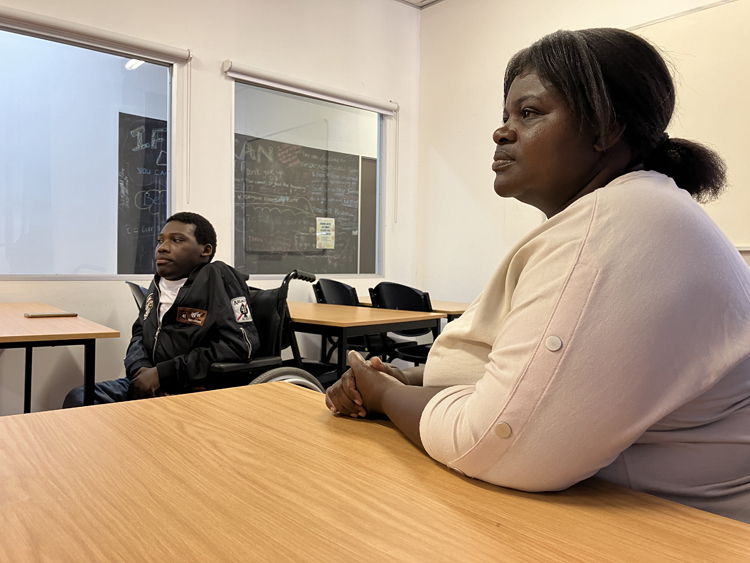
It is evident from their comments that our research-practice has indeed had many positive outcomes on their lives, interestingly not necessarily direly to do with digital tech, but more in terms of self-confidence, knowledge sharing and community building. However, the number of migrants with whom our team (Maria Rosa Lorini, Tim Unwin and “Hari” Harindranath) actually worked together was relatively small. The challenge remains as to how we can continue to support them to extend this work on the safe, wise and secure use of digital tech more widely, thereby making it more sustainable into the future. It is clear that nothing works without some funding, and relying on volunteers is rarely ever sustainable.
For our free resources on the safe, wise and secure use of digital tech on different themes and in multiple languages, see: https://ict4d.org.uk/sws/.
 ICT4D Collective
One thought on “Measuring research outcomes rather than just outputs”